• About

Paul Bigland

~ Blogging on transport, travel & whatever takes my fancy.

Paul Bigland

Tag Archives: Railways

Down memory lane. No 1- a day out to Bescot in 1994.

14 Saturday Apr 2018

Posted by Paul Bigland in History, Memory Lane, Railways

≈ Leave a comment

Tags

History, Memory Lane, Railways

I’ve been scanning a new batch of old slides which has taken me on a real trip down memory lane, to the 2nd of June 1994 to be precise, and a day out from London to Bescot marshalling yard in the West Midlands nearly 24 years ago. The pictures I took of what seemed quite ordinary, everyday scenes during the last years before rail privatisation are now rather special as they show just how much has changed on Britain’s railways since then. I’d been visiting Bescot since the late 1970’s. It was always a good place to observe rail operations as it was a busy marshalling yard with a loco depot that had a station right next door! This meant the place was popular with railway enthusiasts and there’d normally be a gaggle of people on the station footbridge.  Here’s a look at what was happening that day…


03851. 08765. Shunting the Down Yard. Bescot. 2.6.94

Class 08765 shunting the Down Yard at Bescot. These ubiquitous engines used to be seen up and down the network and still survive in service today – although in vastly reduced numbers.  


03852. 47478. Shunting the Up sidings. Bescot. 2.6.94

Class 47 no 47478 shunts a Seacow ballast wagon in the Up yard which is full of Civil Engineers wagons which lie idle until the weekend. This particular locomotive survived in service for a few more years working hauling engineers trains after being relegated from mainline work. A former Intercity loco based at Crewe, it was cut up by EMR at Kingsbury in 2006


03855. 20187. On shed. Bescot. 2.6.94

Class 20 No 20187 had recently been repainted in British Rail Telecoms livery. It was one of only 4 class 20s that ever carried these colours. The locomotive still survives today as part of the DRS fleet. 


03856. 56056. Bescot. 2.6.94

56056 arrives from the North with a train of MGR coal hoppers. I always liked the two-tone grey Trainload livery with its sector decals. The only problem was, the locos never stayed in their sector, hence a Trainload Construction logo’d loco on a coal train!


03857. 304032. Bescot. 2.6.94

Class 304 EMU No 304032 pulls away from Bescot station on its way to Birmingham. Introduced in 1960 these units only had another couple of years left in service. The last survivors went in 1996. I’ve fond memories of travelling in these trains as they were used on Liverpool-Crewe services which I used regularly back in the 1970s. 


03858. 31147. 31237. Bescot. 2.6.94

A pair of Class 31s (31147 and 31237) in the ‘Dutch’ livery of the Engineers sector pass the station en-route to the stabling sidings. In the background is a long line of their cousins. These locos would be sat in the stabling siding all week until it came to the weekend when they’d be started up to work engineers trains on various possessions around the area. It was a terrible use of resources and the failure rate of these engines was high. They also created a hell of a cloud of clag when they were started up! 


03859. 08543. Shunting the Down yard. Bescot. 2.6.94

08543 shunting the Down Sorting sidings. Note the chap walking next to the loco. He was one of the yard shunting staff. PPE was pretty rudimentary in those days! He had the luxury of a long orange coat, most staff wore small tabards. 


03860. 37107. Stopping for a chat. Bescot. 2.6.94

The driver of 37107 gets his instructions from one of the yard staff. They’re both wearing the high-vis tabards I mentioned in the last picture. They were tied on by the thin strips you can see hanging down at the back of the chap on the ground. Most staff didn’t bother, which meant thy were pretty useless as they flapped around a lot. 


03867. 60013. Bescot. 2.6.94

A Class 60 in Trainload Petroleum livery arrives light with a Class 37 before heading off to the depot fuelling point. The last of these locos had only been delivered the year before but they’d already established a reputation for unreliability. The were the last diesel locomotives to be built for BR. 


03868. 47333. 47332. 47334. 47353. 47478. Bescot. 2.6.94

A long line of Class 47s stabled in the former Up reception sidings. These sidings had been severed at the North end to create a fan of four to stable Engineers loco in during the week. Here you can see 47333. 47332. 47334. 47353 and 47478 which had been working shunting the yard earlier in the day. 


03873. 86255. Bescot. 2.6.94

86255 speeds past the station with an Intercity service for the North. The line through Bescot was a useful diversionary route for Intercity, but I can’t remember if it had regular weekend services or if this was a diversion due to problems elsewhere. 


3842. 47318. 31125. Bescot TMD. 2.6.94

A worker carries a jack into the yard, presumably to fix a track defect somewhere. In the background are a couple of Engineers locos stabled in the shed yard. Bescot shed was responsible for the maintenance of Engineers locos, but the depot had a poor reputation for the quality of the locos it looked after and turned out. 


3838. 58033. Bescot. 2.6.94

A Class 58 approaches the station with a mixed rake of empty MGR coal hoppers (some with hoods, others not) watched by a gaggle of railway enthusiasts (including a couple, not a sight you’d see that often). 

As I scan more old slides I’ll be taking other trips down memory lane so my intention’s to turn this into a series. Watch out for another one soon….


The new trains dilemma (what to do with the old ones).

28 Wednesday Mar 2018

Posted by Paul Bigland in New trains, Rail Investment, Railways, ROSCOs

≈ 12 Comments

Tags

New trains, Rail Investment, Railways, ROSCOs

UPDATE, Aug 2019. I’ve added new details where the position (and future) of some fleets has changed since this was originally written.

The old expression ‘feast or famine’ springs to mind when I look at the situation our railways are currently facing with the amount of new trains on order and old ones coming off-lease.

I remember when the railways were first being privatised. The uncertainty around what was happening led to a 1,064 day hiatus when no new trains were ordered. This led to the closure of the ABB works (formerly BREL) at York, where the majority of the BR built trains that still run in service were constructed.

How things have moved on from those days! Now we have a massive amount of new trains coming into service or on order. Also, a mix of old and new train builders are either planning (or building) new assembly plants in the UK. TALGO have plumped for Scotland whilst CAF have picked Llanwern in S Wales and begun construction. Alstom have a site in Widnes whilst Siemens have announced a site in Goole.

This month the Rail Delivery Group published the 6th edition of its Long Term Passenger Rolling Stock Strategy. It makes for interesting reading. It points out that

” The number of new vehicles committed for delivery in the five-year period that commenced in April 2014 (CP5) and in the early years of CP6 is now 7,187 – more than 50% of the current in-service fleet of 14,025. These new vehicles have a capital cost of more than £13 billion, and around 50% will be built in Britain. The average age of the national fleet is estimated to fall from 21 years to 15 years by March 2021, while the numbers of vehicles in service will grow by 6% next year and by a further 5% to 13% by 2024″

Those 7,187 vehicles will see a step-change in our existing fleet and the near elimination of loco-hauled, main line services and displacement of many of the old BR built fleets. As the document highlights,

“Major orders for new build vehicles coupled with the reduced electrification programme has so far resulted in over 4,000 vehicles being displaced from service in the next 3 years. Many of these vehicles are near the end of their life, but 150 are brand new. As at March 2018, there are over 1,500 vehicles less than 30 years old that do not currently have a future lessee, so while over 7,000 vehicles will be built, the net impact on the national fleet total will be less than this number. Displaced, serviceable vehicles bring challenges to the supply chain, notably for owners who may have idle assets, but also for overhaulers who would historically have refurbished mid-life vehicles for their next role.”

That’s a hell of a lot of displaced trains with nowhere to go. OK, many will be on a one-way trip to the scrapyard (who would want to lease Pacers or Class 313s and 315s?) but there’s a significant number of trains with life left in them yet. Firstly, here’s a list of what’s coming into service now or in the next few years.

new fleets

Now here’s a list of what’s coming off-lease and when.

off lease

As the list shows, 2019 is going to bring big changes. Class 90s on Anglia and 91s on the East coast will disappear, even some modern DMUs like the 170s and 185s will be surplus (although I’m sure they’ll find homes somewhere). It’s clear that the old Pacers will be going for scrap, although some will be preserved. I do wonder about the future of the single-car 153s. Could they be added to Northern’s 155 fleet to make permanent 3 cars in the way GWRs 158/9s have been? Due to modern engine emissions standards and the fact they have ‘grandfather rights’ I can’t see the 150s and 156s remaining homeless for long either. Curiously, whilst the list mentions the 313 & 315 fleet, it neglects to mention their Merseyside cousins, the 507/508 fleet. From 2019 they’ll be replaced by new trains from Stadler of Switzerland.

The idea that some trains could be converted for freight use has been mooted. HSTs are one example, and there are suggestions that Pacers *could* be (however unlikely). Here’s a couple of examples of when this happened in BR days.

00408. 53046. York. 21.1.90.
A Class 114 ‘Derby Heavyweight’ DMU converted for express parcels traffic and based at Cambridge stands in one of the bay platforms in York on the 21st January 1990.
00844. 302990. Stratford. 4.5.90.
A former Class 302 unit converted to carry Royal Mail by stripping out the interior and adding roller doors which was used on services out of Liverpool St seen at Stratford (E London) on the 4th May 1990.

Other fleets which are unlikely to find new homes are the old BR 3rd rail stock such as the SWR 455s – despite them having been re-tractioned recently (link). They date from the early 1980s, so they’re 35 years old, and I can’t realistically see them being converted to bi-mode or 25kv overhead – especially as more modern fleets will also be off-lease. Another fleet with an uncertain future (despite having been expensively rebuilt between 2013-16) is the Class 458/5s.

In 2020, just 2 years after entering service, the Siemens Desiro Class 707s will be homeless – although again, I can’t see them remaining so for long. The same with the Anglia Class 379s and I would think the Class 360s and former LM 350/2s. The Class 323 fleet’s an interesting one. Split between Northern and the former London Midland franchise, both will be surplus from 2019-20. They’re a popular train with both passengers and crew – and pretty nippy, but will their age (they were built in 1992-3) and fact they’re a small non-standard fleet of 43 units count against them? Some of the 319s on the list may have a future as more bi-mode conversions but, for me, the big question mark is over the surplus BR built class 317s and 321/322s. I’m not a fan of any of them, the passenger environment’s not as good as the later Class 365s (also surplus, but I hope they do find a home) plus, what’s the need for 100s of 4 -car EMU’s now that electrification’s being scaled back? I suspect a few ROSCO staff will be asking the same question…

Of course, this glut of surplus trains may yet grow depending what happens when the next SET franchise is let. Will we see the Class 465’s and 466s being added to the list?

An interesting fact is that the Railway Magazine calculated we’d need 52 miles of sidings to store the vehicles that are coming off-lease. 52 miles! That’s a hell of a logistical and economic challenge for the ROSCOs. As the old Chinese curse says ‘may you live in interesting times’ – and for the ROSCOs and train maintainers, they certainly are…

To round up, here’s a few examples of the fleets which are coming off lease.

DG256699. 507029. Formby. 29.9.16
Missed off the RDG off-lease list are the 177 vehicles that make up Mersyrail’s Class 507/508 fleets. The 507s were built for Merseyside in 1978-80 whilst their sisters, the 508s were originally built for SW London services in 1979-80 as 4-car units. They transferred to Merseyside in 1983, leaving one car behind which was incorporated into a late build of the Class 455s which replaced them.
DG14404. 323223. Manchester Piccadilly. 18.2.08
The 43 strong Class 323 fleet is split between Northern Rail and the former London Midland franchise, originally, the plan was that both would be be relinquished, but now it looks like Northern will keep their 323s which will be joined by most of the WM sets.
DG212684. 379001. Cambridge. 30.4.15
Abellio Greater Anglia are replacing their entire train fleet with brand new vehicles, which means even this 30 strong fleet of 2010 built Class 379s will go off-lease.
DG212786. 90013. Norwich. 1.5.15
AGA will also be dispensing with the services of their 15 Class 90s and Mk3 coaching stock. Some of the Class 90s are now due to go to Freightliner to replace Class 86s.
DG249479. 321422. 170202. Norwich. 8.8.16
Other trains going off-lease are these Class 321 EMU’s and the Class 170/2 DMU’s, both seen here at Norwich.
DG249474. 156417. Norwich. 8.8.16
9 of these two-car Class 156s will also be coming up for grabs in 2019…
DG214166. AGA Class 360s. Manningtree. 19.5.15
21 sets of these Siemens Desiros were built at Krefeld, Germany in 2002-3. AGA will make them all surplus to requirements. They’ve now found a new home for the future with East Midlands Railway who will use them on St Pancras – Corby services.
DG288310. 5855. 5904. Waterloo. London. 3.1.18
Two variants of the Class 455s that BR built in 1981-85 for SW London suburban services. A total of 364 of these vehicles will be made redundant by 2020.
DG294058. 456016. Clapham Junction. 21.3.18
BREL built 24 of these 2-car Class 456s in 1990-91. All will be surplus in 2020.
DG294029. 458515. Clapham Junction. 21.3.18
Rebuilt from the original Alstom Juniper Class 458 and their sisters, the Gatwick Express Class 460s between 2013-16, the 36 strong 458/5 fleet will be redundant.
DG293981. 707001. Clapham Junction. 21.3.18
The last 2 of the 30 strong Class 707 fleet only entered service this month. SWR will be relinquishing them in 2020.
DG261592. 313032. Harringay. 13.12.16
The Class 313 fleet are currently the oldest trains operating on the national network (exc the IoW). Built in 1976-77, they’re being displaced from GTR services out of Moorgate and Kings Cross by new Siemens Class 717s at the moment
DG268088. 365502. Oakleigh Park. 27.3.17
The 41 strong Class 365 fleet were built by ABB York between 1994-95. They were last trains BR built before privatisation caused a hiatus in orders that led to the closure of York. They’re also my favourite of the BR fleet. 100mph capable, comfortable and with good visibility. Originally intended to go to GWR they’re now coming off-lease with no home to go to and handed back to the DfT by Eversholt as the original lease is DfT owned.
DG222573. 91126. Kings Cross. 27.8.15
The Class 91s and Mk4 coaches took over most East Coast workings in the early 1990s. They’ll be rendered redundant by the arrival of the Hitachi ‘Azumas’ in 2019. There’s no firm plans to cascade them elsewhere. Suggestions that they could be used on the Midland Main Line foundered because of the cost of gauge-clearance.

STOP PRESS!

Just to show how quickly things change, whilst I was writing this came the announcement that Heathrow Express services will continue to operate until at least 2028 under a management contract between Heathrow Airport and FirstGroup subsidiary Great Western Railway. This means HEx will bid goodbyes to their 14 strong fleet of Class 332s as GWR will be using 12 specially modified Class 387s to run the service. That add another 61 100mph vehicles only 20-21 years old looking for a home….

DG125655. 332009. Paddington. 23.9.12.
A Siemens/CAF Class 332 used by Heathrow Express. Today was announced these units would be replaced by specially modified GWR Class 387s

Eurostar heads to Holland

27 Tuesday Mar 2018

Posted by Paul Bigland in Amsterdam, Eurostar, Railways, Siemens, Travel

≈ Leave a comment

Tags

Amsterdam, Eurostar, Railways, Travel

Last month Eurostar invited the media to join them on the first train to run direct from London to Amsterdam, showcasing their new service which opens to the public on April 4th. Needless to say, there was a lot of interest, most UK newspapers and TV channels sent along journalists and film crews to cover the event which received wide publicity.

Our train was No 9114 departing St Pancras International at 08.31. The service was worked by one of Eurostars new 16 car, Siemens built e320 trains (No 4032 to be precise). If you’ve never been aboard on I can tell you that they’re very different from the older Alstom built trains as they’ve been constructed to take advantage of the fact they don’t have to run over the ‘classic’ British network, meaning they’re wider and more spacious. As they have distributed traction equipment rather than a power car at either end they also contain more seats and luggage space.

My group travelled in Business Premier aboard car 16, the leading coach. Here’s what it looked like inside.

DG289709. Car 16. Train 9114, the press trip to Amsterdam. St Pancras International. 20.2.18

As you can see, the seating is 2+1 in a mix of bays and airline style. All seats have power sockets whilst the airline seats have large seatback tables, individual lighting, drinks holders and magazine racks. Here’s a look at some of the features (taken on an earlier trip).

DG245841. Eurostar e320. at seat USB power sockets. 14.6.16

A mixture of British and European power sockets and two USB ports.

DG270738 Executive seats cup holders.. Brussels Midi. Belgium. 23.5.17

Drinks holders and individual lighting (with power sockets below) in airline seating.

DG247036. Eurostar e320. Interior coach No1 (end car) 14.6.16

Bay seating around a table (which is retracted for ease of access).

DG270736. 4026. Executive seating showing power and USB sockets. Brussels Midi. Belgium. 23.5.17

The arrangement for power sockets and USB ports in bay seating.

Here’s our train ready to depart St Pancras. As they’re 16 cars long (400m) it’s quite a walk from the back to the front!

DG289701. 4032. Train 9114, the press trip to Amsterdam. St Pancras International. 20.2.18

As you can imagine, Eurostar staff were as much a centre of media attention as the train itself with many of the crew kept busy before departure giving interviews or posing for pictures.

DG289711. Crew of train 9114, the press trip to Amsterdam. St Pancras International. 20.2.18

We left St Pancras spot on time and settled in for what was hoped to be a record-breaking run to Brussels. En-route the crew were kept extremely busy serving breakfast and chatting to passengers.

DG289723. breakfast in Business Premier. train 9114, the press trip to Amsterdam. 20.2.18

The beginning of breakfast, before the hot option arrives…

DG289739. English breakfast in Business Premier. train 9114, the press trip to Amsterdam. 20.2.18

The English breakfast from chef Raymond Blanc, who created Eurostar’s food menu.

DG289756. Busy time in the galley. train 9114, the press trip to Amsterdam. 20.2.18

A busy time in one of the galleys as the crew serve breakfast

DG289743. Serving breakfast in Business Premier. train 9114, the press trip to Amsterdam. 20.2.18

Service with a smile!

Once breakfast was out of the way the crew showcased some of the Dutch delicacies which would be available on the Amsterdam services.

DG289790. Samples of Dutch goodies. train 9114, the press trip to Amsterdam. 20.2.18

Dutch Gins, cured meats, cheeses, Double Dutch tonic and Stroopwafels will be available on Eurostar’s Amsterdam services.

DG289806. Samples of Dutch goodies. train 9114, the press trip to Amsterdam. 20.2.18

Maarten pours a sample of Dutch gin for our group to try.  I have to say that it went very well with a slice of the mature Gouda that was on offer!

Time flew and before we knew it we were entering Brussels just 1 hour 46 minutes after leaving London – and two minutes ahead of schedule. In celebration, guests were served champagne…

DG289823. Champagne is served. train 9114, the press trip to Amsterdam. 20.2.18
Melo serving champagne to celebrate the record-breaking run from London to Brussels.


Our brief stop at Brussels Midi felt odd as our Eurostar was using one of the through platforms rather than the bays traditionally used by services to/from the UK. Soon we were whizzing past unfamiliar territory for a Eurostar as we headed for the Dutch border and our first stop at Rotterdam. After departure from the city the media was given the opportunity to visit the cab and see how things looked like from a driver’s perspective.

DG289834. Driver waves. train 9114, the press trip to Amsterdam. Holland. 20.2.18

Our driver acknowledges a passing Dutch service heading for Rotterdam. The clean layout of the drivers desk and reliance on touch-screens is evident in the picture.

Just 40 minutes after leaving Rotterdam and 3hrs 41m after leaving London we pulled into platform 15 at Amsterdam Centraal station. We were greeted by the usual media scrum, well-wishers and the CEO of NS (Dutch railways) Roger van Boxtel, for the traditional handshake with Eurostar’s CEO, Nicholas Petrovic who’d travelled with us on the train.

DG289889. Greeting the press special on arrival in Amsterdam Central. Holland. 20.2.18

DG289948. Amsterdam Central. Holland. 20.2.18

4032 stands at platform 15 at Amsterdam Centraal. This is where the new Eurostar lounge is situated so it will become the normal platform for the service to use.

After the formalities and media interviews were over we had chance to check-out the new Eurostar lounge which has been built alongside platform 15.

DG289995. New Eurostar lounge under construction. Amsterdam Central. Holland. 20.2.18

DG290001. New Eurostar lounge under construction. Amsterdam Central. Holland. 20.2.18

Albeit not fully fitted out, this is a taste of what the Amsterdam Eurostar lounge will be like

As yet, there’s no return Amsterdam – London service as discussions over passport checks are still ongoing. In the interim, London-bound passengers use a THALYS service from Holland and change at Brussels where they go through passport control before catching an onward Eurostar service to London. This is expected to change in October when passports will be checked in Holland.

We came back this way and I have to say that it was a seamless journey. Our THALYS service (whilst not as luxurious as an e320 as they’re a lot older) was perfectly adequate, as can be seen from these pictures.

DG290089. 4538. Amsterdam Central. Holland. 20.2.18

THALYS set 4538 arrives to work the 15.17 service to take us to Brussels.

DG290093. Interioor. 4538. Amsterdam Central. Holland. 20.2.18

On board the THALYS

We arrived at Brussels Midi at 1708. By the time we’d gone through Eurostar check-in, security and passport control there was just enough time for a (very) quick drink in the Business Premier lounge before we were called to board our onward service, train 9153, the 17.56 to St Pancras, leaving Brussels 48 minutes after we’d arrived…

DG290099. Eurostar Business Premier lounge. Brussels Midi. Belgium. 20.2.18

The Eurostar Business Premier lounge at Brussels Midi

The London train from Brussels was formed of the same e320 set that had taken us to Amsterdam.

DG290102. 4032. Brussels Midi. Belgium. 20.2.18

We had another good run with great service and lovely food all the way back to the UK. The free wifi on board allowed me to post details of the trip on social media and keep me up to date with my onward connection in London.

DG290112

No, we didn’t starve!

DG290108

Eurostar’s wifi page which gives you information on the systems performance and advises of potential blackspots.

Bang on time at 19.03, we pulled into St Pancras International, which gave me enough time to get a few shots before hot-footing it over to Kings Cross and catch Grand Central’s 19.52 departure for Halifax!

DG290113. 4032. St Pancras International. 20.2.18

Journey’s end….

I’m looking forward to taking this service again in the future. It’s far better and more comfortable than flying and the 3hr 41m city centre to city centre journey time is very competitive. Why not give it a try yourself and see what you think ? Tickets start at a very reasonable £35 one way. You can book through Eurostar’s website here.

Holed up in Huddersfield

20 Tuesday Mar 2018

Posted by Paul Bigland in Huddersfield, Rail Investment, Railways, Travel, West Yorkshire

≈ Leave a comment

Tags

Huddersfield, Rail Investment, Railways, Travel, West Yorkshire

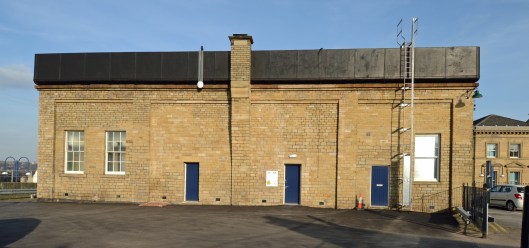
I’m taking a break from working from home to base myself at ACoRP’s water tower office at Huddersfield station today as I’m being interviewed about my ‘Cycle India’ trip for their e-magazine ‘Train Online’, which will be appearing shortly.

DG138747. ACoRP Office. Huddersfield. 17.2.13.

Not bad for an office, is it?

It’s good to be able to stretch my (metaphorical) legs as the bad weather has left me a little ‘stir crazy’. My Indian adventure already feels like a dream, despite it only being a couple of weeks ago. At least the snow’s melting and the thermometer’s reaching a balmy 5 degrees today!

Sadly, there’s little of interest to photograph at the nearby station. The Colne valley route sees hardly any daytime freight traffic nowadays, partly due to the intensity of passenger services but also because most traffic has vanished. The ‘binliner’ services from Manchester which were the backbone of daytime freight traffic have ceased to run and the replacement service from Knowsley (Liverpool) to Wilton traverses the Calder Valley instead. The only regular service, the afternoon Leeds Hunslet to Tunstead cement tanks runs ‘as required’ on a Thursday – which means it’s unpredictable.

DG288370. 66620. Huddersfield. 5.1.18

On the 18th January this year, Freightliner’s 66620 heads West through Huddersfield with the only regular daytime freight service through the town, the Hunslet (Leeds) to Tunstead empty cement tanks.

Whilst there’s little freight, there’s a regular diet of Transpennine Express Class 185s shuttling across the Pennines, plus Northern 142s, 144s, 150s, 153s, 155s and 158s (and the occasional 156) pootling to and from Manchester, Leeds, Sheffield and Wakefield. A few Manchester services are extended to ‘exotic’ destinations farther afield such as Wigan and Southport, whilst one evening service via the Penistone line to Sheffield pitches up at Retford (of all places).

DG115650. 142050. Huddersfield. 20.6.12.

Soon to be heading for the scrapyard, a Northern Class 142 ‘Pacer’ leaves Huddersfield for Wakefield on the 20th June 2012

The railscene at Huddersfield will be considerably enlivened later this year when TPE start running Class 68’s hauling new Mk5 coaches built by CAF in Spain, adding yet another chapter to Yorkshire’s railways. Electrification of the route is due to begin in 2019 which will have a massive impact on the local network, so there’s lots to look forward to (and document) over the next few years.

Basing myself in a large town like Huddersfield’s a bit of a luxury for me when I’m ‘office based’ as it gives me the opportunity to nip out at lunchtime and shop without travelling far. As this is a busy university town there’s a better selection of shops than in humdrum Halifax. It also alters the demographic because there’s far more younger faces around during the day. I nipped out earlier to visit the indoor Queensgate market. I love the variety of Northern markets. Queensgate is a modern example, opened in 1970 it was built with a bespoke roof system of 21 asymmetric curved shells. The design allows maximum light into the market and it’s considered to be the best example still standing of a retail market from the 1960s-70s. Grade 2 listed, it’s a interesting mix of traditional and modern. Fruit and veg and butchers stalls rub shoulders with nail bars and Thai cafes, whilst shoe shops are cheek by jowl with vaping supplies.

20180320_121643

Inside Queensgate market.


20180320_121946

Thai food’s a popular option in a few markets in Yorkshire.

Unlike some towns, the number of empty shops hasn’t hit epidemic proportions, gutting. I passed several vacant properties which were being outfitted for new tenants, keeping the vibrancy of the centre alive. Long may that trend continue in these troubled times. Of course, there’s an irony in this. Without immigration, there’d be a damned sight more empty shops. A significant proportion of convenience stores are run by people from Europe or Asia – as are many restaurants and fast food outlets. How they’ll fare in a post-Brexit economy without freedom of movement is a question many would rather not ask…

Whilst I was on my travels I popped into the station and found a cheese shop had set up store in readiness for the flood of homeward bound commuters. I normally visit on a Wednesday to purchase some of the artisan bread for sale, but I was sorely tempted to sample some of today’s wares. I have to be careful as my wife can’t eat cheese, so for me it’s a rare treat.

Now I’m back at work, where (as is often the case) my workload hasn’t gone to plan and I’ve been diverted into trawling my archives for a suitable cover for a magazine! Let’s see if I can come up with something suitable…

The ‘Beast from the East’ has arrived…

27 Tuesday Feb 2018

Posted by Paul Bigland in Railways, The Railway Children, Travel, Weather

≈ Leave a comment

Tags

Railways, The Railway Children, Travel, Weather

This morning we woke up to a covering of snow across the Calder Valley, whilst the media have been going into overdrive about the ‘Beast from the East’ as the weather front’s been christened, the effects are no more serious than anything we’re usually used to seeing in Yorkshire. Here’s the view from our bedroom, looking across the valley.

20180227_072236

Not too beastly (yet)…

I’ve had a quick look at real-times for our local train services where (apart form a couple of very early cancellations) everything seems to be running normally and to time. Of course, the forecast reckons that there’s more snow on the way, so we’ll have to see how things pan out.

I’m heading down to London today to attend tonight’s George Bradshaw address at the IMechE where Network Rail Chairman Sir Peter Hendy will be speaking. I’ll be staying down tonight and coming back tomorrow so this blog will get updated as I travel. The contrast between North and South should be interesting. The South tends to go into a panic over a bit of snow, whilst up here you can tell when it’s bad – the posties stop wearing their shorts.

I’ve a lot of travelling to do this week as I’ll be heading back to London on Friday to fly out to India for the Railway Children ‘Ride India’ charity cycle challenge (it’s a wonderful cause, so please help me to help them by sponsoring me via this link). I’ll be blogging from India when I can.

Meanwhile, enjoy the snow!

Whilst walking to the station I spotted this and wondered what story it tells…

A Yorkshire Cinderella?

Heading South on the trains has been fun, whilst there was a lot of snow around home, the more Easterly I got the thinner the snow was! By the time I arrived at Doncaster there was hardly anything on the ground and the station was bathed in bright sunshine. A pair of snowploughs sat, forlornly, in the sidings as they clearly weren’t needed. All changed by the time we reached Newark because then we started hitting the blizzards. The rest of the journey has been a real mix and match: Blue skies and fields with fresh dusting of snow contrasting with leaden skies and almost white-out conditions as the tendrils of snow sweep in. Then just as rapidly as it arrives, it clears and we hit a patch where houses and fields are untouched, they’re little green oasis in an otherwise monotone landscape. It’s lovely to watch from my grandstand seat in a nice, warm train!

20180227_125000

Fields North of Peterborough after a fresh coating of snow.

UPDATE: 16:40.

Now I’m in Central London before heading off to the Bradshaw address. The capital’s had a dusting of snow but nothing like many places which is hardly surprising as the capital’s always a degree or two warmer. On thing I did notice was this lovely ‘tiger-stripe’ pattern on the roof of St Pancras station a few minutes ago.

DG290688

I’ll see if I can add a couple of pictures from tonight’s address later…


The end is nigh for diesel trains? Don’t you believe it…

12 Monday Feb 2018

Posted by Paul Bigland in Jo Johnson MP, Politics, Rail electrification, Rail Investment, Railfreight

≈ 1 Comment

Tags

Jo Johnson MP, Politics, Rail Investment, Railfreight, Railways

Today Transport Minister Jo Johnson MP made a policy announcement on the future of the UKs diesel train fleets – sort of, ish…

Because the policy is more of an aspiration, not a firm commitment. Johnson told the BBC that “I would like to see us take all diesel-only trains off the track by 2040. If that seems like an ambitious goal, it should be and I make no apology for that. After all we’re committed to ending the sales of petrol and diesel cars by 2040. If we can achieve that, then why can’t the railway aspire to a similar objective?” Once doesn’t have to be a Professor of English to spot the caveats in that.

The inherent irony here is that his Government has recently scaled back electrification of routes like the Midland Mail Line (MML) and has ordered many more diesel-electric bi-mode trains like the Hitachi Class 802s for GWR. Bi-modes are the worst of all worlds as they’re hardly energy efficient, OK, they may run on electric power for most of the trip, but then they’re carting around a lot of dead-weight in diesel engines and fuel.

This also begs questions about the 55 new CAF built Civity DMUs which are on order for Northern. Can these be converted to EMUs and (even if they can be) what does this do for the economics of the Northern franchise? Elsewhere, Porterbrook leasing are converting all-electric Class 319 trains to bi-mode by fitting them with diesel engines. The rolling stock leasing companies must be scratching their heads right now. They’ve got 1000s of older EMU vehicles coming off-lease in the next few years but without an extension of electrification, there’s nowhere to run them! Instead, we’re going to the halfway-house of bi-mode.

DG288445. 800023. Reading. 16.1.18

GWR are currently taking delivery of these Hitachi Class 800 bi-modes to replace their HST fleet. Does the Government seriously expect the MTU diesel engines to be redundant in 22 yrs time, and if so – how?

Whilst the announcement (or should that be ‘thinking aloud’) will be welcome news for companies like Alstom who have developed a Hydrogen powered train, it leaves more questions than it answers.

There’s one very noticeable omission in the ‘plan’: Freight.

The majority of the UKs railfreight is moved by powerful ‘go anywhere’ diesel locomotives. How will they be replaced by 2040 without electrifying the main freight routes? As many depots and sidings aren’t electrified train builders have fitted ‘last mile’ diesel powerpacks to electric locos. Realistically, can these be replaced by hydrogen or battery power by 2040? And what about the miles of freight lines where diesel operation’s the only viable option? Freight operators exist on very small margins as it is. How would this proposal affect the economics of their operations?

DG246897. Siemens Vectron production line. Munich. Germany. 27.6.16

Siemens Vectron locomotives under construction in Vienna in 2016. These modular locos are can be built as diesel or electric. The version in VR livery is an electric fitted with a ‘last mile’ diesel power-pack.

The current workhorse of UK freight operators is the Class 66. Without widespread electrification, what else could deliver the power at rail needed to move heavy freight trains hundreds of miles at up to 75mph? A Canadian plan for a hydrogen powered locomotive shows that it would be two units, with the second carrying the hydrogen. Doubling the size of the locomotive increases maintenance costs and potentially leads to shorter trains due to the capacity of sidings and loops (also increasing costs).

DG279645. 66206. Golant. 21.8.17

A DB Cargo Class 66 hauls empty china clay wagons away form the harbour at Fowey, Cornwall.

So, I remain sceptical about the ‘plan’ as I don’t see a firm policy or long-term strategy from DfT or Ministers that will allow this to happen, which is a shame as Johnson’s aim is laudable. Recently, I blogged about the change to air quality at Paddington station which was evident now the HSTs and DMU’s were being replaced by electric traction. Sadly, with diesel bi-modes and back-tracking on electrification we seem to be going in the wrong direction.


The stop Hs2 campaign’s as dead as a Dodo.

31 Wednesday Jan 2018

Posted by Paul Bigland in Anti Hs2 mob, Hs2, Rail Investment, Rail Moderinsation, StopHs2

≈ 1 Comment

Tags

Hs2, Railways, StopHs2

As expected, yesterday’s vote on the 2nd reading of the Hs2 Hybrid bill for phase 2a from the West Midlands to Crewe was (to put it mildly) a walkover. The bill passed with a crushing result of 295 Ayes and just 12 Noes. 12! Remember that 41 MPs voted against phase 1 of Hs2, which shows how much the anti campaign’s collapsed. Many of the usual suspects (Chery Gillan and Michael Fabricant being the most prominent) voted no but some familiar names abstained, including Labour’s Kelvin Hopkins, Barry Sheerman, Dennis Skinner and Kier Starmer. This was despite Sheerman speaking during the debate and saying how much he opposed Hs2 – but not enough to vote against it, which makes him as much use as a chocolate fireguard! What’s interesting is how all the usual Labour antis abstained this time but Sir Kevin Barron, the MP for Rother Valley voted (for the first time) against Hs2. This suggests to me that the Labour Party hierarchy gave him a free pass as his is the only constituency on the phase 2 route to Leeds that has any real opposition to Hs2. When I crunched the numbers this morning 1382 constituents had signed the Stop Hs2 petition. That’s still only 1.46% of course, but the nearest to it is Bolsover with a measly 0.43%!

In another twist, the antis favourite Tory leadership candidate (who was supposed to oppose Hs2), Jacob Rees Mogg actually voted for it! Not only Mogg did a volte face. So did seven other MPs from the 41 who’d voted against Phase 1. They were;

Steve Baker (High Wycombe)

Bob Blackman (Harrow Est)

Peter Bone (Wellingborough)

Chris Chope (Christchurch)

Mark Pawsey (Rugby)

Chris Pincher (Tamworth)

John Redwood (Wokingham)

What happened politically was the Labour party abstained, knowing full well the Tory’s had the numbers to carry the bill through with a large majority without them – although 13 Labour MPs (many of whom have held transport briefs) did support the bill. There were some interesting patterns too, all of the 13 MPs on the remaining Phase 2 route to Manchester abstained, as did 14 of the 22 on the phase 2 route to Leeds, whilst 6 voted yes and only 2 no.

Of course Stophs2 tried some desperate spin, whinging that over half of MPs were absent or abstained, but this ‘look over there’ tactic couldn’t hide the fact many of those abstaining were their suporters!

Worse was to come when it became evident that some MPs targeted by ‘action’ groups in Yorkshire & Derbyshire had voted to build the line. Broxtowe’s Anna Soubry and Erqewash’s Maggie Throup being examples! Whilst articulating their constituents concerns it was obvious neither MP was afraid of the tiny but noisy anti Hs2 ‘action’ groups in their constituencies. Both MPs know more constituents will benefit from the opportunities Hs2 will bring rather than suffer.

This leaves the Stop Hs2 campaign as dead as a dodo. Nationally, it’s disintegrated. Hs2 Action Alliance gave up years ago and the ‘Joe & Penny’ show (aka StopHs2) is a joke with Rukin increasingly absent. Essentially, it’s Penny whinging about Hs2 via the internet from her home in Bournemouth!

It’s obvious the local action groups attempts to frighten MPs into supporting them have either failed or backfired, which really does beg the question – what’s the point anymore?

Phase 2a is now a done deal. Nothing short of a miracle can stop its progress to Royal Assent despite the fantasy beliefs of of a few antis who don’t understand the Parliamentary process on Hybrid bills. What’s crystal clear is that cross party support for Hs2 is as stong as ever. Unless this breaks down…Another sign of their failure is the fact only 188 petitions have been received on Phase 2a. Contrast that with the 1,925 which were received in a futile attempt to bog down Phase 1. I’ve blogged about the 188 received here.

The only lobbying of MPs is being done by the local ‘action’ groups but tactically they’re inept. In many cases ‘lobbying’ means trying to throw their non-existant weight around and blustering rather than admitting that they can’t stop Hs2 & focussing on discussing compensation and mitigation instead.

From some of the posturing and levels of denial I’ve seen on Twitter today it’s clear the penny hasn’t dropped with some antis yet. For some it never will. This presents the remaining ‘action’ groups with a problem. Either they ditch these people or the ship goes down with all hands. Will there now be an outbreak of common-sense on the phase 2 route to Leeds (the only one left with active groups)?

Whatever way, it’s obvious the national StopHs2 campaign exists in name only.

2019 is the start of the end for Pacer trains, so here’s a pictorial review.

12 Friday Jan 2018

Posted by Paul Bigland in Down memory lane, Pacers, Rail Investment, Railways

≈ 10 Comments

Tags

Down memory lane, Pacers, Rail Investment, Railways

*NOTE*. This blog was updated with extra photos and notes on January 22nd and August 25th 2018 and again on December 4th 2019.

I’m not intending to go into a full history of the BR built Pacer trains as that’s been done many time before. Instead I’m going to go through my archive to illustrate their life and times whilst offering some personal recollections.

Pacers have been a feature of the railway scene since the mid 1980’s but now their time’s drawing to a close. The first sets will go off-lease after the May timetable change, then there’ll be a steady decline in the numbers until – one day – they’ll all be gone (which is due to be by 2020). Whilst disliked by many passengers (especially commuters) they’re not universally unpopular. Many train crews I’ve spoken to actually admit to liking them! I’ve a soft spot for them too – mainly because they allow you such good views of some of the scenic lines they’re used on. In that respect they’re far superior to the Class 150 fleet. Pacers have also earned their place in history. There’s little doubt that they helped save many a branch line from closure back in the 1980s so we should be grateful for them in some ways. Admittedly, they were far less fun when they were doing their maximum speed on jointed track. I’ve travelled on them coming back from Sheffield  to Huddersfield  several times when they were more like bucking bronco’s than nodding donkeys!

I’ve no recollection of travelling on the original narrow-bodied Class 141 Pacers, but I do remember encountering many of them during my travels around Yorkshire back in the 1980’s-90’s – especially around Leeds (they were based at the city’s Neville Hill depot) and Sheffield. Here’s a few memories.

01489. 141113. Sheffield. 16.9.90.

141113 stabled at Sheffield on the 16th September 1990. The unit’s sporting the West Yorkshire PTE livery that was applied to the 141s after they were rebuilt. This particular unit survives today. It’s preserved by the Llangollen Railcar Group.

13306. 55541 from 141120. Wolverton.15.12.03

Vehicle 55541 from unit 141120 awaits scrapping at Wolverton works on the 15th December 2003. It was cut up the following year.

Over the years the Pacers have carried a variety of liveries. There’s also a wide variation in their interiors and other detail differences. Here’s a look at a  few of them.

00487. 142015. Southport. 17.2.90.

142015 at Southport on the 17th February 1990. It’s still wearing the mock GWR livery that was applied to members of the fleet which had been operating in Cornwall and Devon. Branded as ‘skippers’ they were unsuited to the sharp branch line curves so were eventually transferred North. Unusually, the unit is seen on the Wall side siding. This has a pit, which suggests the set needed inspecting.

01250. 142002. Southport. 27.5.90.

142002 at Southport on the 27th May 1990. Its wearing the orange and brown livery and branding of Greater Manchester PTE.

02559. 142516. lime St. 17.6.91.

‘Skipper’ liveried 142516 at Liverpool Lime St on the 17th June 1991. I’m trying to remember why some of these units were briefly renumbered in the 1425xx series. If I remember correctly they were units allocated to Heaton depot in Newcastle.

02125. 142059. 1220 to Mcr. Blackburn. 3.4.91.

This scene is unrecognisable today! 142059 stands at the old Lancashire and Yorkshire railway station at Blackburn on the 3rd April 1991. 059 is one of two Class 142s to have been scrapped due to accidents. Later that year it ran-away and collided with the buffer stops at Liverpool Lime St, which led to it being withdrawn.

06602. 142020. Middlesborough. 30.4.97.

142020 along with a ‘Skipper’ liveried set stands at Middlesbrough on the 30th April 1997. It’s wearing Tyne and Wear as well as Regional Railways branding.

11551. FNW Class 142 passes over the Leeds and Liverpool canal. Wigan. 28.11.2002

Operated by First NorthWestern but wearing a revised Greater Manchester PTE livery, an unknown 142 passes over the Leeds and Liverpool canal on the approach to Wigan Wallgate station on the 28th November 2002.

DG05344. 142044. Hoscar. 9.2.06.

142044 speeds past Hoscar on the Southport-Wigan line on the 9th February 2006. This unit carries Merseyrail livery. These sets had been refurbished with a new interior and better destination blinds. The small bus-type ones were replaced with a much larger dot-matrix type.

DG05341. Northern 142. Hoscar. 9.2.06.

Also seen at Hoscar on the same day in 2006 was this First NorthWestern, blue and gold liveried Class 142

DG08772. 142015. Newcastle upon Tyne. 12.12.06.

On the 12th December 2006 Arriva liveried 142015 crosses the Tyne at Newcastle

DG10626. Northern class 142. Burnley. 25.5.07.

A Merseyrail liveried 142 crosses the Burnley viaduct whilst working a Colne to Blackpool South service on the 25th of May 2007

DG12553. Northern 142. Parton. 22.9.07.

An Arriva liveried 142 passes the Cumbrian coast at Parton on the 22nd September 2007. This beautiful line is a delight to explore on a Pacer because of their big windows and all round views.

DG45979. Interior. 142052. 12.3.10.

The refurbished interior of Merseyrail’s 142056, showing the low-backed replacement for the original bus-style bench seats and the new PIS screen at the back of the cab bulkhead.

DG12880. 142014. 142094. Wigan Wallgate. 2.10.07.

142014 (with white numbers) and 142094 pass at Wigan Wallgate on the 2nd October 2007

DG192563. Northern Class 142. Edale. 7.9.14.

A Northern 42 heads through the beautiful Hope valley at Edale whilst working a service from Sheffield to Manchester Piccadilly on the 7th September 2014.

DG18202. 142064. Dawlish. 4.8.08.

142064 leads a classmate along the beach at Dawlish on the 4th August 2008. A dozen Class 142s were loaned to First Great Western from Northern in 2007. The last ones returned in 2011. All were based at Exeter, which was nicknamed ‘the Donkey Sanctuary’ by some FGW staff.

DG55897. FGW 142 and Lympstone. 22.6.10.

A FGW 142 passes the Swan Inn at Lympstone on the Exmouth branch on the 22nd June 2010.

DG56173. 142001. Exeter Riverside. 23.6.10.

The first built Class 142 was one of those loaned to First Great Western. Here it is climbing the bank between Exeter St David’s and Exeter Central on the 23rd June 2010

DG199592. 142038. Summit tunnel. 31.10.14.

142038 is about to enter the Summit tunnel on the Calder Valley line on the 31st October 2014

DG214110. 142029. 150137. Todmordon. 17.5.15

A Class 150 and 142 in multiple are seen from across the rooftops in Todmordon whilst working through the Calder Valley on the 17th May 2015.

DG14628. Northern conductor at work. 29.2.08.

A Northern conductor prepares to open the doors on a Pacer

A good place see to find Pacers nowadays are the lines from Manchester Piccadilly out to New Mills Central and Rose Hill Marple. Not only is it an intensive service but services are usually operated by pairs of Pacers like this.

DG305742. 142033. 142057. Romily. 21.8.18

142033 and 142057 leave Romiley with a service to Manchester Piccadilly

I’ve blogged about the lines in detail here.

As well as the British-Leyland/BREL Class 142s, BR also purchased a different design from Andrew Barclay. These were based on an Alexander bus body and were built at Kilmarnock between 1985-86. They were originally put into service in the North-East before being transferred to South Wales and the South-West. After privatisation the Class was split between Arriva Trains Wales and Wessex trains (later First Great Western)

DG277275. 143601. Cardiff Queen St. 24.7.17

First of the class 143601, sporting the original Arriva Trains Wales livery leaves Cardiff Queen St for Cardiff Central on the 24th July 2017.

DG277341. 142076. 143625. Cardiff Queen St. 24.5.17

Two varieties of Pacer pass at Cardiff Central on the 24th May 2017. Leyland/BREL 142076 in old Arriva livery and Barclay/Alexander 143625 in revised Arriva livery.

DG10460. 143603. Standish Jn. 2.5.07.

On the 2nd May 2007 143603 passes Standish Junction whilst working a Gloucester to Swindon service.

DG19110. 143621. Bristol Temple Meads. 3.10.08.

On the 30th October 2008 a rather tatty 143621 approaches Bristol Temple Meads. Many 143s had been given different advertising liveries. In this case ‘Visit Bristol’ – although I’m not entirely sure the train or the state of it was a great  advert for the city!

DG249998. 143619. Copplestone. 15.8.16

143619 Calls at Copplestone on the Barnstaple branch whilst en-route to the end of the line on the 15th August 2016. By this time all the units were in the attractive First Great Western ‘Dynamic lines’ livery (with the lines made up of place names on the network).

Two of the Class 143 sets gave themselves Viking funerals back in the early 2000’s, these were sets 143613 and 143615. The effects of the fires were rather spectacular, as these two pictures show.

DG04501. 143613. Crewe works open day. 10.9.05

The fire had been so severe on this car of set 143613 that the underframe has buckled and drooped. The unit was at Crewe works and could be viewed at the open day on the 10th September 2005.

DG04505. 143615. Crewe works open day. 10.9.05

143615, bearing Valley lines livery was the other member of the class that self-combusted. It’s also seen at Crewe works open day in 2005.

The final batch of Pacers are the Class 144. These were Alexander bodies on BREL underframes. They now operate across Yorkshire, especially around Leeds which is where they’re based. At one time they did used to have diagrams which took them across the border into Lancashire.

DG204045. 144022. Huddersfield. 6.1.15

Northern liveried 144022 crosses Paddock viaduct in Huddersfield whilst working a Huddersfield to Sheffield (via Penistone) service on the 6th January 2015

DG160605. 142091. 142018. 144012. Huddersfield. 22.9.13.

A trio of Pacers stabled for the weekend in the yard at Huddersfield. Along with their Class 15x brothers, the units work services to Sheffield, Leeds, Bradford and Wakefield

DG83479. 144015. Neville Hill. 3.6.11.

144015 sits inside Leeds Neville Hill depot on the 3rd June 2011. The fleet are based at and maintained by the depot.

DG12743. Northern 144s. Halifax. 25.9.07.

A pair of Class 144 Pacers arrive at Halifax, West Yorkshire on the 25th September 2007.

DG255134. Interior. 144021. 15.9.16

High backed Richmond seating as fitted to refurbished Pacer 144021, seen on the 15th September 2016

DG255574. Driver and passengers. Sheffield.16.9.16

A driver waits to take 144023 on a service from Sheffield on the 16th September 2016

Of course, no mention of the Pacers would be complete without a look at the sole 144e (E for Evolution) number 144012. This unit was rebuilt by Porterbrook at the RVEL workshop in Derby back in 2015. Here it is in service at Huddersfield in 2016.

DG242334. 144012. Huddersfield. 8.4.16

I wrote about the launch and published a series of internal views of the unit in this blog

UPDATE: 25th August 2018

The letting of the new Welsh rail franchise has spelled the death knell of Pacers in Wales. It’s been announced that they’ll be replaced from next year by older DMUs which will be cascaded to the franchise from elsewhere.

Update: 12th August 2019

The first of the Pacers has been ceremonially withdrawn today. 142005 was adorned with banners announcing its ‘retirement’ and shown off to the press at Manchester Victoria before working a final service to Stalybridge. Expect many more to follow now…

Update 4th December 2019.

Yesterday the first Pacer began its final journey to the scrapyard. 142005, which was withdrawn in August become the first Pacer to meet this fate. It’s being moved by road to Booths, Rotherham in two parts. It’s seen here at Rainford Junction whilst working an Ormskirk to Manchester Victoria service along with classmate 142051 on the 27th September 2018.

DG309910. 142005. 142051. Rainford. 27.9.18crop

A look at Huddersfield station

05 Friday Jan 2018

Posted by Paul Bigland in Architecture, Food and drink, History, Huddersfield, Railways, Travel

≈ 1 Comment

Tags

Food and drink. Pubs, History, Huddersfield, Railways, Travel

Don’t ask me about best laid plans, mine seem to change all the time! It’s one of the beauties and frustrations of being freelance! Today I’ve found myself working from the ACoRP (Association of Community Rail Partnerships) water tower cum office in Huddersfield which is part of the superb grade 1 listed station. How’s this for a place to work?

DG138747. ACoRP Office. Huddersfield. 17.2.13.

The water tower stands in what’s now a car park but in the 1960’s it was a locomotive stabling yard, complete with a turntable which was situated right outside the building.

I love Huddersfield’s architecture. Well, most of it anyway. George Square outside the station is surrounded by a selection of stunning Victorian buildings that make a fantastic backdrop for the annual food and drink festival which is held over 4 days in August.

DG160608. Wilson statue outside the station. Huddersfield. 22.9.13..JPG

The grand entrance to Huddersfield station seen from the square, complete with statue of former Labour Prime Minister Harold Wilson, who was born in the town in 1916


DG60541. Crowds. Huddersfield food drink festival. 14.8.10.

The food and drink festival in the square outside the station. The building on the left is the (closed) George Hotel which was the place where Rugby league was born.

The station’s a real community hub. Not only is it the gateway to the town, it’s also a destination in its own right. It’s most well-known for its two pubs (The Head of Steam and the Kings Head) and Felix, the station cat (who even has its own Facebook page). But there’s a lot more too – as well as having a warm and welcoming café on the island platforms which does a mean bacon teacake (as they call them in these parts) the lobby hosts a range of food providers on different days of the week. For example, on Wednesdays you can buy artisan breads from this stall. The area also doubles as an exhibition space for local artists.

DG176254. Handmade bakery selling loaves at Huddersfield station. 16.4.14

Here’s a look inside the Kings Head pub on the Leeds end of the station. It’s undergone a fantastic restoration job in the past few years, which has exposed the wonderful ceiling and reopened side rooms. The work’s led to it winning a Railway Heritage award.

DG283267. Interior of the Kings Head on the station. Huddersfield. 4.10.17

So, what’s not to like? Trains, food, beer and architecture. If you’ve never been to Huddersfield station before – why not pay a visit? But beware, because it’s on the Rail Ale trail it can get extremely busy at weekends – and if Huddersfield Town are playing at home it can be bonkers, so I’d recommend a weekday if you can make it.

2018 and the usual rail fares furore…

02 Tuesday Jan 2018

Posted by Paul Bigland in Rail fares, Rail Investment, Railways, Uncategorized

≈ 1 Comment

Tags

Rail fares, Rail Investment, Railways

Normality has resumed after the New Year holiday. Train services are running as per the usual timetable (with the odd exception) and some of the major investment projects carried out over the holiday period have borne fruit. London Bridge station’s seen the last 5 rebuilt platforms open, The GWML has seen electric train services extended from Reading to Didcot and more works been completed on the EGIP project in Scotland. Oh, and we’ve had the annual fare increase kick-in, which has produced the usual gush of uninformed comment and politicking over railway nationalisation from the Labour party.

What’s lost in this mass of misinformation is the facts around the fare increases. They’re calculated on the basis of the Retail Price Index – which has shot up in the part year due to Brexit and the fall in the pound leading to inflation. Also, let’s not forget that this isn’t ‘profiteering’ by the Train operators, but a rise in fares regulated by the Government. It’s a political decision. In fact, I’m told the unregulated fares (those set by the train operators themselves) have risen by less than the 3.6% regulated fares have.

I’ve got to give a hat-tip to @DirectorSERG for supplying this handy little chart which details BR fare increases from 1972 until 1994.

BR fares increases

As you can see, the majority were all well above the rate of inflation and there were some eye-watering ones of 50.7% in 1975 and 42.1% in 1980. It’s a rather useful antidote to the rose-tinted views of some that BR = good, Privatisation = bad. Quite how nationalisation is meant to cut rail fares whilst guaranteeing the levels of investment we’re seeing in the railways is a question Labour don’t seem too keen on answering.

Meanwhile, it’s worth remembering that the TOC’s aren’t exactly ‘fat cats’. Their margins are around 3%, which compares very favourably with other state-owned railways like the Netherlands, which would expect a 7% return.


← Older posts
Newer posts →

Recent Posts

  • 4th September picture of the day…
  • 1st September picture(s) of the day…
  • Bits and bobs from Southport…
  • A visit to the HS2 Duddeston viaduct.
  • 20th August picture of the day…

Recent Comments

Charles Esteppé's avatarCharles Esteppé on Southport: The 12th July…
Ian Dinmore's avatarIan Dinmore on 5th July picture of the d…
Andy Davies's avatarAndy Davies on Rolling blog. Capital times. D…
Andy's avatarAndy on Rolling blog. Three peaks by r…
Rob Shepherd's avatarRob Shepherd on Political plus ça change…

Archives

  • September 2026
  • August 2026
  • July 2026
  • June 2026
  • May 2026
  • April 2026
  • March 2026
  • February 2026
  • January 2026
  • December 2025
  • November 2025
  • October 2025
  • September 2025
  • August 2025
  • July 2025
  • June 2025
  • May 2025
  • April 2025
  • March 2025
  • February 2025
  • January 2025
  • December 2024
  • November 2024
  • October 2024
  • September 2024
  • August 2024
  • July 2024
  • June 2024
  • May 2024
  • April 2024
  • March 2024
  • February 2024
  • January 2024
  • December 2023
  • November 2023
  • October 2023
  • September 2023
  • August 2023
  • July 2023
  • June 2023
  • May 2023
  • April 2023
  • March 2023
  • February 2023
  • January 2023
  • December 2022
  • November 2022
  • October 2022
  • September 2022
  • August 2022
  • July 2022
  • June 2022
  • May 2022
  • April 2022
  • March 2022
  • February 2022
  • January 2022
  • December 2021
  • November 2021
  • October 2021
  • September 2021
  • August 2021
  • July 2021
  • June 2021
  • May 2021
  • April 2021
  • March 2021
  • February 2021
  • January 2021
  • December 2020
  • November 2020
  • October 2020
  • September 2020
  • August 2020
  • July 2020
  • June 2020
  • May 2020
  • April 2020
  • March 2020
  • February 2020
  • January 2020
  • December 2019
  • November 2019
  • October 2019
  • September 2019
  • August 2019
  • July 2019
  • June 2019
  • May 2019
  • April 2019
  • March 2019
  • February 2019
  • January 2019
  • December 2018
  • November 2018
  • October 2018
  • September 2018
  • August 2018
  • July 2018
  • June 2018
  • May 2018
  • April 2018
  • March 2018
  • February 2018
  • January 2018
  • December 2017
  • October 2017
  • September 2017
  • August 2017
  • July 2017
  • June 2017
  • April 2017
  • March 2017
  • February 2017
  • January 2017
  • December 2016
  • November 2016
  • October 2016
  • September 2016
  • July 2016
  • June 2016
  • May 2016
  • April 2016
  • March 2016
  • February 2016
  • January 2016
  • December 2015
  • November 2015
  • October 2015
  • September 2015
  • August 2015
  • July 2015
  • June 2015
  • May 2015
  • April 2015
  • March 2015
  • February 2015
  • January 2015
  • June 2013

Categories

  • 'Green' madness
  • 'Think Tanks'
  • 144e
  • 2005 London bombing
  • 2017 General election
  • 3 peaks by rail
  • 3 Peaks by ral
  • 51M
  • 7/7
  • Abandoned railways
  • Abu Dhabi
  • ACoRP
  • Adam Smith Institute
  • Adrian Quine
  • Advertising
  • Air Travel
  • Aircraft
  • Airports
  • Airshows
  • Allan Cook
  • Alstom
  • Amsterdam
  • Andrea Leadsom MP
  • Andrew Gilligan
  • Andrew Haylen
  • Andy Burnham MP
  • Anti Hs2 mob
  • AONBs
  • Arambol
  • Architecture
  • Art
  • Australia
  • Avanti West Coast
  • Bali
  • Bangkok
  • Bank holidays
  • Barrow Hill
  • beer
  • Belgium
  • Bereavement
  • Berlin
  • Bigotry
  • Birmingham
  • Blackpool
  • Blists Hill
  • Blue passports
  • Boris Johnson MP
  • Bradford
  • Brazil
  • Brexit
  • Brighouse
  • Brighton
  • British Railways
  • British Railways (BR)
  • Buckinghamshire
  • Buses
  • Byline media
  • Calder Valley
  • Calderdale
  • Cambridge
  • Cambridgeshire
  • Canals
  • Cardiff
  • Carillion
  • Carolyne Culver
  • Censorship
  • Charities
  • Cheryl Gillan MP
  • Cheshire
  • Chester
  • China
  • Chris Packham
  • Claire Perry MP
  • Class 08
  • Class 155
  • Class 180
  • Class 313
  • Class 314s
  • Class 317
  • Class 319
  • Class 320
  • Class 321
  • Class 323
  • Class 345
  • Class 365
  • Class 455
  • Class 456
  • Class 507
  • Class 508
  • Class 60s
  • Class 91
  • Climate Change
  • Communications
  • Community
  • Community rail
  • Community Rail Network
  • COP26
  • Corbynwatch
  • Coronavirus
  • Coventry
  • Covid 19
  • CP5
  • Crap journalism
  • Crazy anti Hs2 campaigner of the week
  • Crazy kippers
  • Crewe Hub
  • Crossrail
  • Cuba
  • Cumbria
  • Customs
  • Cyberattacks
  • Cycle India
  • Cycling
  • Dame Bernadette Kelly
  • Dawn
  • Democracy
  • Denmark
  • Derbyshire
  • Desiro City
  • Devon
  • Dewsbury
  • Diary
  • Dispatches
  • Doha
  • Donald Trump
  • Doomed
  • Dorset
  • Down memory lane
  • Duxford
  • East Lancashire Railway
  • East Midlands Railway franchise
  • East Midlands Trains
  • East-West rail
  • Easter fairy stories
  • ECML
  • Economic illiteracy
  • Economics
  • election2015
  • Elon Musk
  • Engineering
  • Environment
  • Essex
  • Eurostar
  • Euston
  • Extinction Rebellion
  • Fake News
  • Festivals
  • Film and TV
  • Flag shaggers
  • Flooding
  • Flora and Fauna
  • Food
  • Food and drink
  • Foot in mouth
  • Gardening
  • GBRf
  • GCRE
  • General election
  • General election 2019
  • General election 2024
  • Georgetown
  • Germany
  • Glasgow
  • Glossop
  • GNGE
  • GNRP
  • Goa
  • Goole
  • Grand Central trains
  • Grant Shapps MP
  • Great Western Railway
  • Greater Anglia franchise
  • Greater Manchester
  • Greece
  • Green issues
  • Green madness
  • Green Party
  • Grok
  • Gt Missenden
  • GTR
  • Guido Fawkes
  • GWML
  • GWR franchise
  • Gwyll Jones
  • Halifax
  • Hampshire
  • Harvil Rd Hs2 protest
  • Harz railway
  • Heathrow 3rd runway
  • High Speed 1
  • High Speed UK
  • History
  • Hitachi
  • Hong Kong
  • House of Lords
  • HS North
  • Hs1
  • Hs2
  • Hs2 Bow Group
  • Hs2 petitions
  • Hs2 Phase 2B
  • Hs2 to Crewe
  • Hs2aa
  • HS2Rebellion
  • HSUK
  • Huddersfield
  • Humberside
  • Humour
  • Hurricane Ophelia
  • Huw Merriman MP
  • Hypocrisy
  • I love my job
  • Imperial College London
  • Imperial War Museum
  • India
  • Indonesia
  • Infrarail
  • Innotrans
  • Internet
  • Iolo Williams
  • iran
  • Ireland
  • Islamophobia
  • Istanbul
  • Jacob Rees Mogg
  • jakarta
  • Jeremy Corbyn
  • Jeremy Corbyn MP
  • Jo Johnson MP
  • Joanne Crompton
  • Joe Rukin
  • John McDonnell MP
  • John Poyntz
  • Johnathan Bartley
  • Journalism
  • Kanchanaburi
  • Kemi Badenoch
  • Kent
  • Kuala Lumpur
  • Labour election
  • Lancashire
  • Laos
  • Law and order
  • Lazy journalism
  • Leicestershire
  • Levelling up
  • Liam Halligan
  • libel
  • Lilian Greenwood MP
  • Lincolnshire
  • Liverpool
  • LNER
  • Local elections
  • Local elections 2018
  • Lockdown
  • London
  • London Underground
  • Lord Berkeley
  • LRT
  • M62 motorway
  • Major Projects Authority
  • Malaysia
  • Manchester
  • Manchester Airport
  • Manchester Victoria
  • MAPA
  • Mark Keir
  • Marketing
  • Martin Tett
  • Mediawatch
  • Melton Mowbray
  • Memory Lane
  • Merseyrail
  • Merseyside
  • Michael Dugher MP
  • Michael Fabricant MP
  • Mid Cheshire against Hs2
  • Miscellany
  • Modern Railways
  • Monorails
  • Music
  • Musings
  • Mytholmroyd
  • Natalie Bennett
  • National Rail Awards
  • National Trust
  • Nepal
  • Network Rail
  • Never a dull life
  • New Economics Foundation
  • New trains
  • New Year
  • New York
  • New Zealand
  • Newcastle
  • NHS
  • Nigel Farage
  • Norfolk
  • Norland scarecrow festival
  • North Yorkshire
  • Northern Powerhouse
  • Northern Rail
  • Northumberland
  • Norway
  • Nostalgia
  • Nottingham
  • Obituaries
  • Old Oak Common
  • ORR
  • Ossett
  • Our cat, Jet
  • Oxfordshire
  • Pacers
  • Paris terror attack
  • Parliament
  • Pasenger Growth
  • Patrick McLouglin MP
  • Penny Gaines
  • Peter Jones
  • Peterborough
  • Photography
  • Photojournalism
  • Picture of the day
  • Poetry
  • Politics
  • Porterbrook
  • Portugal
  • PR nightmares
  • Preston
  • Protest
  • Public Accounts Ctte
  • Pubs
  • rail ale
  • Rail electrification
  • Rail fares
  • Rail Investment
  • Rail Live 2021
  • Rail Live 2022
  • Rail Live 2024
  • RAIL magazine
  • Rail Moderinsation
  • Rail PR
  • Railfreight
  • Railstaff awards
  • Railtex
  • Railway Benefit Fund (RBF)
  • Railway preservation
  • Railways
  • Rant
  • Religion
  • Reservoir blogs
  • RFEM
  • Richard Wellings
  • Ride India
  • Rishi Sunak
  • Road accidents
  • Rolling blogs
  • ROSCOs
  • Royal Mail
  • Royal Wedding 2018
  • RSPB
  • Rugby Observer
  • Rushbearing
  • SAIP
  • Sarah Green
  • Scores on the doors
  • Scotland
  • Scotrail
  • Sheffield
  • Ships
  • Shrewsbury
  • Shropshire
  • Siemens
  • Signalling
  • Silly season
  • Simon Heffer
  • Simon Jenkins
  • Singapore
  • Sleeper trains
  • Snail mail
  • Social media
  • South West Trains
  • Southport
  • Sowerby Bridge
  • Spectator magazine
  • Sri Lanka
  • St Pancras station
  • Stafford
  • Stamford
  • Station buffets
  • StopHs2
  • Surabaya
  • Surrey
  • Swansea
  • Talgo
  • Teresa May
  • Terrorism
  • Tesla
  • Thailand
  • Thameslink
  • The 'Beast from the East'
  • The BBC
  • The Big 6
  • The Cludders
  • The Daily Express
  • The Economy
  • The end of the line
  • The fog
  • The Grauniad
  • The Great Central railway
  • The Green Party
  • The Guardian
  • The Independent
  • The Labour Party
  • The Moorcock Inn
  • The Piece Hall
  • The PWI
  • The Railway Children
  • The Rodelblitz
  • The USA
  • The Woodland Trust
  • Tilford
  • Tony Allen
  • Torquay
  • Tourism
  • TPE
  • Traffic congestion
  • Trams
  • Trans-Pennine electrification
  • Trans-Pennine Route Upgrade
  • Transport
  • Transport Committee
  • Transport for Wales (TfW)
  • Travel
  • TRU
  • Turkey
  • Twilight years
  • Twitter
  • Twitter (and how not to use it)
  • UK
  • UK steel industry
  • UKIP
  • ukraine
  • Uncategorized
  • Uxbridge
  • Vandalism
  • Victoria Prentis MP
  • Virgin Trains
  • Virgin West Coast
  • Vivarail
  • Wales
  • Walking
  • Warwickshire
  • WCML
  • Weather
  • West Yorkshire
  • Wigan
  • Wildlife Trusts
  • Wiltshire
  • Worcester
  • Work
  • World car-free day
  • World War 1
  • World War Two
  • Yorkshire
  • YorkshireStopHs2

Meta

  • Create account
  • Log in
  • Entries feed
  • Comments feed
  • WordPress.com

Blog at WordPress.com.

Privacy & Cookies: This site uses cookies. By continuing to use this website, you agree to their use.
To find out more, including how to control cookies, see here: Cookie Policy
  • Subscribe Subscribed
    • Paul Bigland
    • Join 469 other subscribers
    • Already have a WordPress.com account? Log in now.
    • Paul Bigland
    • Subscribe Subscribed
    • Sign up
    • Log in
    • Report this content
    • View site in Reader
    • Manage subscriptions
    • Collapse this bar
Loading Comments...