The past few days have been quiet here in the Calder valley, although Saturday did see us spending time over in Mytholmroyd, visiting old friends to help them out with a little project for the future. Beyond that we’ve been very much home-based. The weather’s beginning to turn drier, swapping with high winds that have turned our bird feeders into something of a challenge for our feathered friends. It’s akin to trying to land a plane on an aircraft carrier in high seas! Now we’re into a new week where I’ve decided to make the most of the brightening skies to return to Manchester and check out how the approaches to Piccadilly look from a photographic perspective now that the station’s reopened after the engineering blockade.
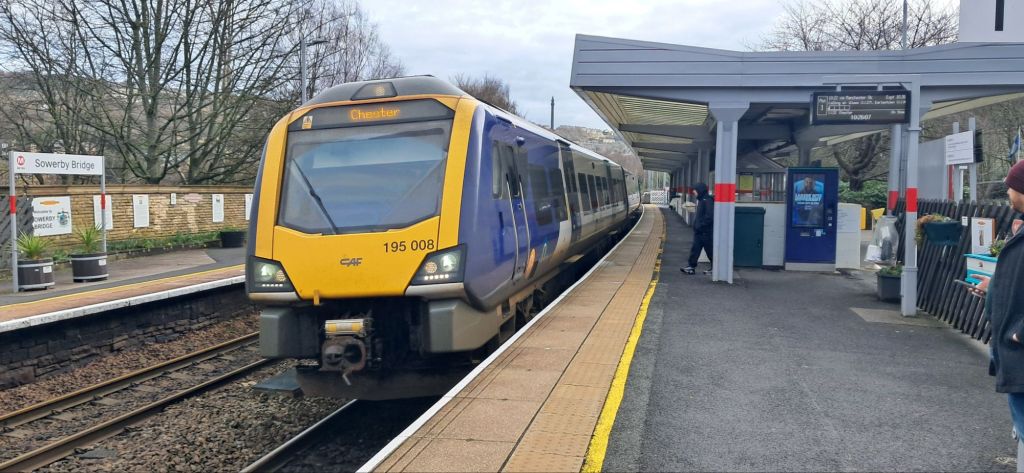
Right now I’m on a Northern service from Sowerby Bridge to head across the Pennines. It’s a quiet train, so there’s plenty of available table bays in which to set up the mobile office to type this.
I’ll be blogging (intermittently) throughout the day, so feel free to pop back and have a look at what I get up to (and where)…
Here we go…
13:30.
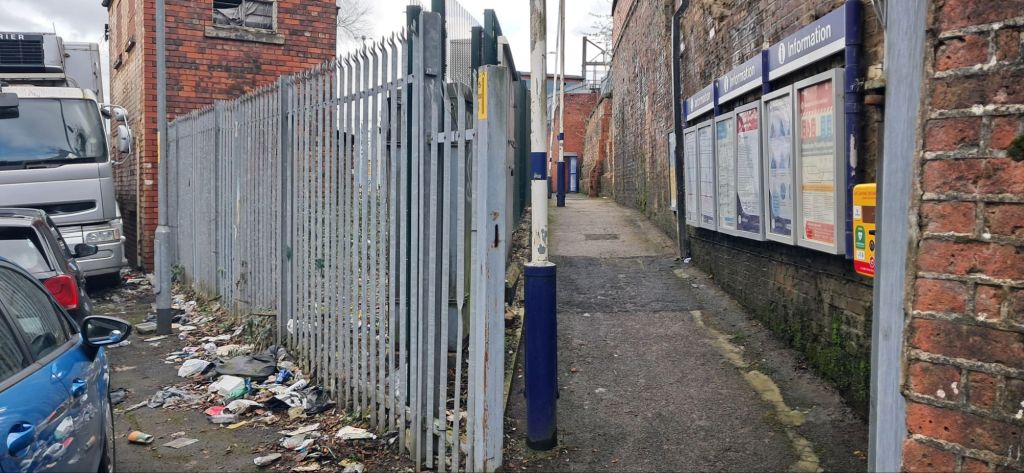
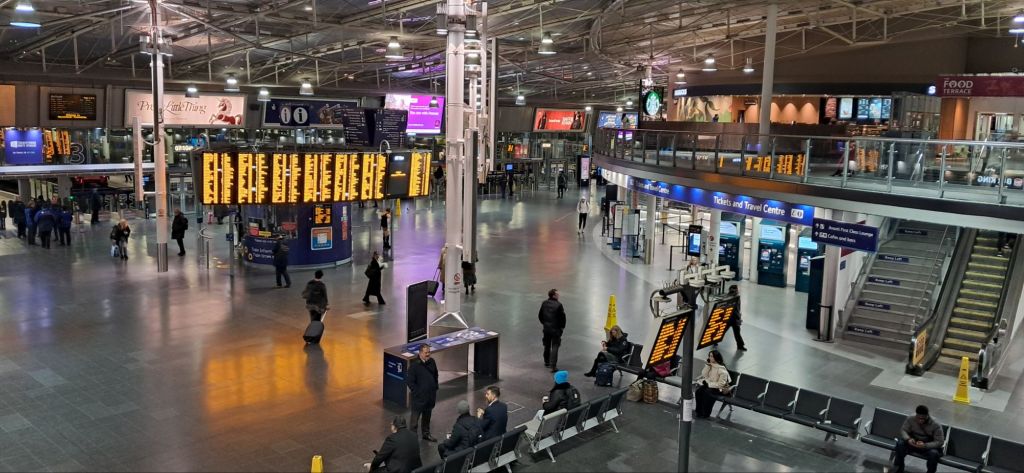
Phew! Time for a break and chance to upload a few images. Piccadilly station’s back to its normal buzzy self with both concourse and trainshed full of activity. What isn’t easy to see is the fruit of the past 9 days labours as the track that’s been renewed is some way away from the station itself. Hoping to get a better look I walked the backstreets to Manchester’s least used railway station – Ardwick. Just two trains a day call here, with a 2024/25 footfall of a mere 262 souls. The state of the entrance probably helps explain that.
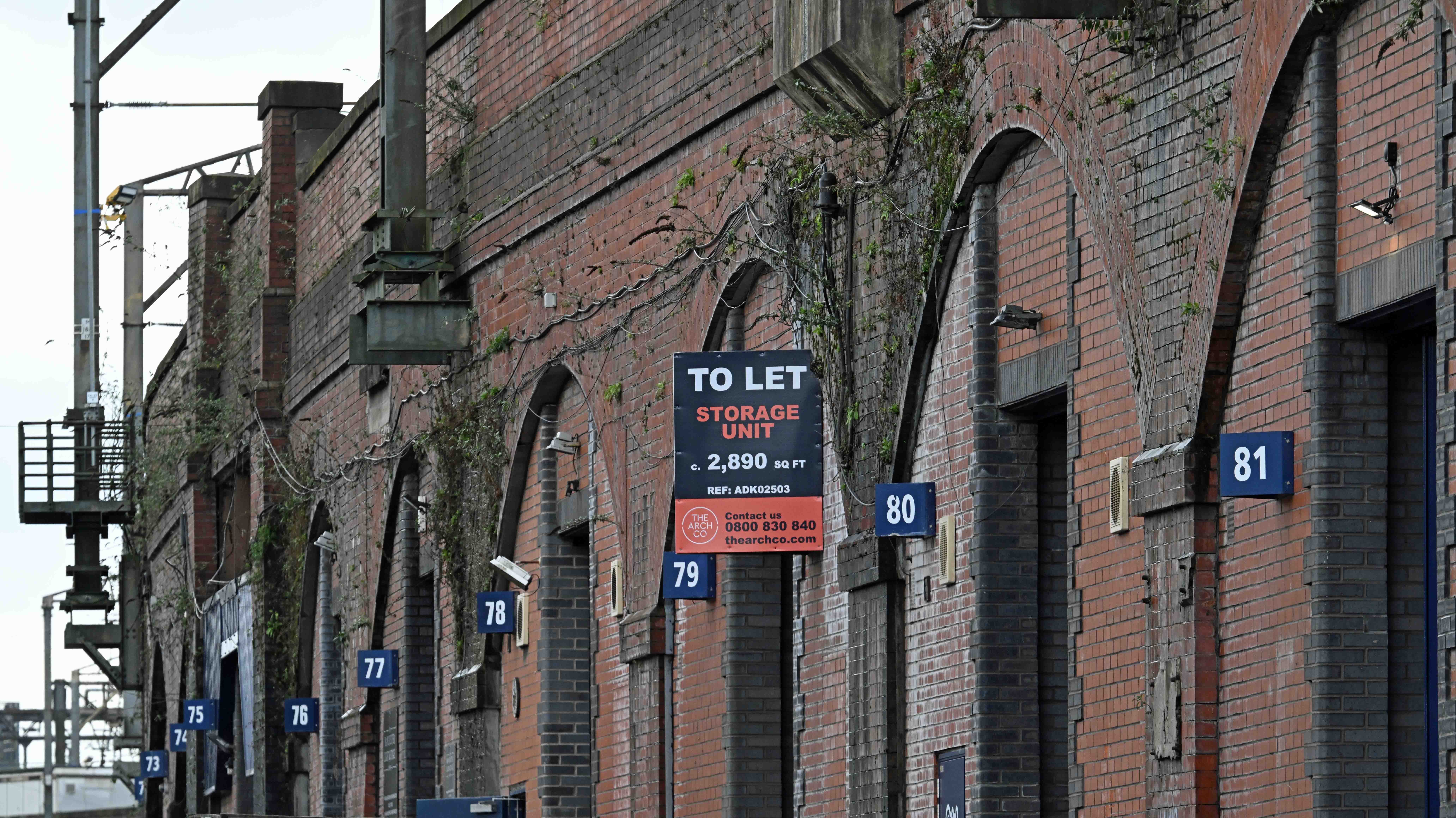
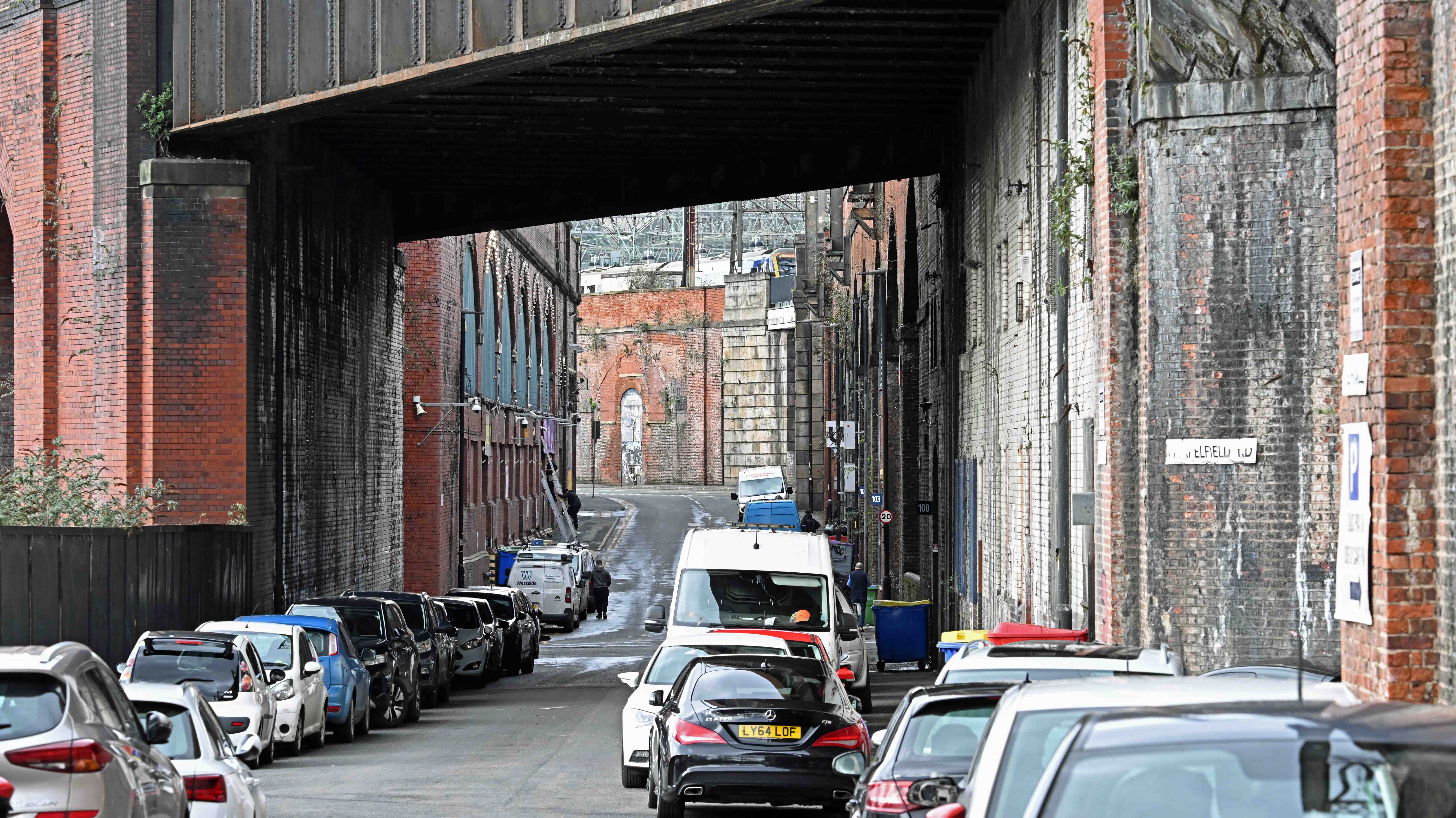
The walk through some of the city’s less salubrious areas is fascinating from a photographic and social perspective, but I certainly wouldn’t want to be wandering around there after dark! When you catch a train from Piccadilly you don’t appreciate how much life there is in the arches below you. Despite the outward signs of decrepitude and decay there’s a myriad of small businesses. Many involve catering. Others supply hairdressing products or repair e-bikes used by Deliveroo drivers. Some are really rather posh behind the anonymous shutters. Here’s a few pictures.
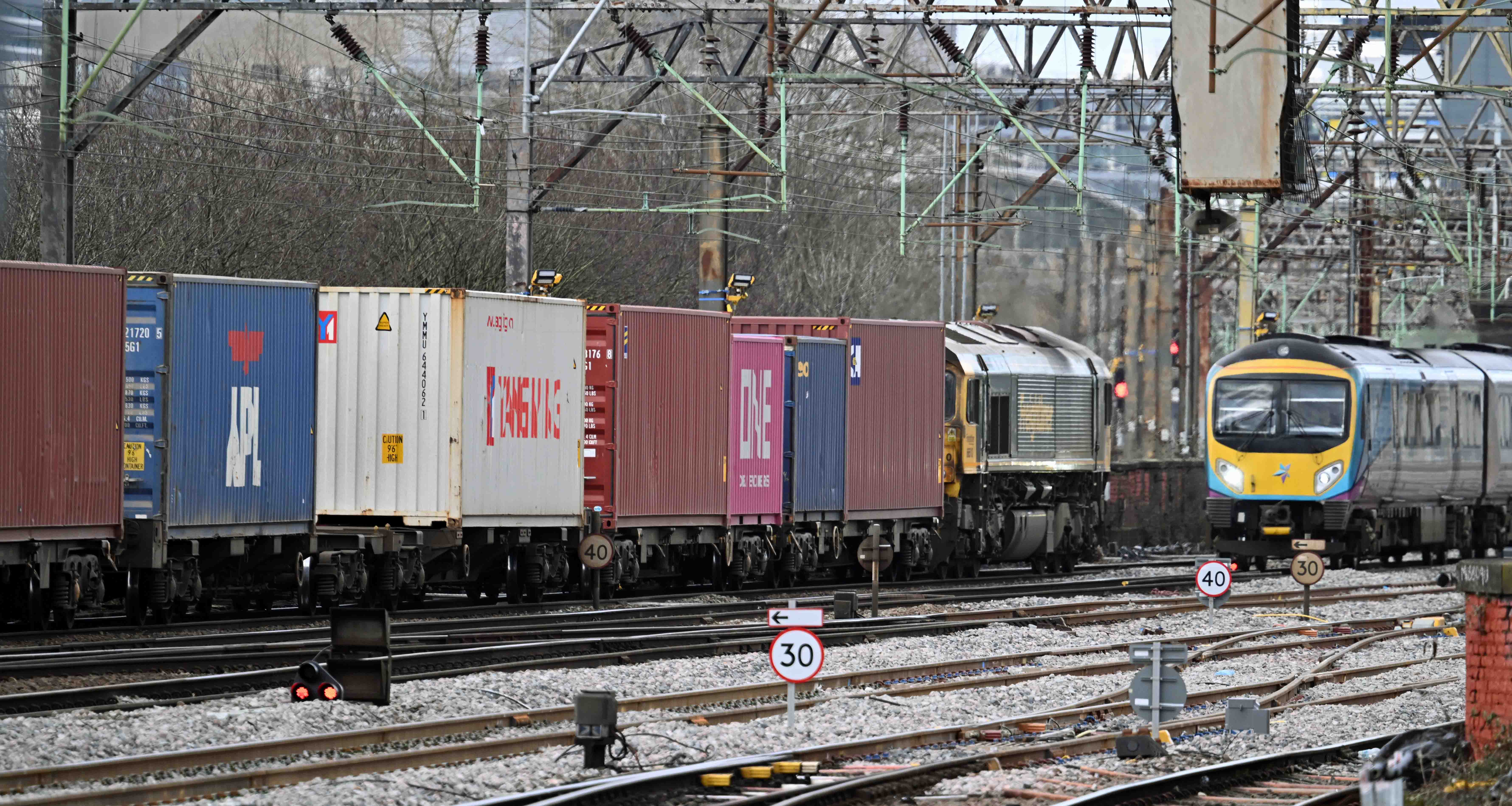
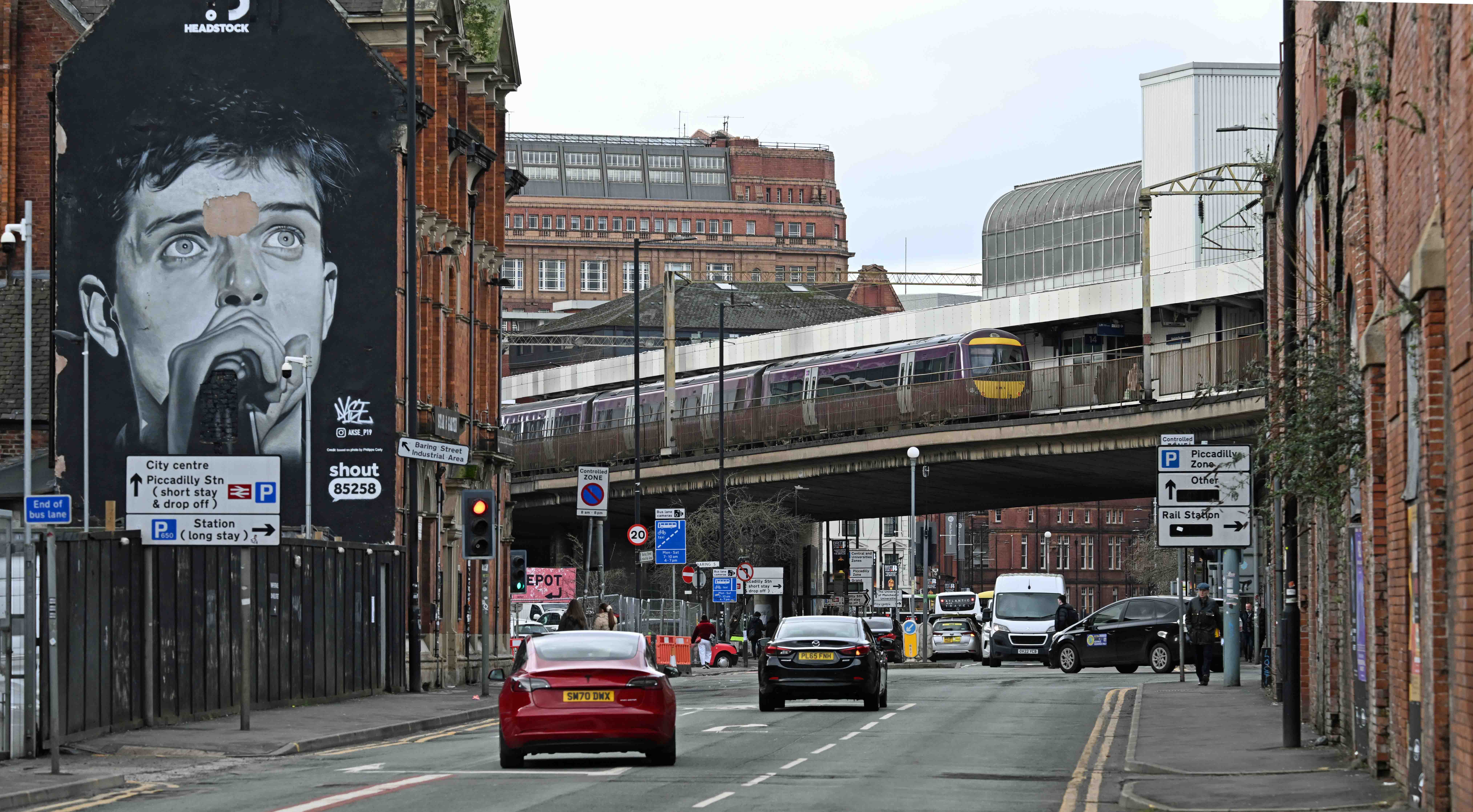
Welcome to Ardwick station! The view from Ardwick. Fresh ballast (stone) and cleaner rails give away which tracks have been renewed during the blockade – as do the clean speed restriction signs!Shopping by numbers. Each of these arches are a small business – or available to be one.Looking back to Piccadilly along Temperance St. The bridge in the foreground carried tracks into the former Mayfield station, latterly used for mail trains until it closed completely in 1986. A train calls at platform 14 at Piccadilly whilst a mural of Ian Curtis from the band ‘Joy Division’ on the side of the Star and Garter looks on.
18:20.
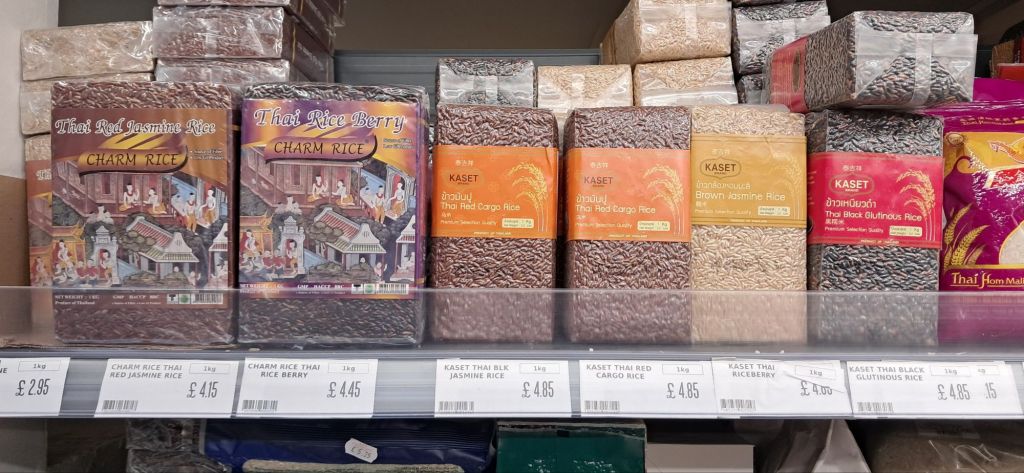
Due to the spring-like conditions I decided to hang around in the city centre in order to enjoy the weather, explore and get some architectural shots (which I’ll upload later). This also gave me time to pop into my favourite store in Chinatown to pick up some more goodies. This time it was different types of rice…
Now I’m heading back across the Pennines, which hasn’t been easy due to very busy (and short-formed) trains. I made it as far as Rochdale where I thought numbers would tail off. Bad move, as there were crowds of young men (well provisioned with bottles and cans) heading East on their way to some sporting event. Ah,well. At least I’ve managed to find a seat…
21:15.
Home!
It turned out that the sporting event was in Halifax, at the Shea stadium. I’ve no idea what as I’m not tribal and don’t follow these things. Half a dozen police officers kept an eye on the crowds flooding off the station, whilst more hung around pubs in town where supporters congregate. I was amused to see dozens of teenage lads – all dressed the same – in trainers, black jogging pants, black hoodies and baseball caps. So much for individuality it seems!
Finally, after 15 miles and 33,000 steps I made it home. Now it’s time to curl up with Dawn, enjoy a film and relax. There’s now a lot of new pictures to edit tomorrow. Here’s a couple of samples…
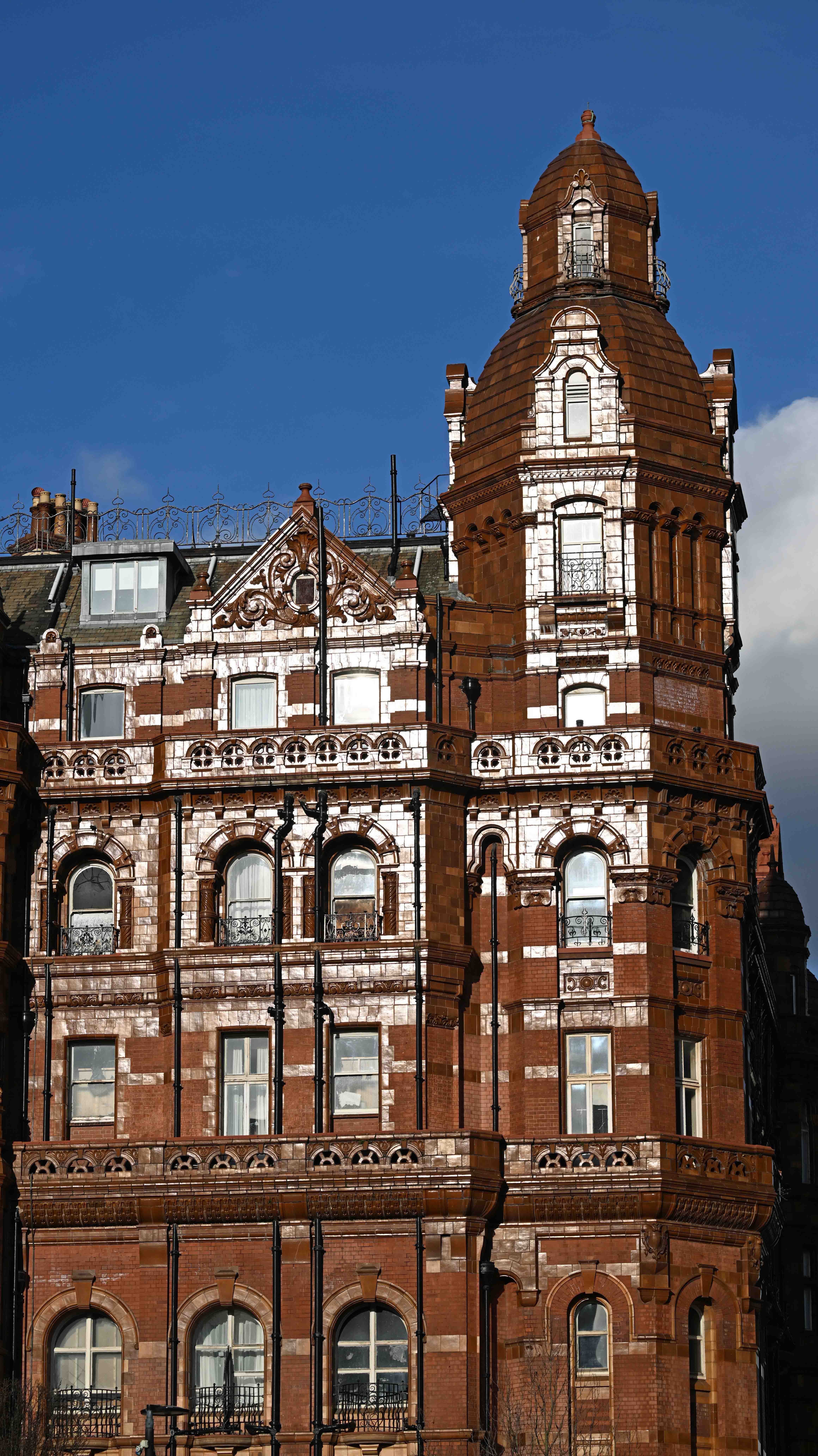
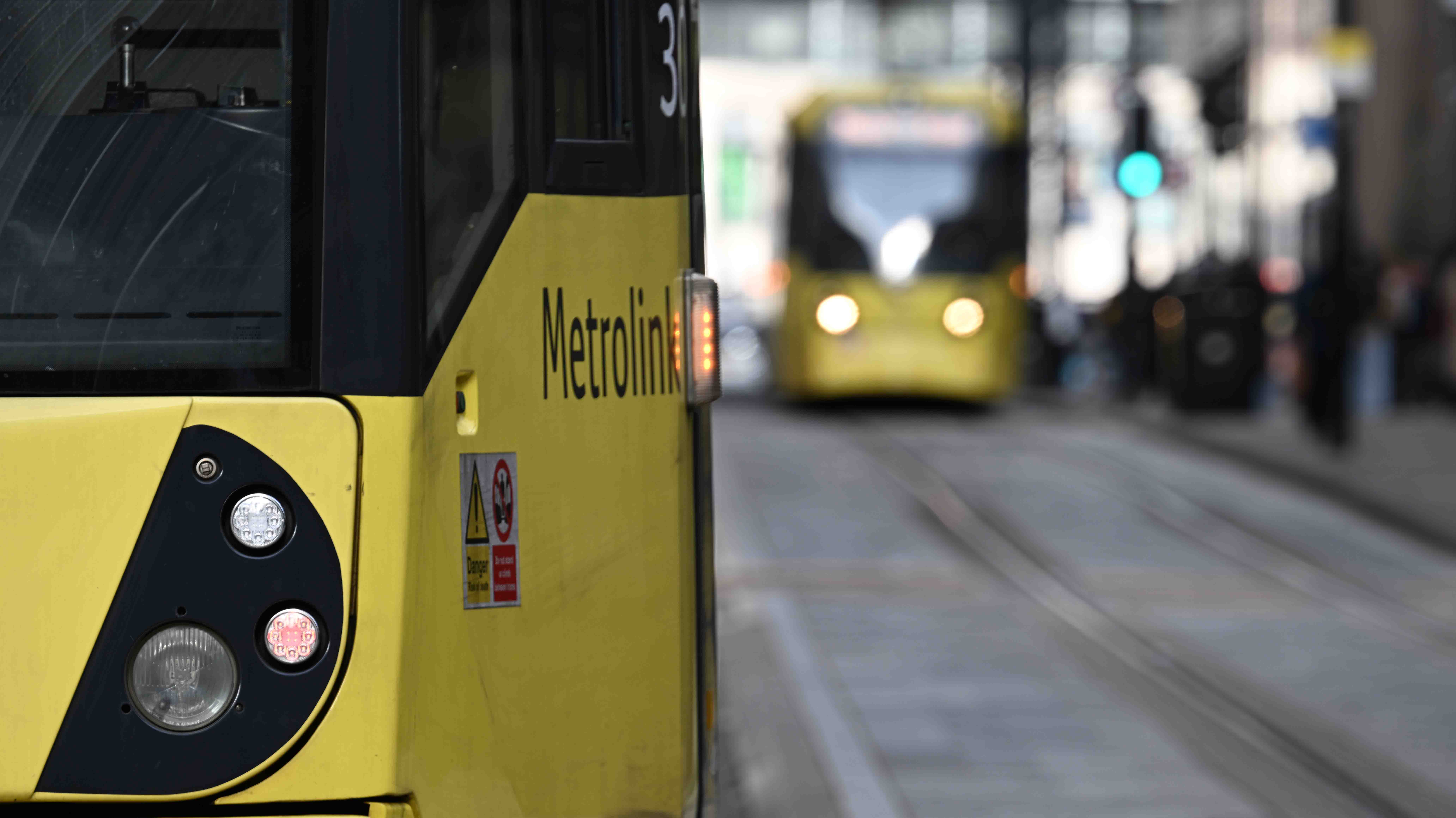
The glazed brickwork of the Midland hotel really caught the sun this afternoon…A slightly different perspective on Metrolink trams.
I’ve a small favour to ask… If you enjoy reading this or any of the other blogs I’ve written, please click on an advert or two. You don’t have to buy anything you don’t want to of course – although if you did find something that tickled your fancy that would be fab! – but the revenue from them helps me to cover some of the cost of maintaining this site (which isn’t cheap and comes out of my own pocket). Remember, 99% of the pictures used in my blogs can be purchased as prints from my other website – https://paulbigland.zenfolio.com/
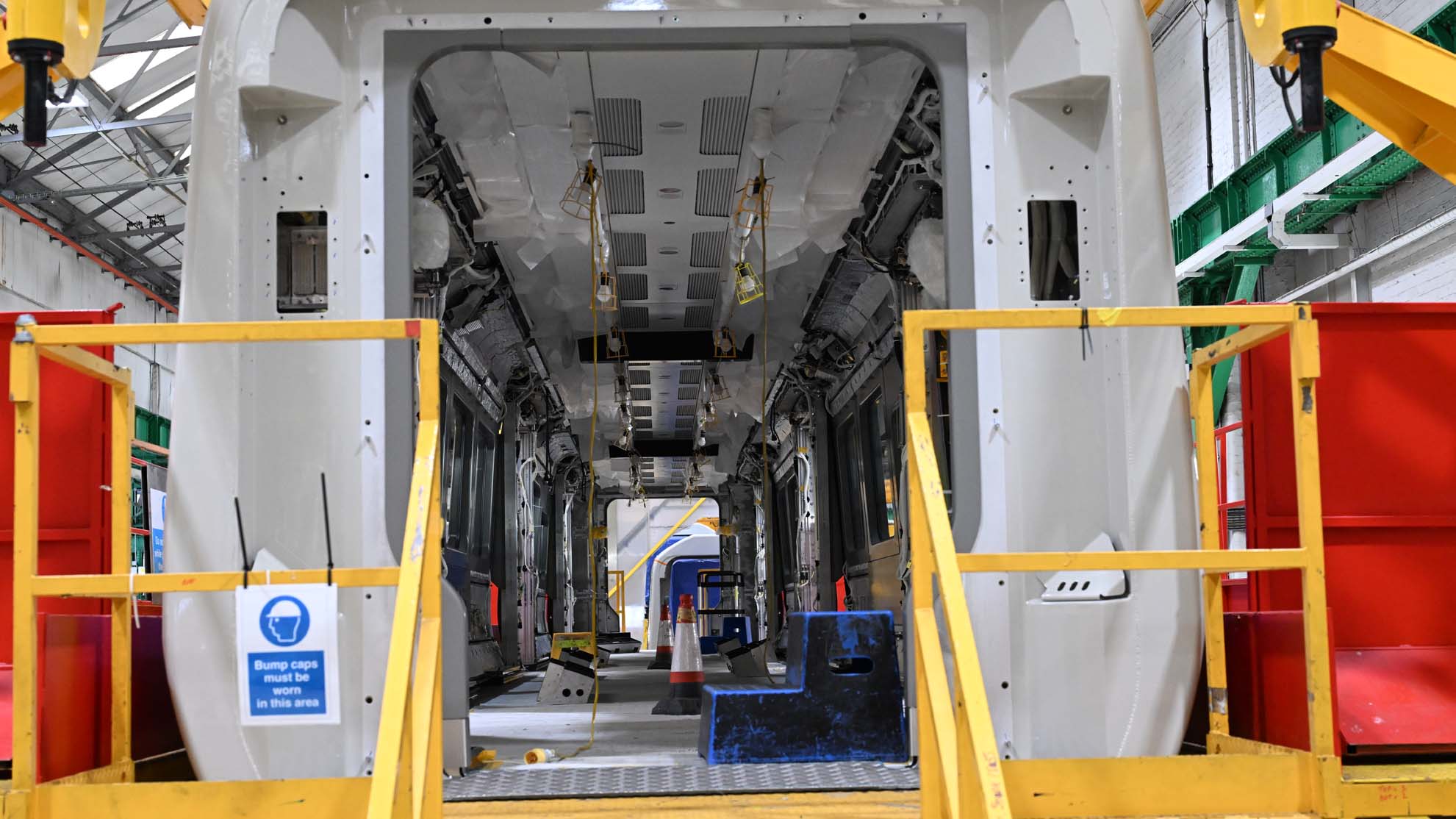
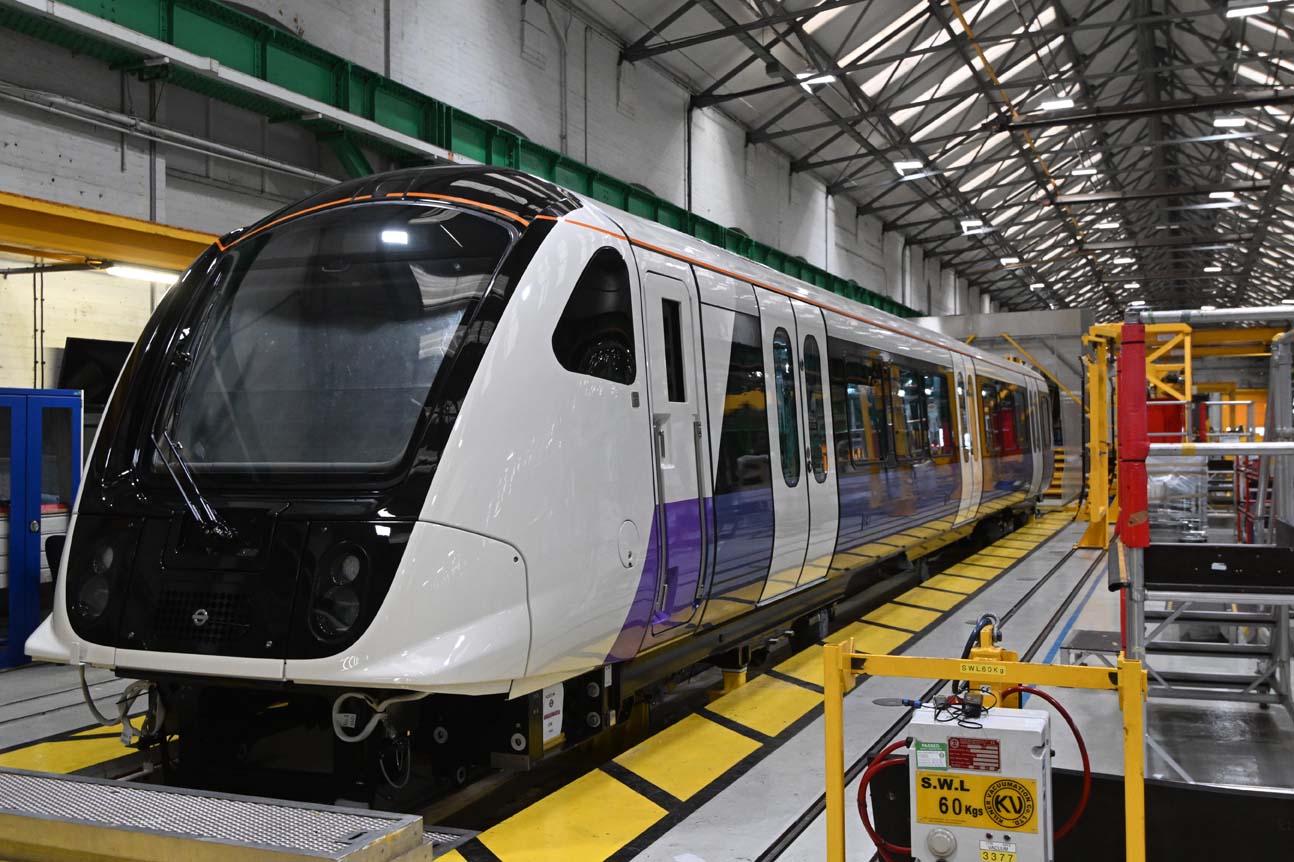
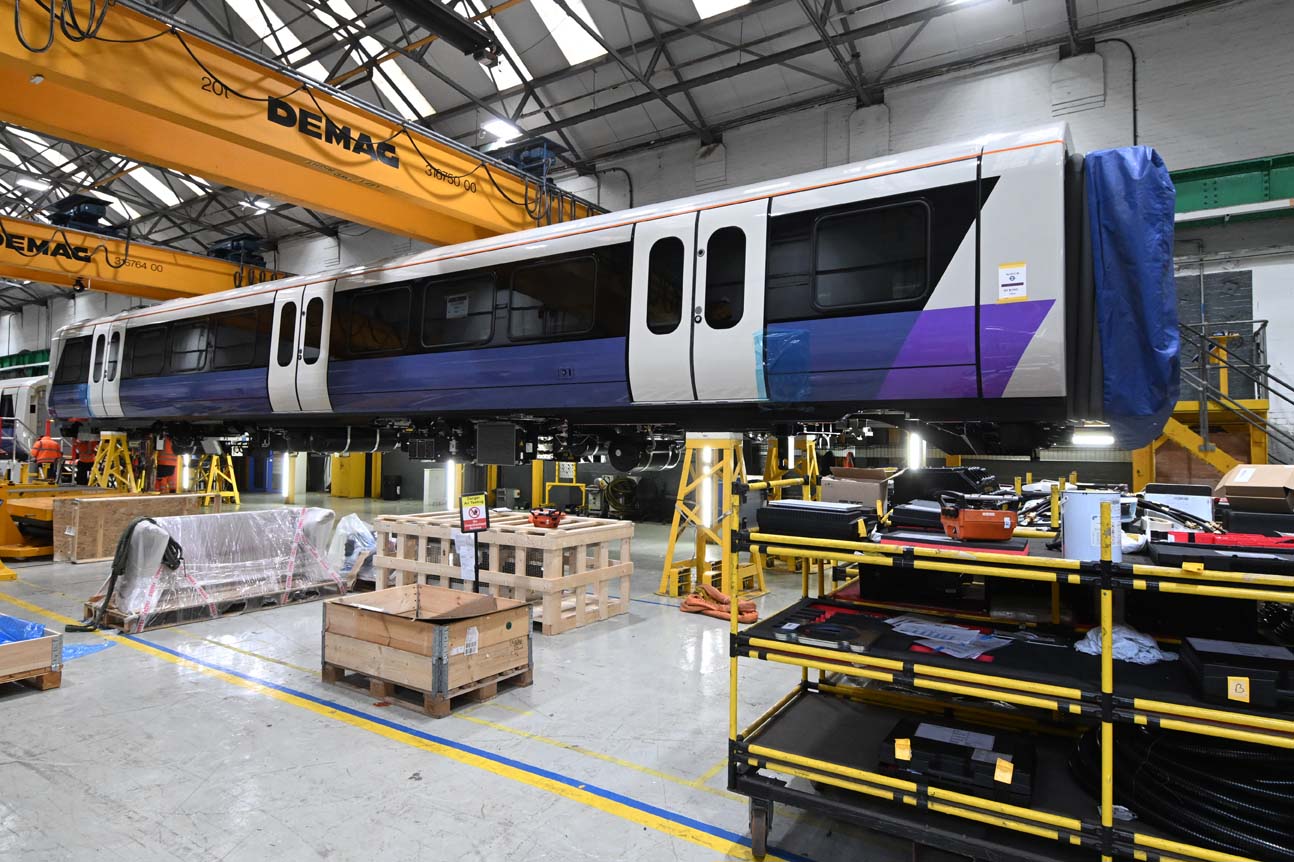
10 new 9 car Class 345 ‘Aventra’ trains for London’s Elizabeth line are currently under construction at Derby by Alstom. Ordered in June 2024 for delivery in 2026 the order saved the Derby site from closure due to a gap in orders before the start of building trains for the delayed and truncated HS2 project.
On Tuesday a selected group of journalists were given a tour of the production line. Here’s a gallery of pictures showing progress on the fleet and the first train.
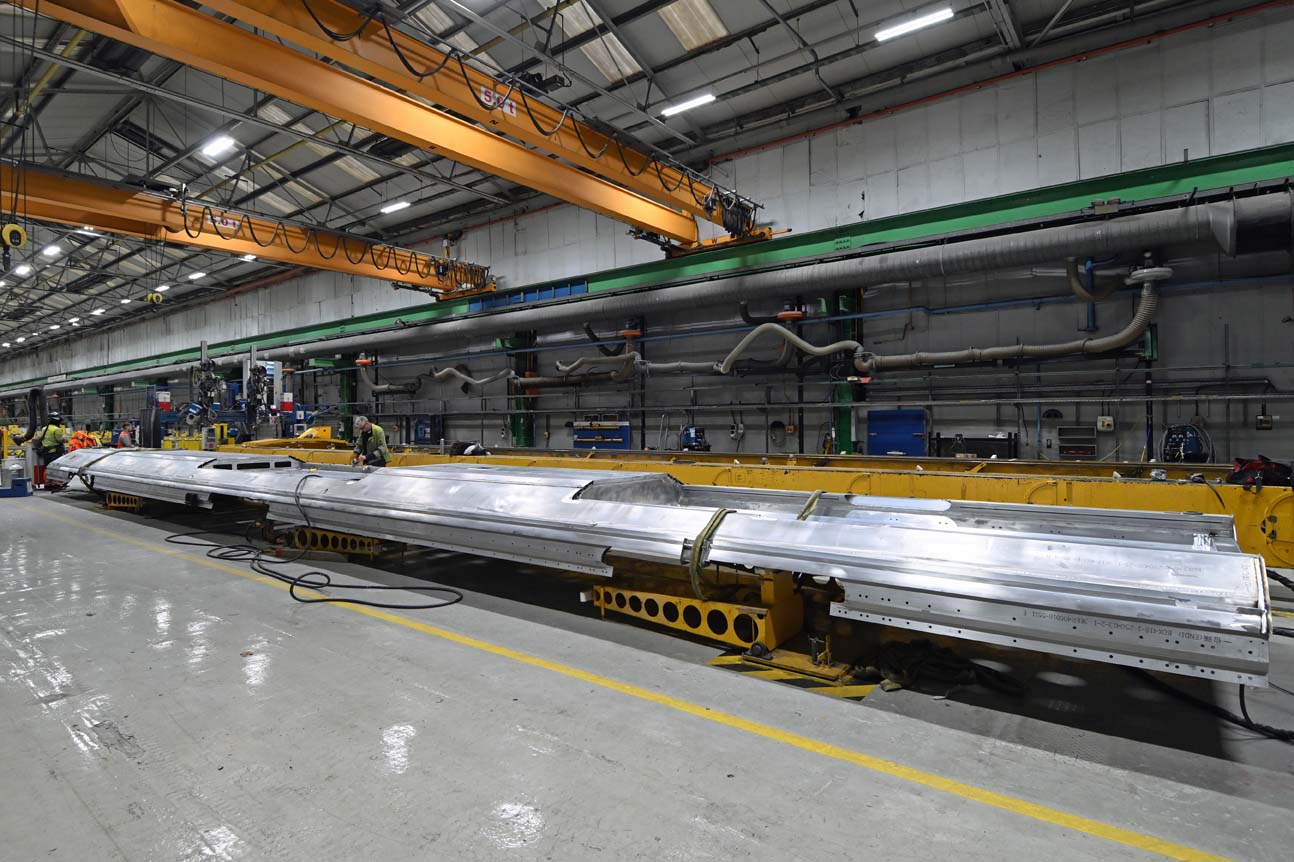
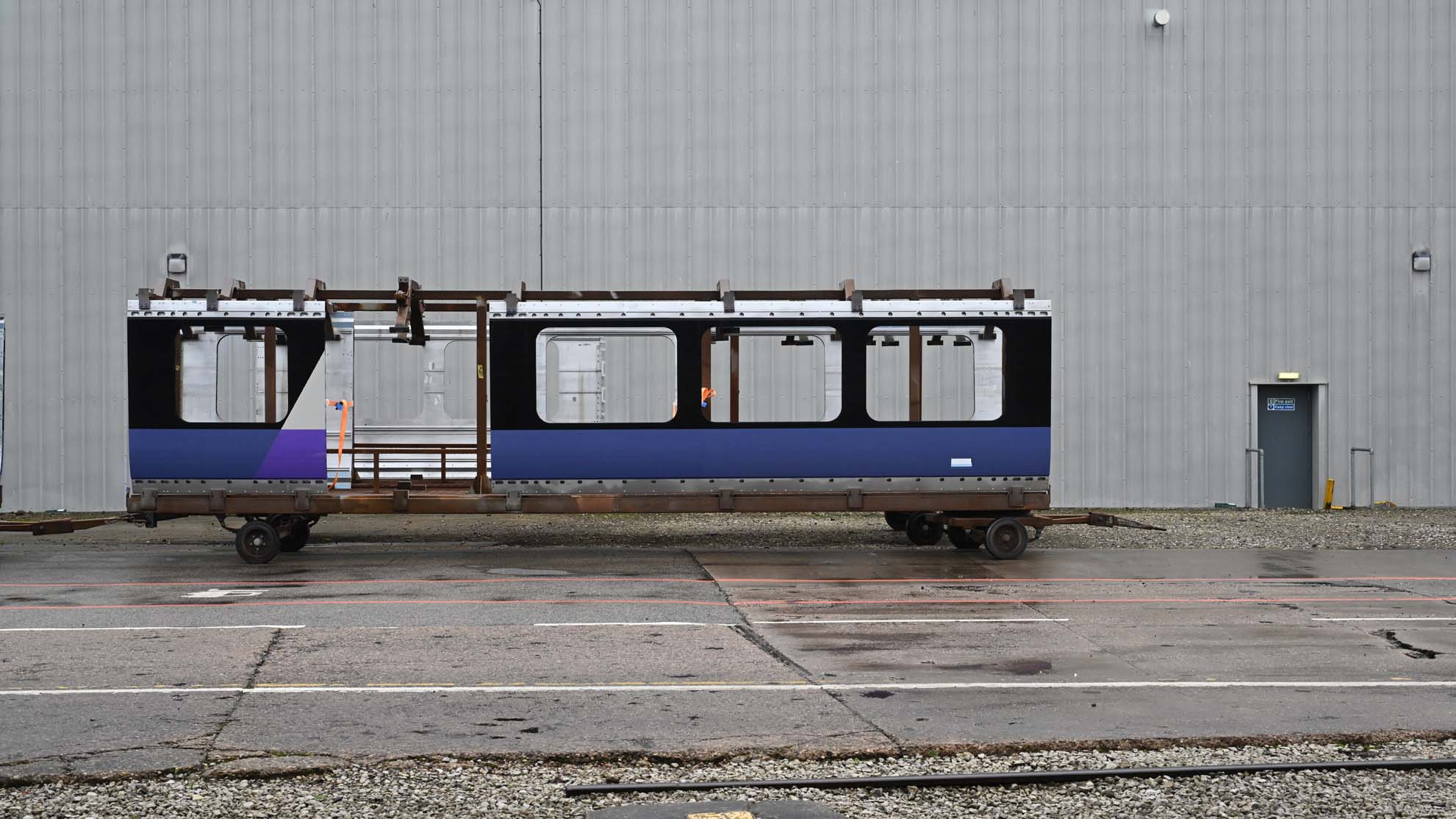
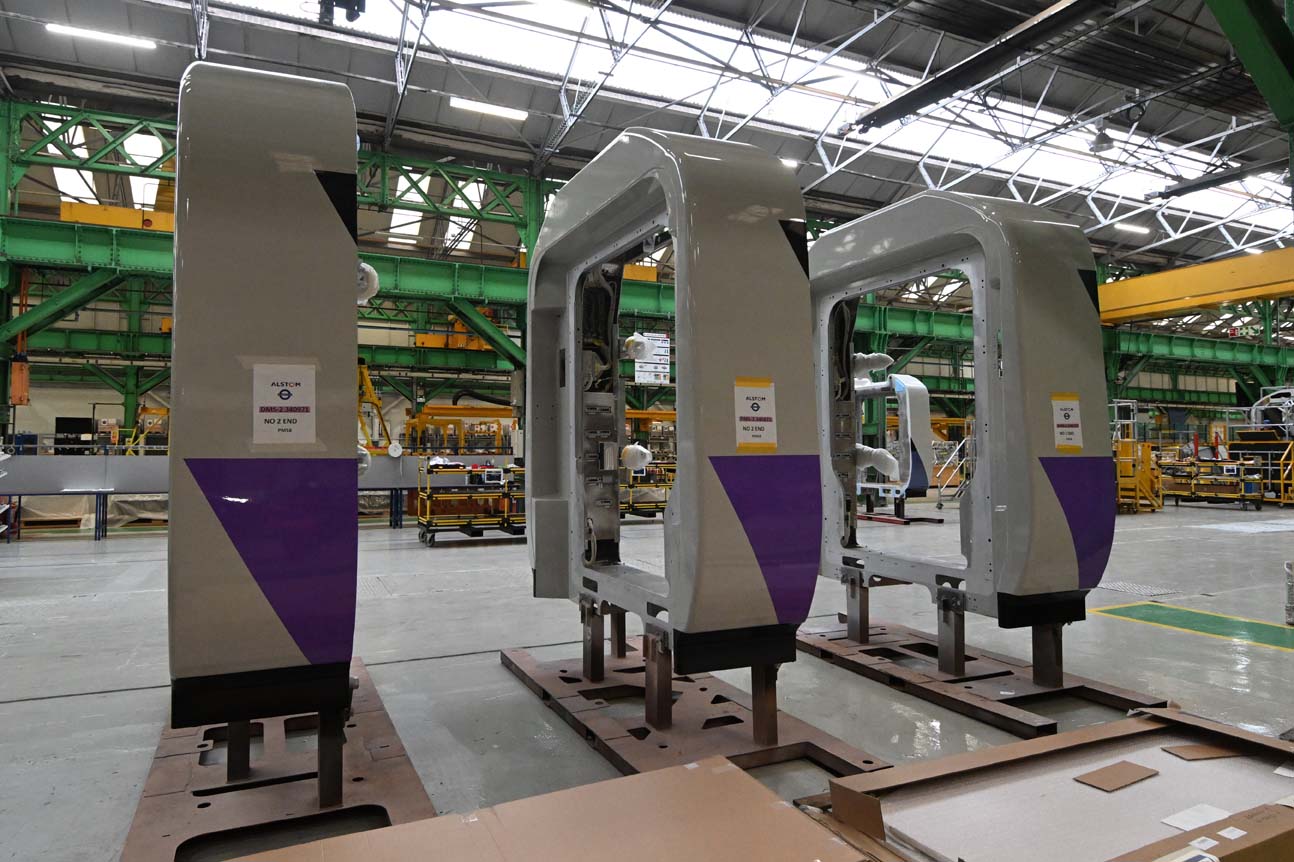
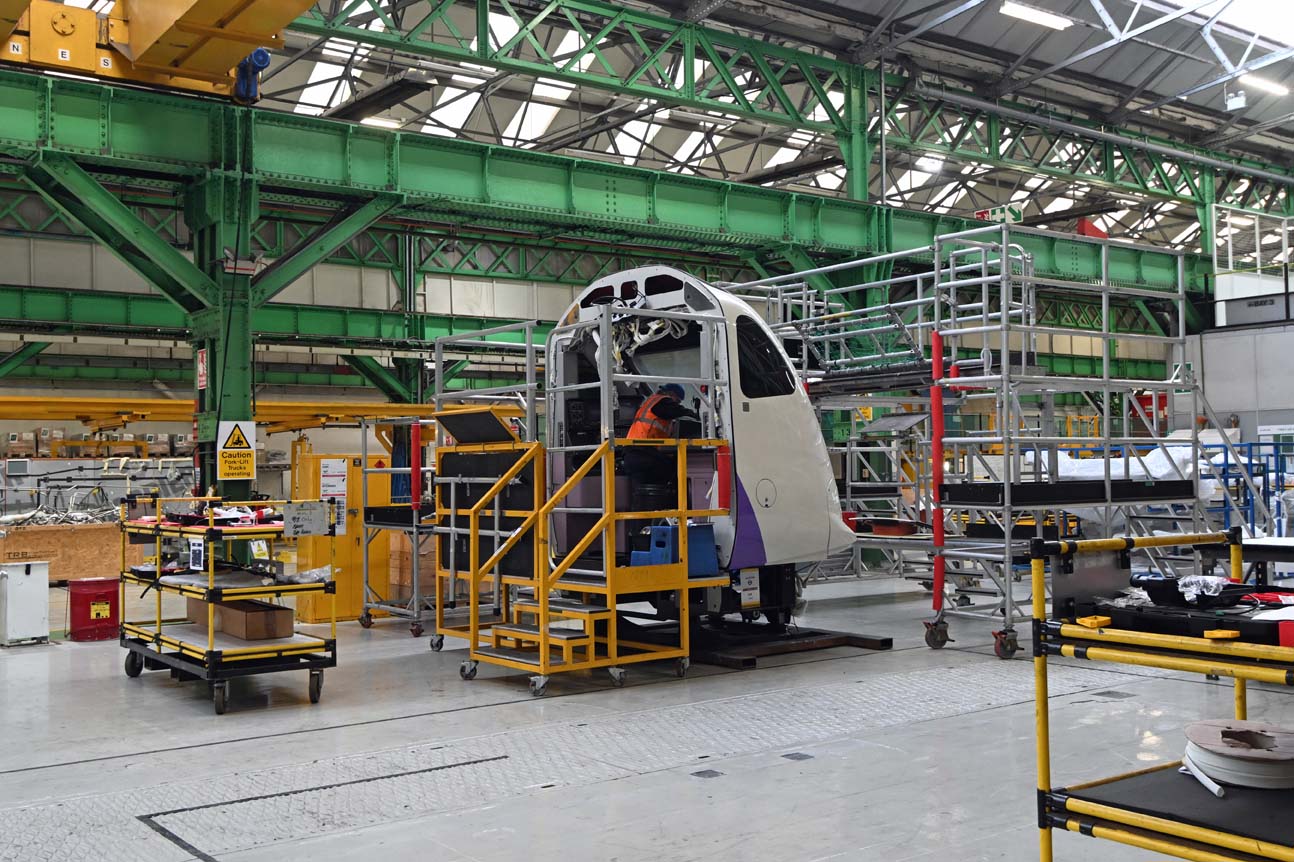
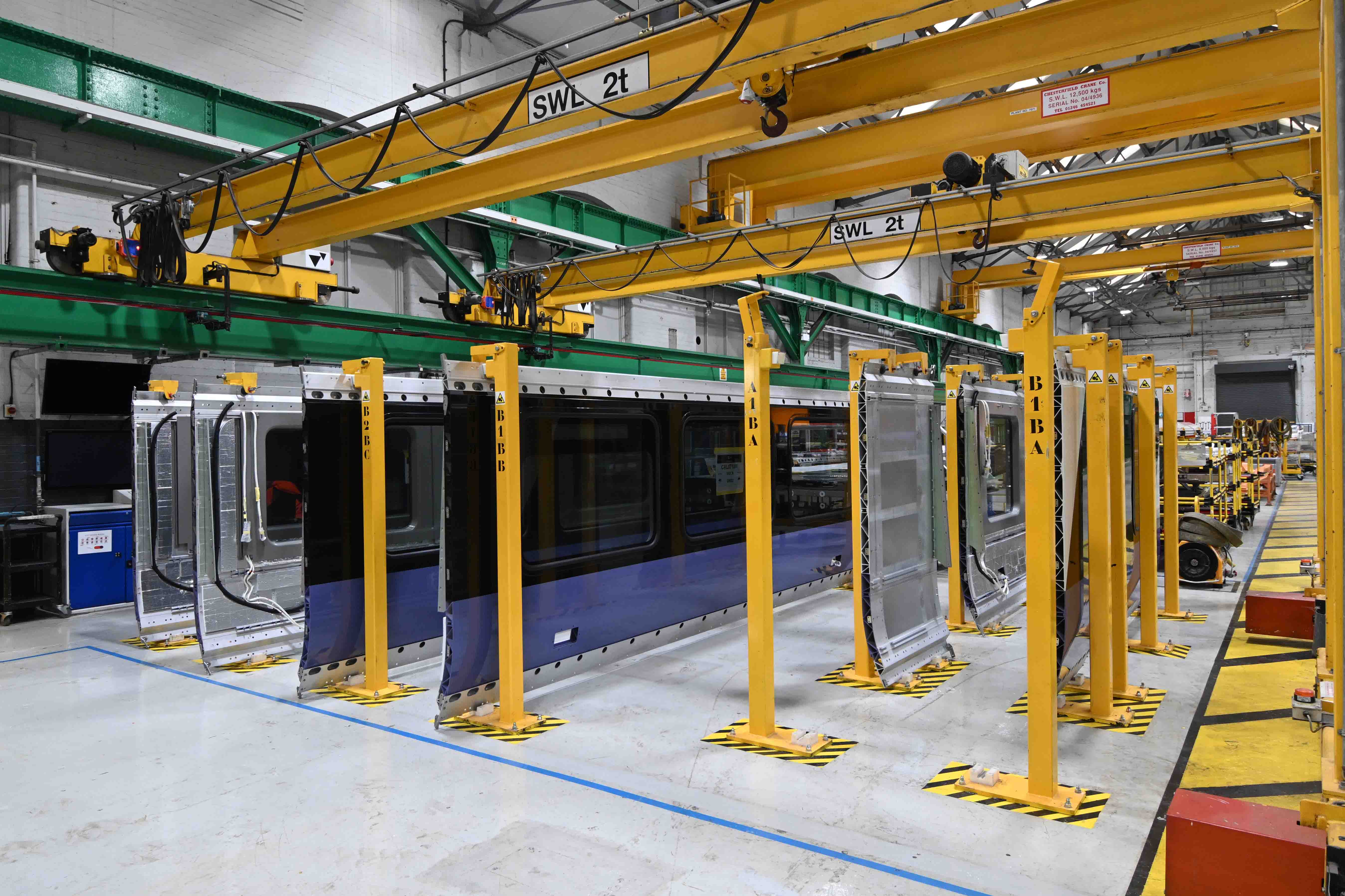
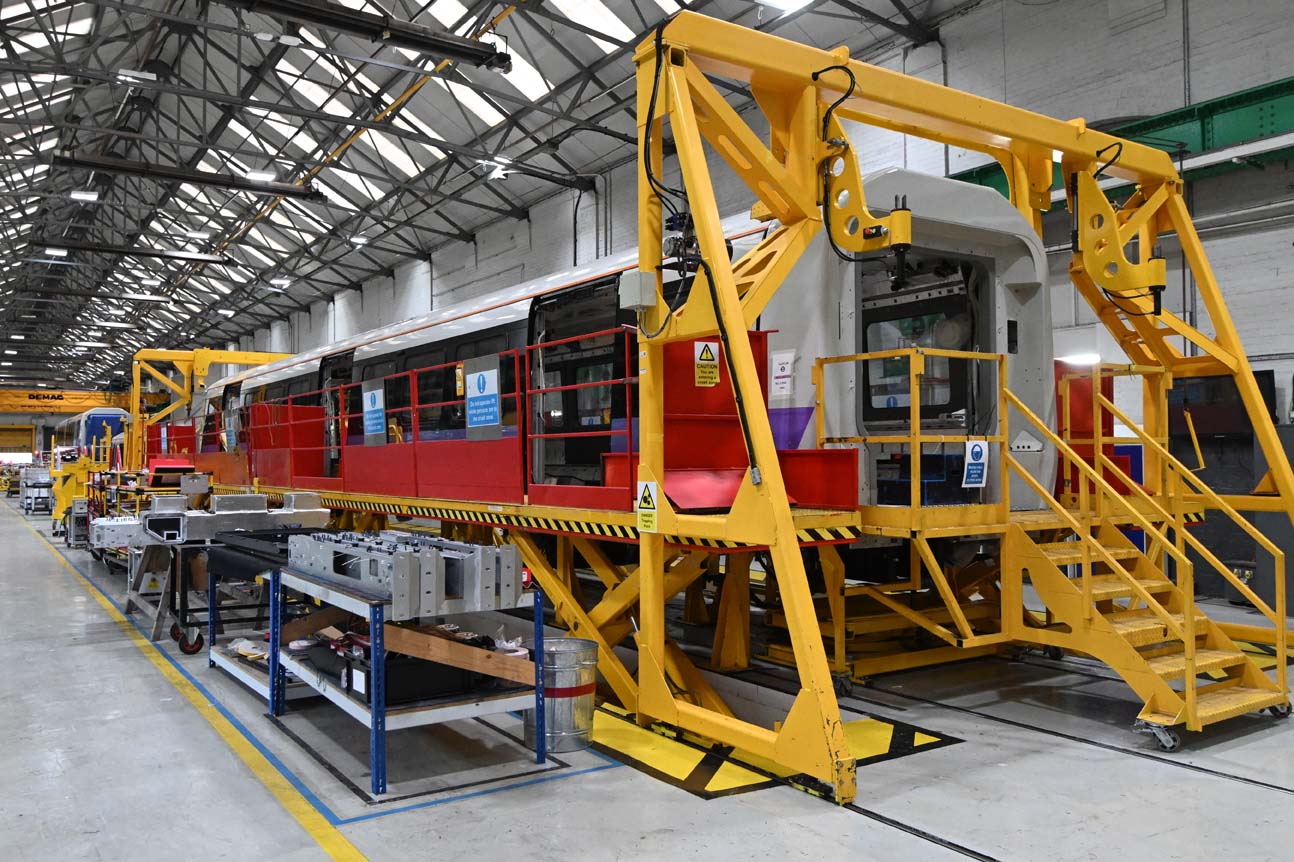
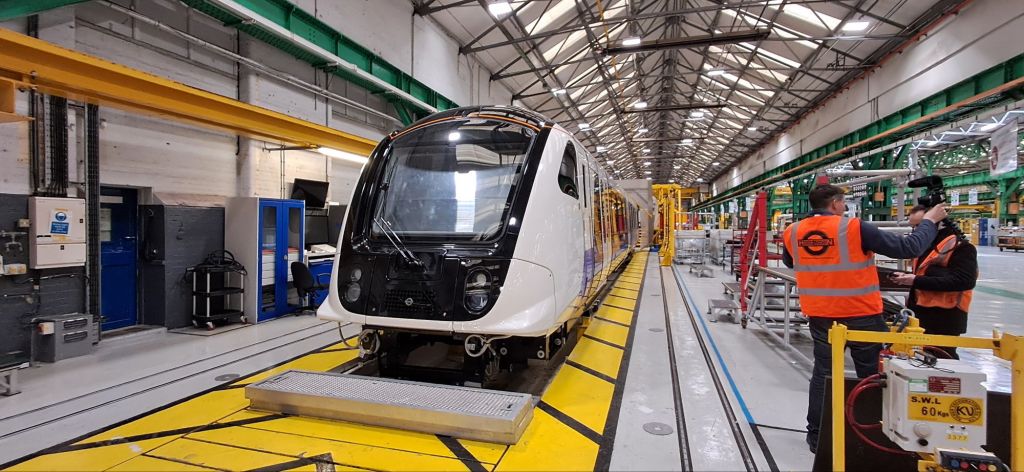
Building trains at Derby is like assembling a kit of parts. Here’s the welding shop where aluminum sections brought in from off site are joined together to form frames, roofs, bodysides and other sections. Once individual sections are completed they’re moved around the site between different shops on fleets of bespoke trollies. Here’s a pair of bodysides waiting their turn to enter U shop, where final assembly takes place. Body ends in U shop waiting their turn to be fitted. ‘A bit like fitting a cap to a tube of Pringles’ was how it was described during our tour!The cab of a 345 having the drivers control desk and associated electronics installed before being fitted to a bodyshell. Painted bodysides complete with windows, internal insulation and some cabling waiting to be put on a jig where they’ll be joined to roof and floor sections.A bodyshell nears completion. Now it gets most internal components and panels installed. A look inside the bodyshell showing progress on fitting it out internally. Here’s the next stage as a driving car for 345071 nears completion internally and externally but before the traction equipment is fitted. The next stage in the line. Completed internally, the bodyshell is supported from below to allow the traction equipment to be slung underneath.
Next, the bodies will be moved to have their bogies fitted, then they’ll be formed into complete units. Despite the fact they’re a follow-on order of a type of train already running on the network they’ll undergo rigorous type testing before being accepted as part of the existing Elizabeth line fleet.
I’ve a small favour to ask… If you enjoy reading this or any of the other blogs I’ve written, please click on an advert or two. You don’t have to buy anything you don’t want to of course – although if you did find something that tickled your fancy that would be fab! – but the revenue from them helps me to cover some of the cost of maintaining this site (which isn’t cheap and comes out of my own pocket). Remember, 99% of the pictures used in my blogs can be purchased as prints from my other website – https://paulbigland.zenfolio.com/
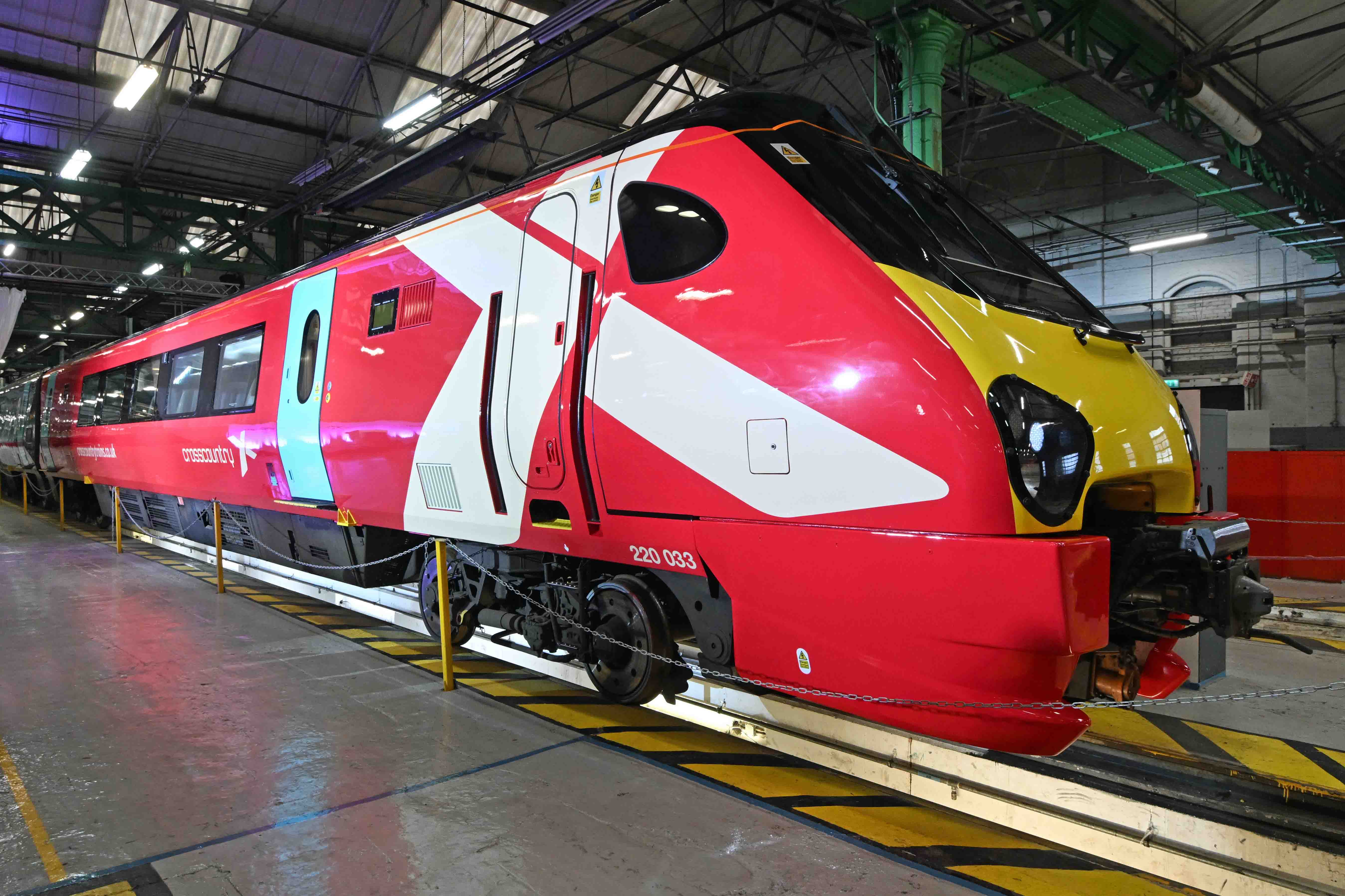
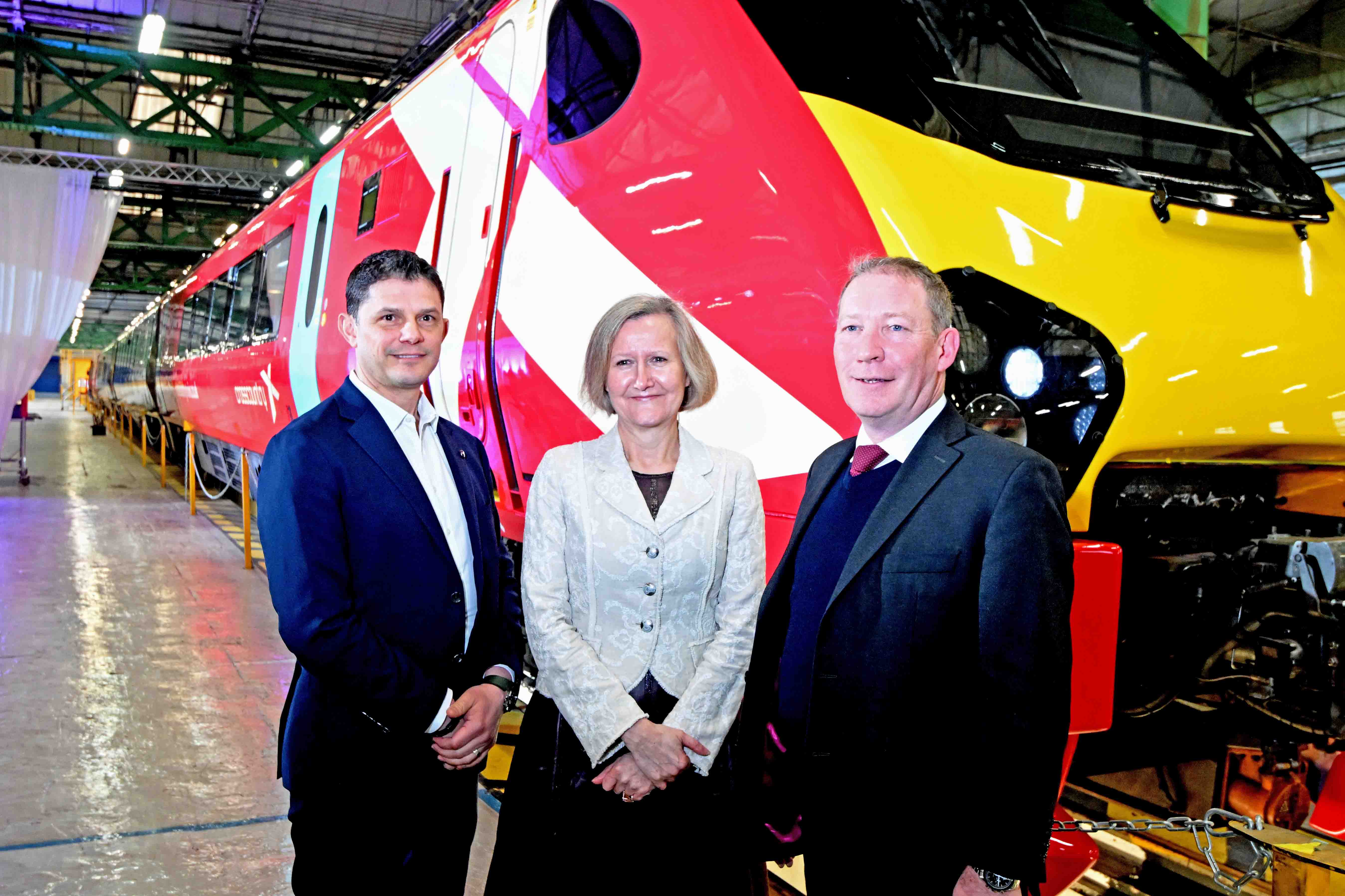
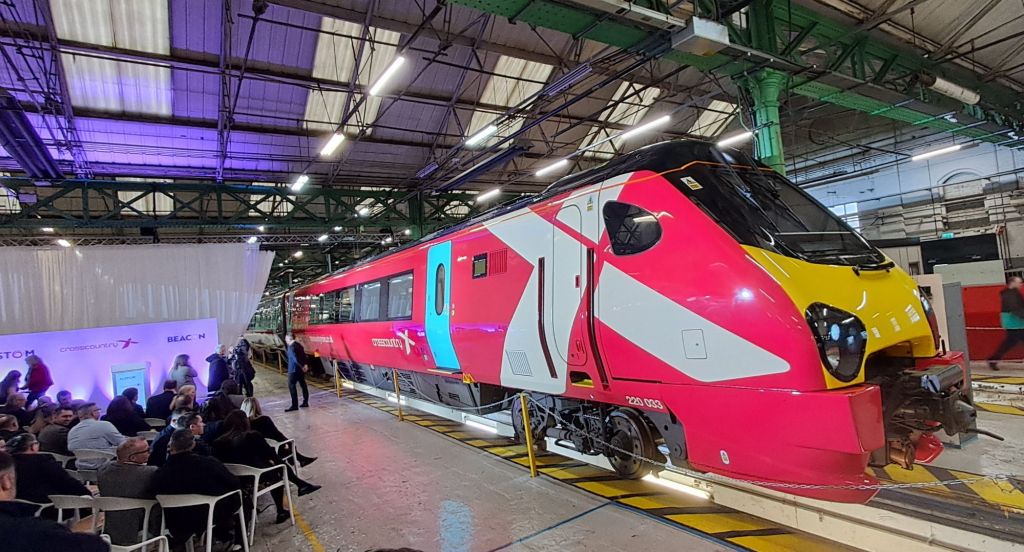
Yesterday the first refurbished four-car Voyager (220033) was unveiled to the media and invited guests at Alstom’s Derby works, where the work is taking place. Expected back in traffic before the end of the month after undergoing an exam at the Central Rivers depot, 220033 is beginning of a programme which, over the next two years, Alstom will refurbish a total of 136 Voyager (Class 220) and 176 Super Voyager (Class 221) cars at Derby, including an additional 12 trains added to the CrossCountry fleet following their release from Avanti West Coast.
Alstom’s £60 million contract is part of long-distance train operator CrossCountry’s £75 million project to refurbish all of its Voyager fleet and has been funded by rolling stock company Beacon.
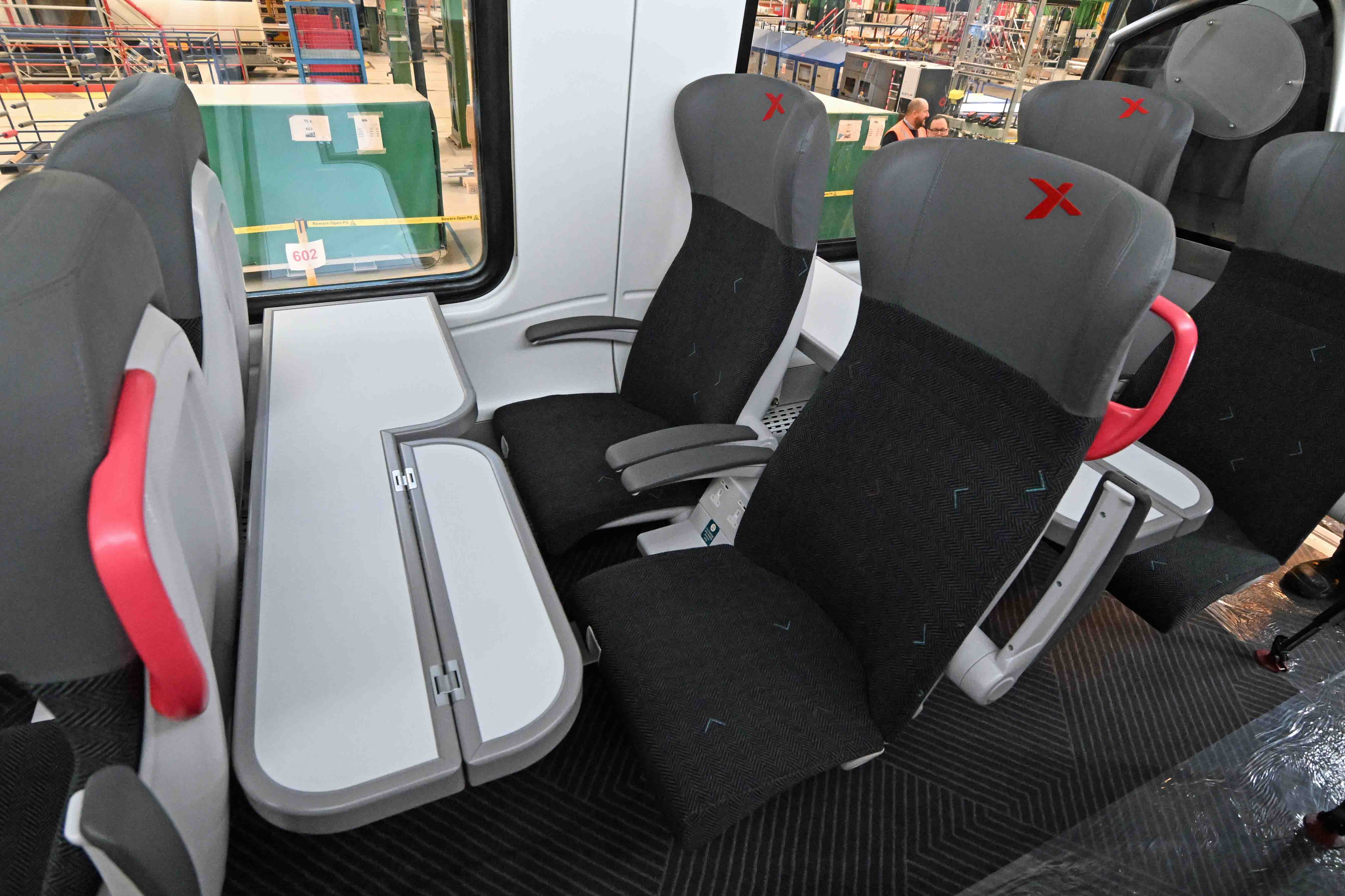
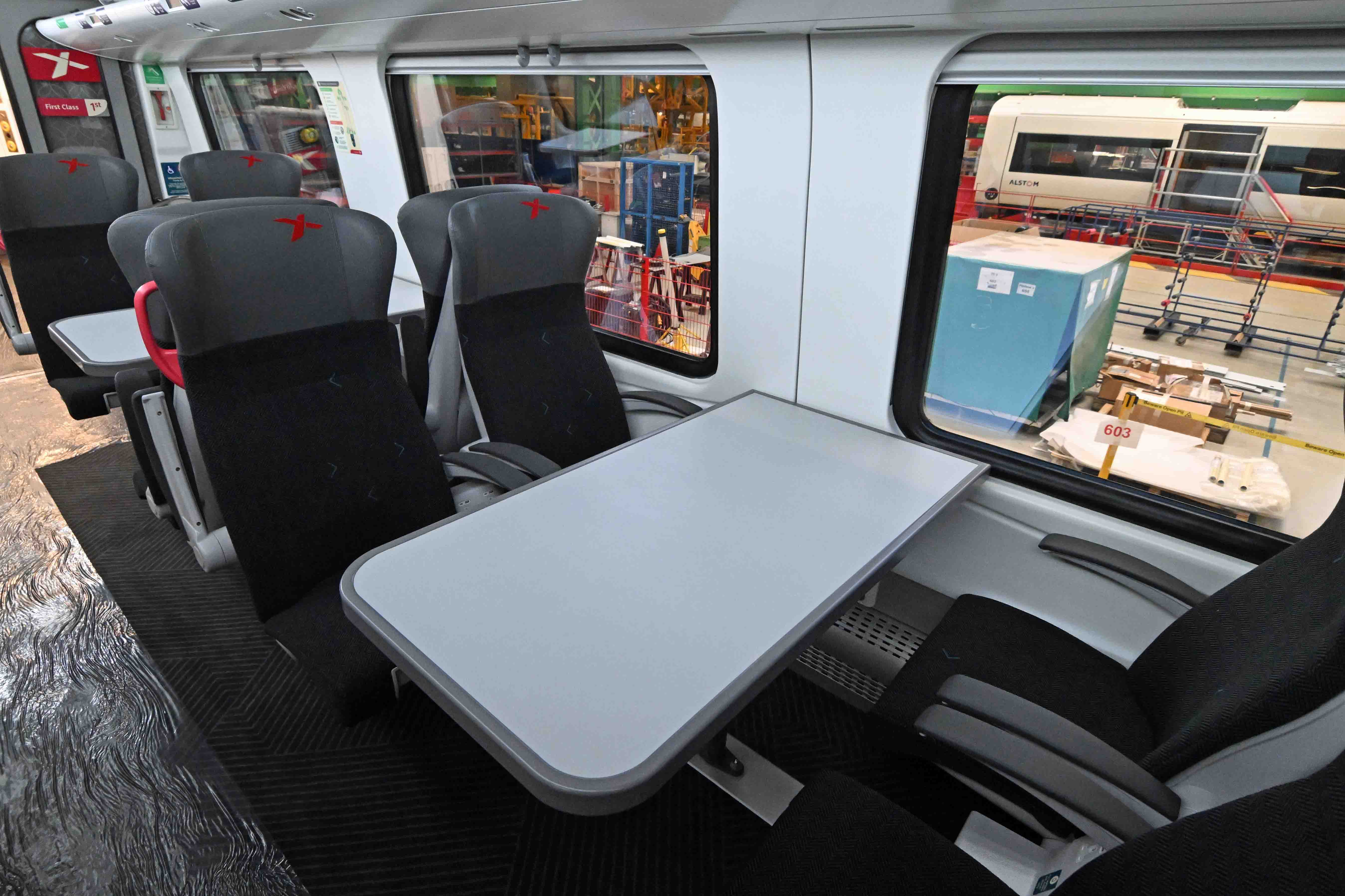
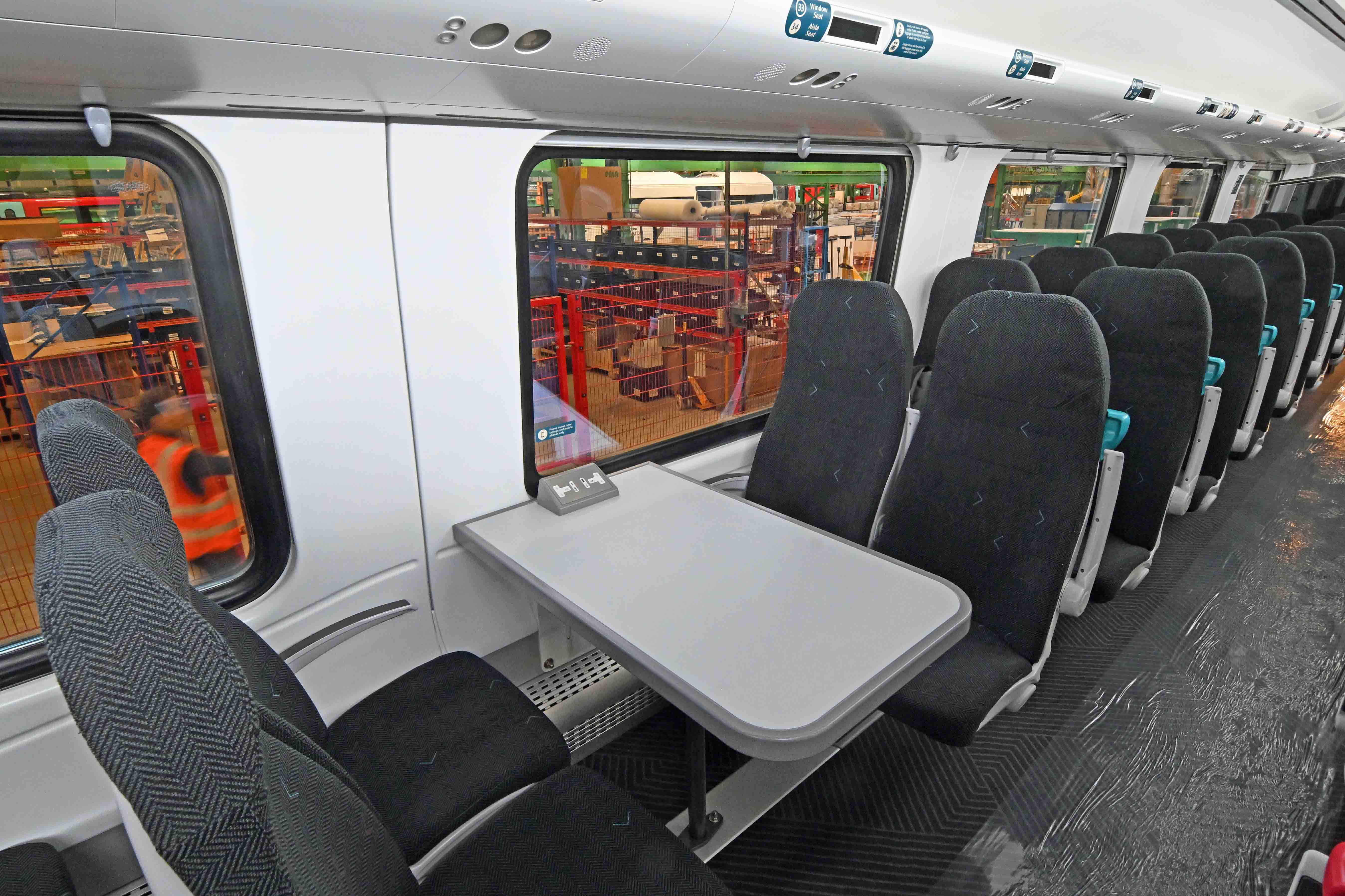
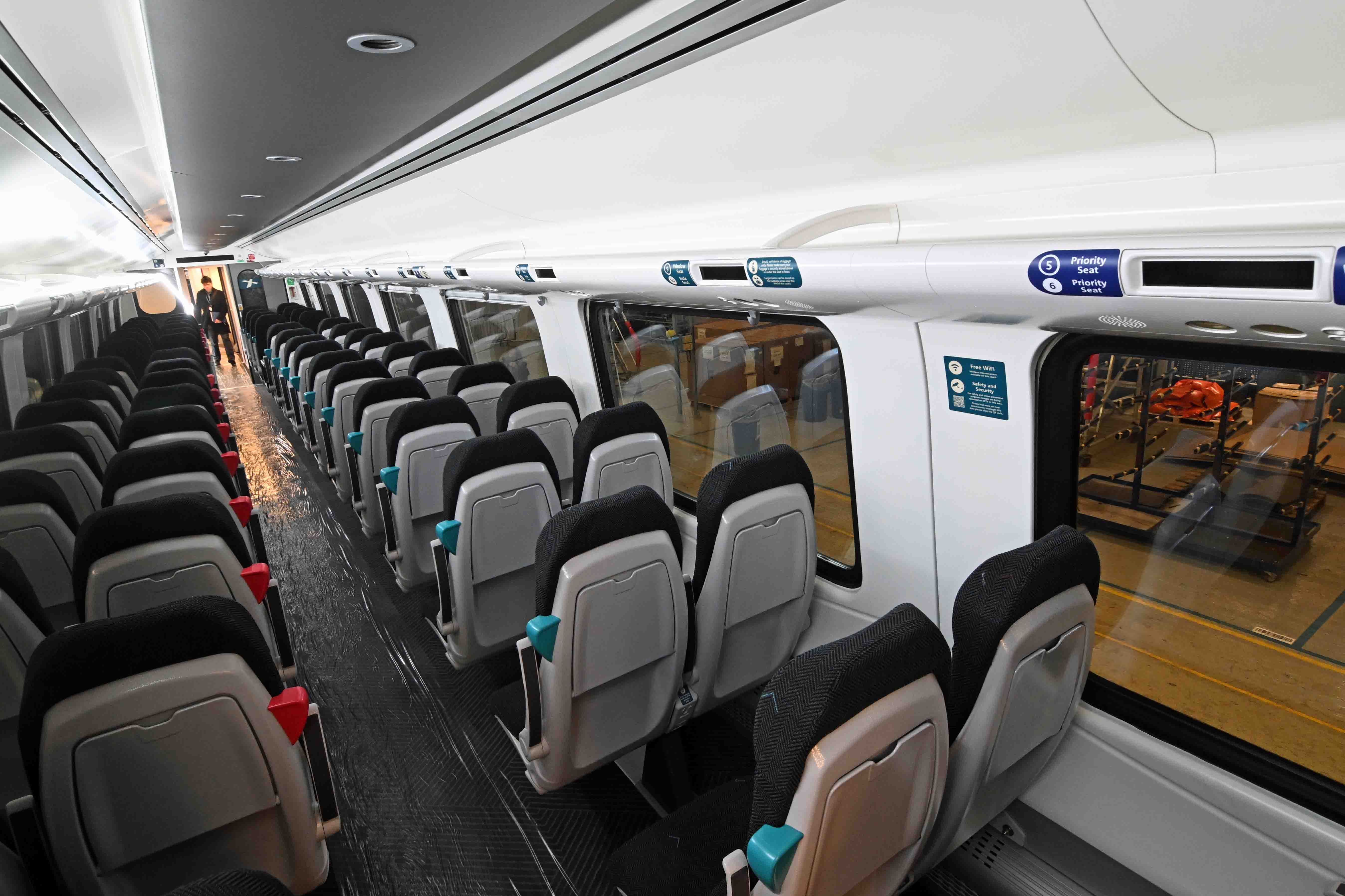
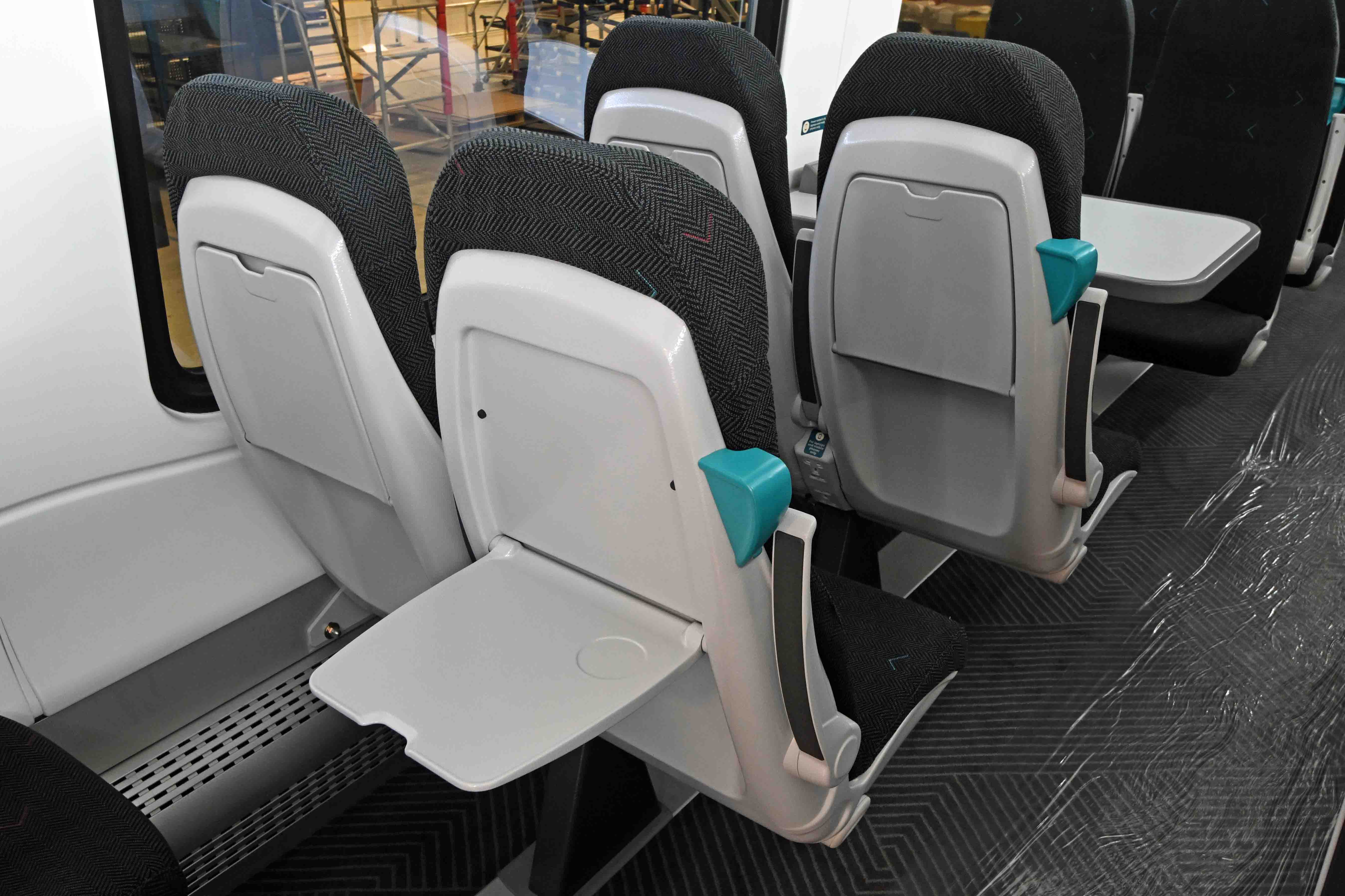
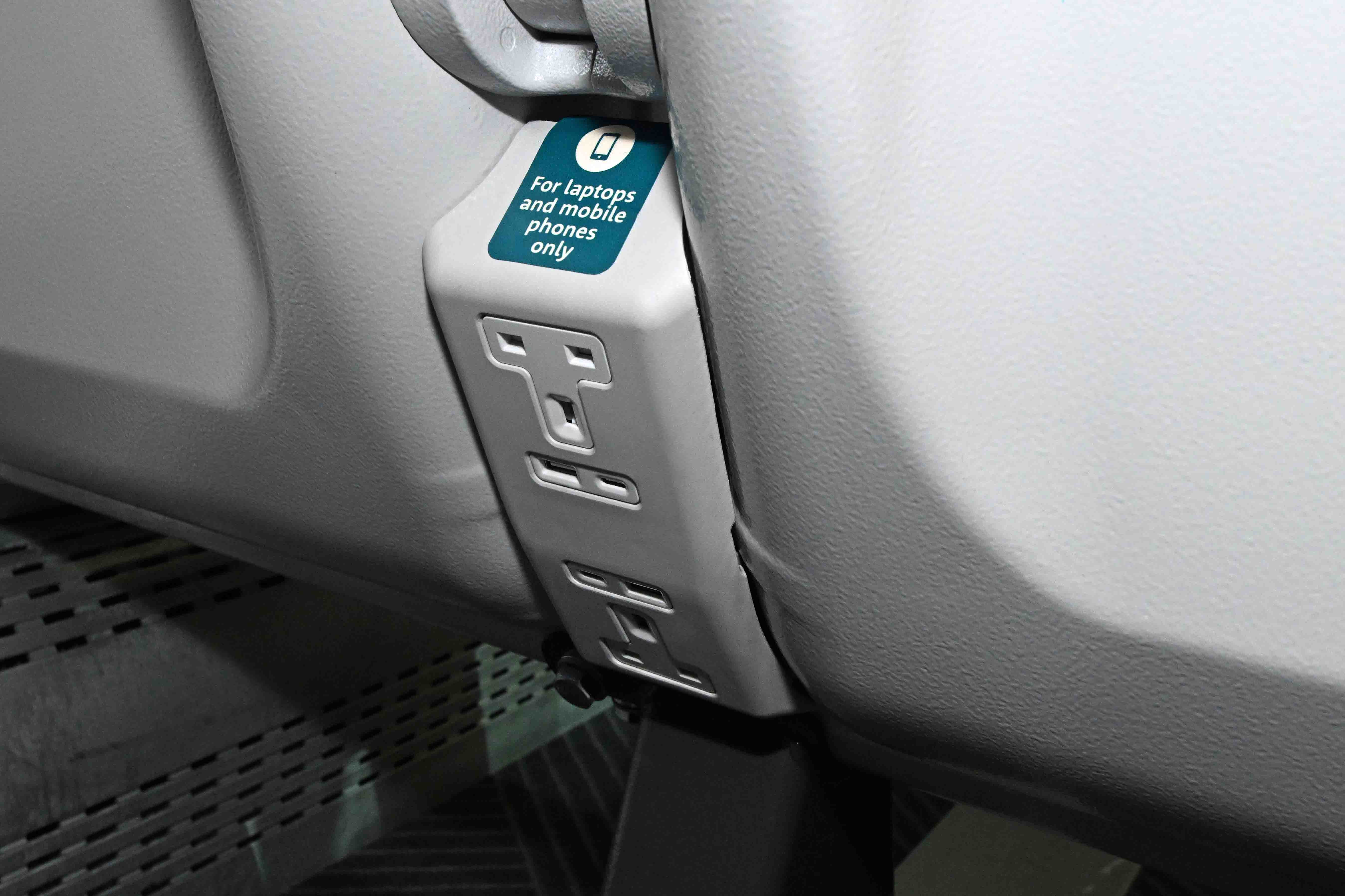
The work doesn’t involve altering the internal layout of the trains (except for the ex-AWC sets) but does include new seats, tables, wall panelling, carpets and LED lighting, together with internal and forward-facing CCTV and a passenger-counting system. Double the number of power and USB sockets are being provided, allowing for one for each seat.
Here’s a selection of images from the event.
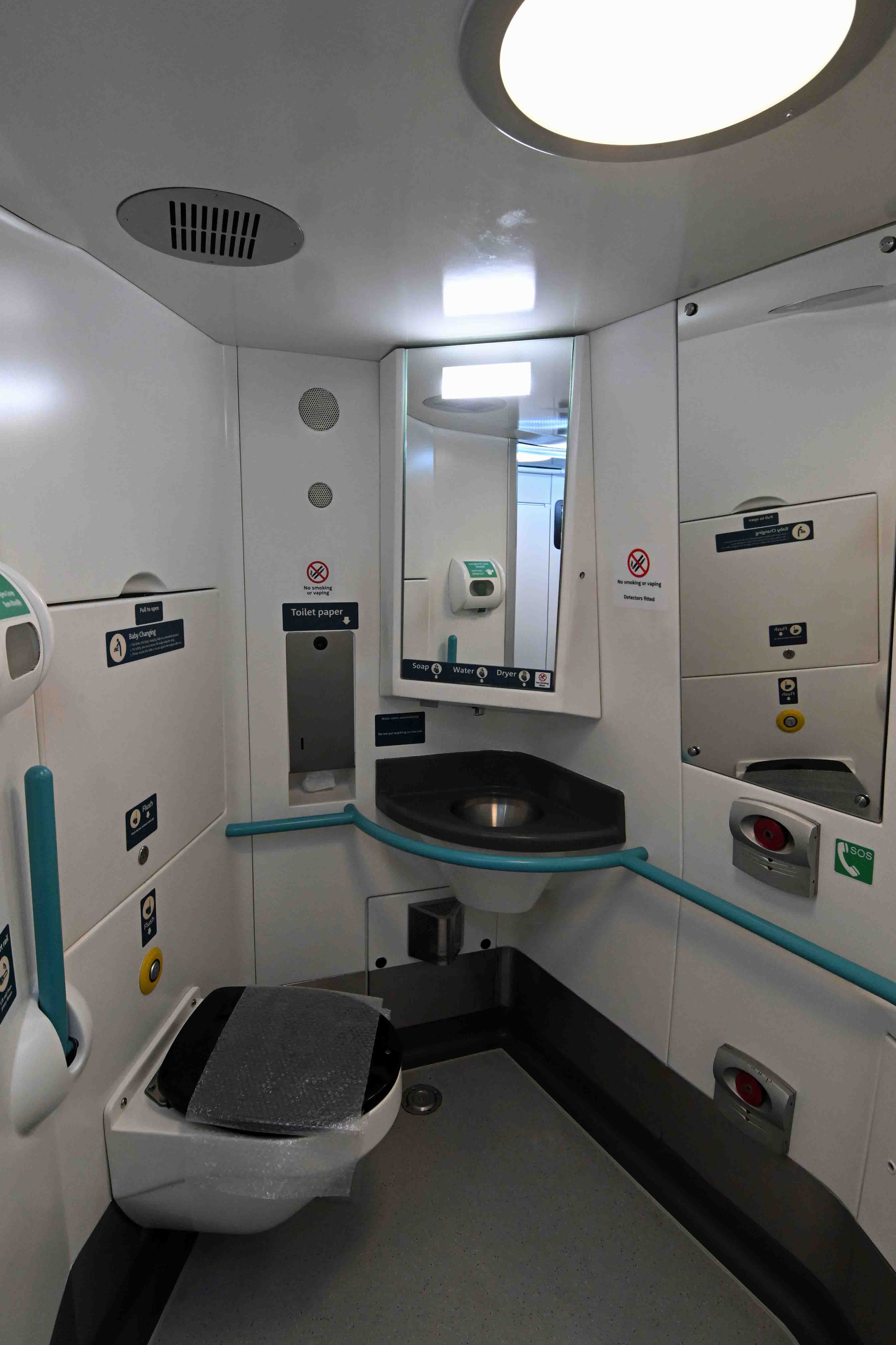
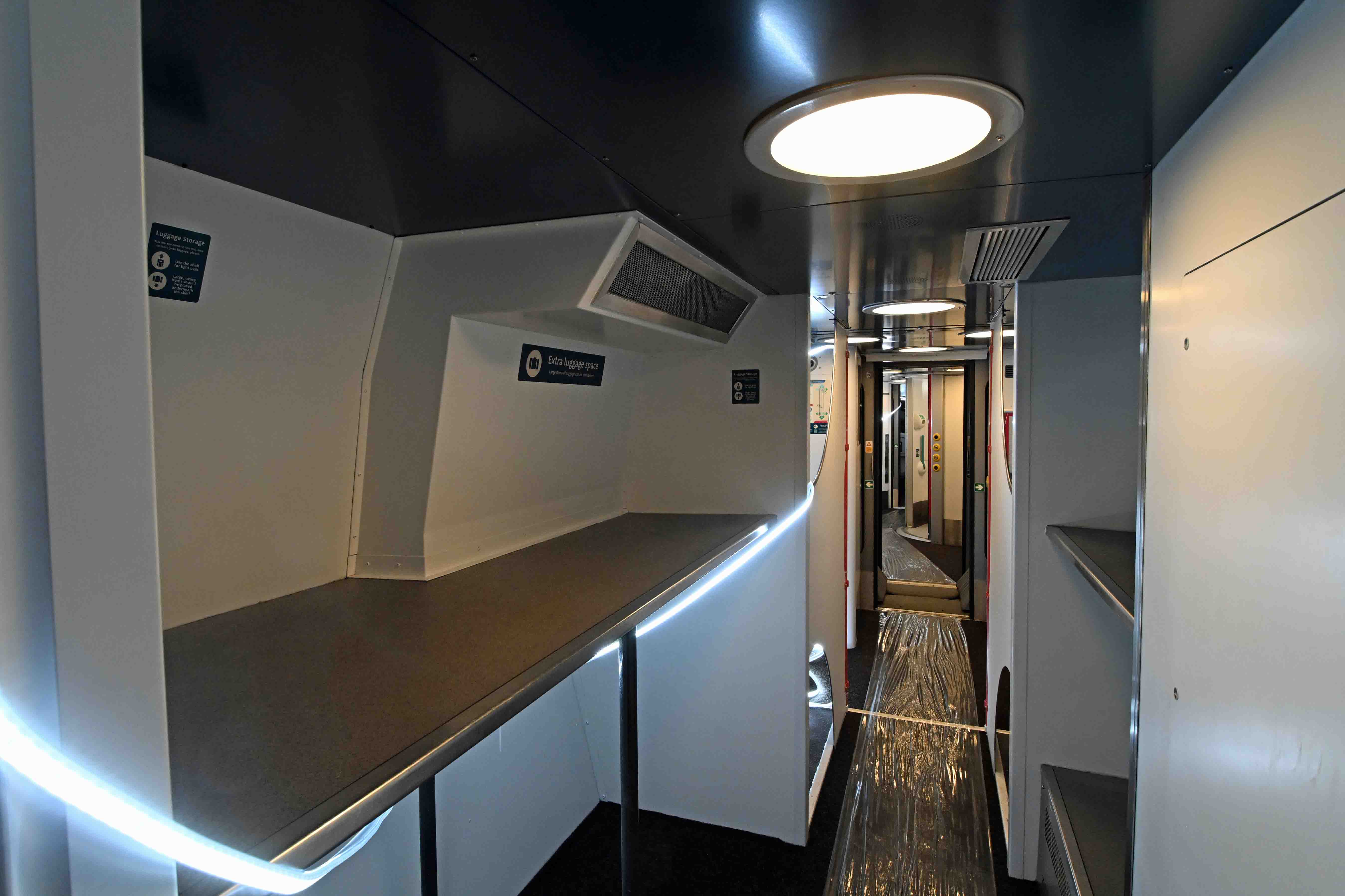
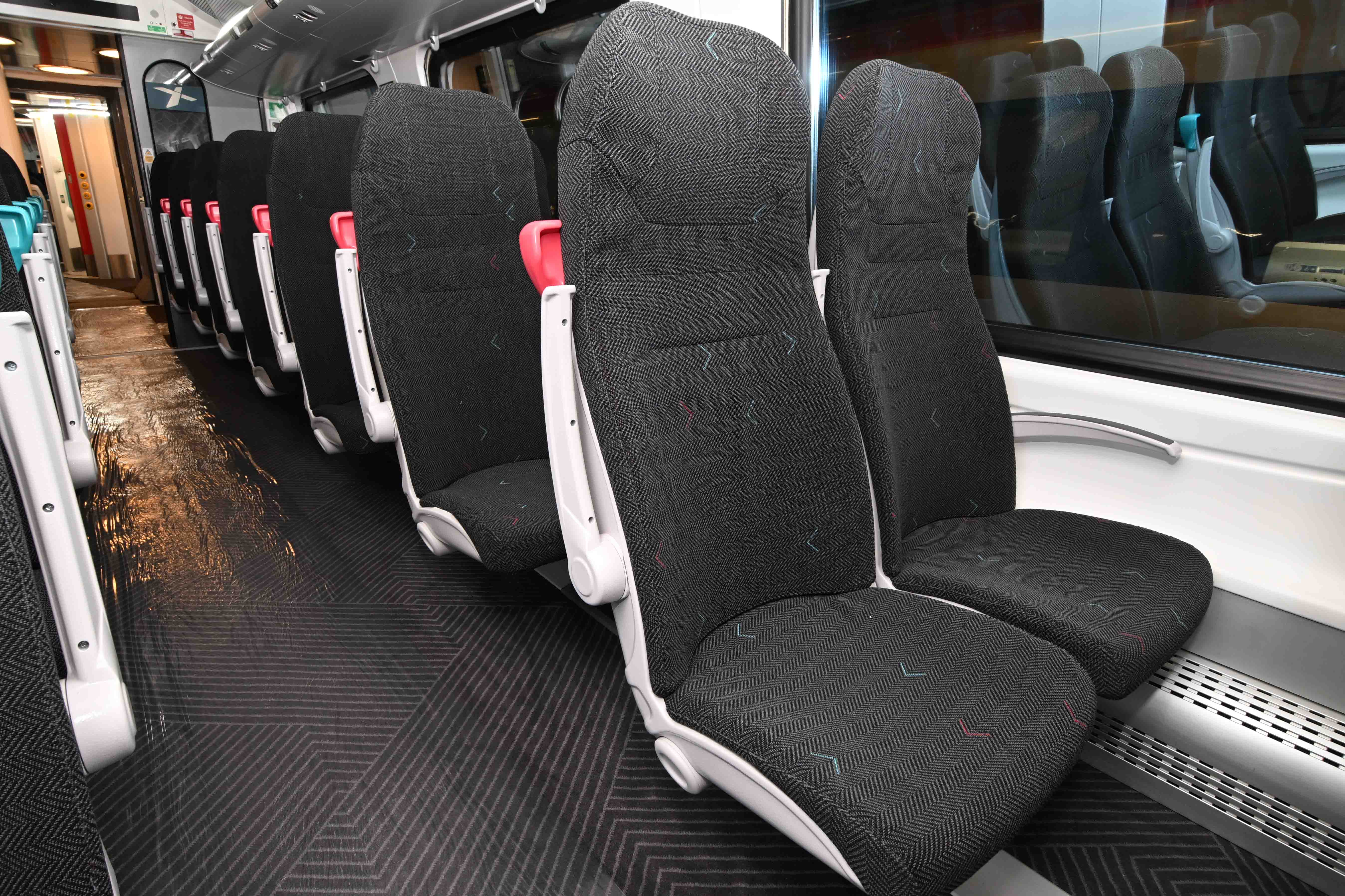
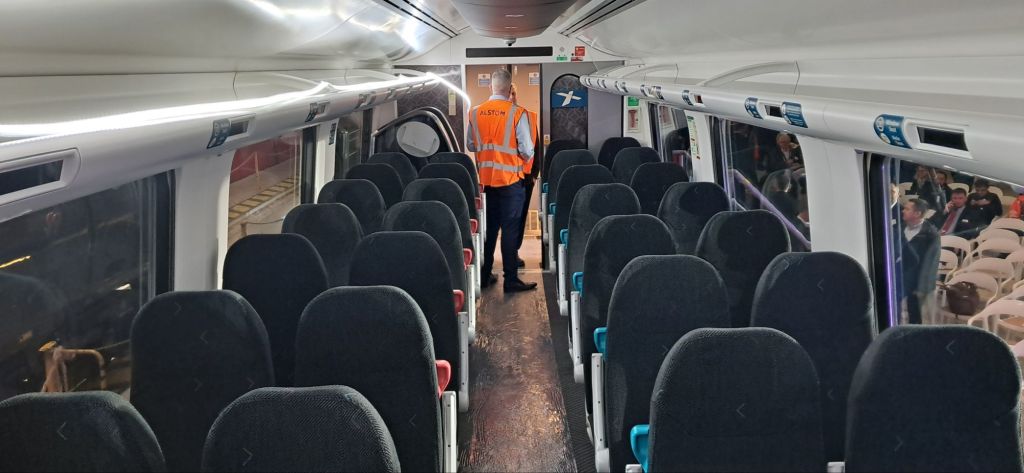
From left to right; Steve Harvey, Alstom’s Services Director UK and Ireland. Shiona Rolfe, Managing Director at CrossCountry and Adam Cunliffe, Chief Executive Officer at Beacon Rail.A pair of 1st Class airline seats. The extra seat width allows for the power and USB sockets to be fitted between the seats, underneath the armrests. A 1st Class table bay. One of the refurbished disabled toilets. A Standard Class table bay, where the power and USB sockets are table-mounted due to the seats being narrower. . Looking through one of the Standard Class vehicles, showing that the internal layout remains unchanged. What are very noticeable are the new different coloured grab-handles which are designed to be gauge cleared for catering trollies. The new seats have a longer table compared to the old version, although I’ve not tried using one with a laptop yet. In the longer term there are plans to remove the redundant heating grilles and radiators which take up space at the bottom of the bodyside to create more legroom. The radiators were heated by circulating engine coolant but if the system leaked this could cause engines to shut down due to a loss of pressure, which was less than desirable! Now all heating’s provided by the roof mounted HVAC systems.The luggage storage area remains unchanged but it’s been repanelled. The ‘funky’ lighting was temporary and fitted to help illuminate the vehicle as it had no shore-supply attached. Sockets in Standard Class airline seats, showing that the top one is mounted ‘upside down’ to avoid conflicts. Both the older and newer USB-C sockets are provided. Another feature is that the new seats offer more legroom as there’s no footrest bar. Here’s a closer look at the new seat mocquette and padding. On first try the seats seem to be firm but with sufficient padding that makes them superior to the ‘ironing board’ types fitted to some other long-distance trains…
I’ve a small favour to ask… If you enjoy reading this or any of the other blogs I’ve written, please click on an advert or two. You don’t have to buy anything you don’t want to of course – although if you did find something that tickled your fancy that would be fab! – but the revenue from them helps me to cover some of the cost of maintaining this site (which isn’t cheap and comes out of my own pocket). Remember, 99% of the pictures used in my blogs can be purchased as prints from my other website – https://paulbigland.zenfolio.com/
George Formby’s catchphrase was running through my head as I made my soggy way to Halifax station. The Pennines are obscured by mist and rain yet again today – and the forecast is no better in Derby, my final destination.
It’s grim up North – and everywhere else apparently…
Right now I’m on a packed and humid Northern service to Leeds which is full of damp humanity heading to work. We’re running several minutes late but it shoukdn’t affect my connection. I’ll be transferring to Northern’s new ‘Yorkshire flyer’ service which is a fast service to Sheffield with just one stop at Wakefield Westgate. It’ll make a useful alternative to Cross-Country trains on the same route as they’re normally packed.
Hopefully, there’ll be enough room on that train to set up the mobile office. Right now I’m jammed in an airline seat with my camera bag balanced on my lap. We’re currently reversing at Bradford Interchange and there’s not a single seat left free in my coach. This train’s going to be extra ‘cosy’ by the time we reach Leeds!
08:55.
My 10 minute late arrival at Leeds proved to be no great disaster as my connection was leaving from the opposite end of the platform I arrived in on – 12. I’m now aboard the ‘Yorkshire Flyer’, a grand name of an ex-Scotrail 2-car class 158, although I suppose its top speed of 90mph does count as ‘flying’ by Northern standards! It’s reasonably busy too – between 50-60% capacity at a guess. That’s allowed me to grab a table bay (which I’m sharing) to set up the mobile office and type-swipe. The only thing I miss compared to Cross-Country is an at seat trolley service. A coffee would have gone down very well right now as I admire the dreary skies outside. Not that you can admire very far, visibility’s limited to about 700m!
12:07.
Oh, hello!
Whilst the internal layout of the Voyagers hasn’t changed the seats have. There’s more legroom because of it.
19:10
Well, that was an interesting day! Not only did we get to explore the first of Cross-Country’s refurbished Voyagers (a project costing £70m), we also got to see a few poor old Class 455 cars hauled off for scrap, walk through the production line of the new Class 345 trains for the Elizabeth line – and have a ride on a 5-car Class 701 on the test track.
The first of the new Elizabeth line Class 345 sets on the production line.
Of course, part of the fun was talking to old friends and colleagues from the industry and his Majesties railway press corps! I’ll go into greater detail about the refurbishment tomorrow and hope to add a few more pictures when I get home later. Right now I’m heading back to Leeds on a late running ‘Yorkshire Flyer’ from Sheffield after having stopped for a quick pint in Derby with an old friend, Robert Pritchard, Editor of Today’s Railways UK.
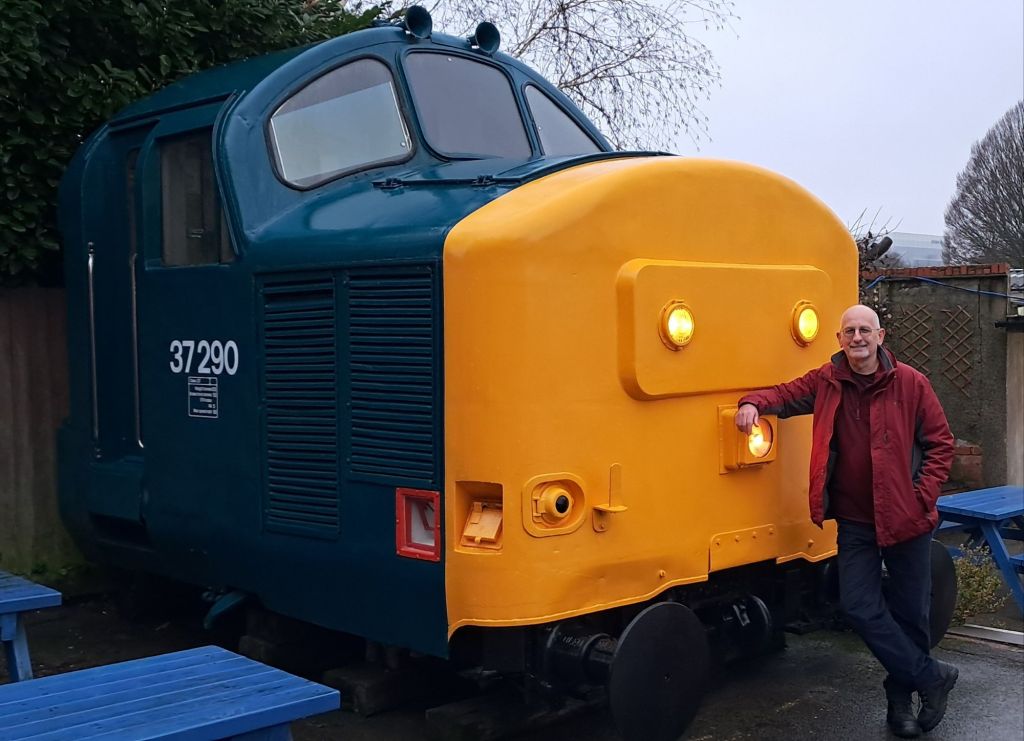
One of the cabs of 37290 is preserved outside the Alexandra pub. It’s recieved a repaint and had its lights recomissioned.
I’ve a small favour to ask… If you enjoy reading this or any of the other blogs I’ve written, please click on an advert or two. You don’t have to buy anything you don’t want to of course – although if you did find something that tickled your fancy that would be fab! – but the revenue from them helps me to cover some of the cost of maintaining this site (which isn’t cheap and comes out of my own pocket). Remember, 99% of the pictures used in my blogs can be purchased as prints from my other website – https://paulbigland.zenfolio.com/
Oh, God. Is that really the time? I’m already up, drinking coffee and munching on toasted fruit teacakes in preparation for my stroll to Sowerby Bridge station to catch the first Manchester bound train of the day, the 06:03. I’ll be heading to Birmingham for an HS2 media visit, the first to this particular site which I’ll describe when I get there. Unlike some, this is no hole in the ground. Exactly the opposite, in fact – it’s rather eye-catching…
I’ll be blogging as and when I can, so feel free to pop back to see how the day goes…
06:10.
Whilst it’s a damp and somewhat icy morning my walk to the station was rather enjoyable. The fact it’s downhill all the way added to that fact! Now I’m relaxing in the warmth of a mostly empty 3-car Class 158, although I’ve no doubt it’ll have folled up with wage-slaves by the time we get to Manchester.
06:43.
As expected my train slowly filled up en-route but was way over half full by the time it left Rochdale which is the busiest station on the route after Halifax. The occupants are a mix of trades people heading into the city to work on various building projects and earlybird white collar office or shop workers.
07:33.
This morning’s walk twixt Vic and Picc stations was a chilly one. The city centre felt colder than back in the Pennines. I felt for the poor sods sleeping rough, hidden in cardboard boxes to keep warm, or just swaddled jn dleeping bags. There but for the grace of God…
Piccadilly station was just beginning to spring into life with long-distance services heading South and East whilst local trains ferried in commuters from the suburbs.
Piccadilly awakes…
Now I’m en-route to Crewe aboard an ex-London Midland Class 323 whilst dawn breaks over the city on what promises to be a decent winter’s day.
09:07.
I’m typing this aboard a London North-Western service from Crewe to Birmingham. I’m on a warm, comfortable Class 350/4 with plug sockets, a/c and wifi, which is a bit of a step-up from the Class 323 that got me here from Manchester. Not that it was a bad journey, watching the sunrise over frosty fields and frozen streams as we traversed the Cheshire countryside was gorgeous. At Crewe I bumped into two other rail journalist colleagues, but they’re booked on a later train so I’ve gone on ahead.
Staffordshire is just as frozen as Cheshire with everywhere covered in a thick layer of frost. If I was lineside it would make for some great pictures, but today I’ve other fish to fry.
09:33.
Perusing the BBC website my day was dimmed by the tragic news coming out of Thailand where 28 people have been killed when a construction crane collapsed onto a train. It’s a railway system I know well and I country I love, so it feels anything but abstract, or distant, especially as I’d normally be there this time of year.
11:00.
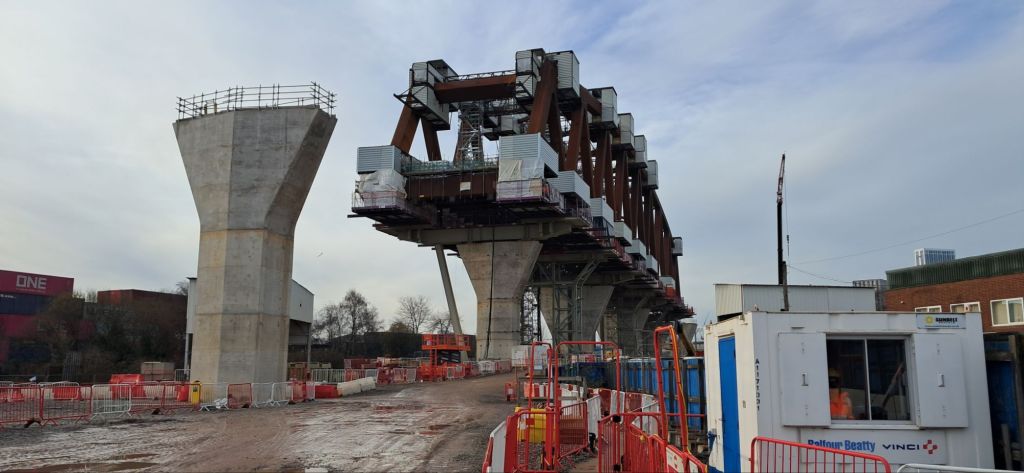
Having met up with Chris Howe and Rich Wilcock at New St we’re now on site. This is what we’ve come to learn about – and climb to the top of. The HS2 bridge which will span the existing line to Walsall at Duddeston.
14:35.
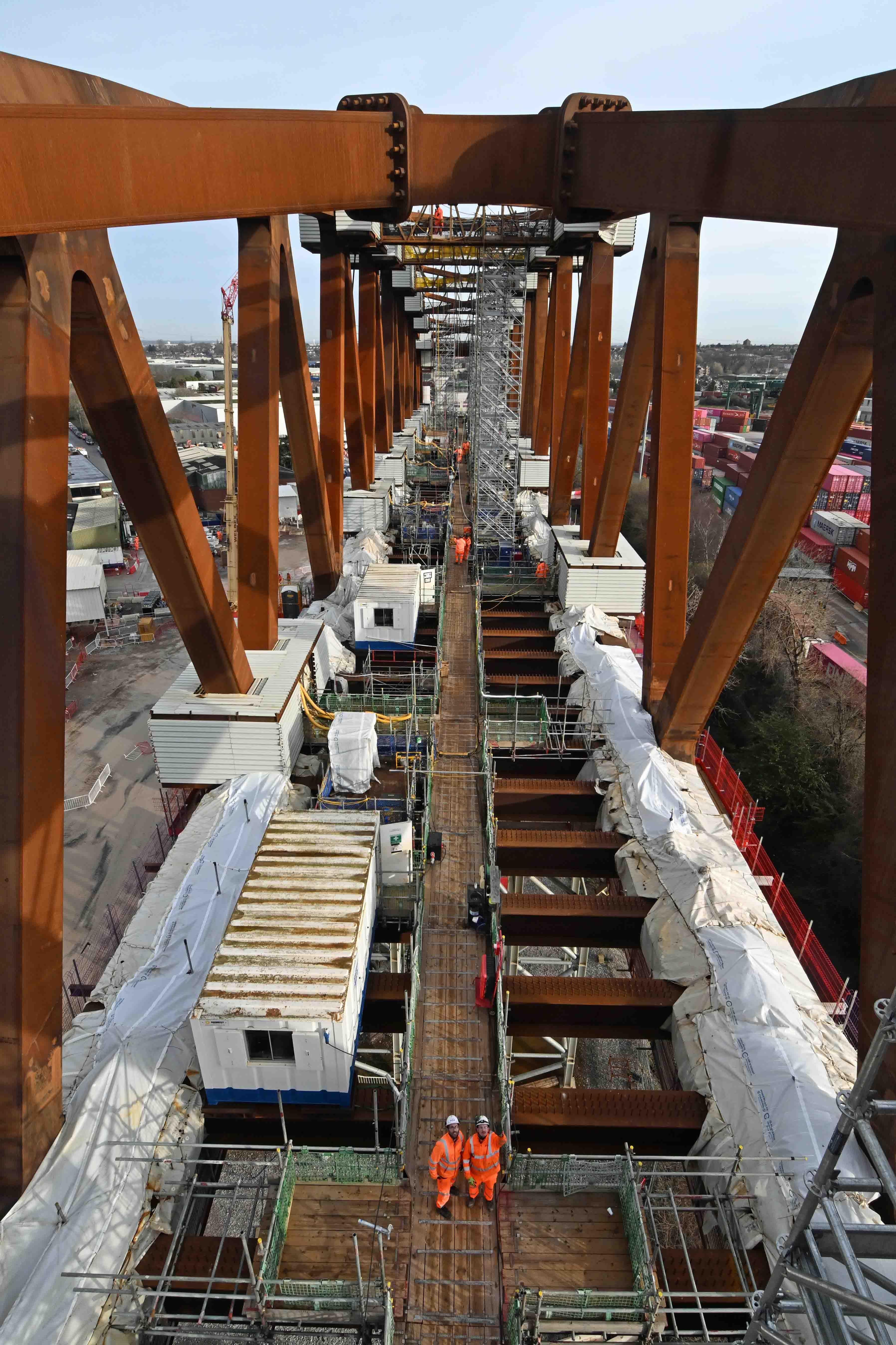

Visit over, I’m now having a warm and editing a few pictures. Here’s a sample (captions to follow).
Looking down along the bridge from the high girders at the Birmingham end of the structure.The view looking the othe way towards Curzon St with a cross-city line train on the route the bridge will be pushed out over…A zoom lens shot of Curzon St station under construction.
18:00.
I’m now on my way home from Crewe after a fascinating day. I’ll be writing a seperate blog about Curzon St No2 bridge soon. Hs2 Ltd organised an excellent visit with lots of information and access to the engineers building this project.
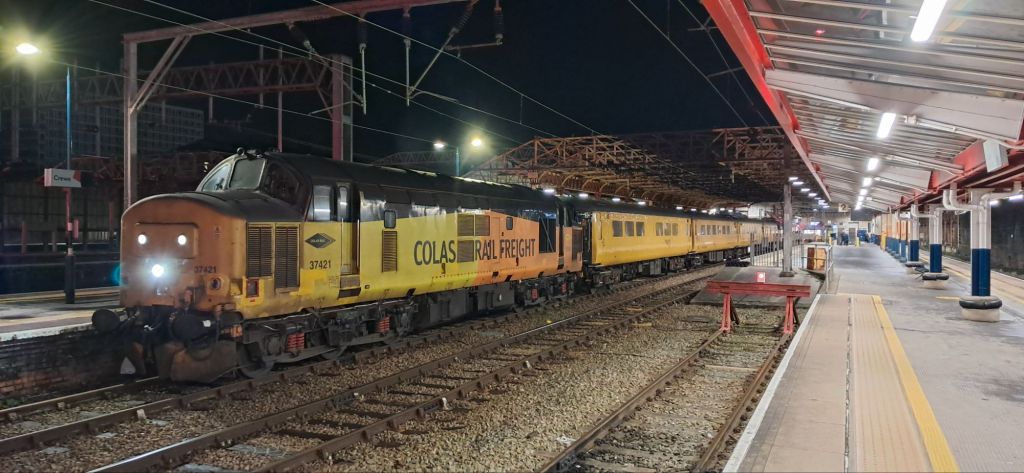
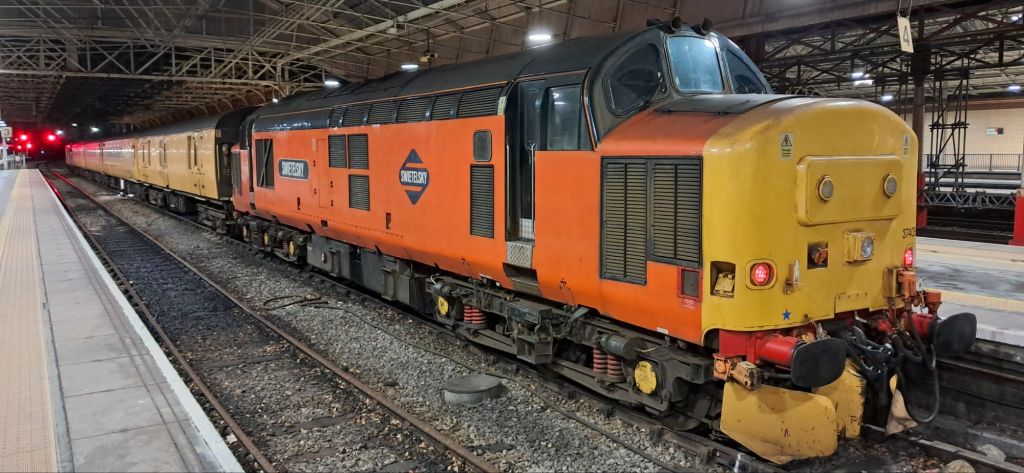
Having left site I had a couple of hours to get pictures around New St station before catching the 16:34 North. This was another busy train which was rammed all tge way to Wolverhampton. It remained busy all the way to Crewe, where I had a few minutes grace between trains to photograph these beasties.
The Class 37. Still serving the railway after 60 plus years.
I’ve a small favour to ask… If you enjoy reading this or any of the other blogs I’ve written, please click on an advert or two. You don’t have to buy anything you don’t want to of course – although if you did find something that tickled your fancy that would be fab! – but the revenue from them helps me to cover some of the cost of maintaining this site (which isn’t cheap and comes out of my own pocket). Remember, 99% of the pictures used in my blogs can be purchased as prints from my other website – https://paulbigland.zenfolio.com/
The new year has started slowly here at Bigland Towers. After the excitement and fireworks that saw the end of 2025 we’ve taken the day off to potter around and enjoy the warm coziness of home before starting 2026 in earnest. January’s brought cold weather and threats of snow, so a day off seemed sensible.
New years eve was more productive. Despite the chill we ventured out by car to do some exploring. The railways annual Christmas shutdown has seen a lot of engineering work take place up and down the country. Some of that work will run well into January, but there was one local Trans-Pennine Route upgrade (TRU) project I wanted to have a look at. Mirfield station.
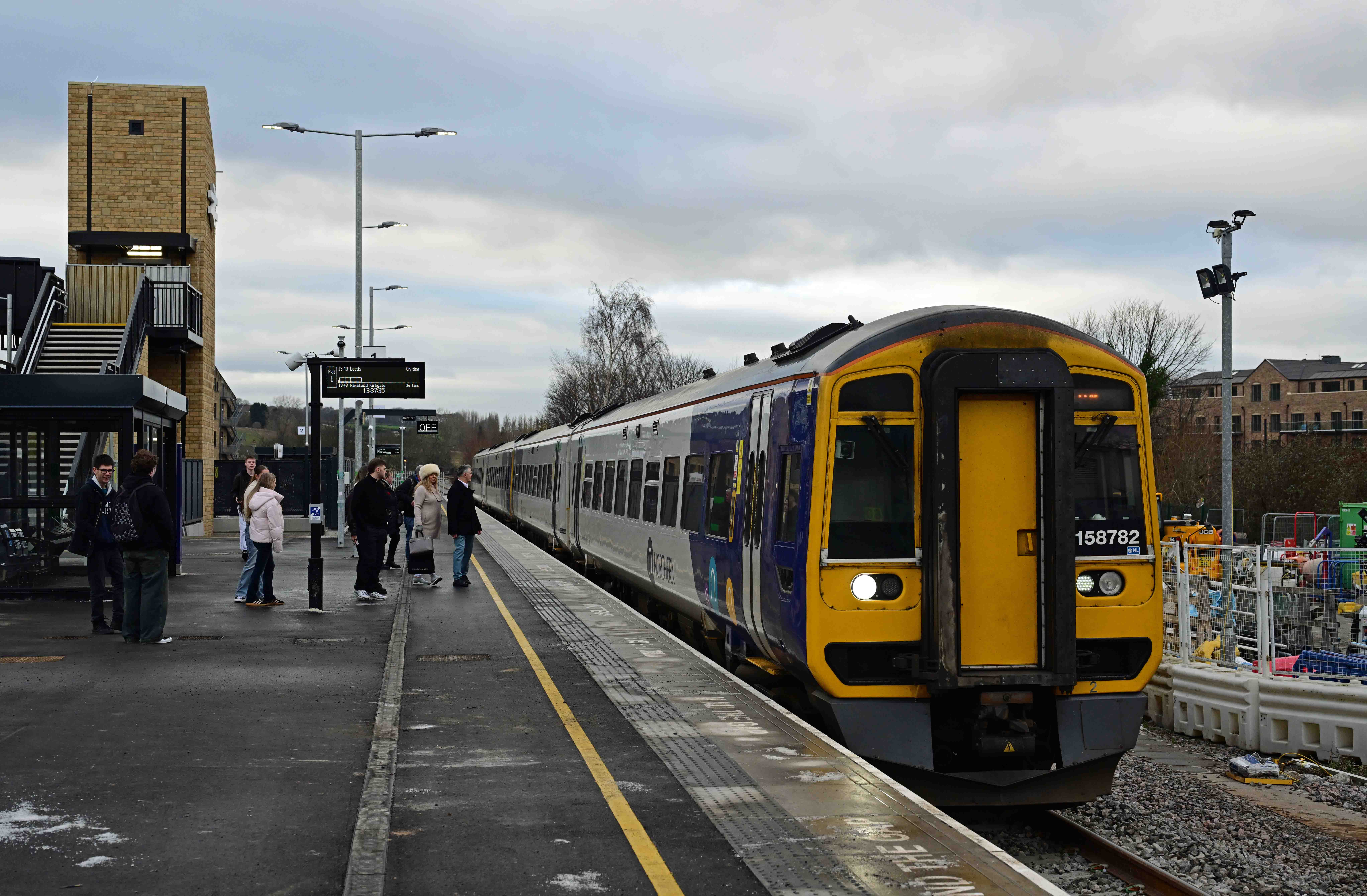
Over Christmas the rebuild of the island platform was completed and track through platform one was reinstated. Hording blocking it off were removed with passenger trains reintroduced from December 27th. There’s still a lot of work to complete as the new footbridge and lifts have yet to be commissioned, but the place looks very different to how it did just a few weeks ago.
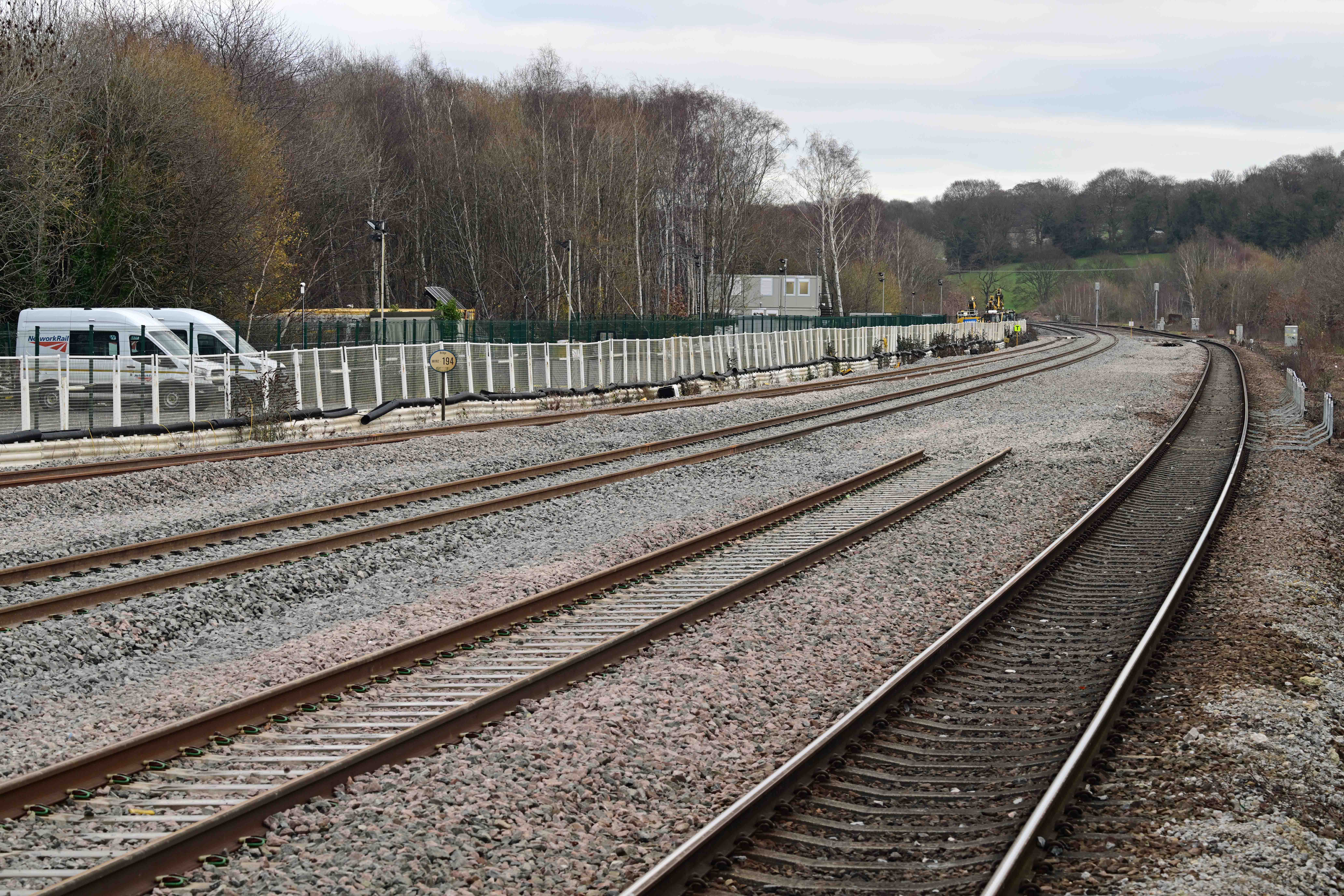
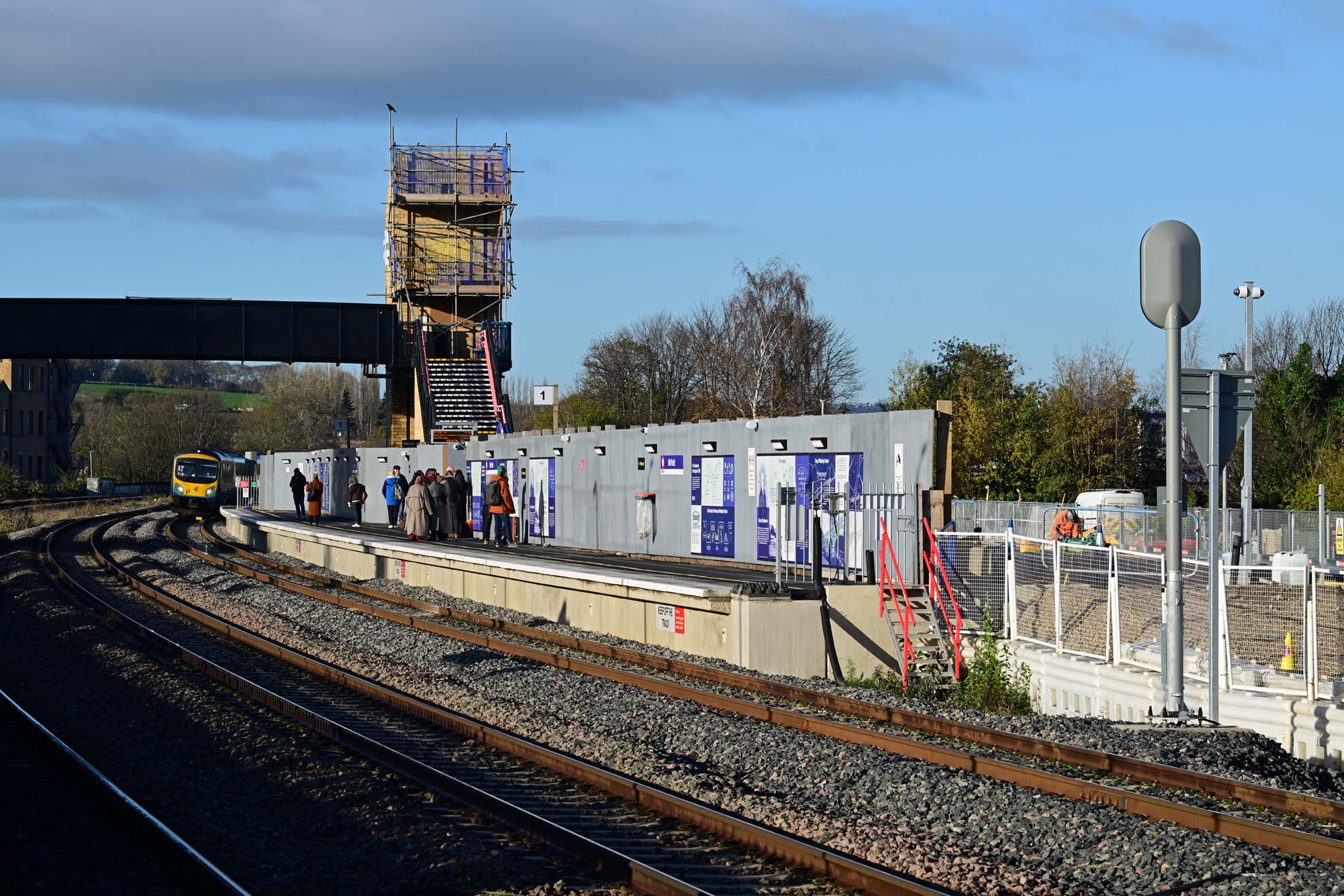
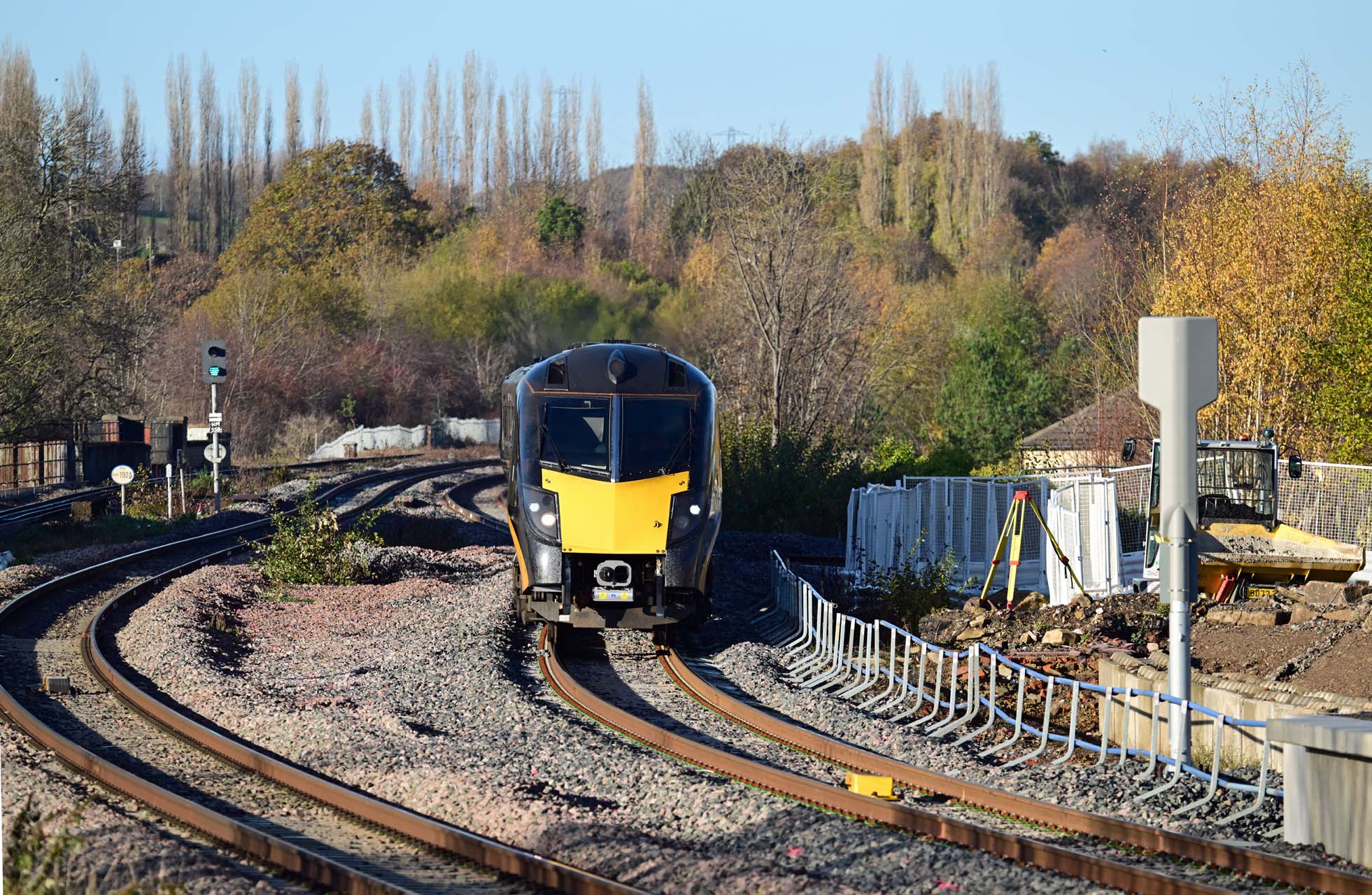
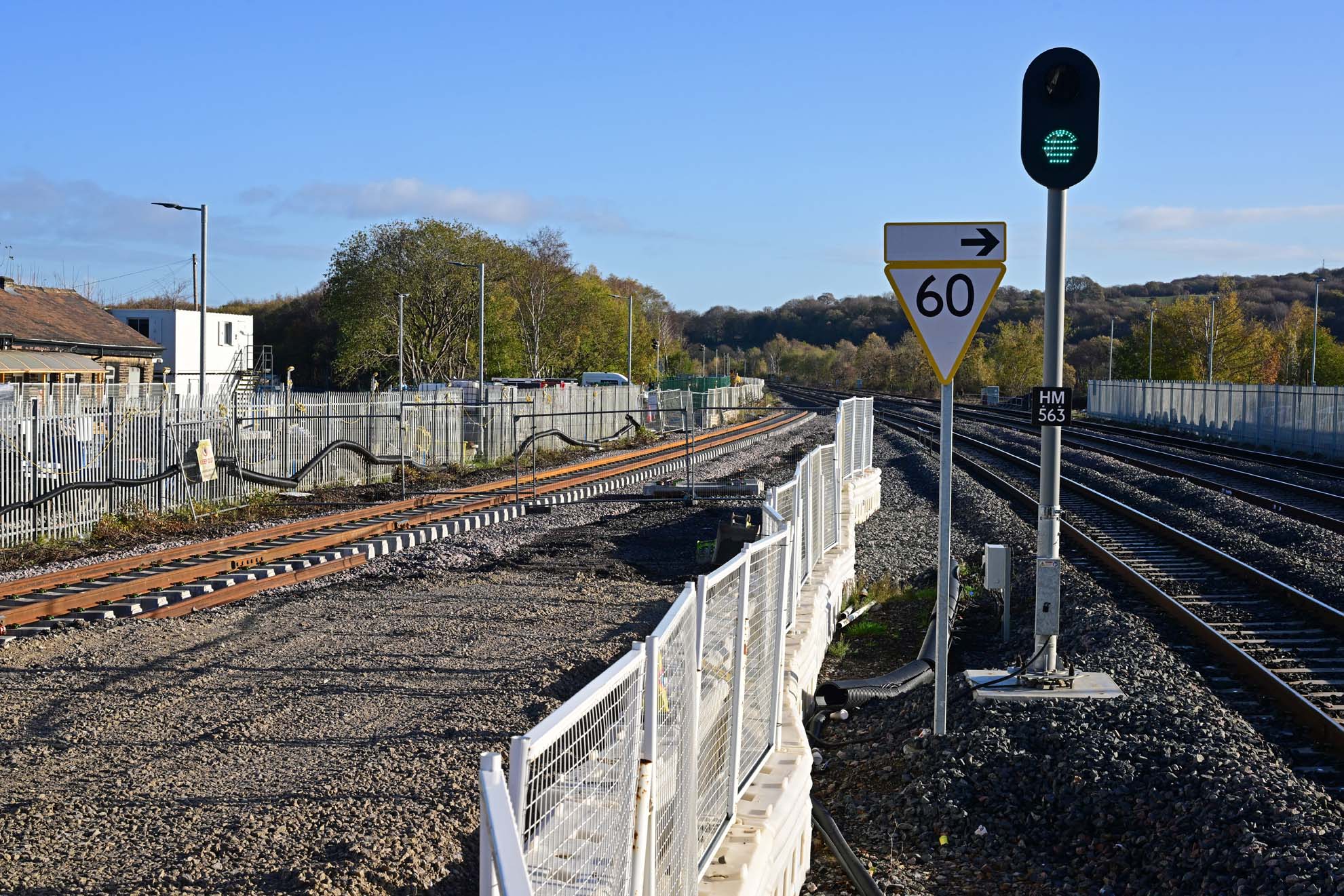
Here’s how the station looked on November 25th. The lift towers were still swathed in scaffolding and the majority of the island platform was hidden behind hoardings. Here’s how it looks now.The hoardings have vanished, along with the scaffolding. They’ve been replaced by new lighting and platform shelters, which whilst rather basic at least offer some shelter from the elements. The rebuilt island has been lengthened to be able to accommodate 6-car trains. The other major change is that the direction of the tracks has been reversed. Platform 1 now caters for Eastbound services as platform 2 has reverted to serving Westbound trains – although none are scheduled to use it at the moment until platform 3 is abolished. Looking East from platform 3 you can see that the former Fast line has been disconnected and slewed to run through platform 2. The track running through the station’s been left in situ ready from when this becomes four-tracks again. 158782 and 158789 call at the reinstated platform whilst working 2L13, the 11:49 Wigan Wallgate to Leeds.Almost ready. The new footbridge and lifts are seeing the finishing touches being completed and lifts commissioned. The lift in the right-hand tower will descend below the platform to the new entrance to provide level access from the street.
Having frozen to death in the wind to get these pictures we headed back to Halifax and home, but not before stopping off to photograph moody skies providing a backdrop to Castle Hill near Huddersfield.
Back home, Dawn busied herself in the kitchen to experiment with making her own thin-crust pizza bases. I’m biased (obviously) but I think they were a great success and tasted delicious when topped with seafood or chorizo, vegan cheese and chilli. I suspect these will become a regular feature in the Bigland household this year!
Whilst we weren’t bothered about spending midnight in the pub, we did pop out for a sociable few drinks in our local, the Big 6, before returning home to see in the new year sat in front of the fire, watching the fabulous London fireworks display. That brought back a lot of memories as I was there on the Embankment on the opposite side of the river to the wheel for the millennium display in 1999. There’s been a lot of water down the Thames since then…
Now it’s 2026. A year I’m looking forward to with cautious optimism. The world’s still a very uncertain place but there are grounds for hope. Russia’s war in Ukraine is going badly for them, and there’s signs that one of their key allies (Iran) is beginning to fall apart due to civil unrest. Of course Trump is still a major disaster, but the narcissistic old fool and his MAGA morons are in trouble in the polls and likely to have bad mid-term elections this year. In the UK, the wheels are starting to come off Nigel Farage’s latest bandwagon (Reform). His Russia connections are coming back to haunt him and the councils Reform run show every sign of being a fiasco waiting to unfold. Plus, despite all the Reform and media frenzy and speculation over Keir Starmer, the idea that there’s going to be a general election before 2029 is for the birds. And if a week’s a long time in politics, 3.5 years is an age.
The Labour government have proved to be a disappointment due to a lack of bravery, squandering a huge majority that they could have used to make important changes without fear of opposition. But, they’re nowhere near as bad as the media love to make out. They’re doing good things but the media resolutely refuse to highlight anything positive and concentrate on a stream of negativity. I’m hopeful Labour can get their act together on messaging, stop being timid and cut through to highlight the positive changes they are making.
If only the media spent as much time looking at how Nigel Farage’s girlfriend managed to pay nearly a million quid in cash for ‘his’ house in Clacton as they did obsessing about Angela Rayner and Rachel Reeves tax affairs we’d be far better informed as an electorate.
On a personal front, I’m looking to spend January concentrating on some projects that have taken a backseat over the past year or so, which includes finishing scanning a lot of old slides which have never seen the light of day for decades. Then there’s travelling. I may not be heading outside of the UK for the next month, but plans are certainly afoot for later in the year.
I’m also intending to up the ante on blogging. Things slipped a bit in 2025, but now I’m back with a lot to say – and things to do…
In the meantime, let me with all my like-minded readers the very best for 2026. I hope you all have a fabulous year.
I’ve a small favour to ask… If you enjoy reading this or any of the other blogs I’ve written, please click on an advert or two. You don’t have to buy anything you don’t want to of course – although if you did find something that tickled your fancy that would be fab! – but the revenue from them helps me to cover some of the cost of maintaining this site (which isn’t cheap and comes out of my own pocket). Remember, 99% of the pictures used in my blogs can be purchased as prints from my other website – https://paulbigland.zenfolio.com/
Yesterday (Thursday) the sun shone bright here in West Yorkshire, making a change from the dank and dismal weather which seems to be the norm nowadays. It spurred me on to get out and about for a few hours to look at some of the Trans-Pennine Route Upgrade work sites that I hadn’t visited this year, as well as some I’ve been popping into regularly. I was also driven by the fact Ravensthorpe station closes this weekend so that the site can be cleared for the new fast lines flyover. Here’s a selection of pictures from the day.
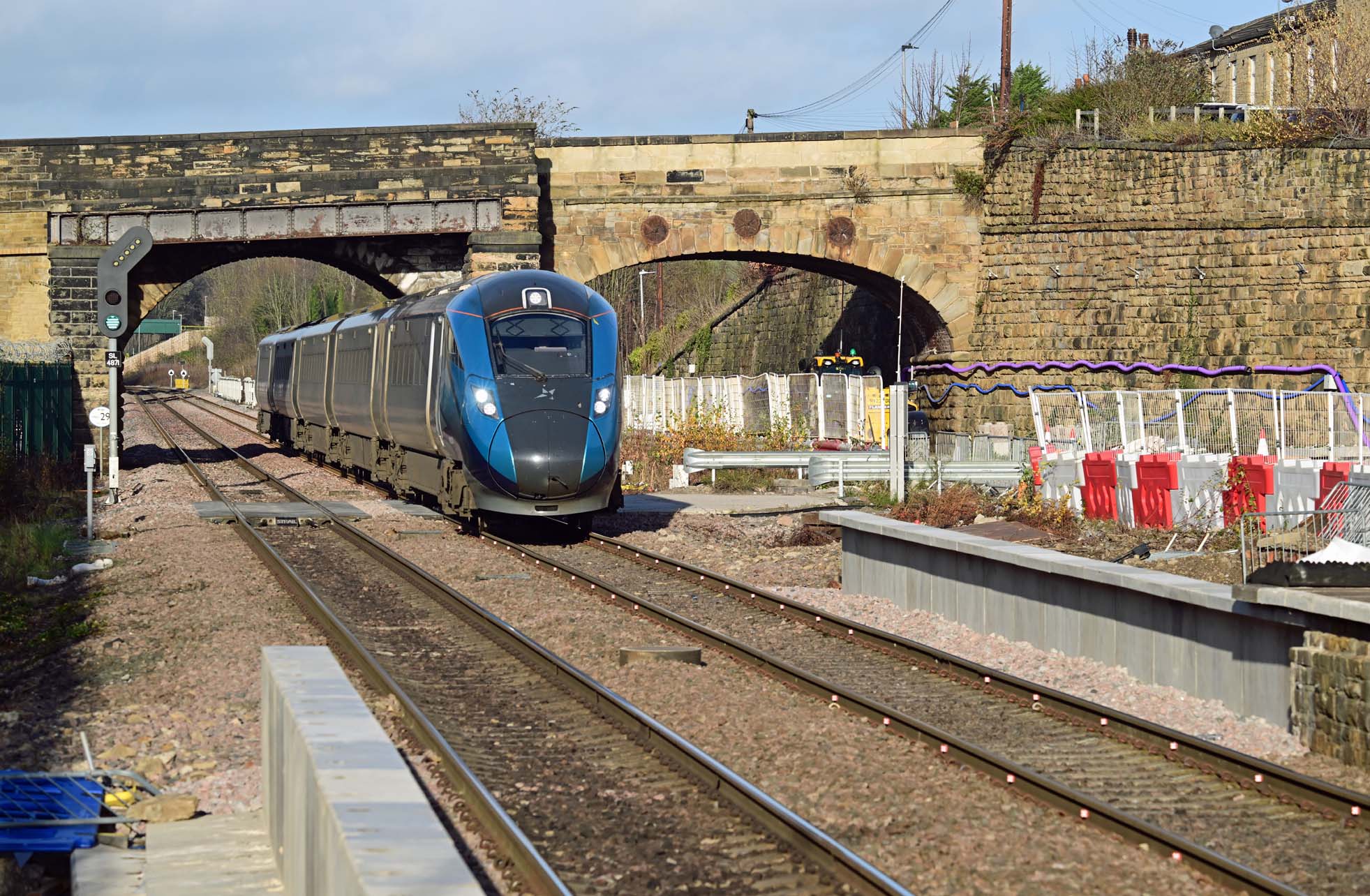
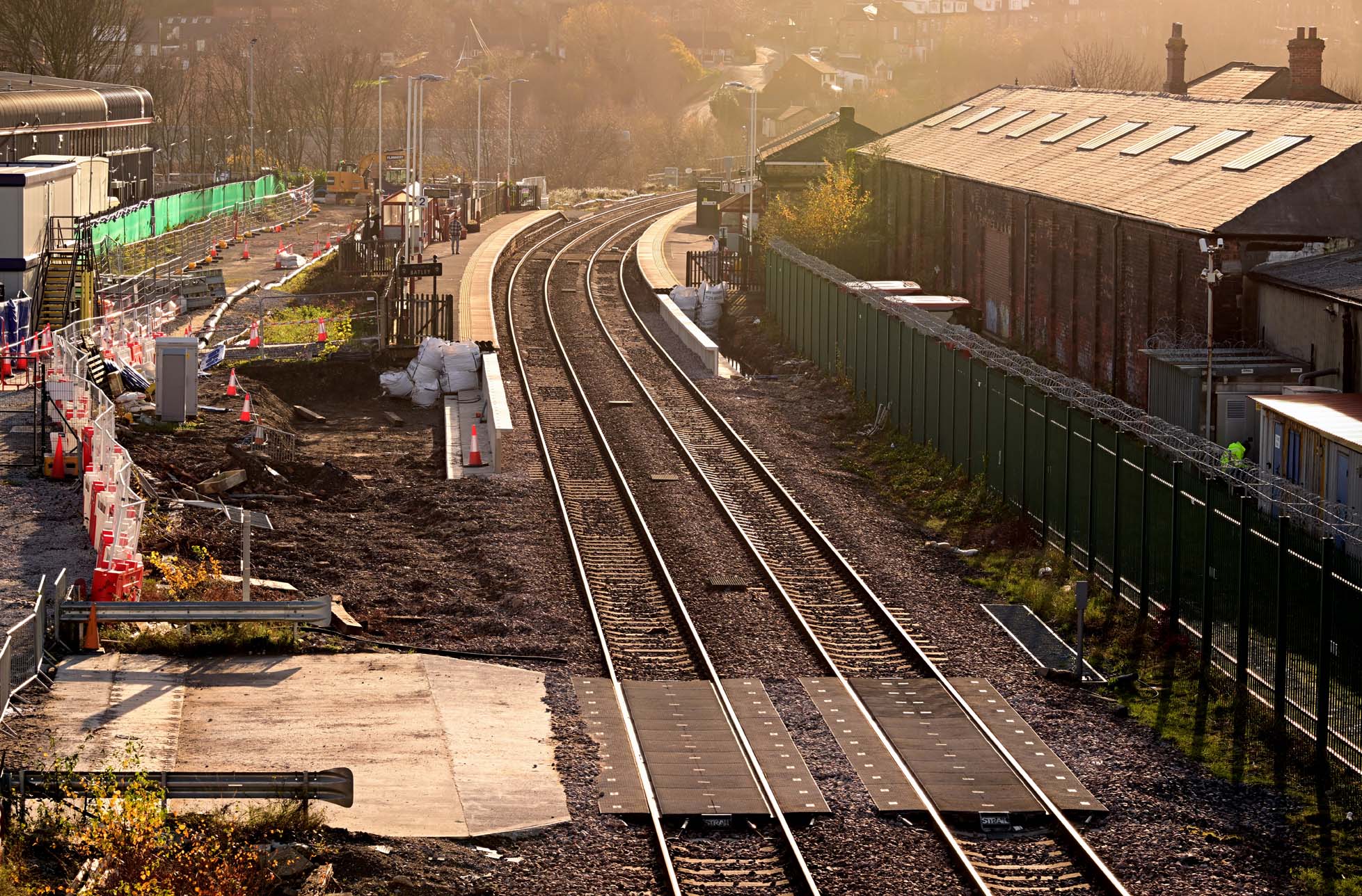
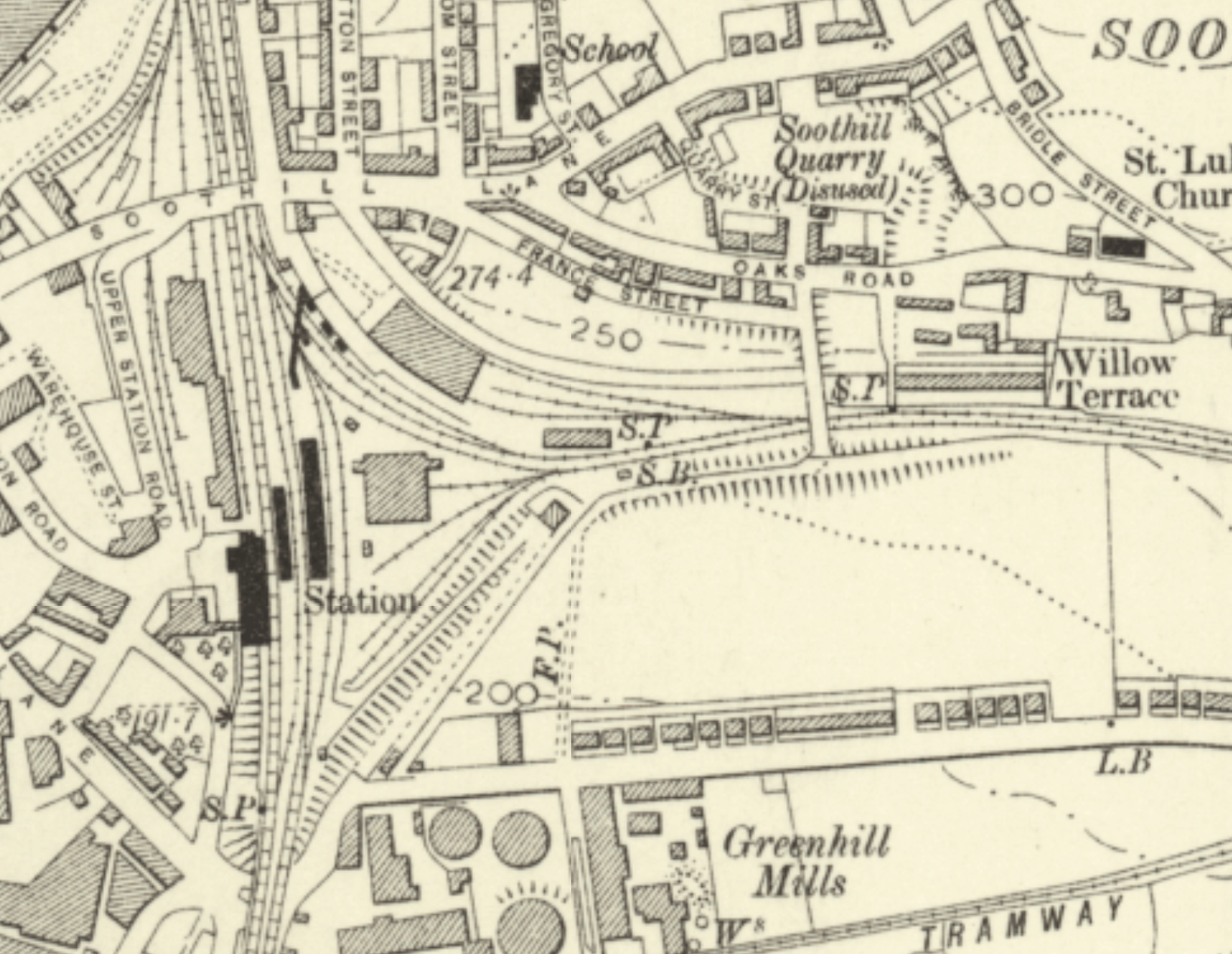
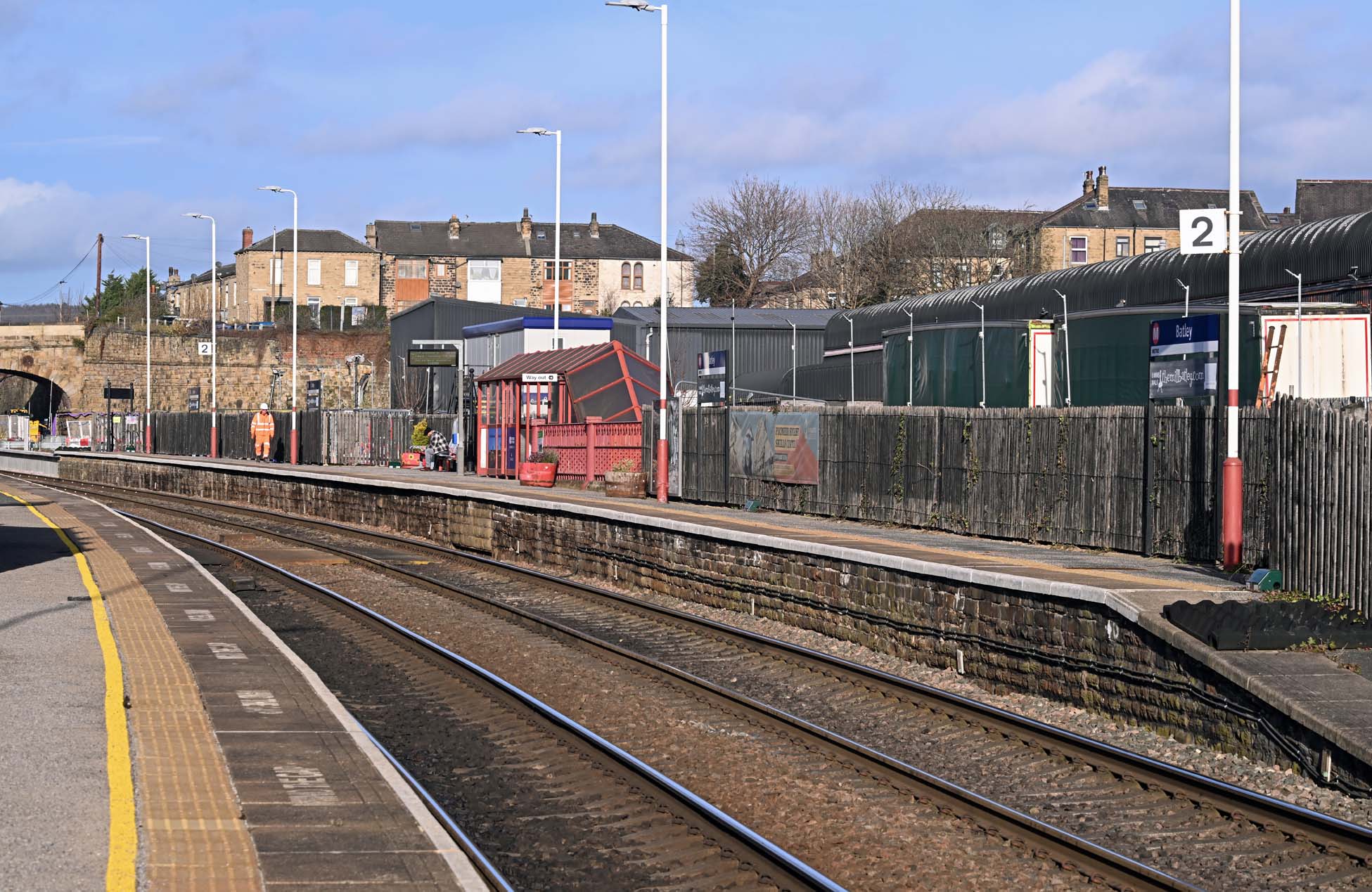
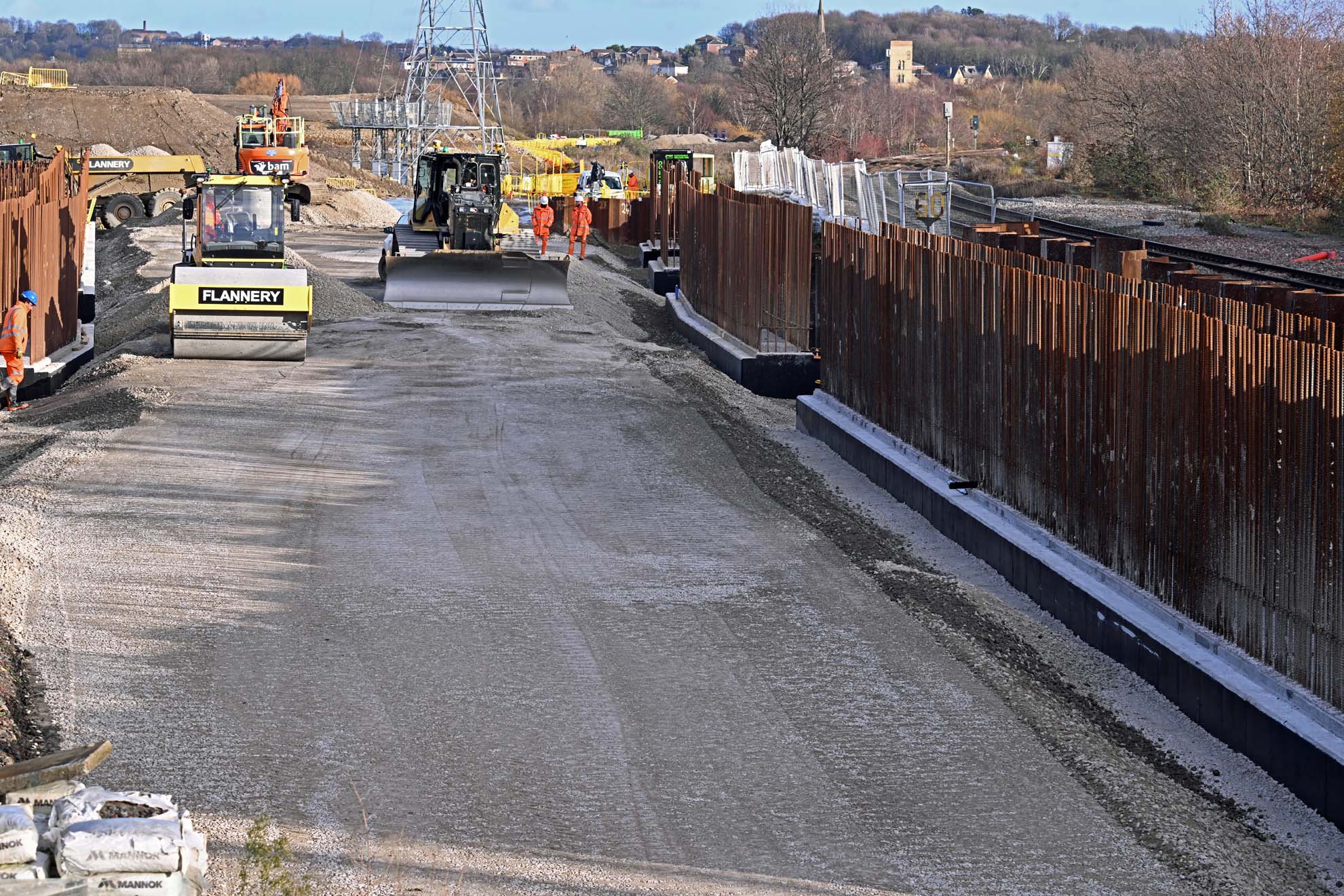
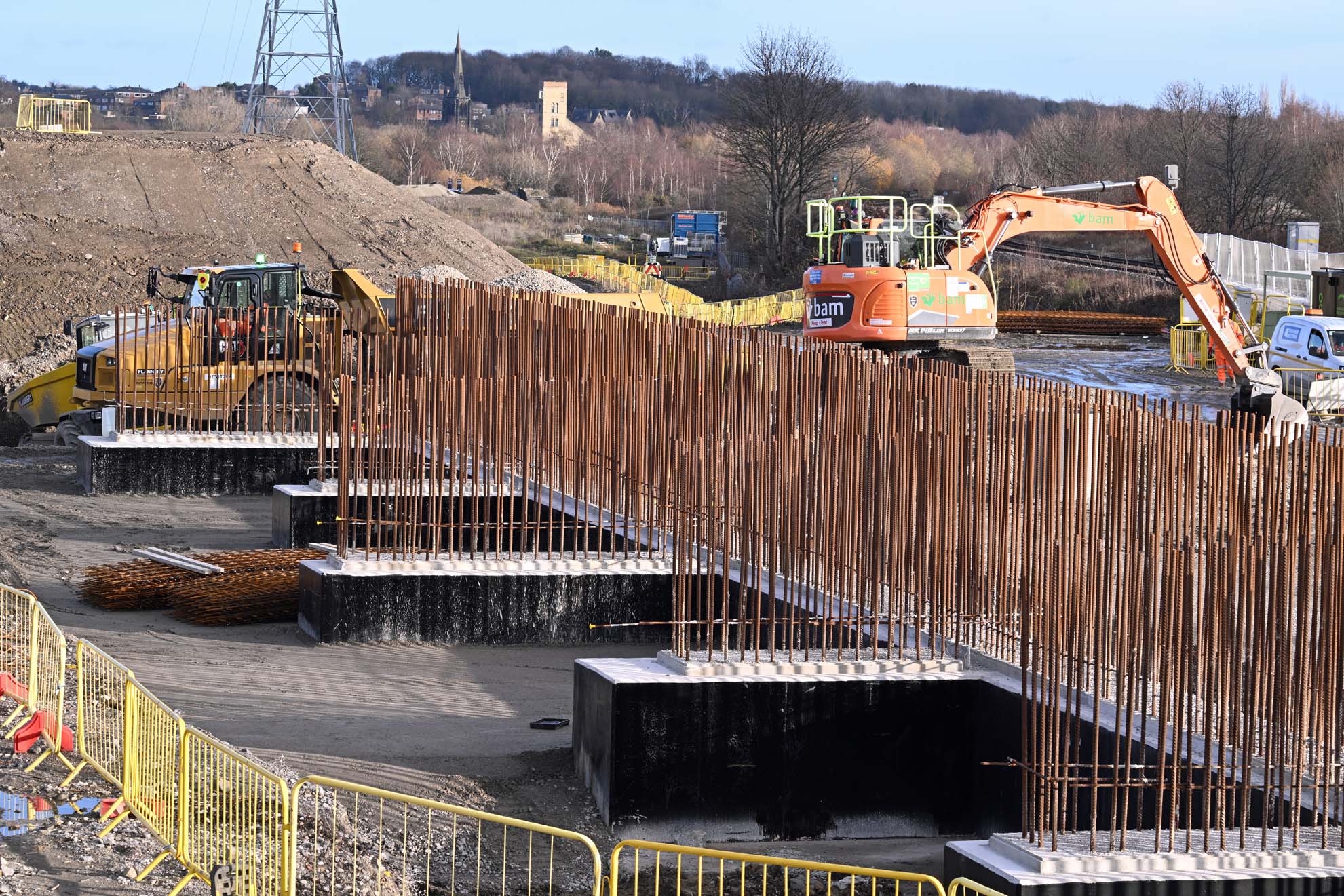
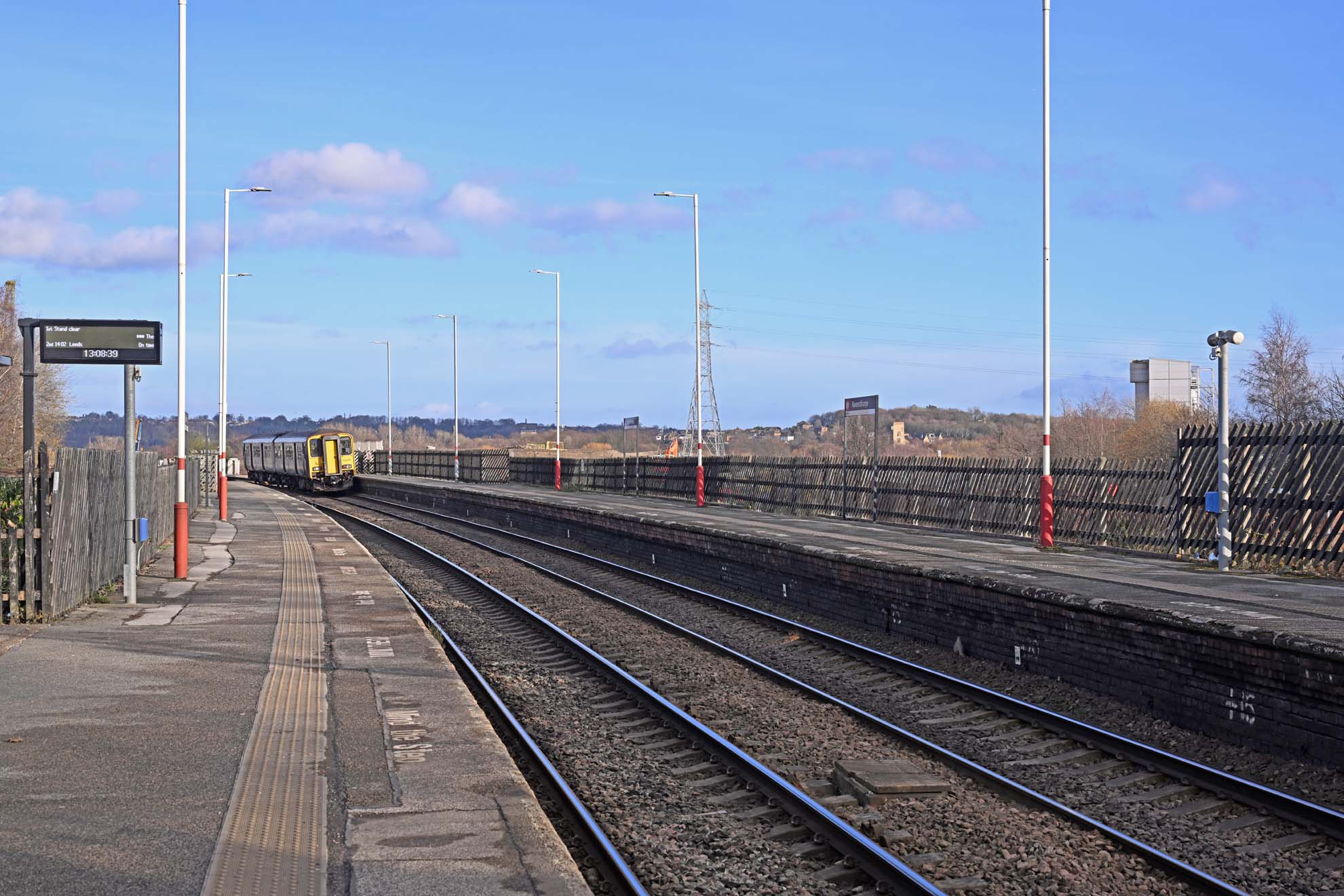
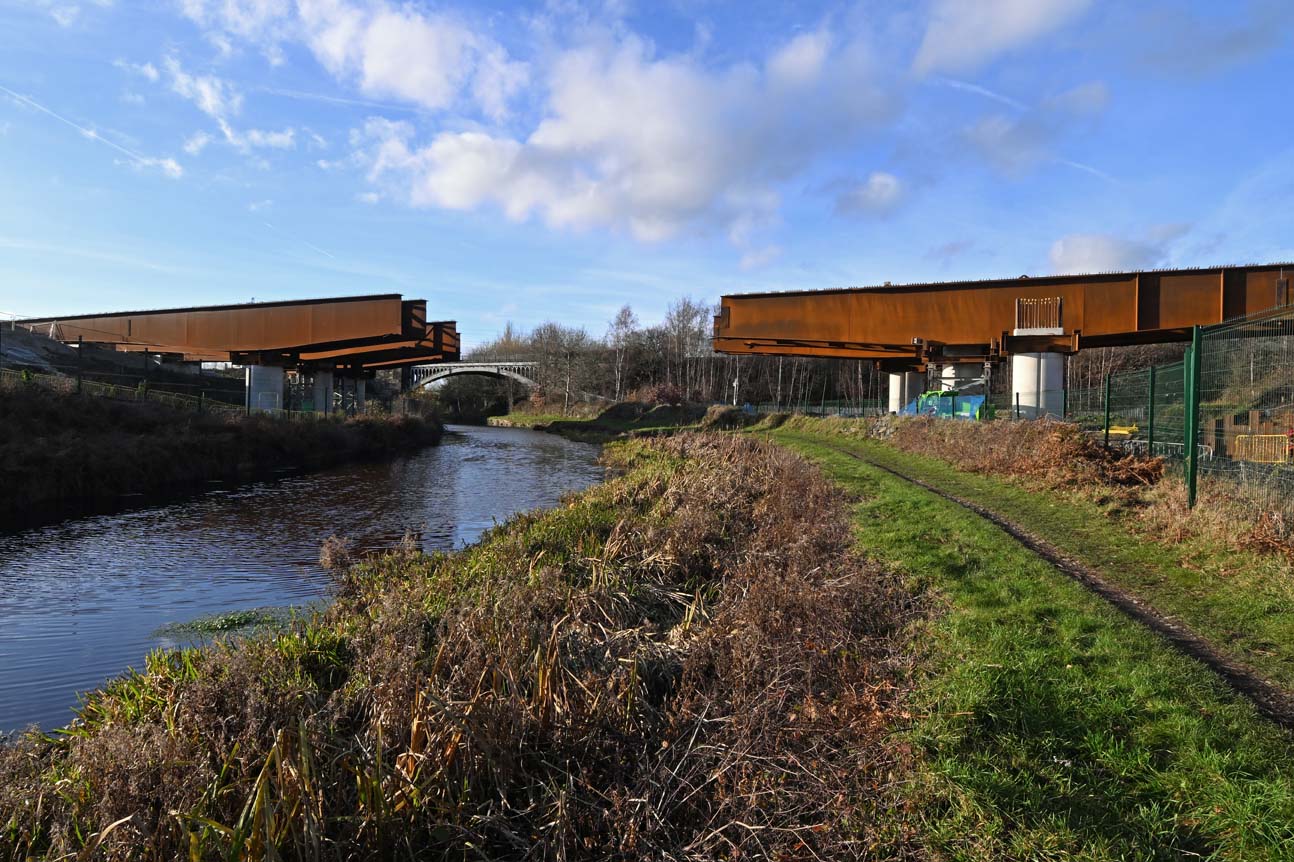
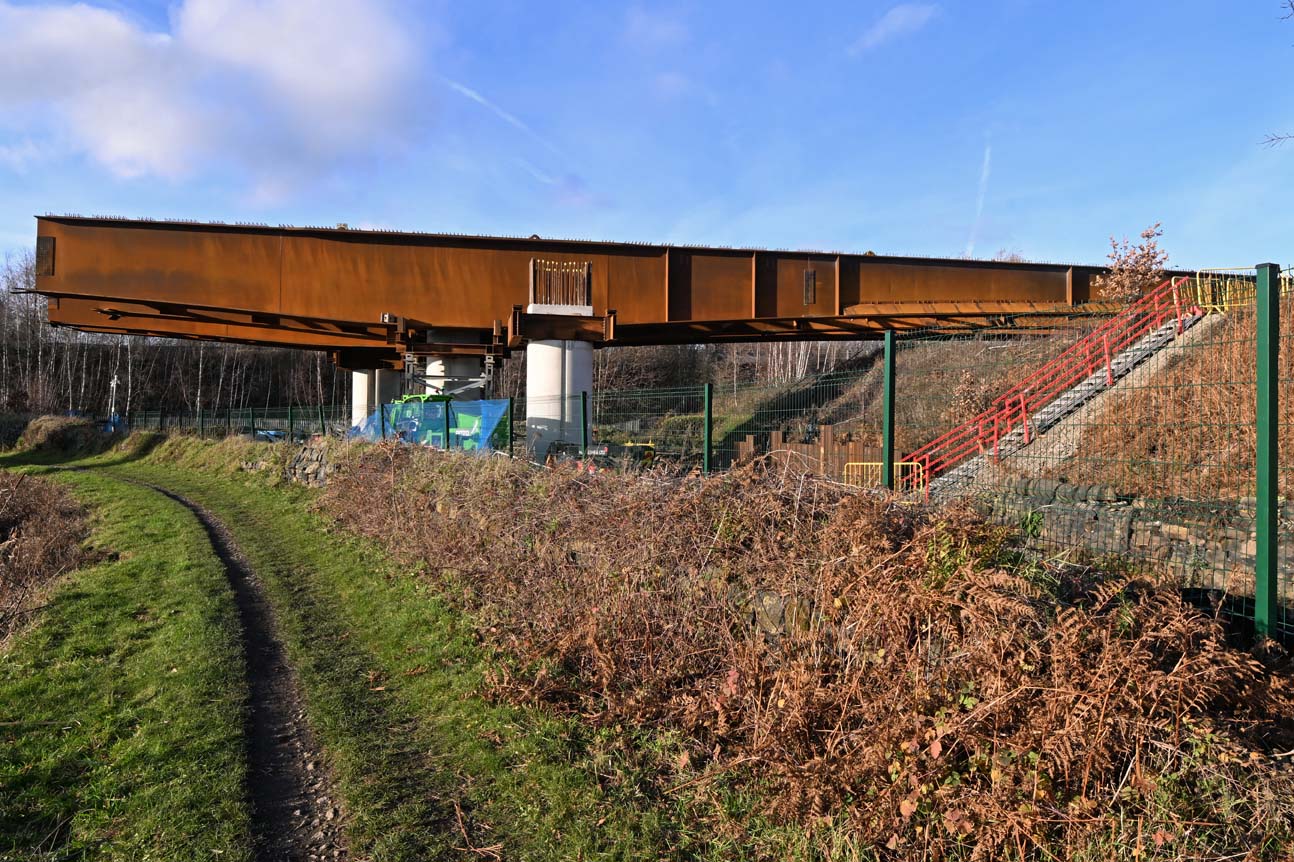
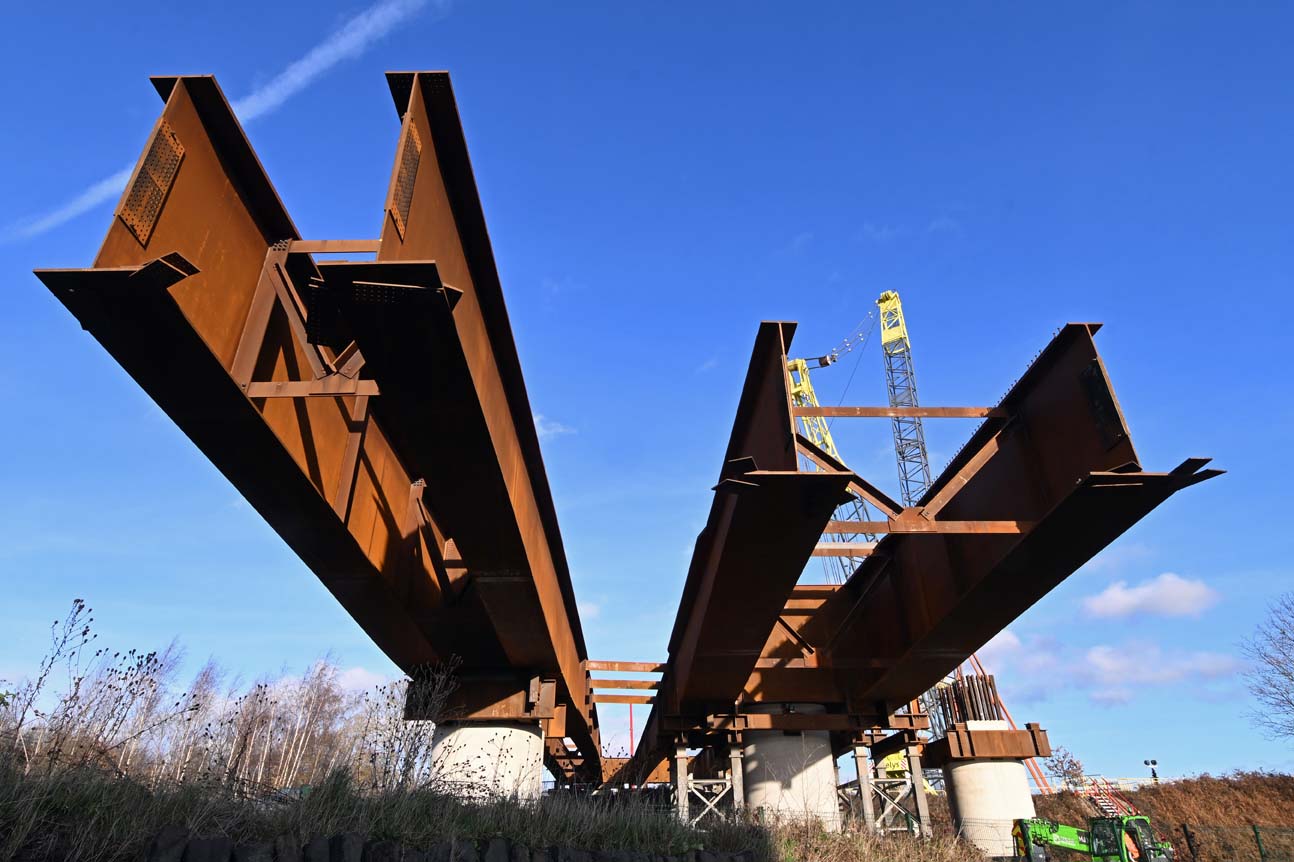
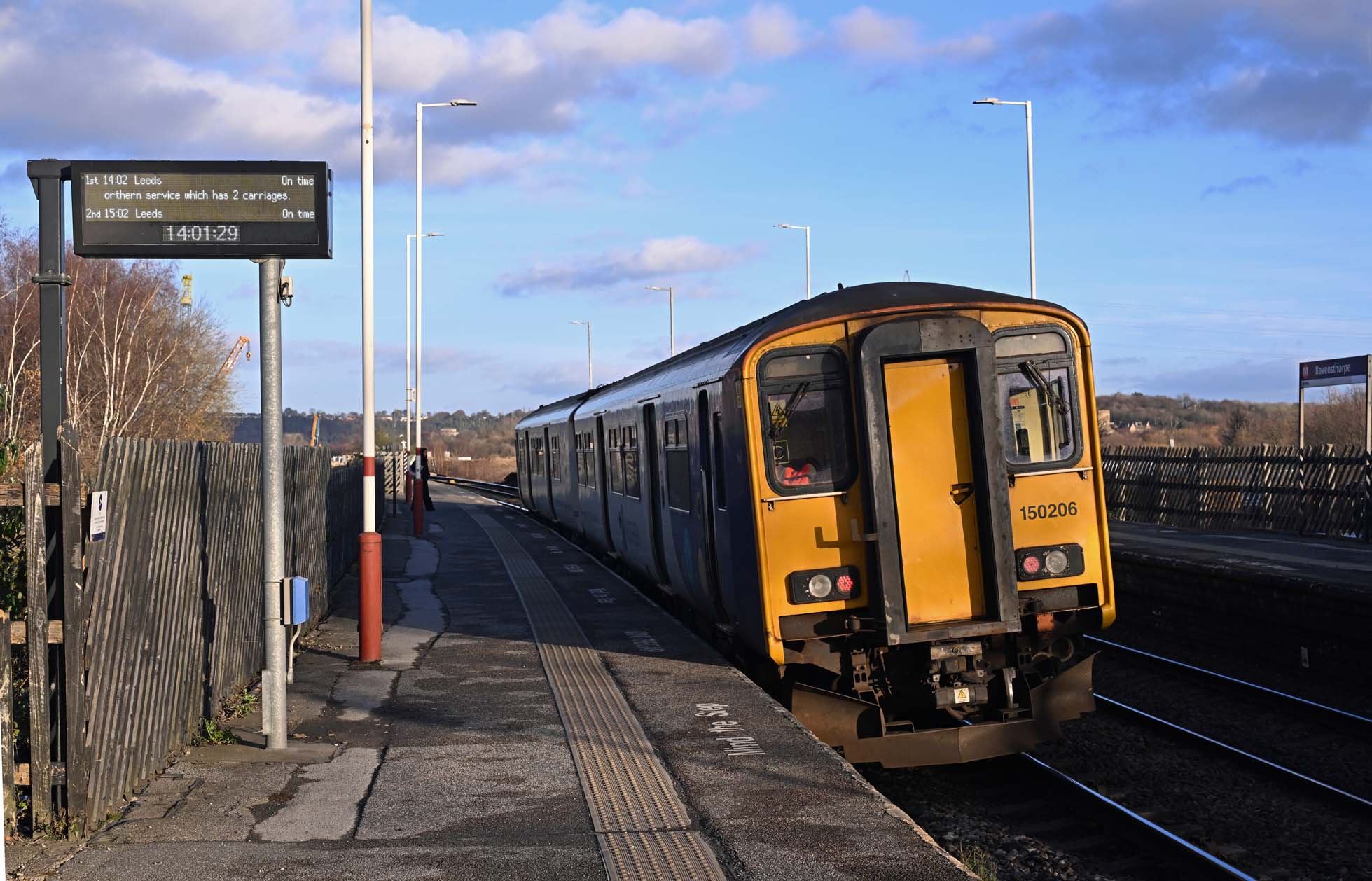
802204 speeds through Batley as 1K16, the 1103 Hull to Liverpool Lime Street, passing the platform extensions which are being added to both Up and Down line platforms at the North end. Looking down on Batley station from Soothill Lane bridge. It’s hard to believe this was once a junction, with the GNR Chicken Heath branch running off to the left towards Ossett.A 1915 OS map shows the station and goods yard. The dingy Batley station subway is due to be replaced by a footbridge with lifts which is being constructed at the Southern end of the platforms. I’ll span the tracks between the two lamp posts on the right. Meanwhile, at Ravensthorpe, hardcore is being laid between the two side walls of the flyover. This will be the location of the slewed lines to/from Healy Mills.Foundations of the Northern wall of the flyover are almost complete. A last view of Ravensthorpe station which closes this weekend. 150215 approaches with a service from Leeds to Bradford Interchange. That’s progress! Here’s the new bridges over the Calder and Hebble navigation. Since I visited on the 25th November two of the Eastern side girders have been put into place. A closer view of the two new girders. The pillar nearest the camera waits to receive its girder, which is already hooked up to the crane nearby. Passing under the new girders. The last train I’ll ever catch from the old Ravensthorpe station. 15020 calls on the 14.02 from Bradford to Leeds.
On the way back I stopped off at Brighouse to get a couple of pictures and to visit the renowned Blakeleys take-away and restaurant, which is famous for the quality of its fish and chips. It’s next door to another Brighouse institution, the Market Tavern. It seemed rude not to wash my food down with a pint, so I called in for a ‘swifty’. The beer was in great condition and the pub busy, but I couldn’t help noticing that the clientele were almost all pensioners (shit, that includes me now!). Admittedly, most younger people would still be at work, but I wonder what the place would look like at 16:00 in say, 10 years time? Times are changing, and so are demographics…
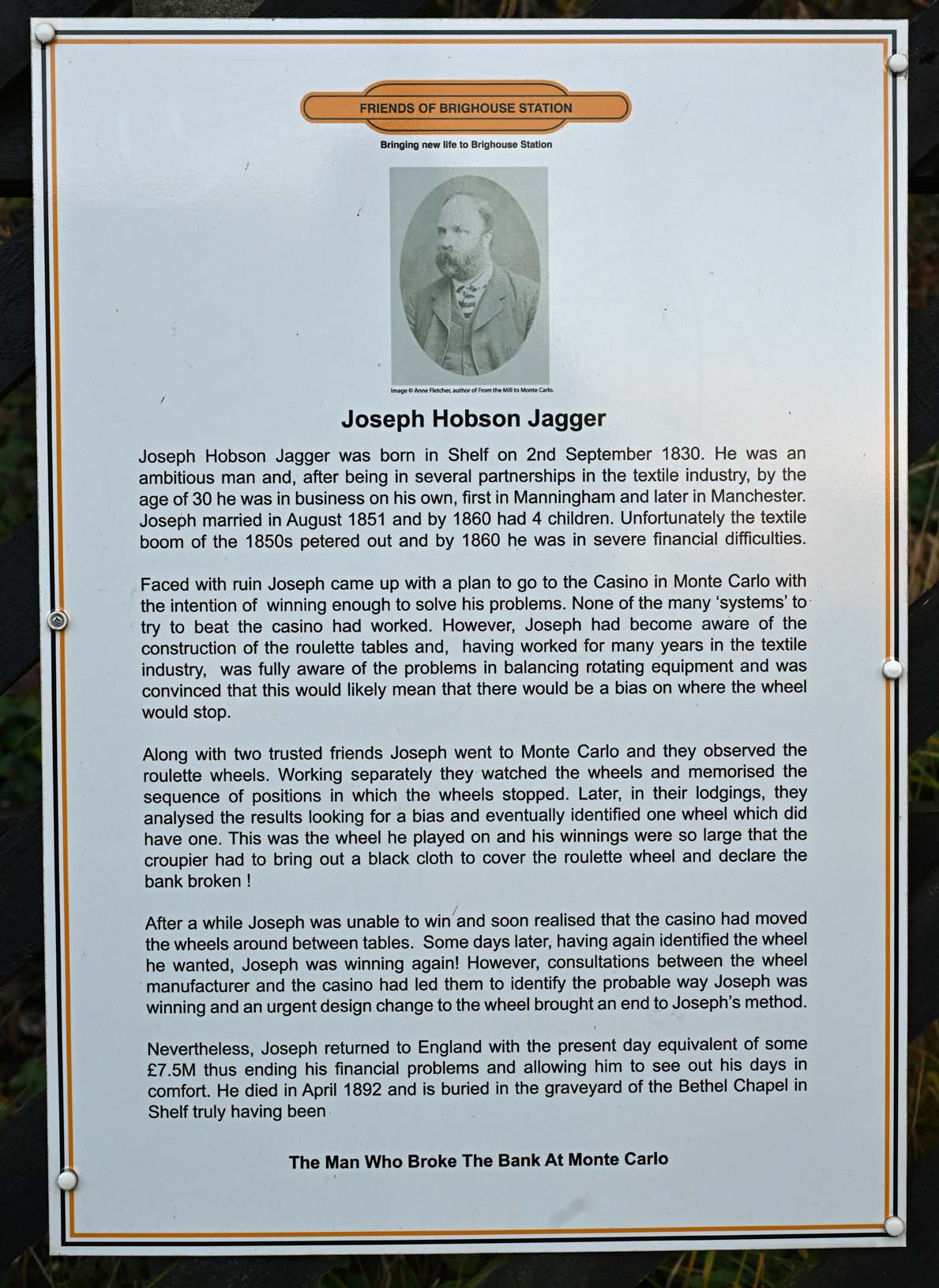
Back at the station I couldn’t resist getting a picture of this history board. I’ve mentioned the tale of the man who broke the bank of Monte Carlo before, but here’s the full story…
If you want to see more TRU construction pictures, you can find the complete gallery by following this link to my Zenfolio website.
I’ve a small favour to ask… If you enjoy reading this or any of the other blogs I’ve written, please click on an advert or two. You don’t have to buy anything you don’t want to of course – although if you did find something that tickled your fancy that would be fab! – but the revenue from them helps me to cover some of the cost of maintaining this site (which isn’t cheap and comes out of my own pocket). Remember, 99% of the pictures used in my blogs can be purchased as prints from my other website – https://paulbigland.zenfolio.com/
Friday’s weather turned fine for a change. Well, for most of the day, anyway. It gave me the opportunity to catch a train from Halifax to Brighouse in order to check out progress on The Trans-Pennine Route Upgrade (TRU) around Bradley, to the East of Huddersfield. The area contains Bradley Junction, where the Westward connection from Calder valley line from Brighouse joins the Trans-Pennine route, and also for me to explore closer to Heaton Lodge Junction, further East.
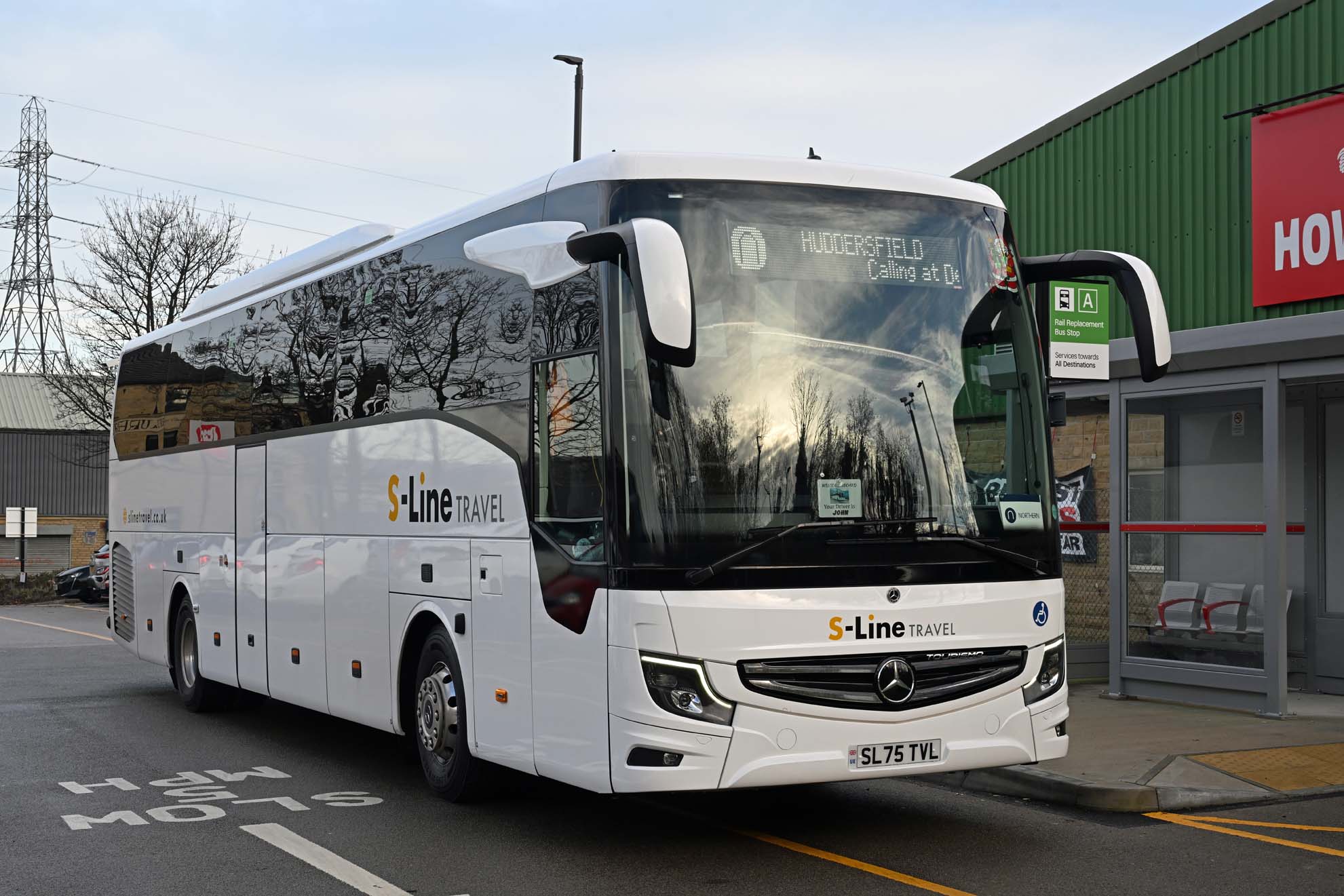
There’s no train service from Brighouse to Huddersfield anymore. Instead, you have to catch a rail replacement coach which stops at Deighton before heading into Huddersfield. I struck lucky, as the vehicle I caught was a brand-new Mercedes coach which was seeing its first day in revenue service. John, the driver, explained that operator S-Line travel had bought 3 of the vehicles at a cost of £1.2m. I have to say, it certainly put the Class 150 I’d arrived on to shame when it came to comfort!
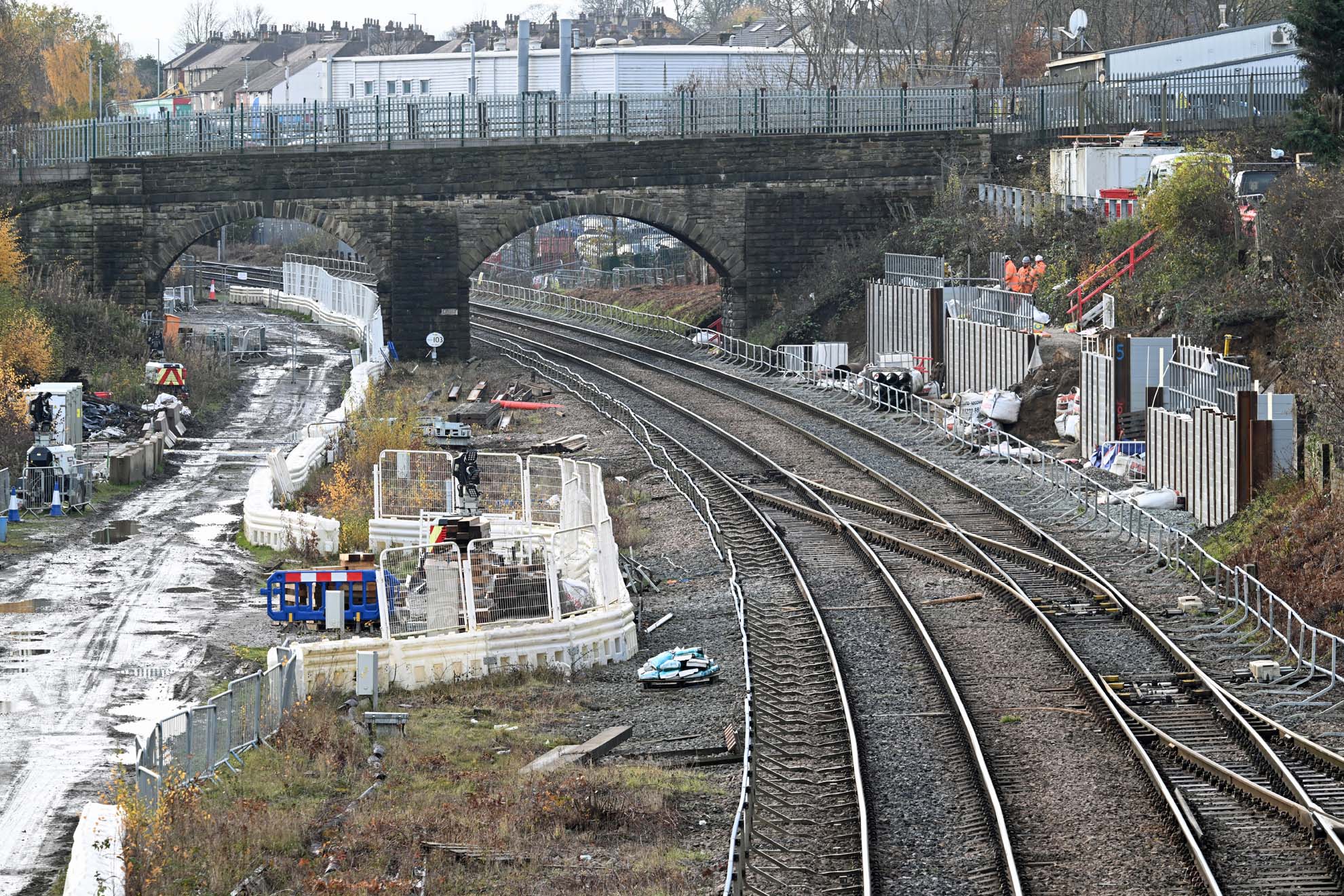
There two rail replacement stops at Deighton and John dropped me off at the Easternmost, where it was only a short walk to Colliery Bridge. Sadly, this arched bridge is now closed prior to demolition as it’s being replaced by a new structure to allow this section of line to be electrified. Here’s how it looks from Station Rd bridge further East.
It may be called Colliery bridge, but the colliery it was named for (which was out of picture to the left) closed in early Victorian times. The crossover you see in the foreground leads to the single-track spur to Brighouse. This was also the site of Bradley station which closed on the 2nd March 1950. No trace of the station remains.
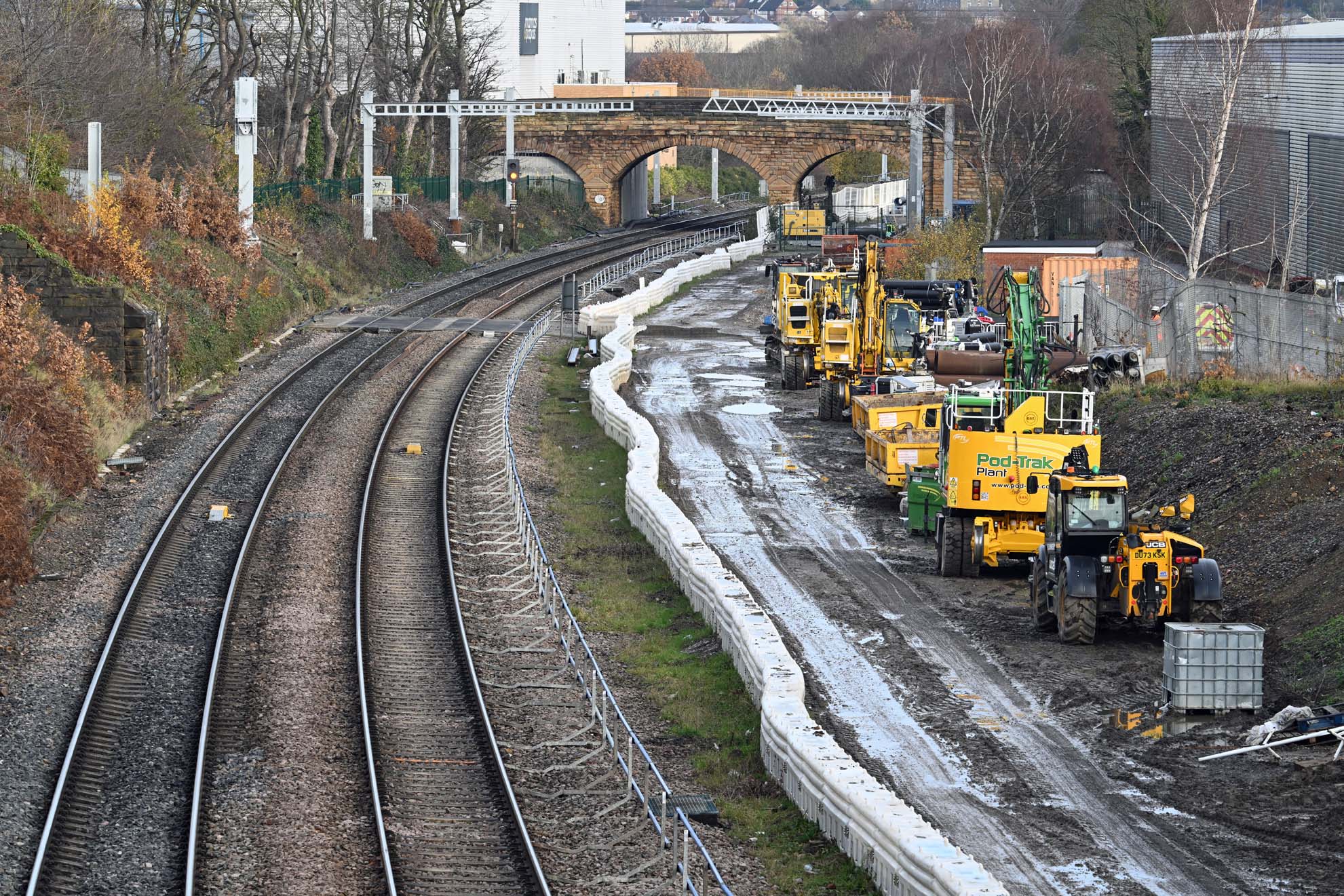
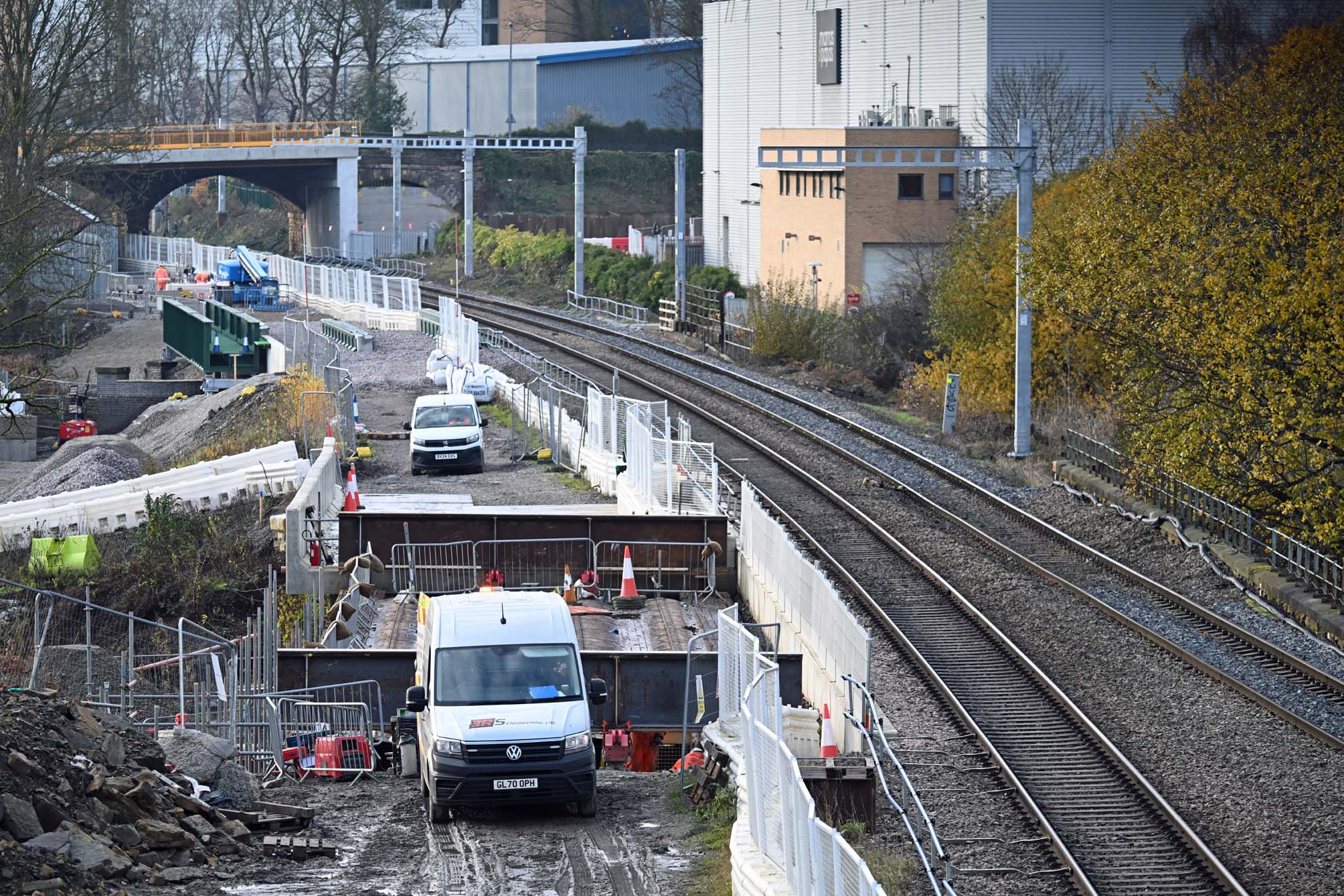
Here’s the view looking the other way with Colne Bridge Rd in the background. A lot has changed since my last visit in June, with the first OLE masts having made an appearance, both on the existing line and also where the new Fast lines will be installed.
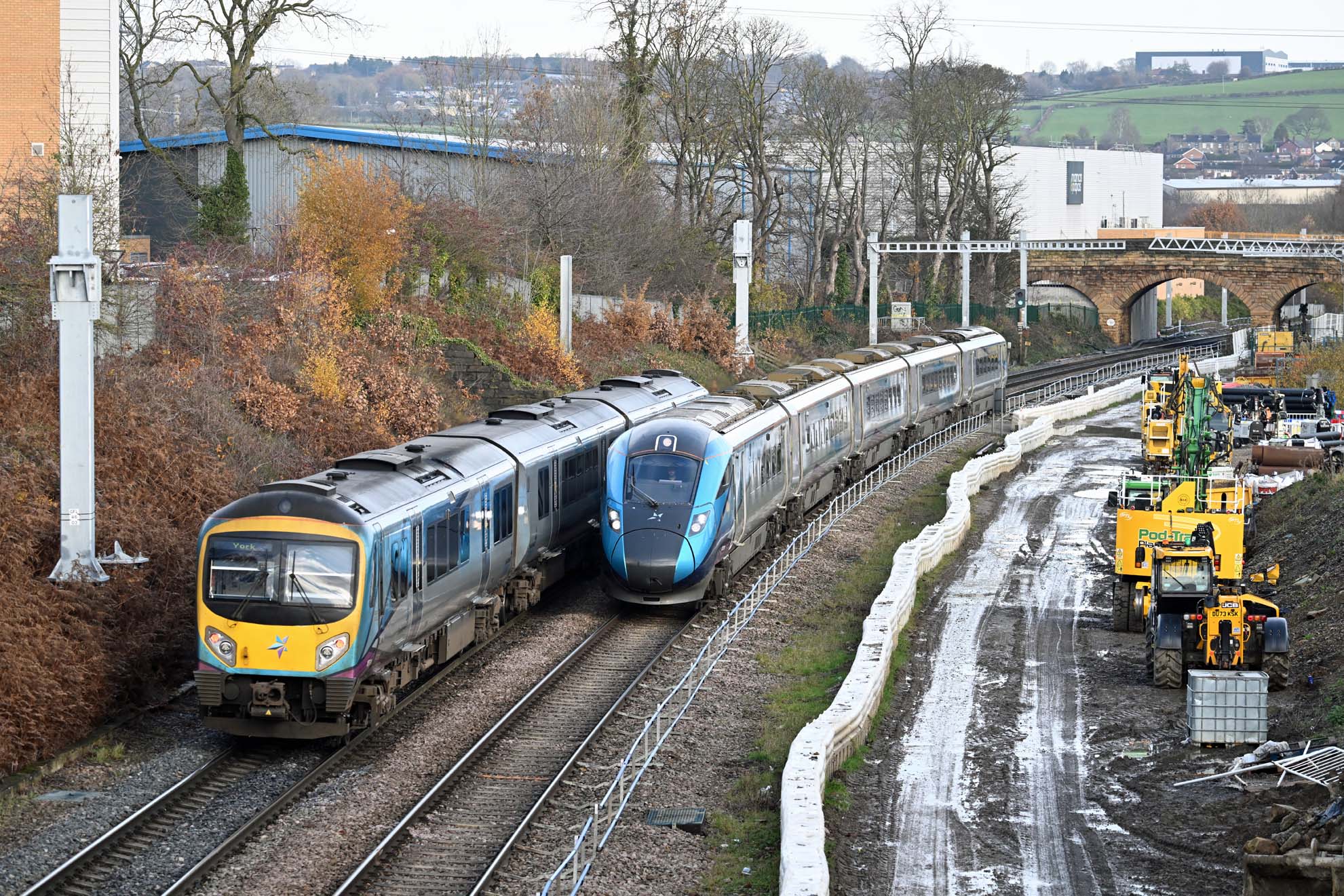
A TPE service for York worked by 185124 passes 802204 on a Newcastle to Liverpool Lime St service at Bradley. In a few years time they’ll use the new Fast lines which will be laid to the right of the existing tracks.
Moving on I walked up to Colne Bridge Rd but it’s impossible to get pictures there right now. The bridge carries a very busy and very narrow road which only has an (equally narrow) pavement on the Eastern side – which is where a replacement bridge has been built that completely blocks off any view! You can see one of the bridge abutments through the arches in the picture above.
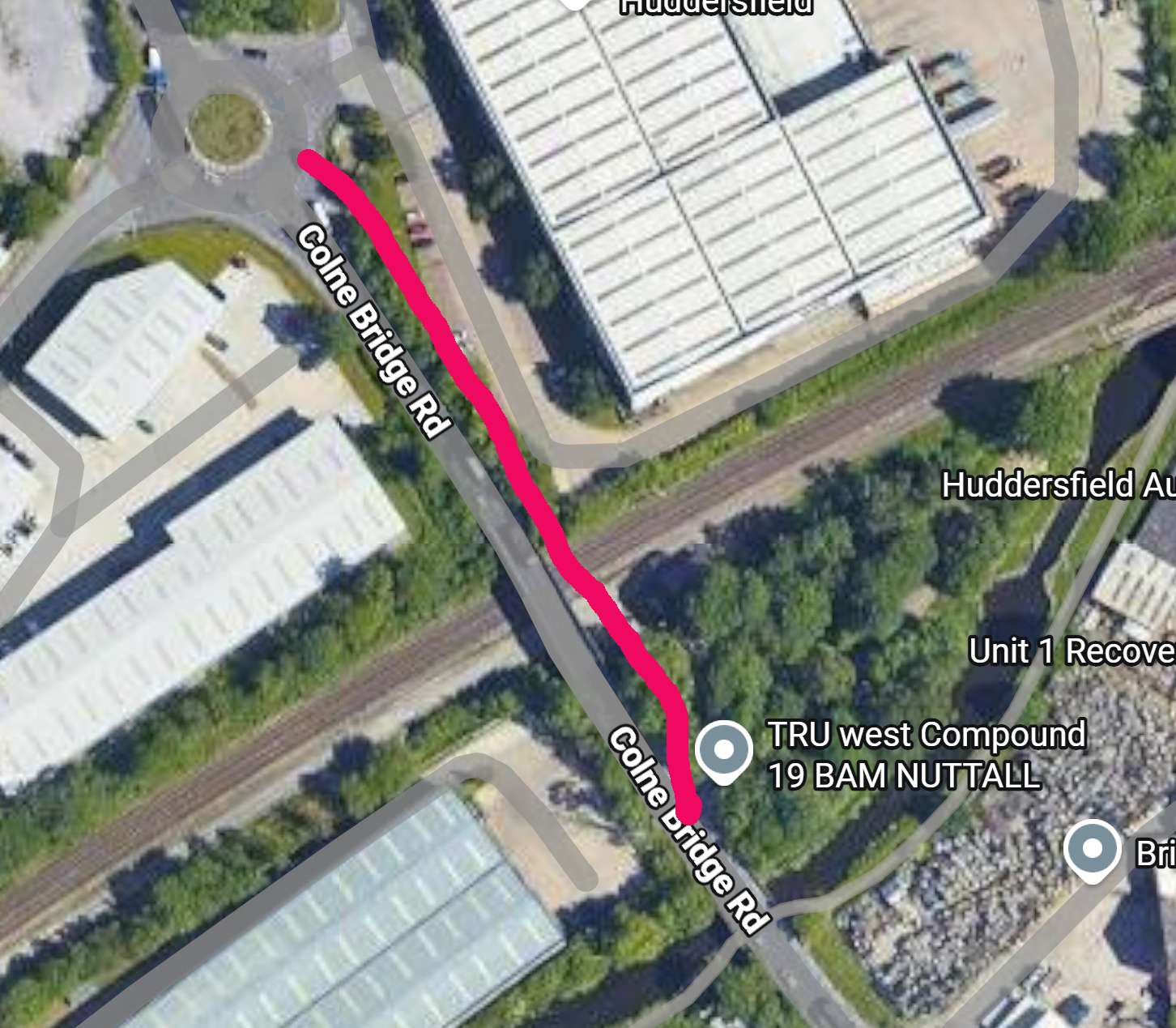
Realigning the road here presents a challenge due to site constraints and the fact there’s an equally narrow bridge over the Huddersfield Wide canal just a few 100 meters South! I’ve marked the new road in red on this satellite image. I can only assume that (at some point) the bridge over canal will be replaced and realigned as it’s going to create a real bottleneck.
As it wasn’t possible to get pictures I walked on to the next bridge which involves a trek uphill before cutting down Bog Green Lane then along a road to the old sewage works where the existing (but also to be replaced) bridge gives this view Westwards.
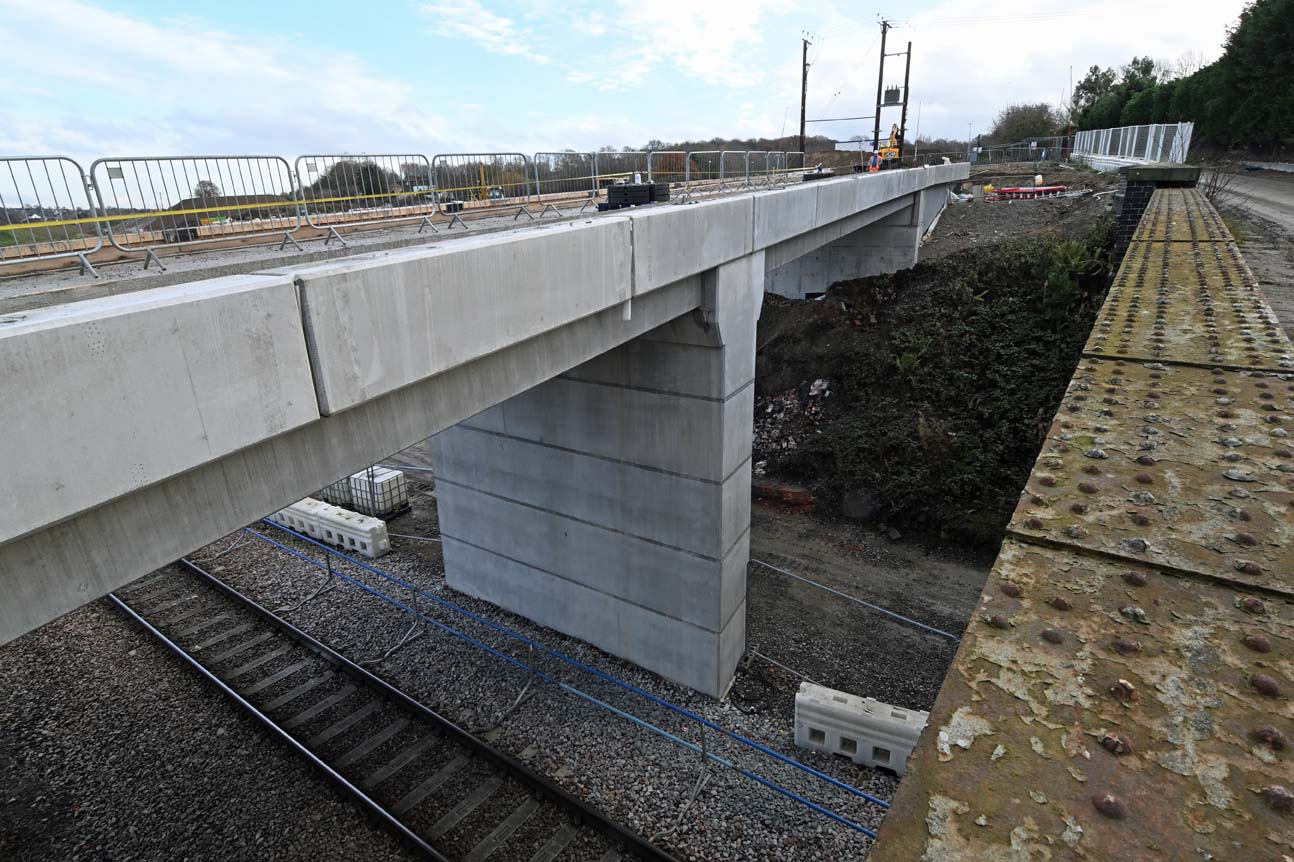
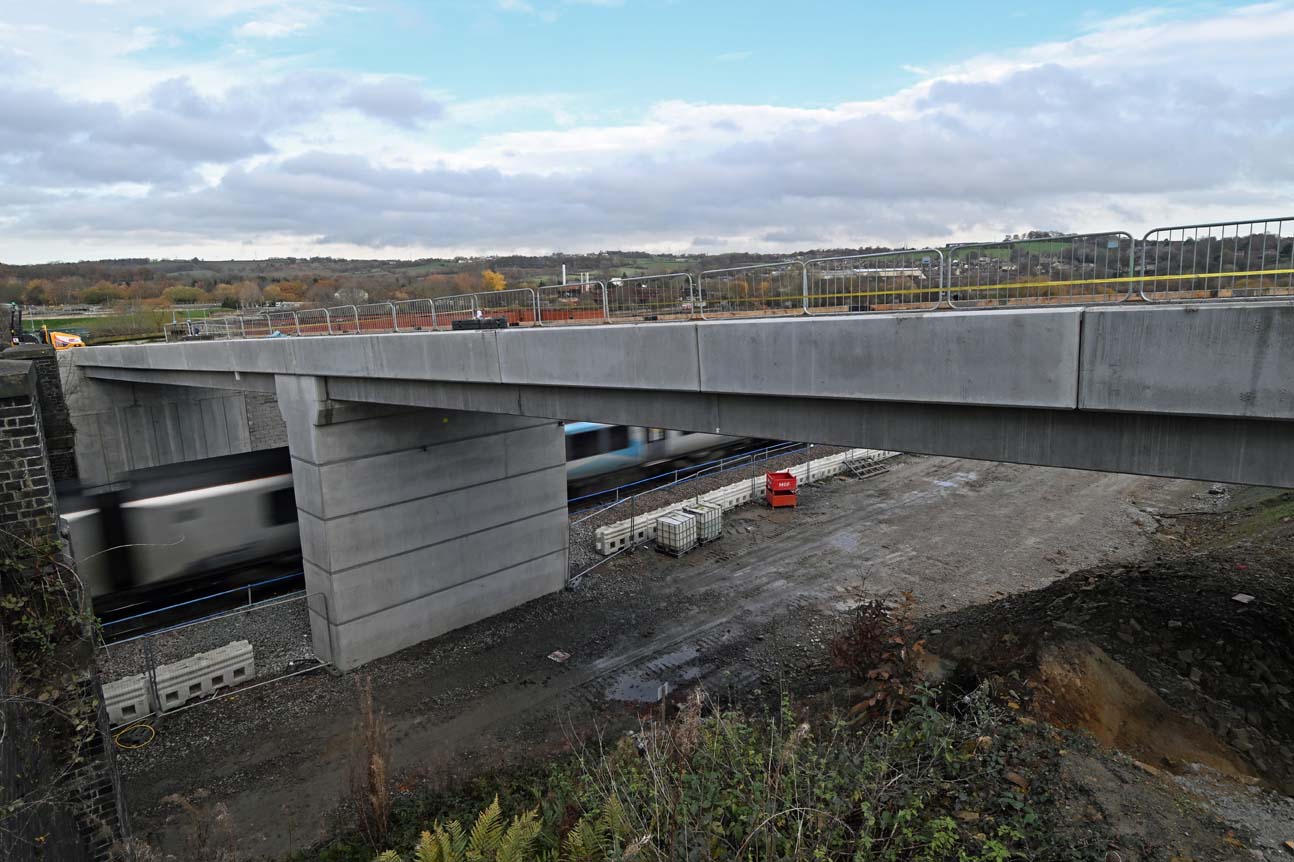
In the foreground is a new Fast line bridge over the Colne river. Beyond that is a new bridge over the Huddersfield wide canal whilst in the background is the new Colne Bridge Rd bridge. OLE masts have made an appearance here too.
This bridge used to offer a commanding view of the new cutting being dug for the Fast lines to avoid Heaton Lodge Junction. Only now someone’s stuck this bridge in the way!A TPE service for Manchester speeds under the new Bog Lane bridge. The new Fast lines will run in the foreground.
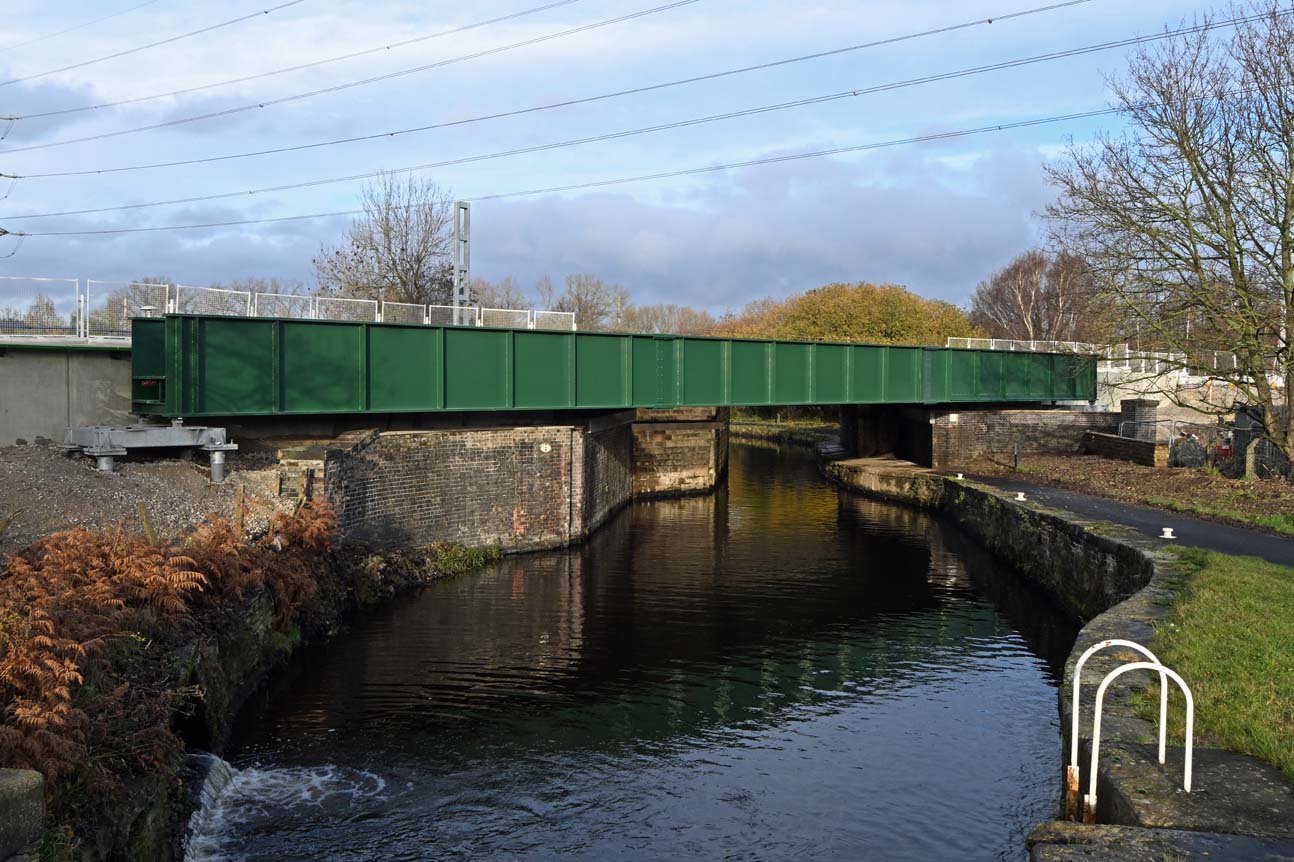
Finally, here’s a look at one of the new bridge sections over the Huddersfield wide canal at Lock No 2.
I’ll pop along for another visit to this section of TRU in the next few days.
I’ve a small favour to ask… If you enjoy reading this or any of the other blogs I’ve written, please click on an advert or two. You don’t have to buy anything you don’t want to of course – although if you did find something that tickled your fancy that would be fab! – but the revenue from them helps me to cover some of the cost of maintaining this site (which isn’t cheap and comes out of my own pocket). Remember, 99% of the pictures used in my blogs can be purchased as prints from my other website – https://paulbigland.zenfolio.com/
On Tuesday the grey skies which have bedevilled us here in West Yorkshire took a day off, allowing me to get out with the camera and record progress on the Trans-Pennine Route Upgrade between Mirfield and Dewsbury.
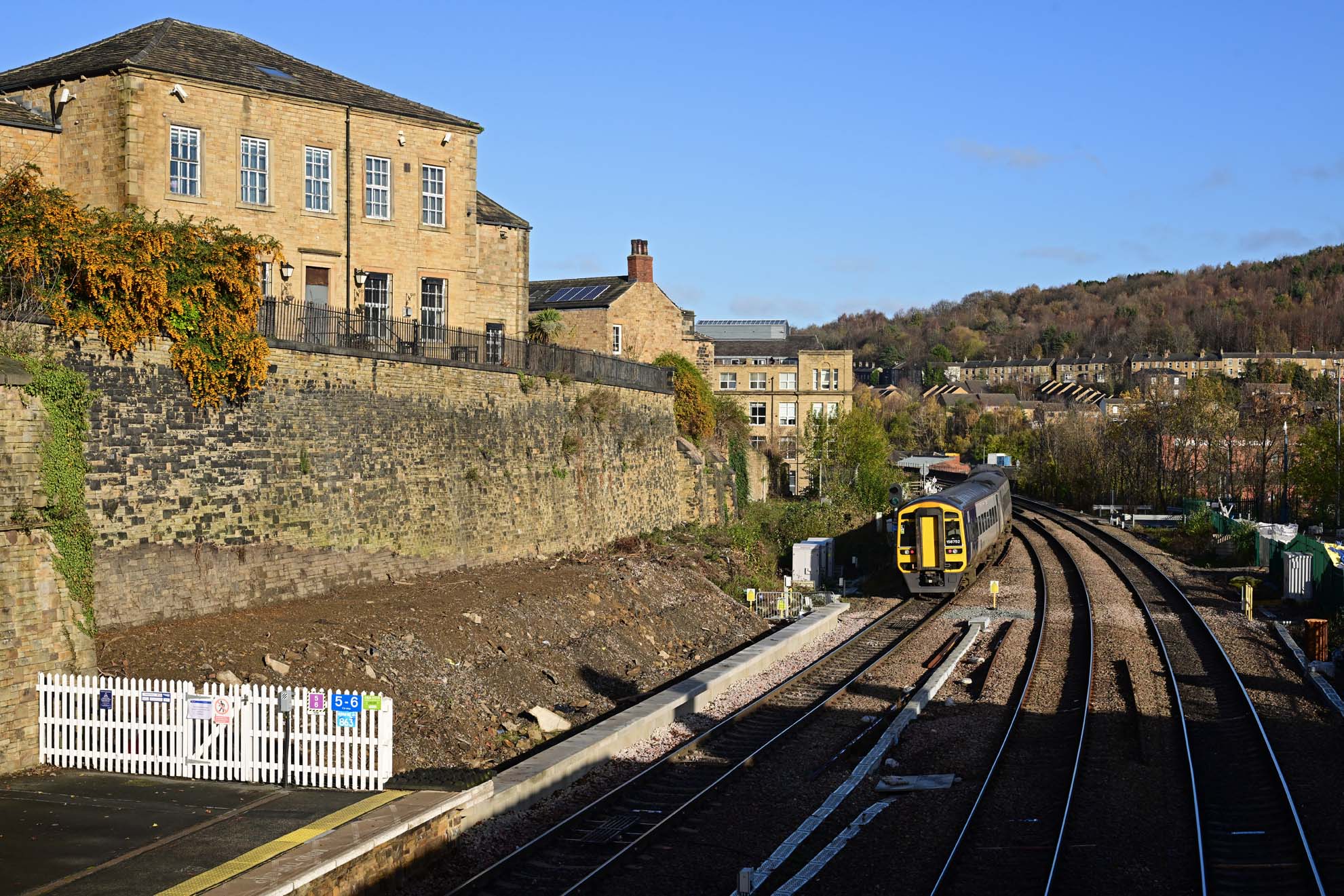
Having caught a Northern service from Sowerby Bridge we joined the Trans-Pennine route at Bradley Wood Junction, where earthmoving continues in order to create space for the new Fast lines. I’ll visit here again soon. My first stop was at Mirfield, where progress is steady but slow. Work on the new footbridge and lifts continues, as does the rebuilding of the island platform which is gradually creeping West towards Huddersfield. The most noticeable change since my last visit is that a long length of the Down Huddersfield line through the old platform 1 has been laid, although it remains unconnected and has yet to be ballasted. Here’s some pictures.
Much of the scaffolding around the lift tower has disappeared. Meanwhile, work continues on rebuilding the platform 1 side of the island. Grand Central’s 180108 working 1A63, the. 10:29 Bradford Interchange to London Kings Cross slows to stop at Mirfield. You can see work continue on rebuilding platform 1 to the right. This scene will look very different in a few years when all four tracks are reinstated and electrification masts and wires abound! Newly laid track in place on the formation of the Down Huddersfield which serves platform 1. This is looking East towards Ravensthorpe.
Moving on, I caught another Northern service to Dewsbury before walking back to Ravensthorpe.
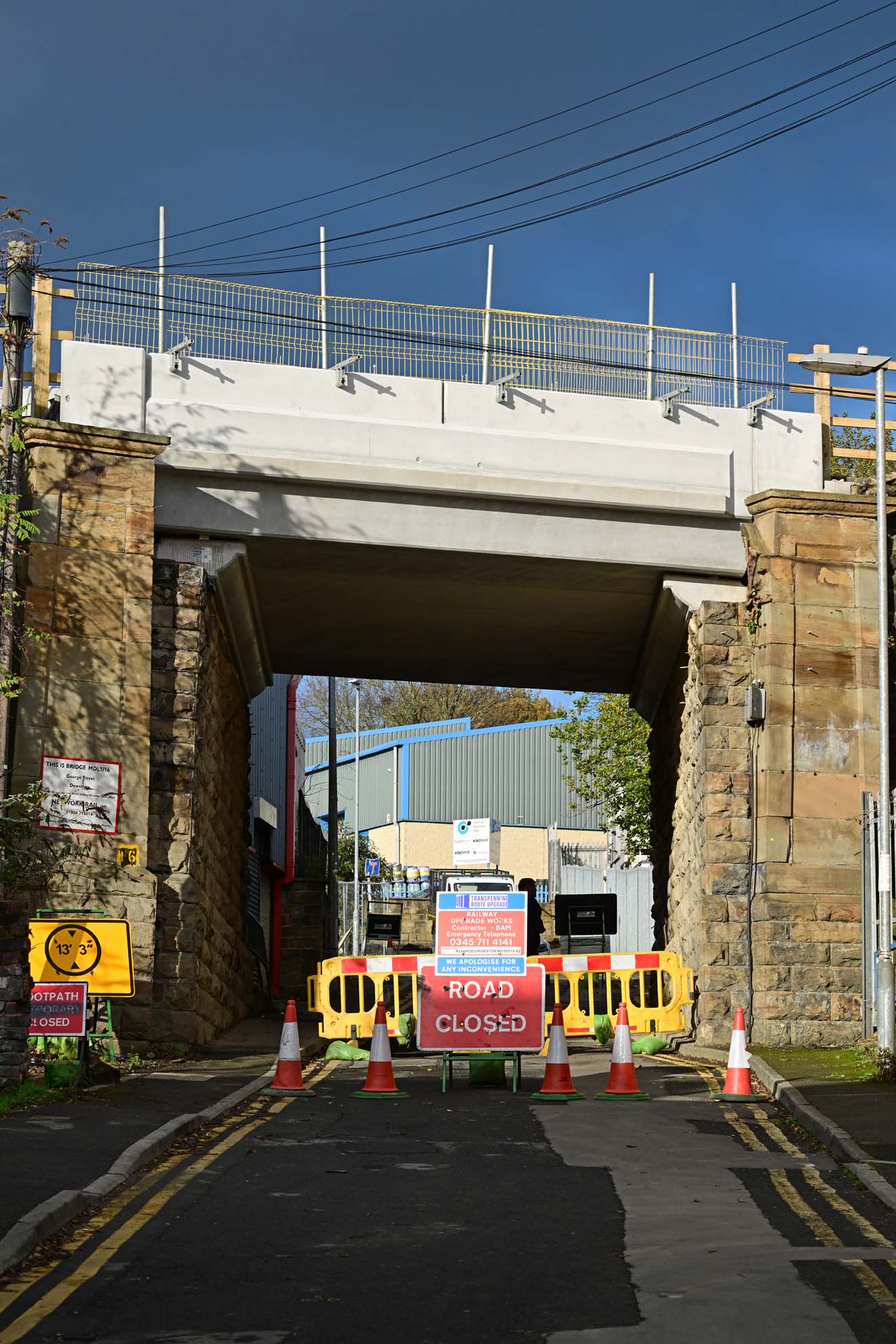
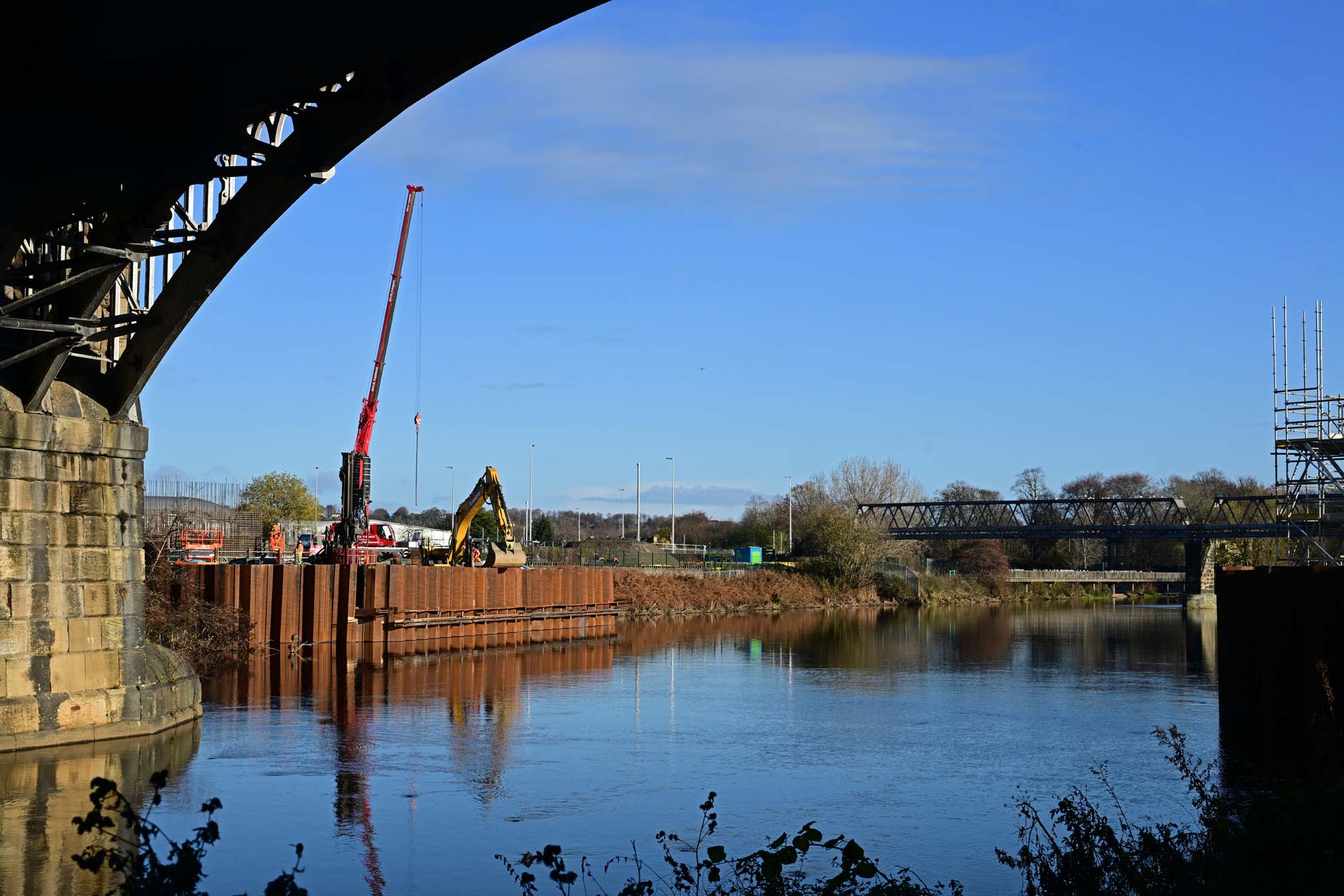
Dewsbury is having platforms extended to cope with 6-car trains. Here’s progress on the Eastern (Leeds) end of platform 1. The overbridge on George St has been replaced by a new concrete structure. The original (life-expired) structure dated from the opening of the line in 1847, so it had a good innings! Note the detailing on the concrete undersill in an attempt blend in with the original stonework. Early embankment work on the River Calder seen through one of the arches of the double-span Butler bridge. A new river crossing will be constructed at this point with the original 1847 railway alignment and bridges being abandoned. The footpath along this stretch of the Calder is blocked off at this point. This is as far as you can go.
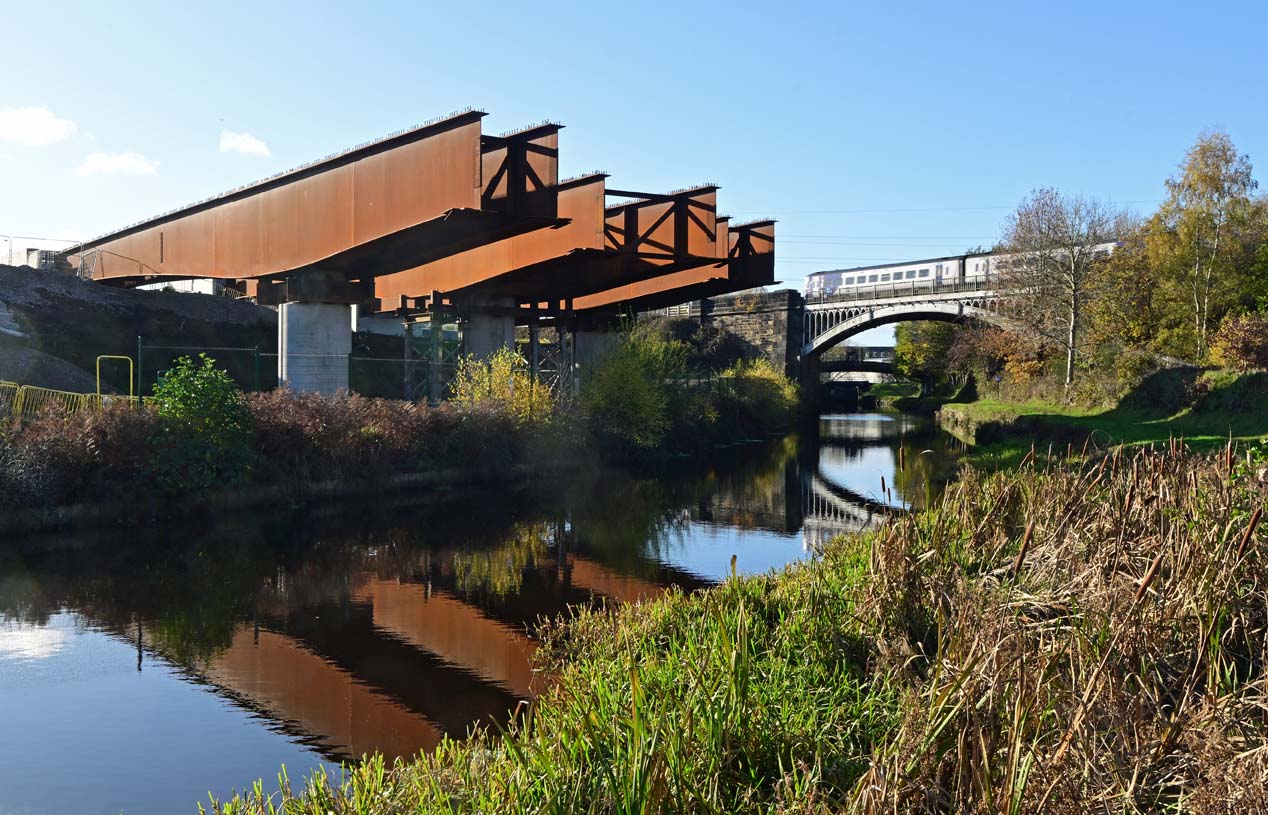
Walking back along the Calder to pass under the Spen valley greenway I walked down the (still open) footpath along the Calder and Hebble navigation to this point where the new railway bridges are beginning to take shape. A Northern service from Bradford to Leeds crosses the 1847 bridge in the background. Another view of the new bridge. The different spans are because the Fast and Slow lines will converge near here. The (double track) Fasts are in the centre whilst the Up and Down Slows join on either side.
Walking on along a very muddy towpath I moved on to Ravensthorpe. Here’s the view of the station from the soon to be replaced Calder Rd bridge.
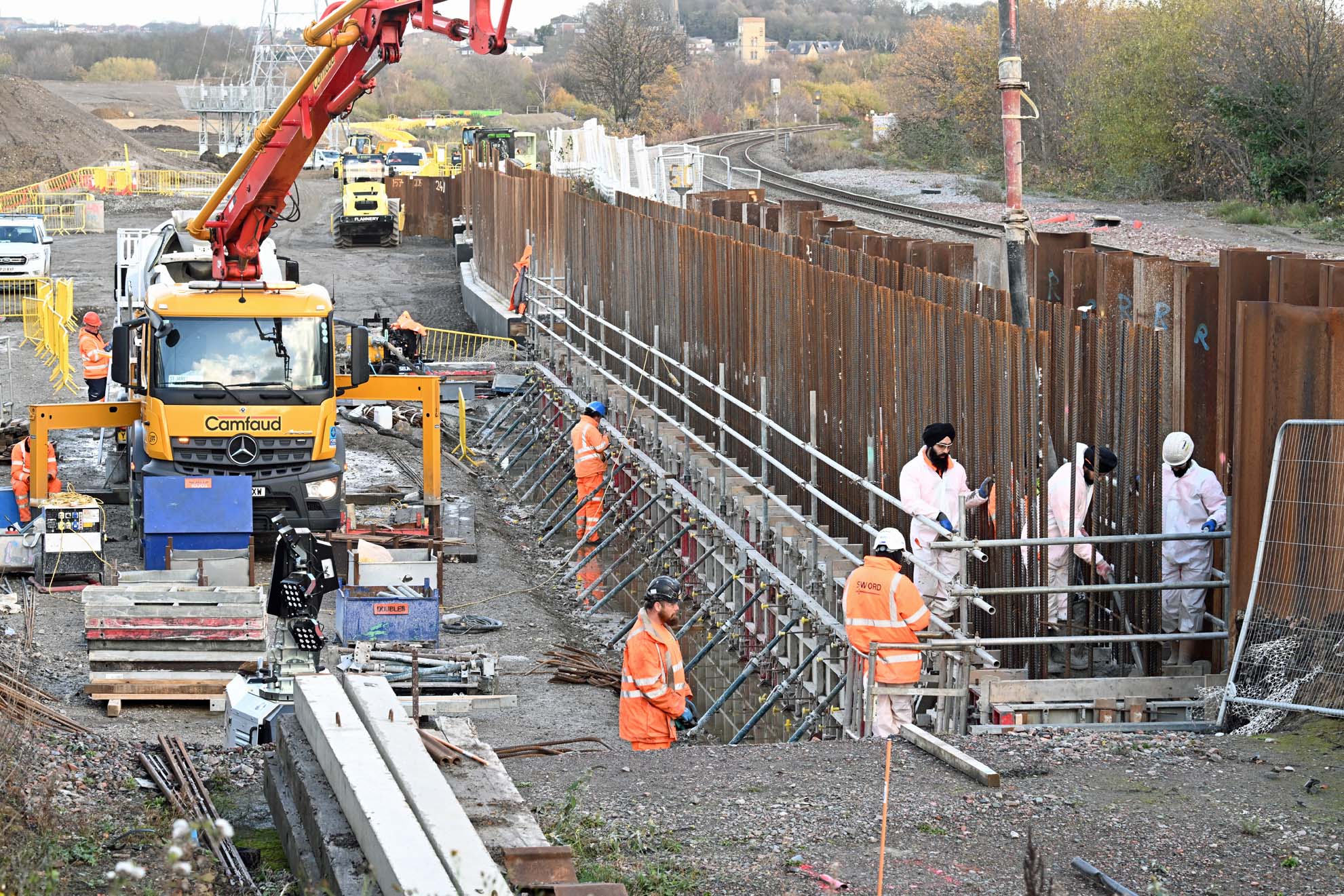
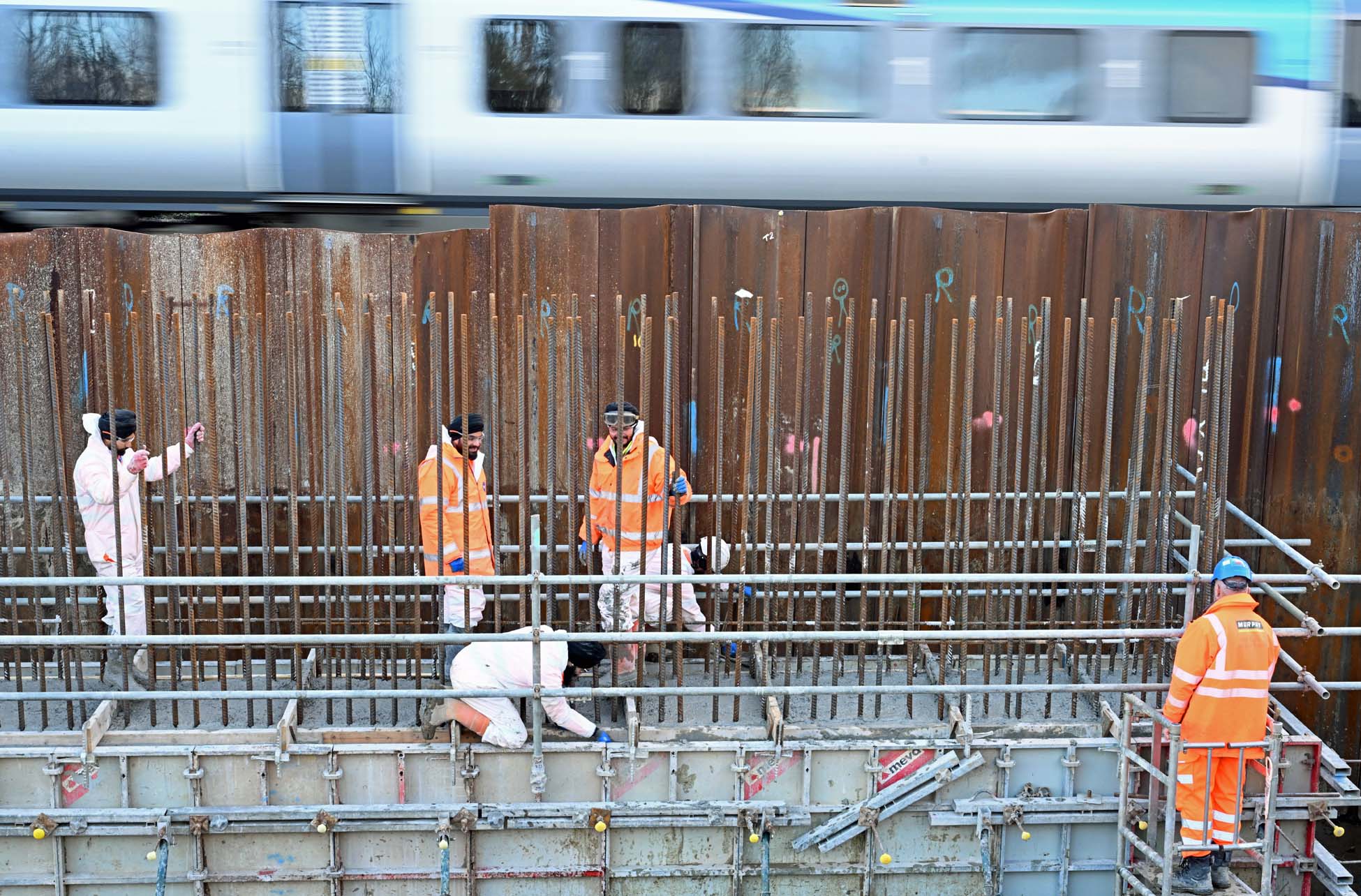
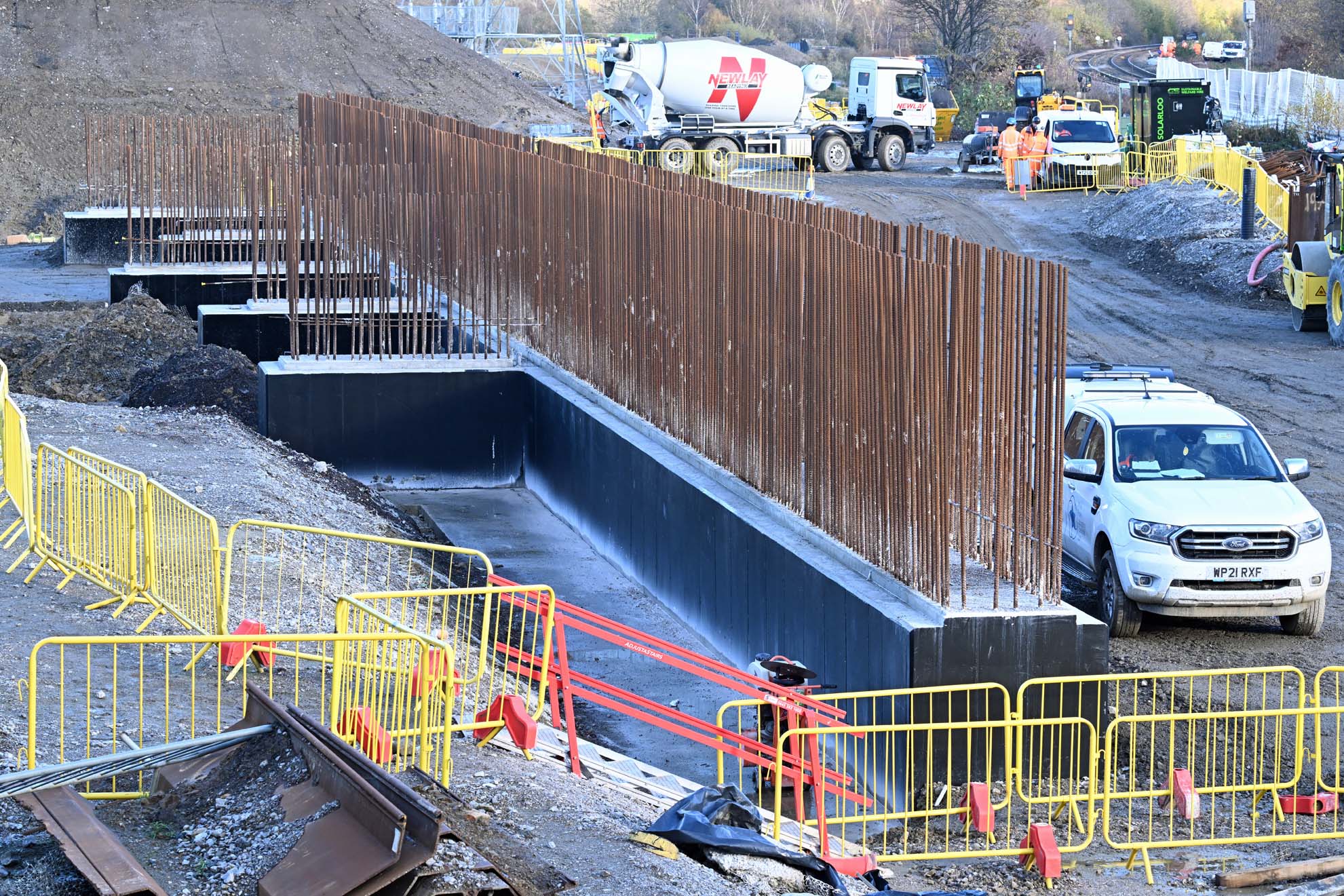
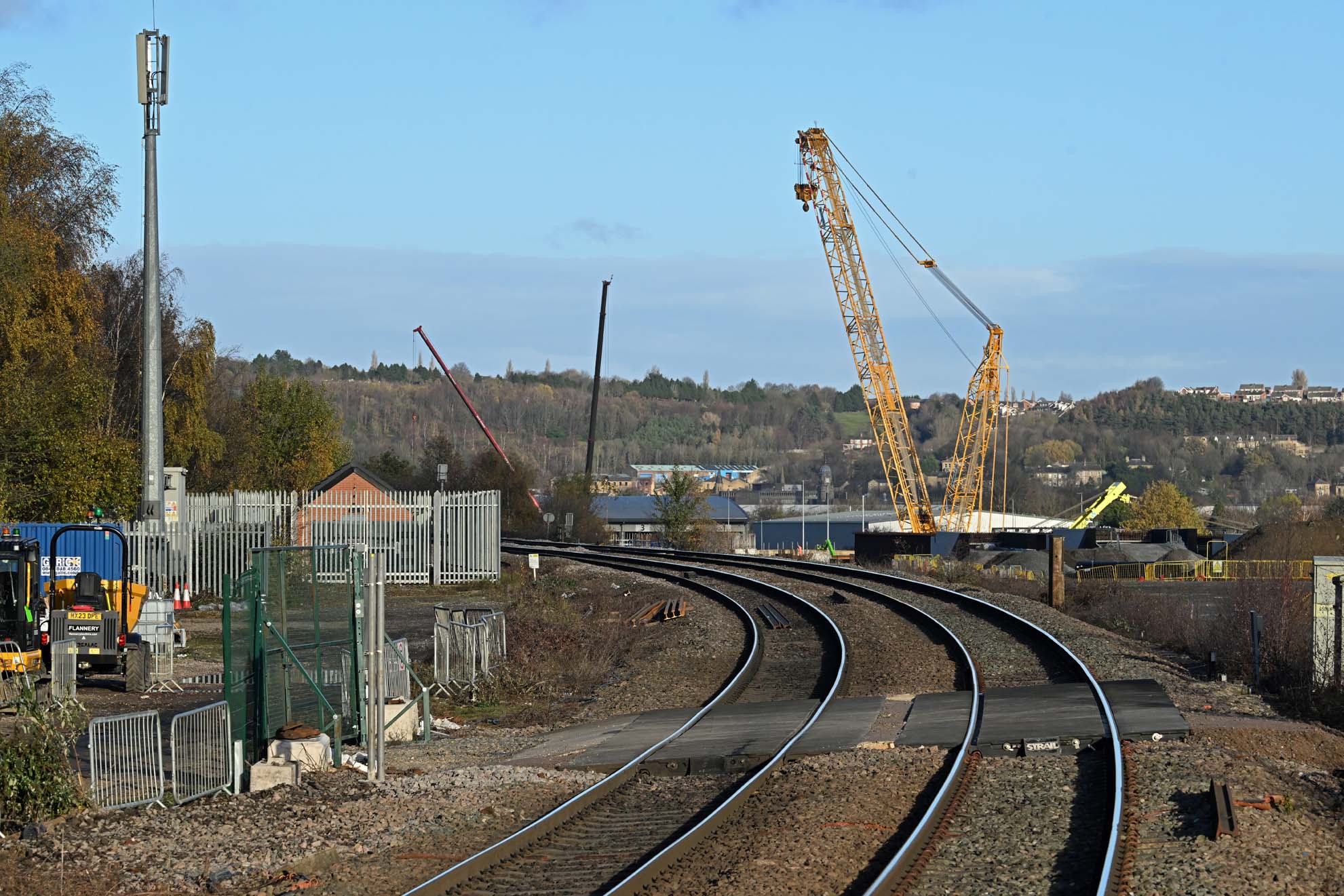
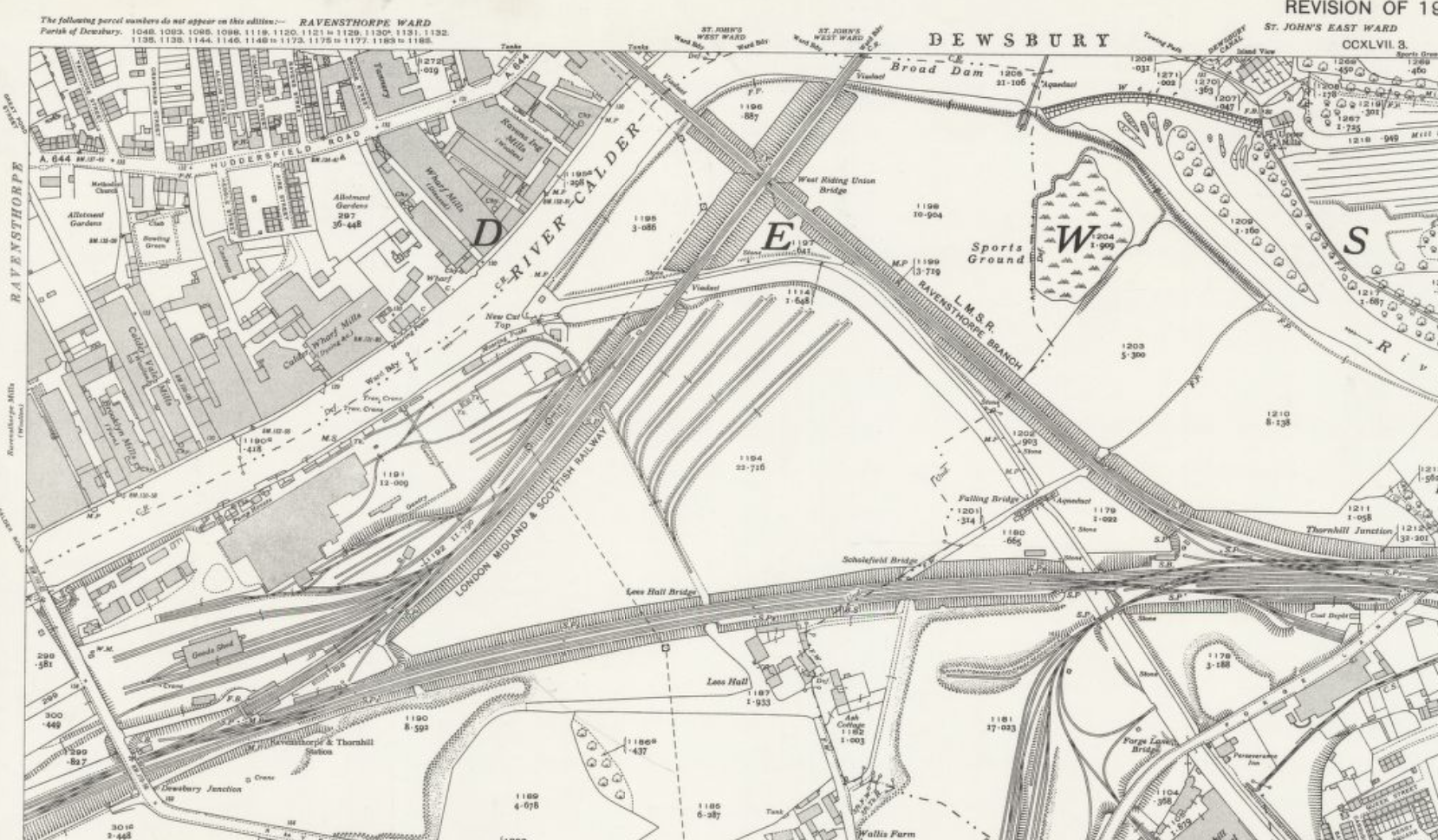
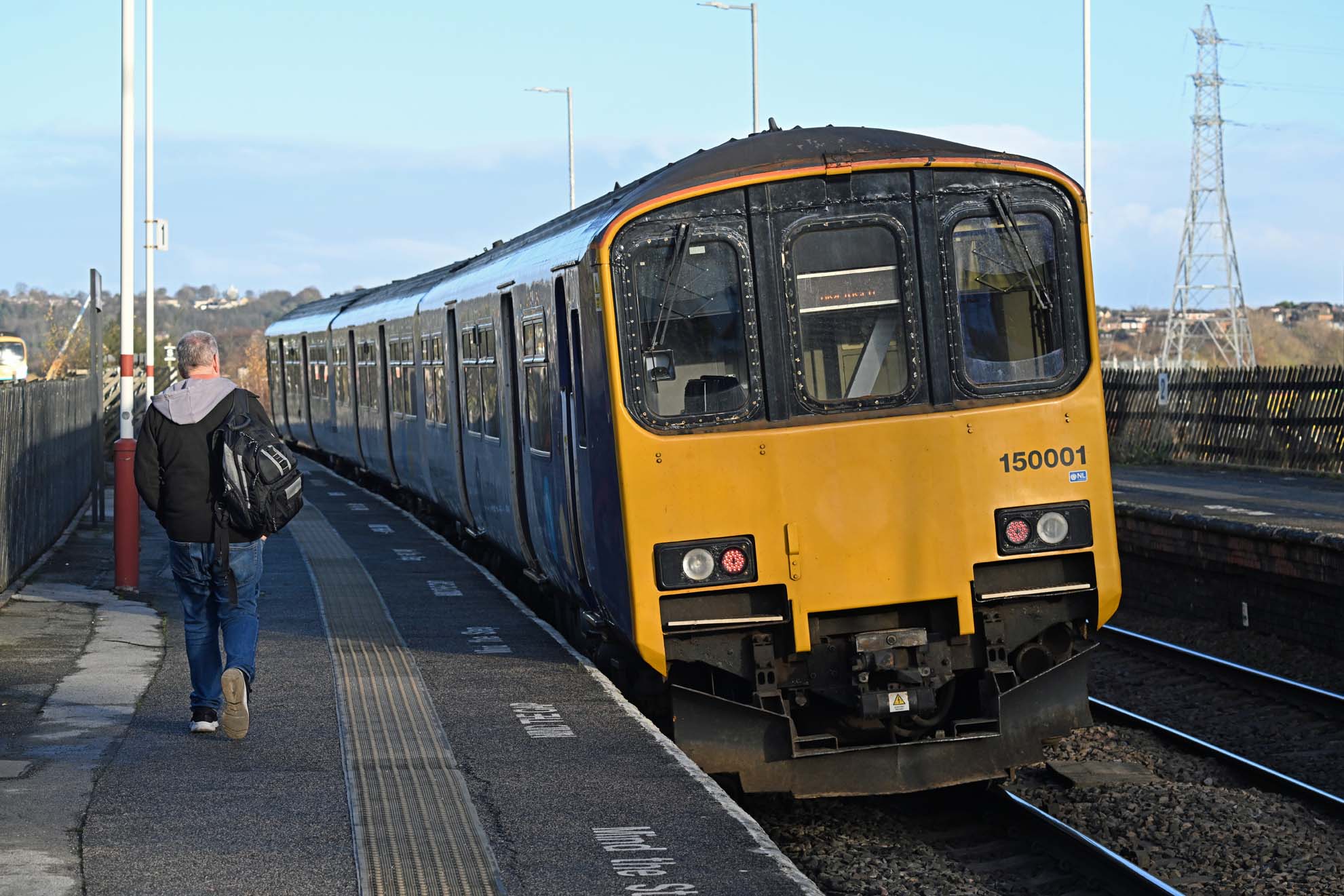
It’s difficult to appreciate how this scene will look in the future – or how it looked in the past. Here’s an artist’s impression curtesy of TRU. Everything here will disappear under a flyover and dive-under! The station will move behind the camera, to the other side of the bridge. The current view from the station platform as workers pour concrete to build one of the retaining walls for the flyover and the line to/from Healy Mills (seen in the background) which will be diverted to pass underneath. A TPE service from York via Healy Mills speeds past workers levelling a fresh pour of concrete.Retaining walls for the new flyover are beginning to rise. The existing main line towards Dewsbury curves away in the distance whilst cranes are at work constructing the bridges for the new line. This section of track will be abandoned once the new lines open. To the left of the picture is the site of the old goods yard and coal-fired power station which provided a lot of rail traffic in the past. Here’s a 1937 map (published in 1942) showing the mass of freight lines and sidings that existed in the area. Ravensthorpe station is bottom left. The very first of the Class 150s, 150001 arrived to take me back to Dewsbury for my connecting train to Halifax. The station will close from the start of the new timetable on Sunday 14 December 2025, so if you want to visit – be quick!
I’ll be adding another TRU update shortly. I’ll also be visiting Ravensthorpe again before it finally closes.
NOTE: All photographs in this blog are my copyright.
I’ve a small favour to ask… If you enjoy reading this or any of the other blogs I’ve written, please click on an advert or two. You don’t have to buy anything you don’t want to of course – although if you did find something that tickled your fancy that would be fab! – but the revenue from them helps me to cover some of the cost of maintaining this site (which isn’t cheap and comes out of my own pocket). Remember, 99% of the pictures used in my blogs can be purchased as prints from my other website – https://paulbigland.zenfolio.com/
*I originally wrote this as an article in RAIL magazine, where it appeared in April 2024.*
One complaint that’s levelled at the new HS2 railway is that it’s hardly going to be Britain’s most scenic rail journey! With 105km of tunnels on the section between London and Birmingham that’s no surprise. Much of the rest will be in cuttings. HS2 will be Britain’s most invisible railway. But there are a few structures that will afford views from the train (however fleeting) as well as provide iconic landmarks that can be admired from afar.
One such structure is the Wendover Dean viaduct which is being built just a few Km South of the town. In January RAIL was invited to take a look at construction progress in the week after the first 90 metre section of the deck had been pushed out onto the piers that will carry it. It’s an impressive structure which crosses above Durham Farm, a portion of Bowood Lane (which is being realingned) and parallels King’s Lane – which will allow views down over the structure.
A crane used to lift the infill panels into place. A stack of panels can be seen in the foreground. This view is looking South.
Built by EKFB with ASC (Arcadis, Setec, Cowi JV) as its design partner and Moxon as the architects the design has used as inspiration similar French structures like the Vicoin viaduct on the LGV Bretagne – Pays de la Loire high-speed line. When complete the viaduct will be 450m long, sitting on nine piers, some of which are 14 meters high, giving the structure a maximum height of 20 meters (not counting OLE masts). This method of construction is well known in Europe but it’s a first for the UK.
Traditional decks tend to use what is effectively a continuous block of concrete. A drawback of this is that concrete manufacturing is one of the most carbon-intensive parts of such structures. Instead of being constructed of concrete sections built in situ before lifted atop the piers then fixed together, at the Wendover Dean site, EKFB is using a pair of long ‘I’ beams of weathering steel sandwiched between two slabs of concrete with a hollow inner. These beams are constructed by specialists in France before being delivered to the Wendover site in 25 metre sections. They’re then welded together at ground level on the launching platform – a much safer method than having to do it in-situ at height.
This double composite structure is both super strong and lightweight. Compared to the traditional method (pre-cast concrete beams lifted into position with cranes) the overall carbon footprint gives a carbon reduction of 56% over the lifetime of the project. Most of this is in the materials themselves, with transport the next largest contributor. This method should save an estimated 7,433 tonnes of embodied carbon – the equivalent of someone taking 20,500 return flights from London to Edinburgh.
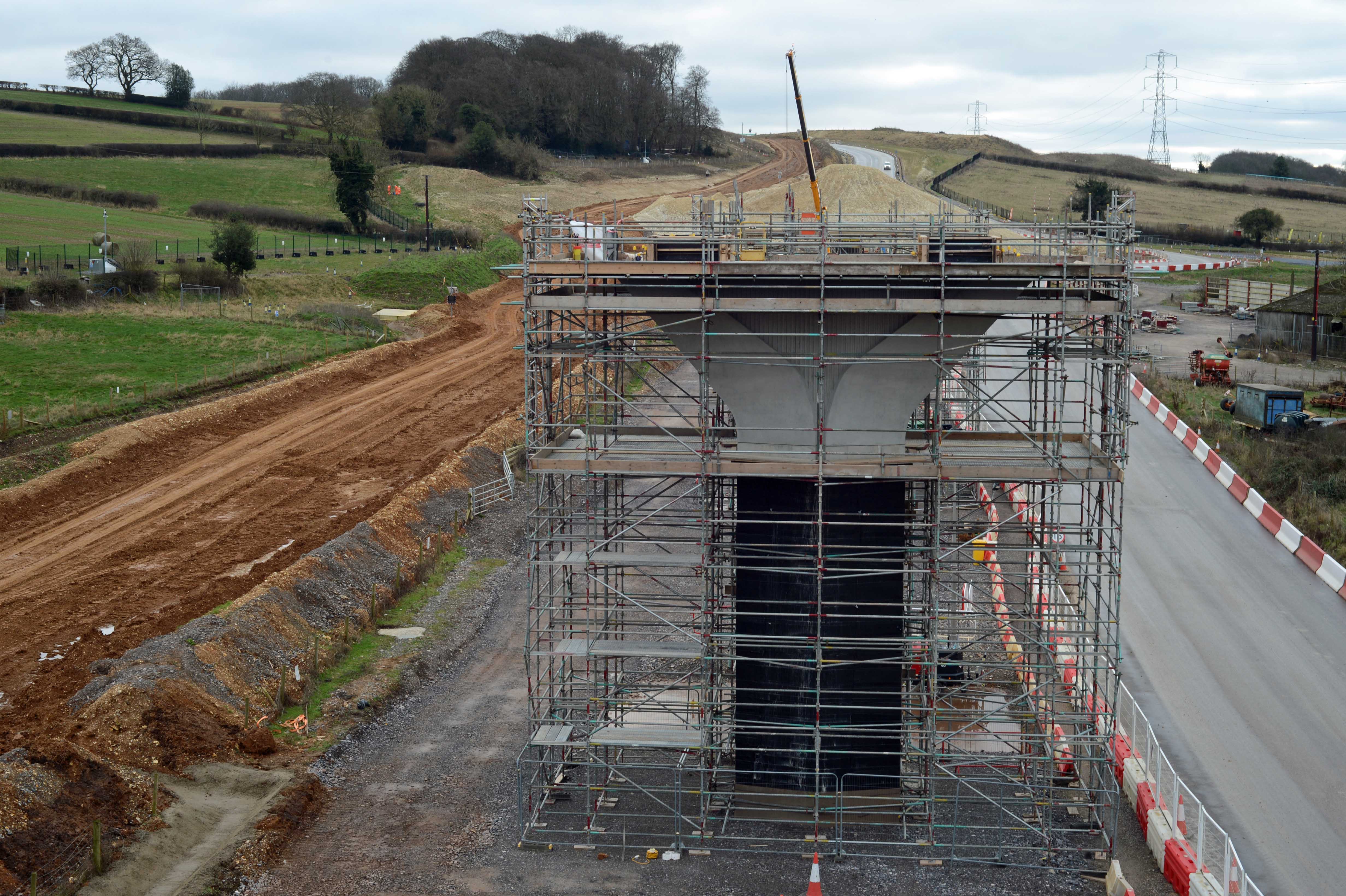
Another interesting aspect of the engineering is the nine piers that will support the deck. The foundations (piling began in June 2022) themselves aren’t unusual They consist of four piles between 38-45 meters deep. A steel cage is inserted into each borehole before being filled with concrete, then topped with a pile cap. Then, a steel cage is built above the pile cap with pre-cast concrete shells slotted over them. Finally, a hammerhead shaped shell is added as the final piece, with a steel cage dropped into it before the shell is filled with concrete. Having these pre-cast concrete shells made off-site at a facility in Northern Ireland is one of the ways that HS2 has managed to reduce disruption to the local area in Wendover as well as control the quality of the finish compared to being built on-site. It’s also a good illustration of how HS2 is generating jobs and income right across the UK, not just on the route. Northern Ireland’s contribution to the project amounts to £140 million in tier two contracts.
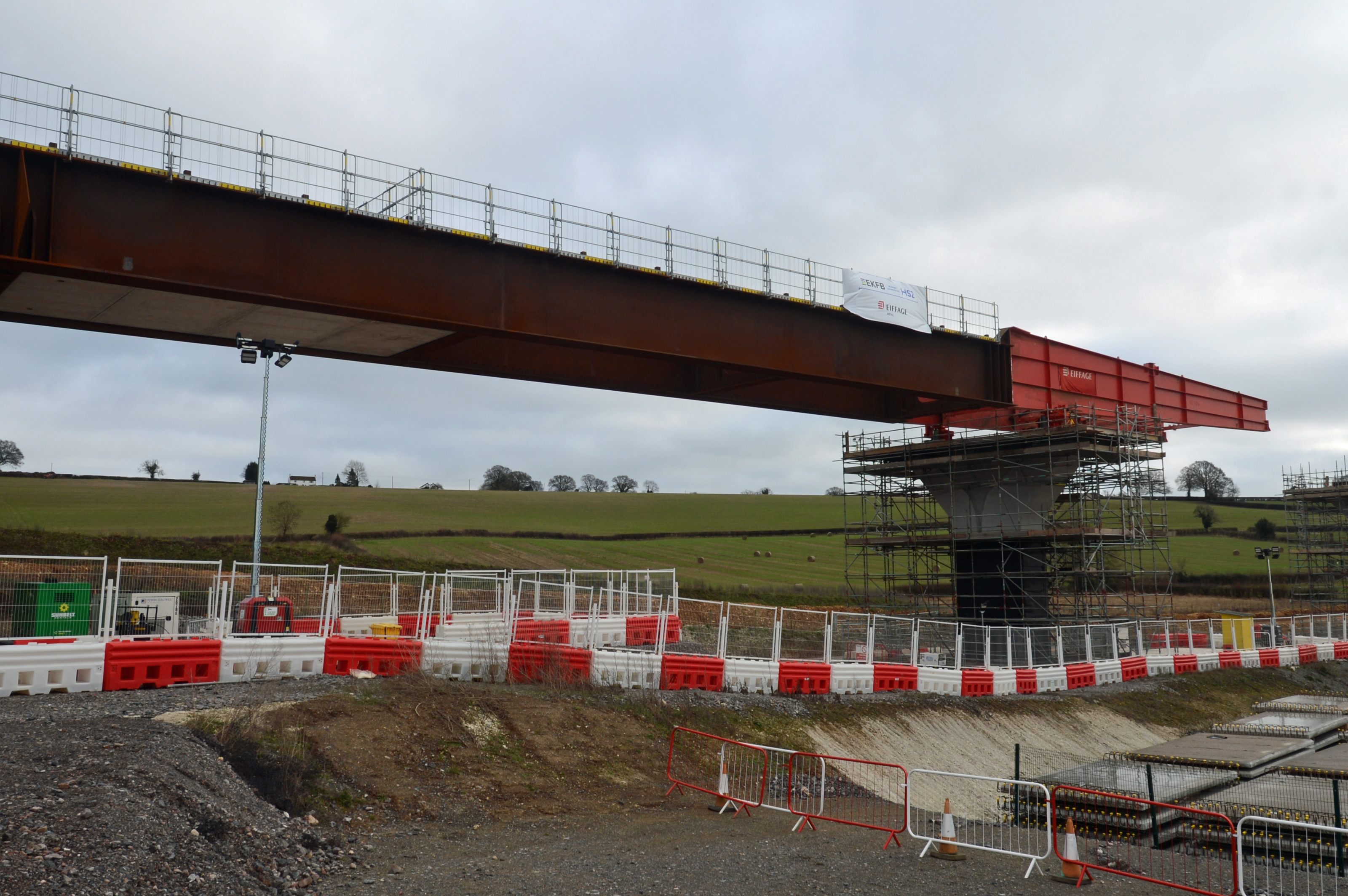
Looking North from atop one of the piers. The haul road can be seen to the right of the picture. The red structure on the end of the girders is there to allow the permeant bridge to be guided into place. The first section after being pushed into place, with some of the infill panels already positioned.
The deck is being assembled in three stages ranging from 90m to 180m sections, with each one pushed out from the north abutment before the next section is attached behind it. This slow and painstaking process means that the weight of the deck will increase with each push, up from an initial 590 tonnes to 3700 tonnes by the end of the year. With the deck moving at roughly 9m/hour, the process will take most of 12 months with the finish point at the South abutment approximately 1.8m higher than start point. The deck is pushed out over temporary bearings, sliding across Teflon plates which are fed across the bearings by hand. Pushing power is provided by cable winches which are anchored to the massive Northern abutment which was specially designed for this purpose – hence its size and weight.
Looking South from the Northern abutment.
When you visit the site you appreciate just how constrained the layout is. The HS2 Hybrid bill defined the limit of land that could be used to built HS2. As you’d expect at a viaduct site, this is quite narrow with most of the site to the West of the viaduct. There’s just enough room to store the concrete panels that form the top and bottom of the viaduct as well as the plant and other machinery needed for construction, plus the offices and welfare facilities which are on a temporary site nearby. One difficulty is the need for a haul-road to pass by the site. This is to allow for the movement of spoil from constructing cuttings to the South towards Wendover where it will be reused. To do this an extra strip of land had to be purchased to the East of the trace so that wagons could traverse the site without interrupting work on the viaduct. This land will be returned to its owners once work is finished.
Looking South from atop one of the piers. The wood on the horizon to the left of the pier is the (in)famous Jones’ hill woods which anti HS2 protestors occupied whilst falsely claiming it had a link to Roald Dahl. Their abandoned camp still lies there, rotting, polluting the very woods they claimed to have been trying to ‘save’.
Our visit allowed access to the top of one of the piers where we had a grandstand view of construction and an impression of how the viaduct was set in the landscape. On the edge of the rise to the South-East corner is the (in)famous Jones’ Hill ancient woodland, the edge of which (0.7 Ha) had to be felled for HS2. This privately-owned wood had been occupied by protesters who falsely claimed it was linked to author Roald Dahl. Their camp still exists, abandoned and rotting, polluting the very land they claimed to be trying to ‘save’. In mitigation, HS2’s planted 4.1 Ha of mixed woodland, some of which is adjacent to Jones’ Hill.
Seeing the red-painted launching-girder attached to the bridge deck at eye-level is quite a sight, as is knowing you’re standing atop a pier that will soon be carrying high-speed trains between London and Birmingham. Our guides also took us to the Northern abutment to see the temporary bearings and show us the Teflon plates that were used as flat rollers, allowing the weathered steel beams to be launched Southwards. Once the completed deck is in place it will rest on jacks which will gradually lower the whole structure onto the permanent bearings that will support it thereafter.
One of the temporary bearings used whilst the bridge deck is pushed out. Demonstrating how the Teflon plates are used to slide the bridge girders along the structure.
After the main viaduct deck is complete the parapets will be installed along with derailment walling and noise barriers. The parapets will be creased rather than flat. The crease will create inward and outward leaning surfaces that catch light and shade making the structure much more interesting, attractive (and photogenic). Once the civils side is finished the structure will be handed over to the rail systems teams to allow track, signalling and overheads to be installed.
Finally, the adjacent historic field boundaries and hedgerows will be recreated to provide uninterrupted access for farmers and local residents, leaving little to no trace of the construction compound and years of activity.
I suspect this viaduct will become a popular site for photography as it’ll be one of the very few locations where HS2 will be able to be seen in the context of the landscape it passes through. The sight of 400m long trains whizzing through the Chilterns atop a viaduct at speed will be one not to be missed!
I’ve a small favour to ask… If you enjoy reading this or any of the other blogs I’ve written, please click on an advert or two. You don’t have to buy anything you don’t want to of course – although if you did find something that tickled your fancy that would be fab! – but the revenue from them helps me to cover some of the cost of maintaining this site (which isn’t cheap and comes out of my own pocket). Remember, 99% of the pictures used in my blogs can be purchased as prints from my other website – https://paulbigland.zenfolio.com/










 Paul Bigland