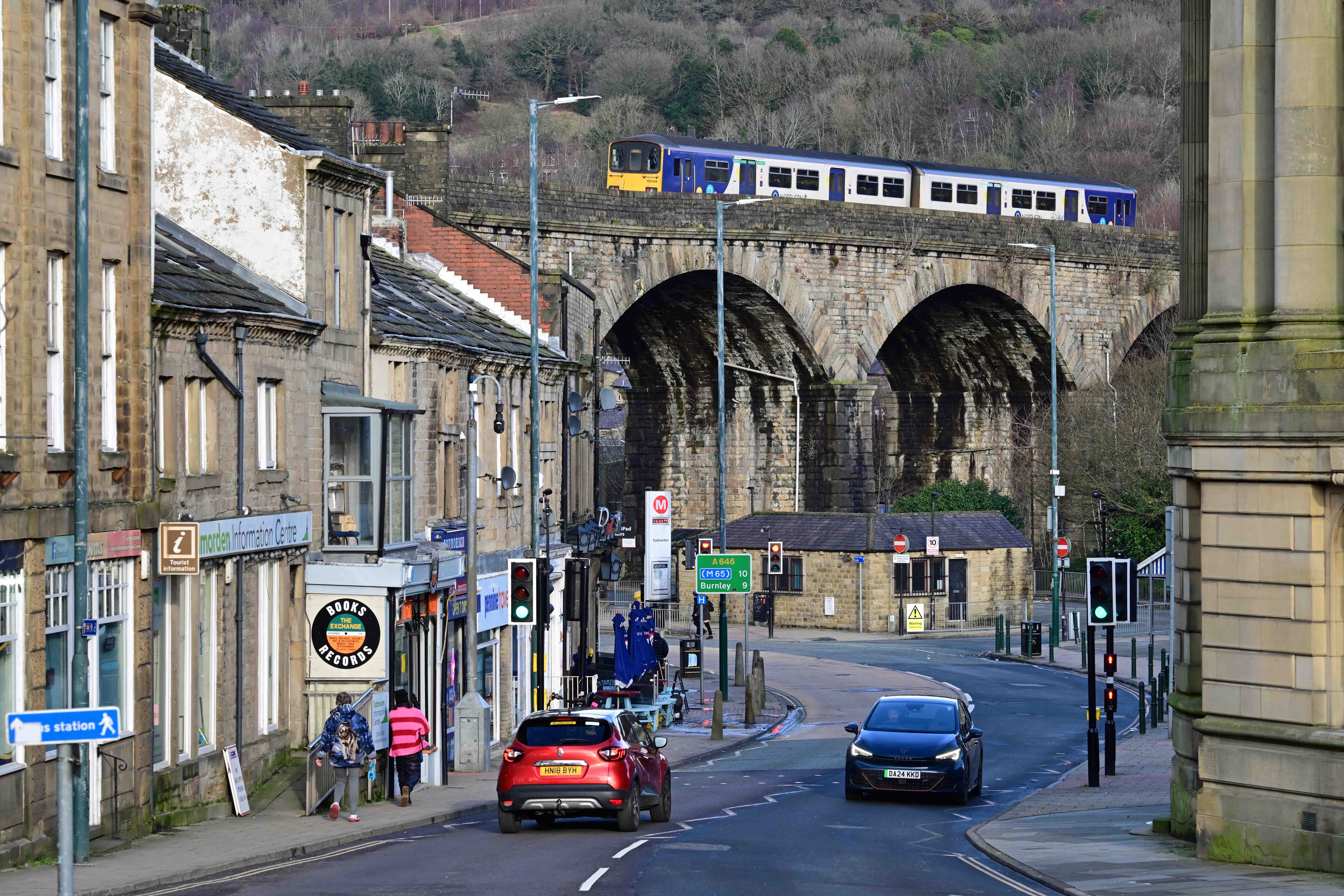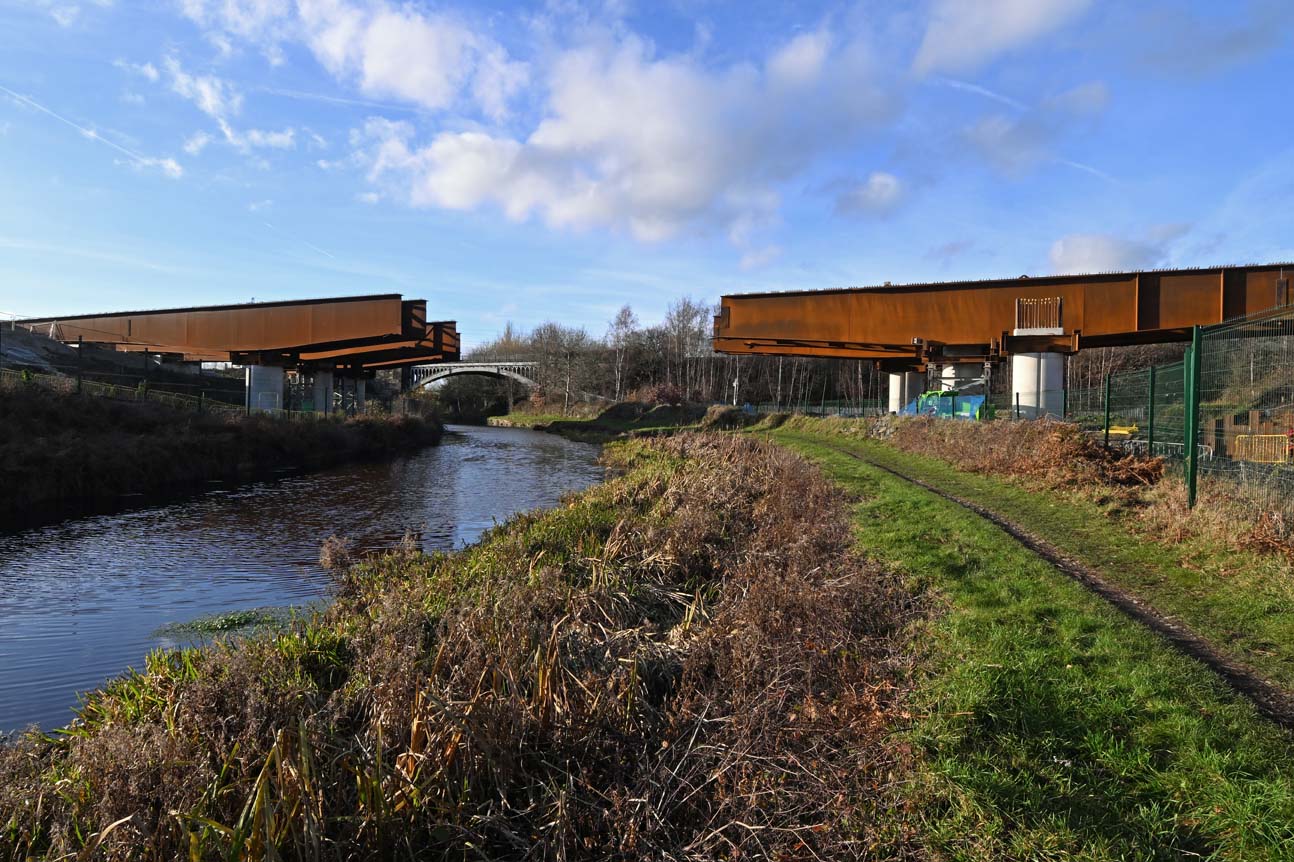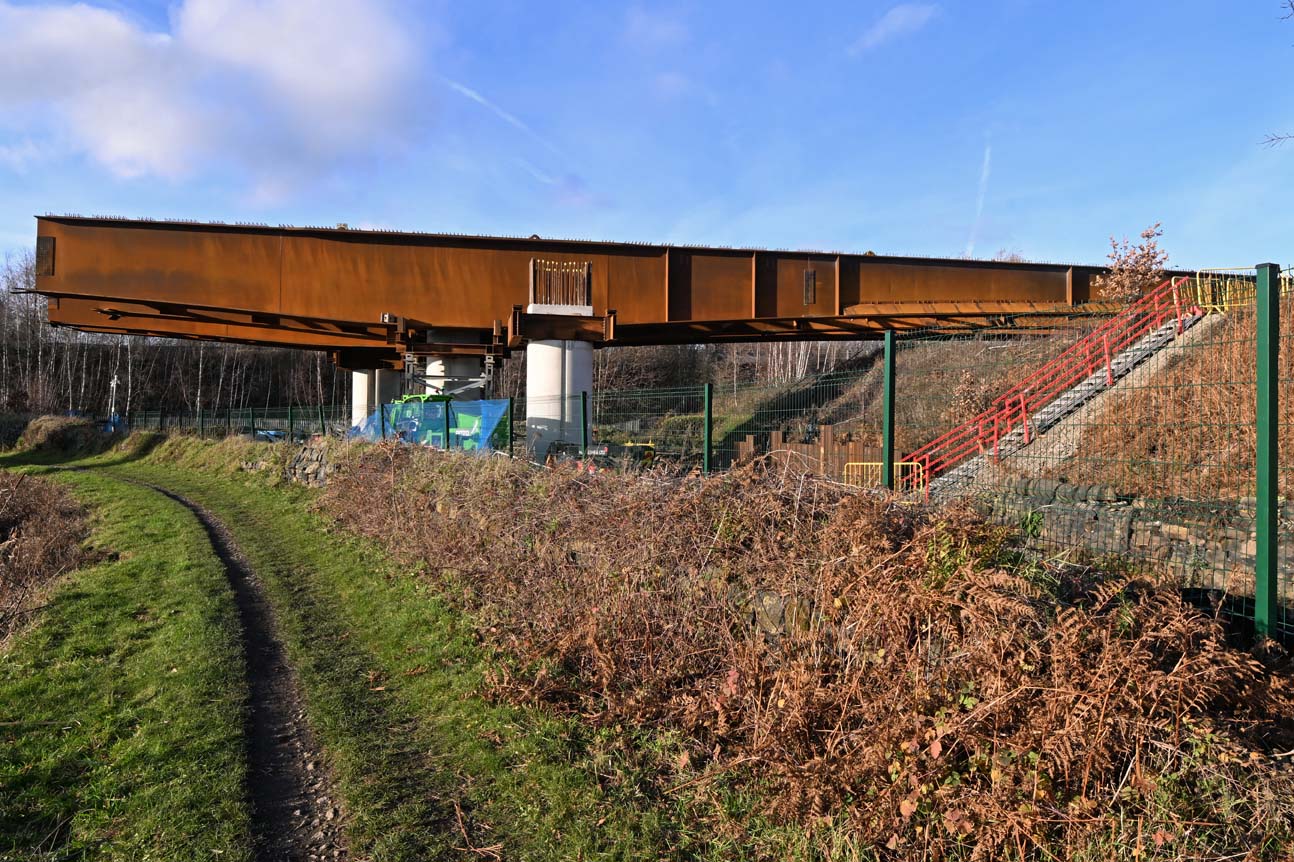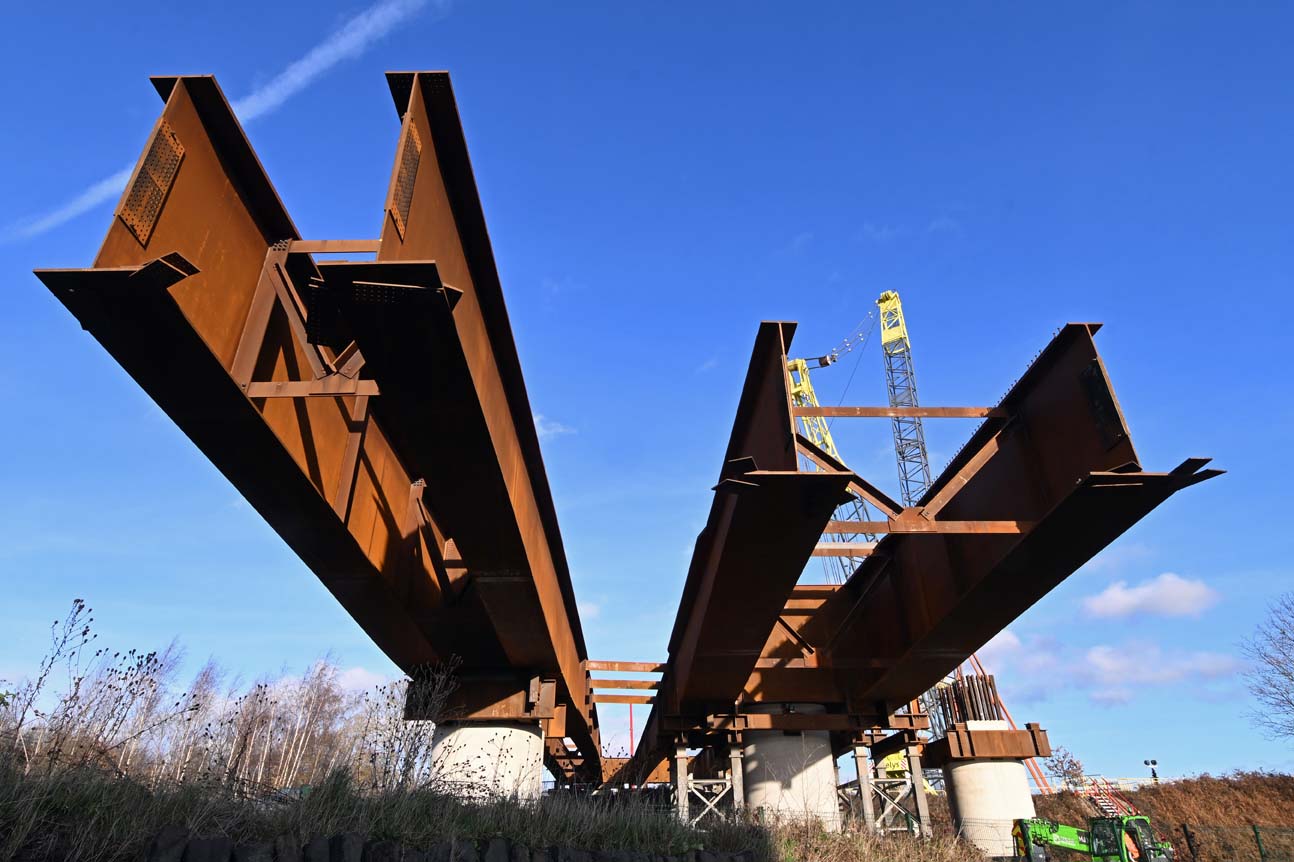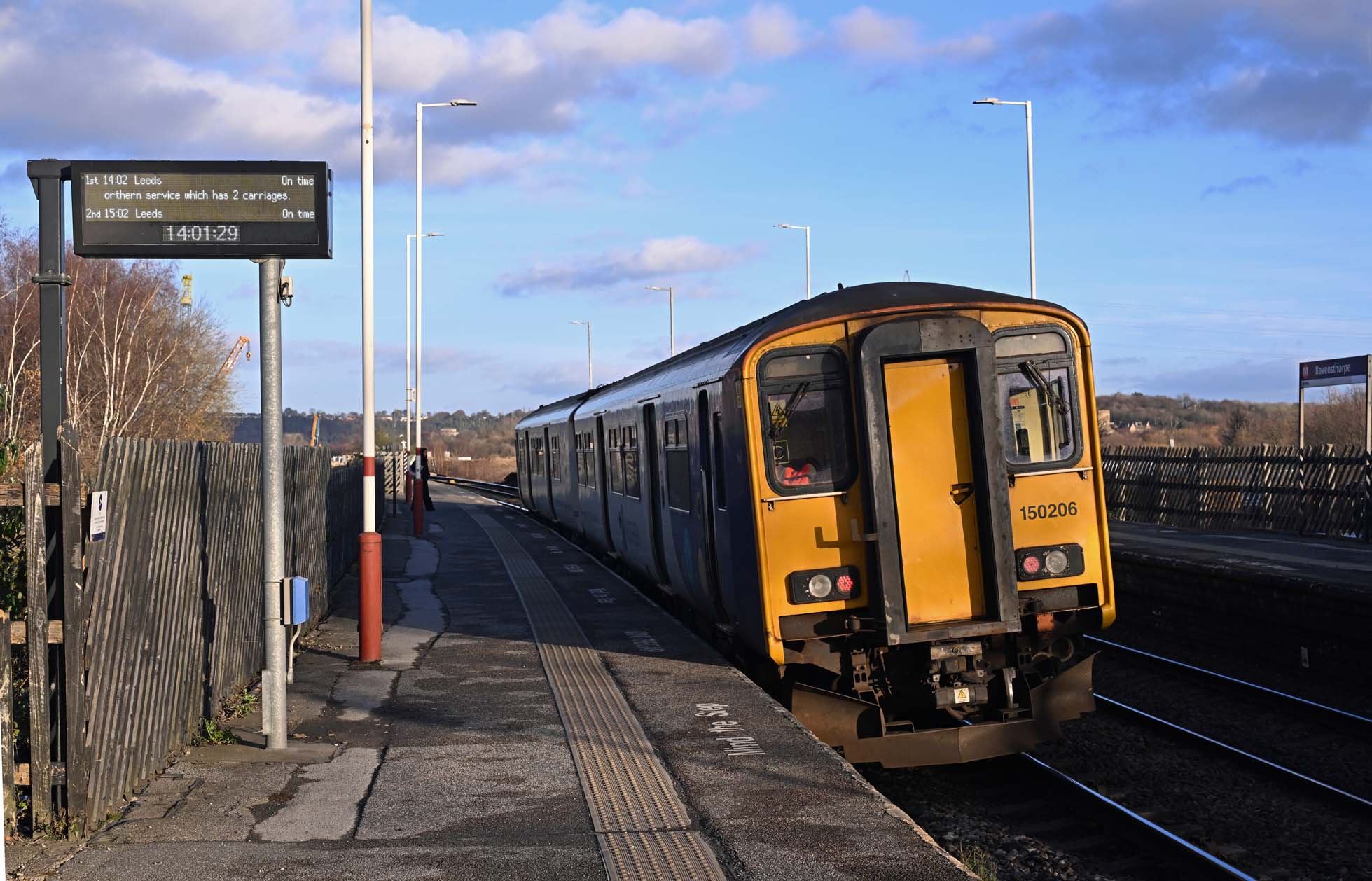
Yesterday (Thursday) the sun shone bright here in West Yorkshire, making a change from the dank and dismal weather which seems to be the norm nowadays. It spurred me on to get out and about for a few hours to look at some of the Trans-Pennine Route Upgrade work sites that I hadn’t visited this year, as well as some I’ve been popping into regularly. I was also driven by the fact Ravensthorpe station closes this weekend so that the site can be cleared for the new fast lines flyover. Here’s a selection of pictures from the day.
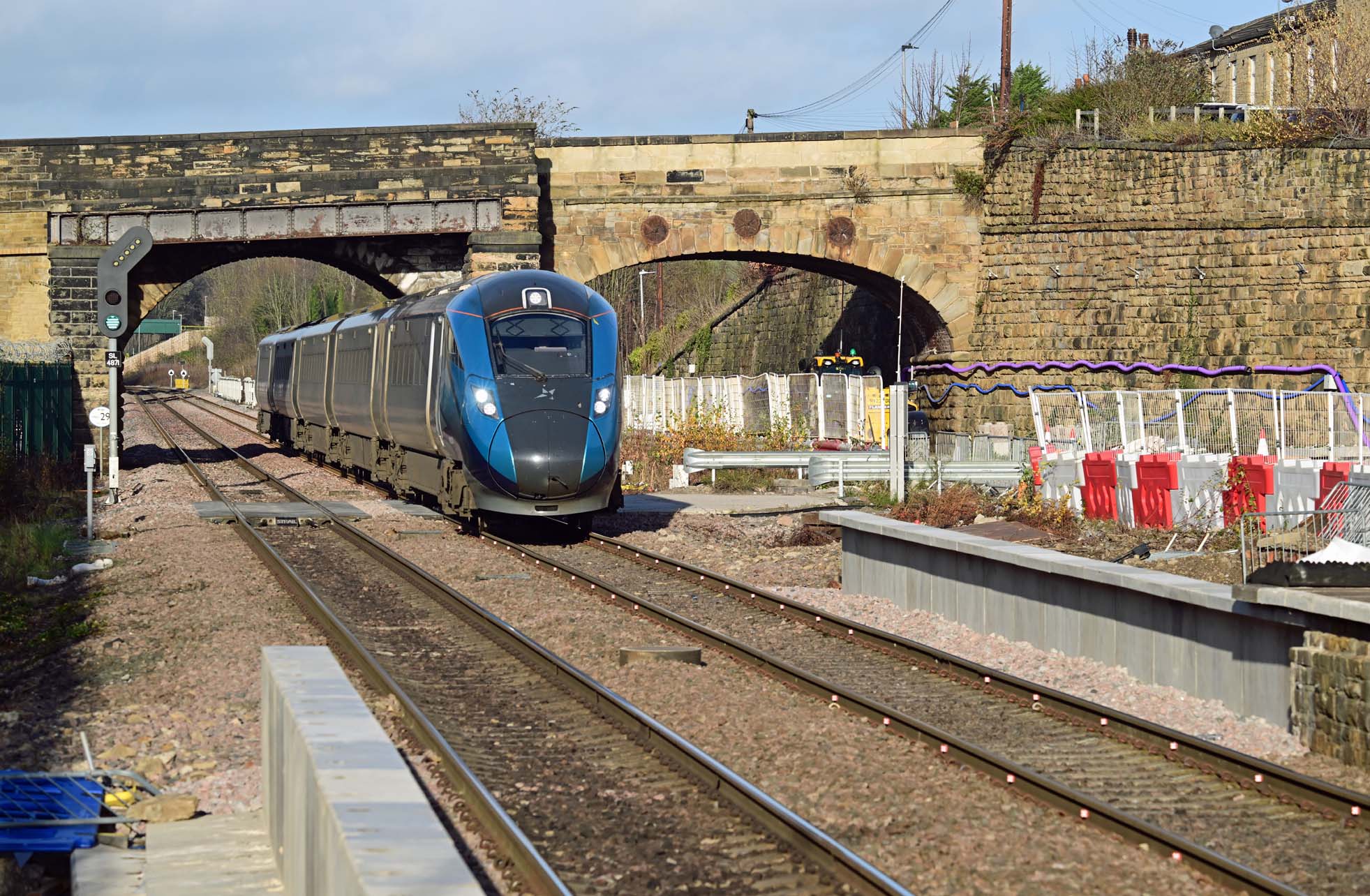
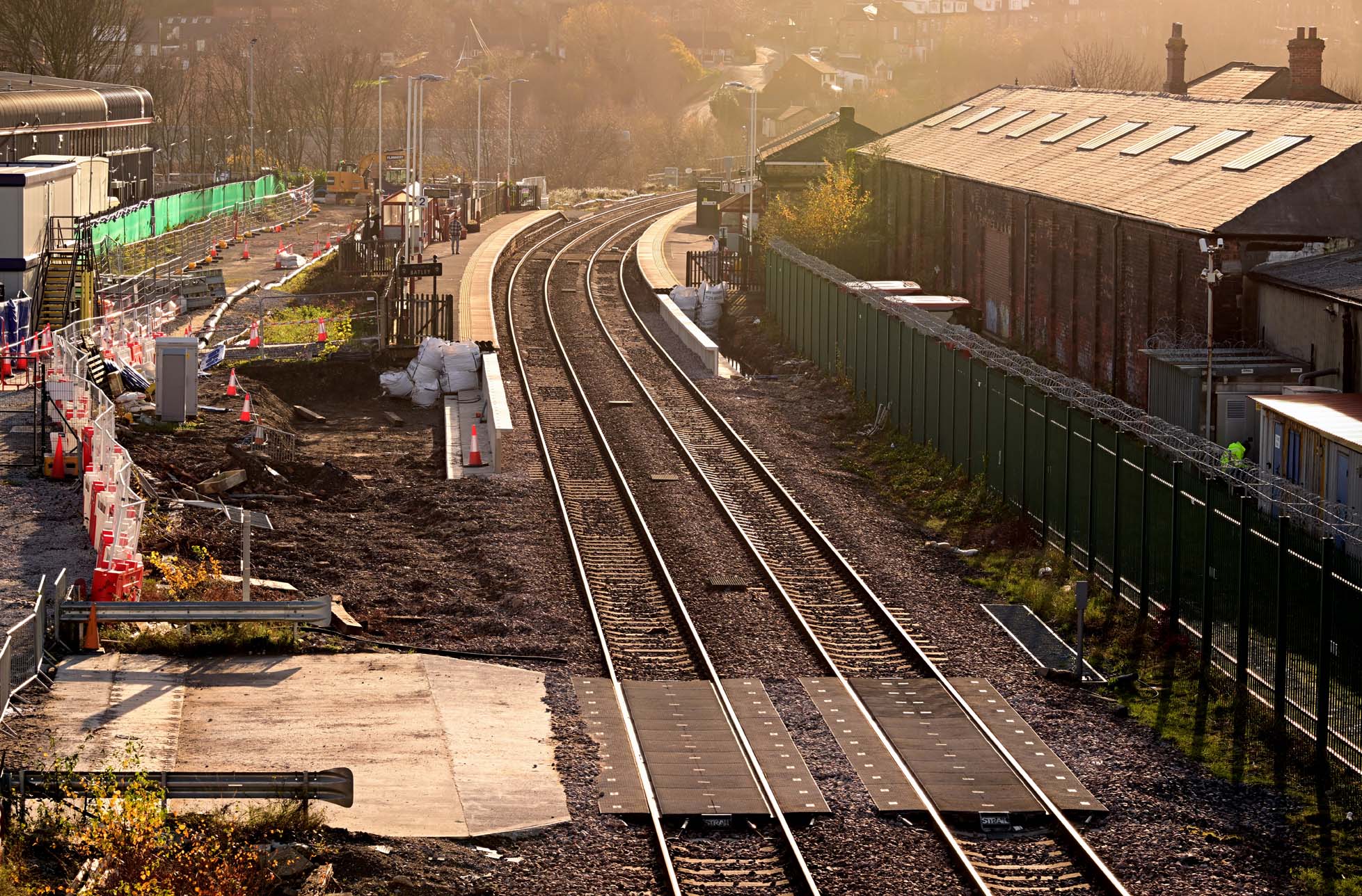
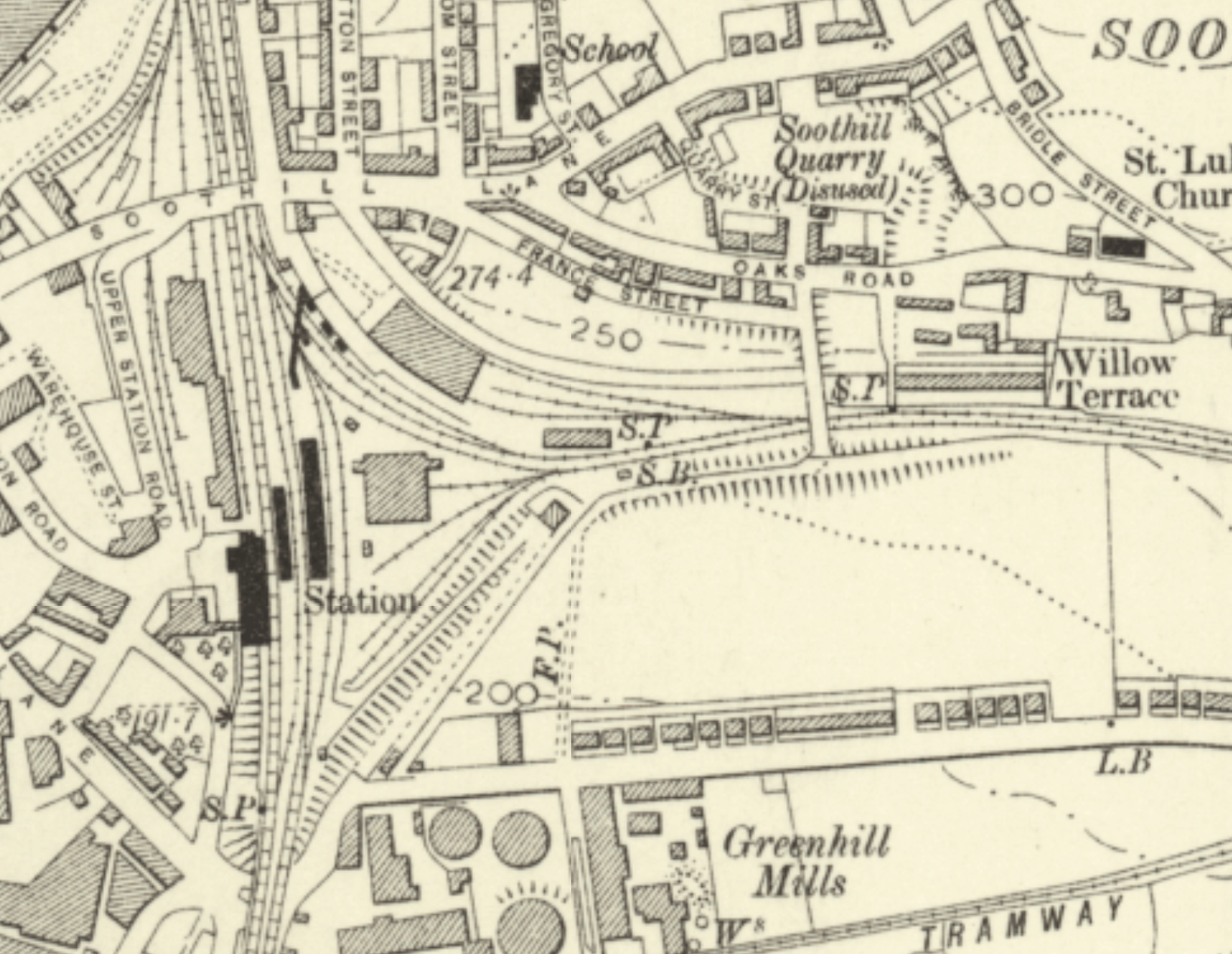
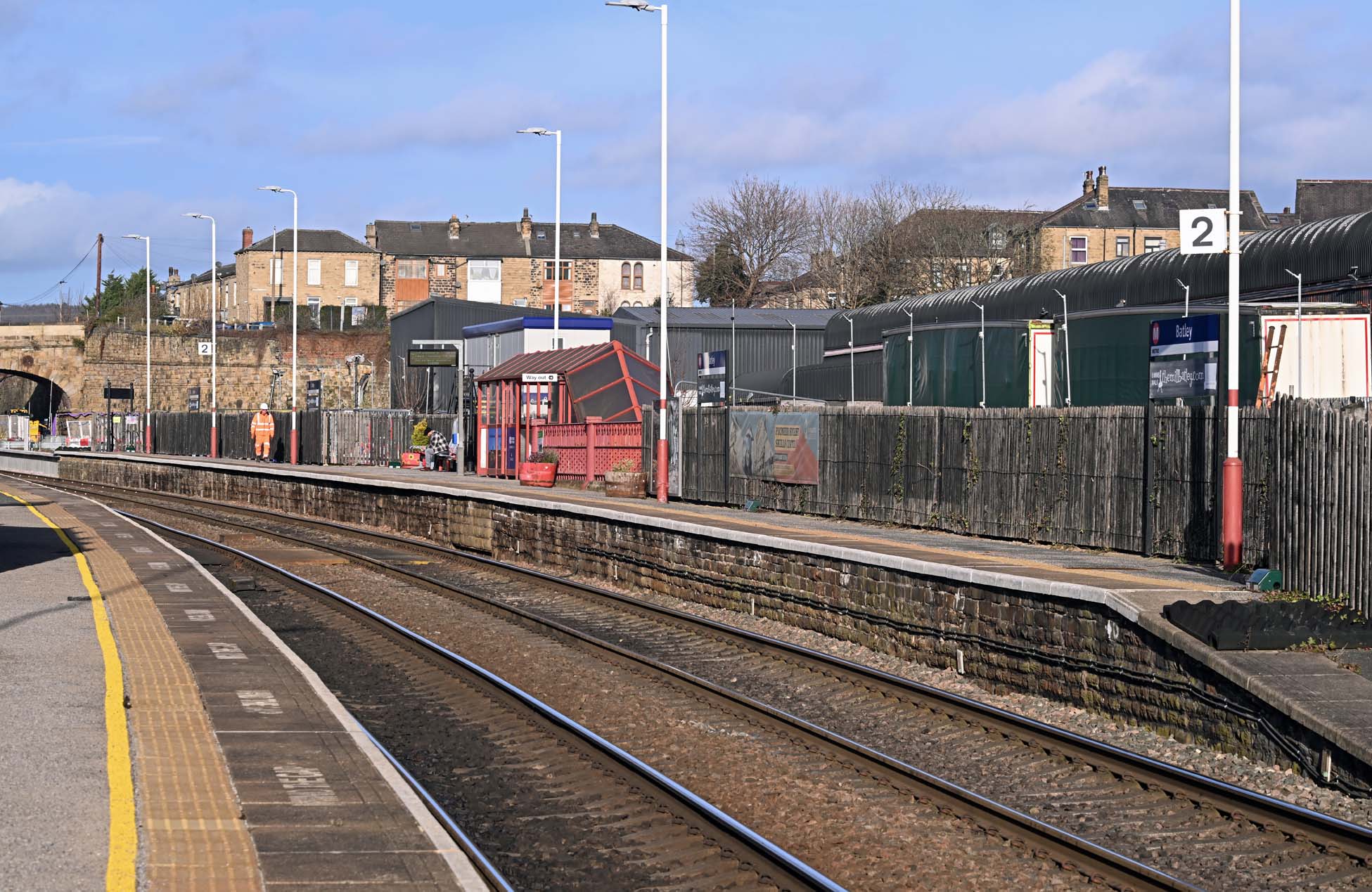
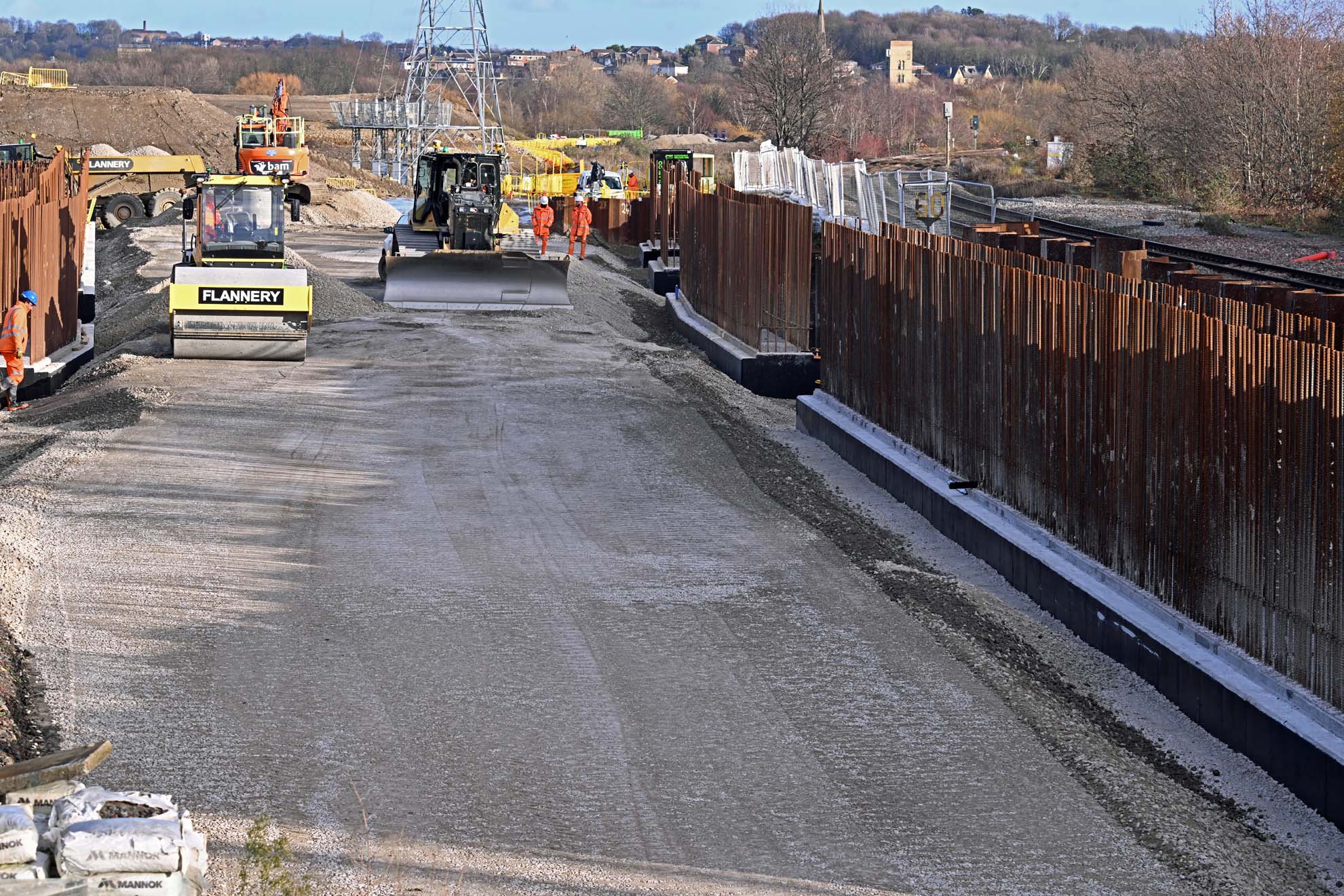
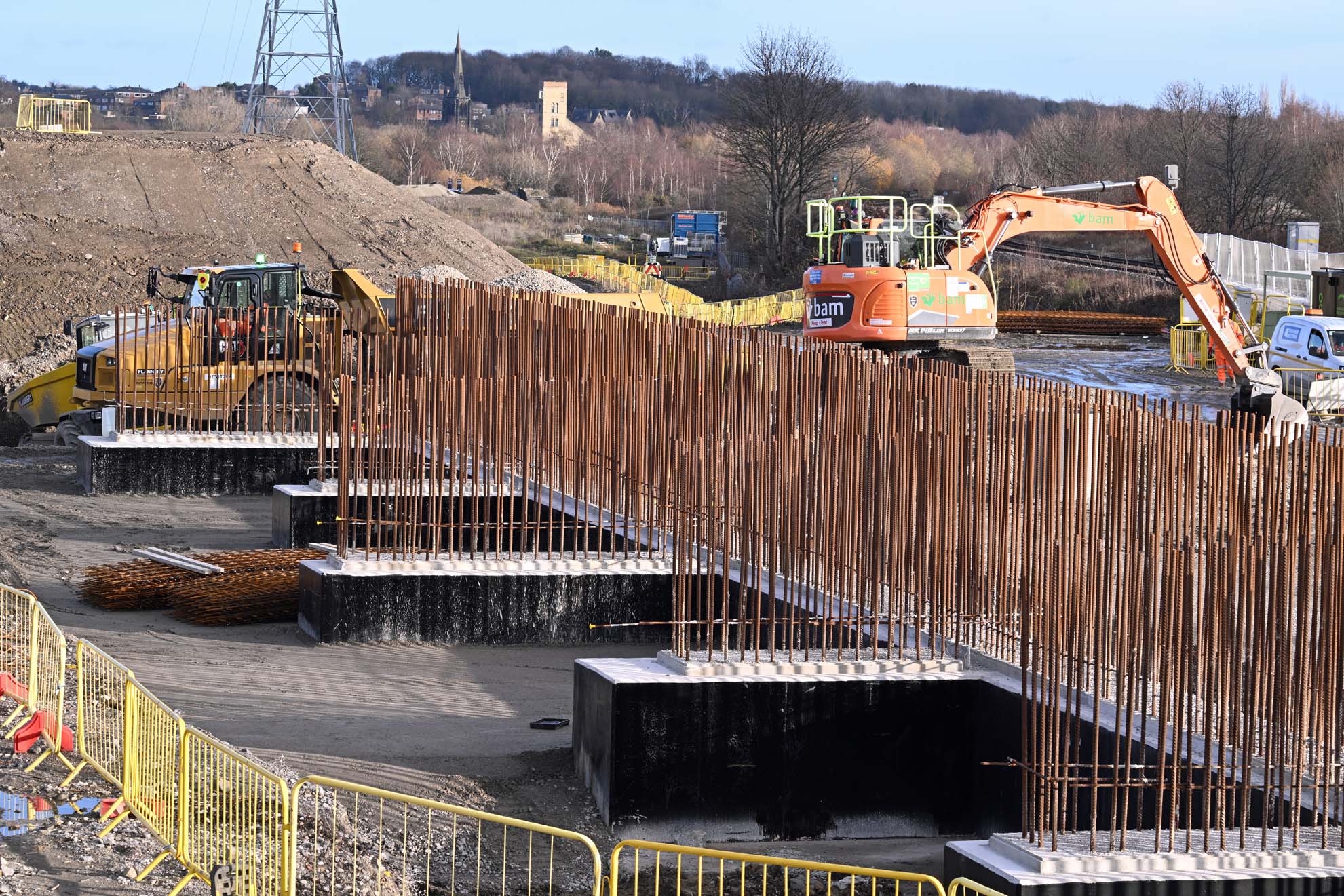
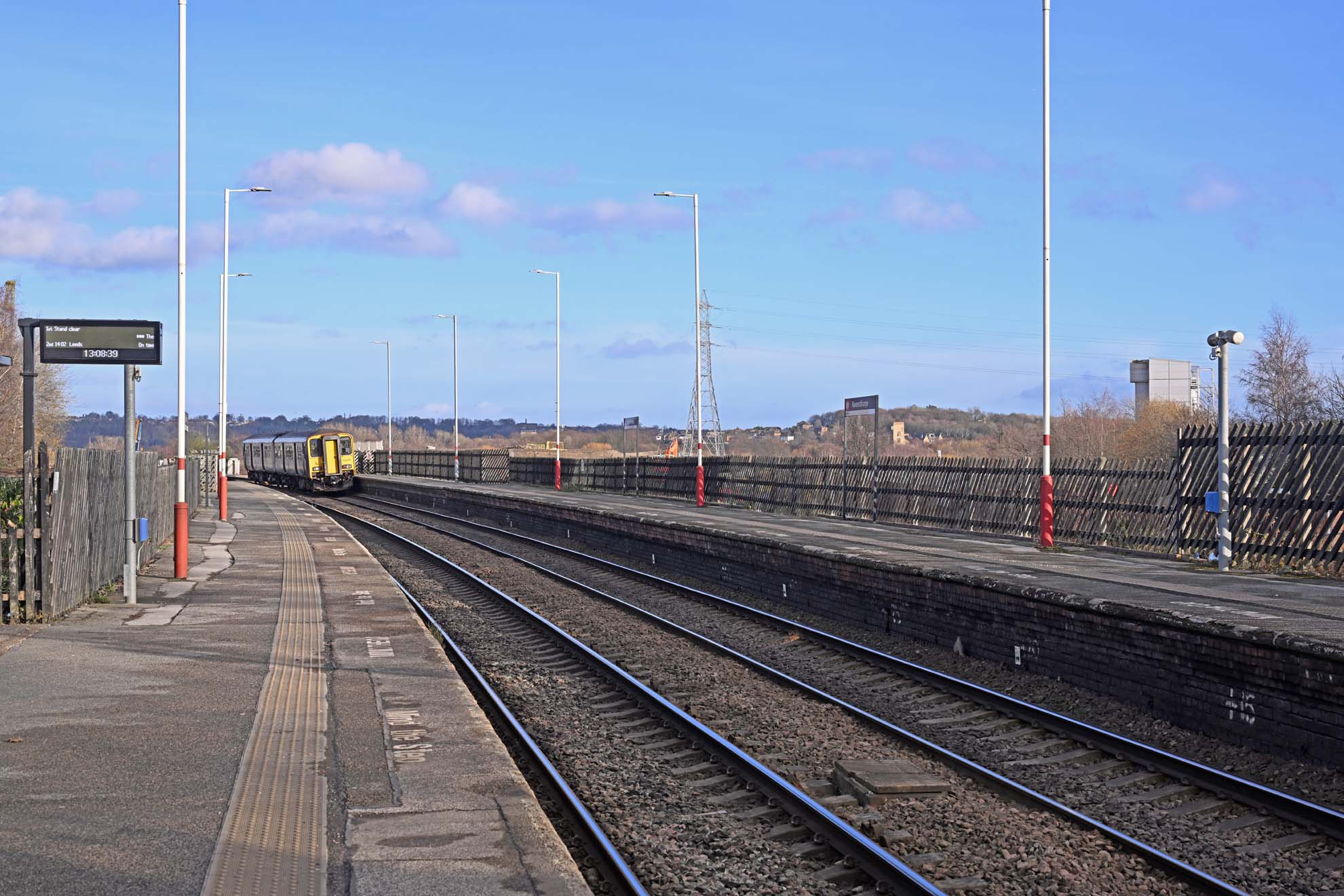
802204 speeds through Batley as 1K16, the 1103 Hull to Liverpool Lime Street, passing the platform extensions which are being added to both Up and Down line platforms at the North end. Looking down on Batley station from Soothill Lane bridge. It’s hard to believe this was once a junction, with the GNR Chicken Heath branch running off to the left towards Ossett.A 1915 OS map shows the station and goods yard. The dingy Batley station subway is due to be replaced by a footbridge with lifts which is being constructed at the Southern end of the platforms. I’ll span the tracks between the two lamp posts on the right. Meanwhile, at Ravensthorpe, hardcore is being laid between the two side walls of the flyover. This will be the location of the slewed lines to/from Healy Mills.Foundations of the Northern wall of the flyover are almost complete. A last view of Ravensthorpe station which closes this weekend. 150215 approaches with a service from Leeds to Bradford Interchange. That’s progress! Here’s the new bridges over the Calder and Hebble navigation. Since I visited on the 25th November two of the Eastern side girders have been put into place. A closer view of the two new girders. The pillar nearest the camera waits to receive its girder, which is already hooked up to the crane nearby. Passing under the new girders. The last train I’ll ever catch from the old Ravensthorpe station. 15020 calls on the 14.02 from Bradford to Leeds.
On the way back I stopped off at Brighouse to get a couple of pictures and to visit the renowned Blakeleys take-away and restaurant, which is famous for the quality of its fish and chips. It’s next door to another Brighouse institution, the Market Tavern. It seemed rude not to wash my food down with a pint, so I called in for a ‘swifty’. The beer was in great condition and the pub busy, but I couldn’t help noticing that the clientele were almost all pensioners (shit, that includes me now!). Admittedly, most younger people would still be at work, but I wonder what the place would look like at 16:00 in say, 10 years time? Times are changing, and so are demographics…
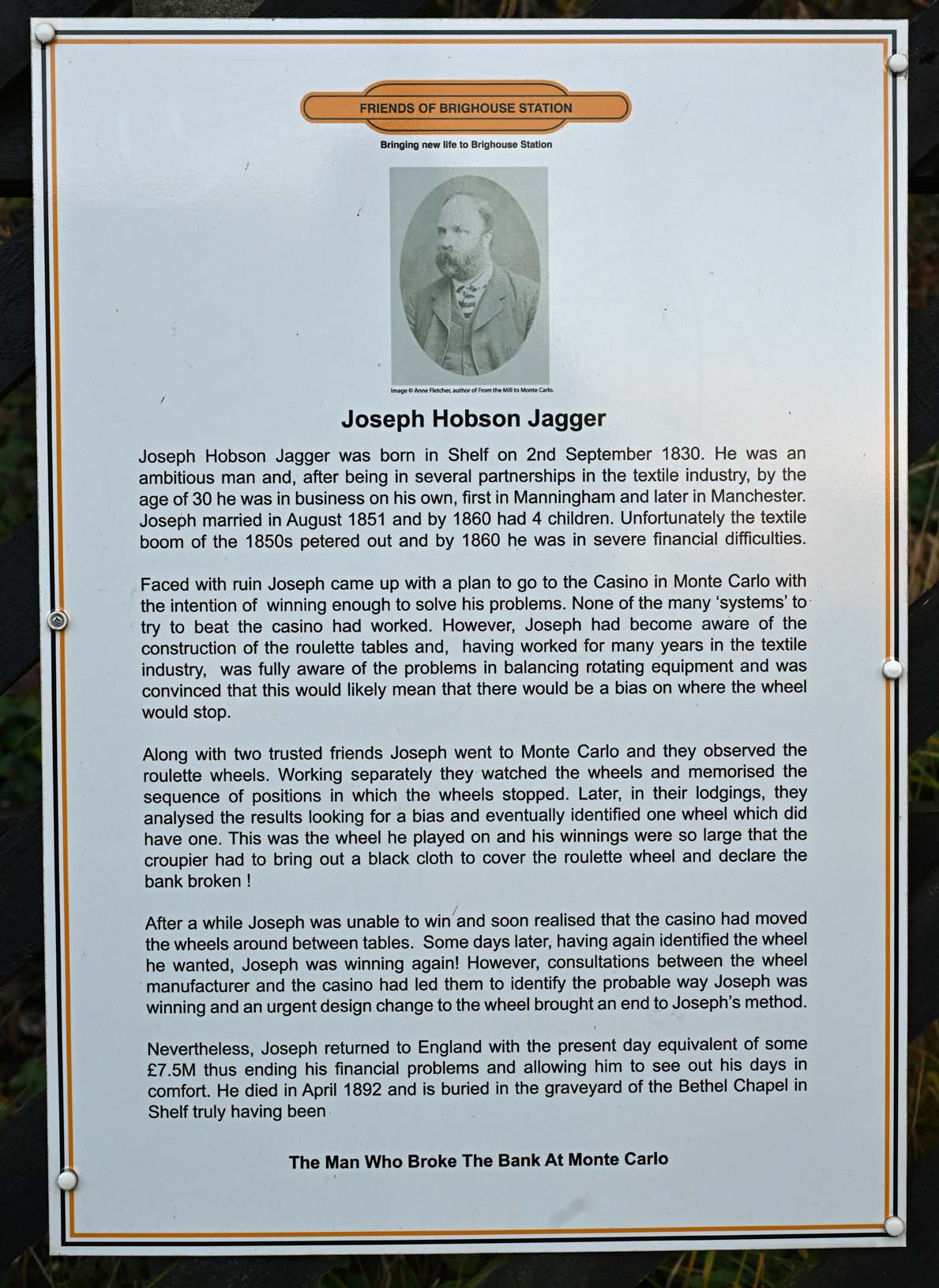
Back at the station I couldn’t resist getting a picture of this history board. I’ve mentioned the tale of the man who broke the bank of Monte Carlo before, but here’s the full story…
If you want to see more TRU construction pictures, you can find the complete gallery by following this link to my Zenfolio website.
I’ve a small favour to ask… If you enjoy reading this or any of the other blogs I’ve written, please click on an advert or two. You don’t have to buy anything you don’t want to of course – although if you did find something that tickled your fancy that would be fab! – but the revenue from them helps me to cover some of the cost of maintaining this site (which isn’t cheap and comes out of my own pocket). Remember, 99% of the pictures used in my blogs can be purchased as prints from my other website – https://paulbigland.zenfolio.com/
Today, we drove over to Chester to begin a two-night stay outside the city, at a hotel and pub in the nearby village of Rowton – a 15 minutes drive from the centre of Chester. The journey across from West Yorkshire took around 100 minutes, we’d have cut at least 15-20 off that if the motorways around Manchester hadn’t been so congested. The traffic was the worst we’ve seen for quite some time, although we’ve no idea why that was.
Fortunately, we were in no rush and the glorious weather made up for any minor inconvenience. Having checked in and dumped our bags we headed into the city. We were both a little disappointed by Chester during our last visit together. The city had a down at heel air, with rubbish strewn city walls suggesting neglect of one of its most historic assets. So, on this visit we were relieved to find the place feeling somewhat improved. Oh, it still has its problems. Like any other UK city it has its fair share of vagrancy, shuttered shops and anti-social behaviour, but this was offset by a vibrant atmosphere, with the city centre buzzing with people out shopping, eating or drinking.
As it was late in the day we had little time to do much other than explore and check out some shops for later in the trip. Then it was time to eat.
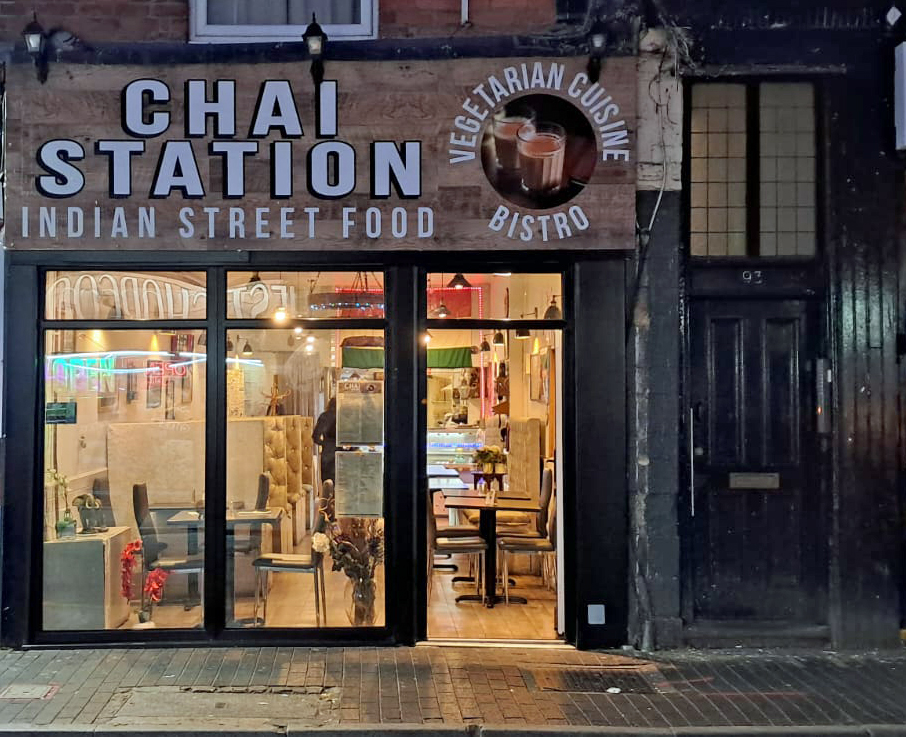
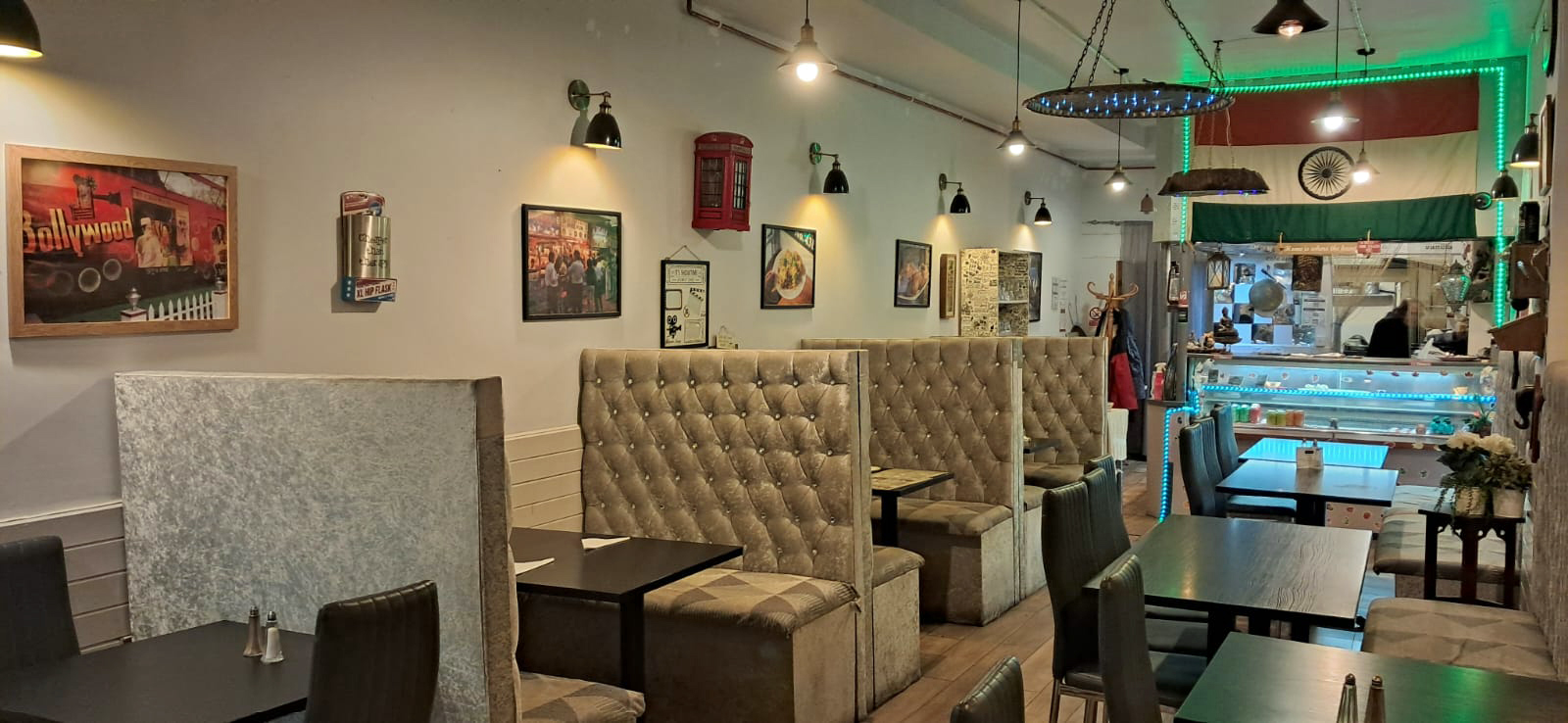
We eschewed the famous names and food-chains to head for a small Indian vegetarian bistro on Brook St called ‘chai station‘, which had taken our fancy. Chai station has an excellent selection of home cooked Gujarati dishes, many of which are vegan. Dawn and I decided to order the thalis (minimum order, two people) and we weren’t disappointed. The food was really very good. We had time to chat to Bobby, the owner, who is Ugandan Indian, he came to the UK when Idi Amin through out the Ugandan Indian community in the 1970s. Bobby’s wife Anna is Kenyan Indian and does all the cooking. We’d certainly come back as there’s so many other dishes on the menu we’re dying to try.
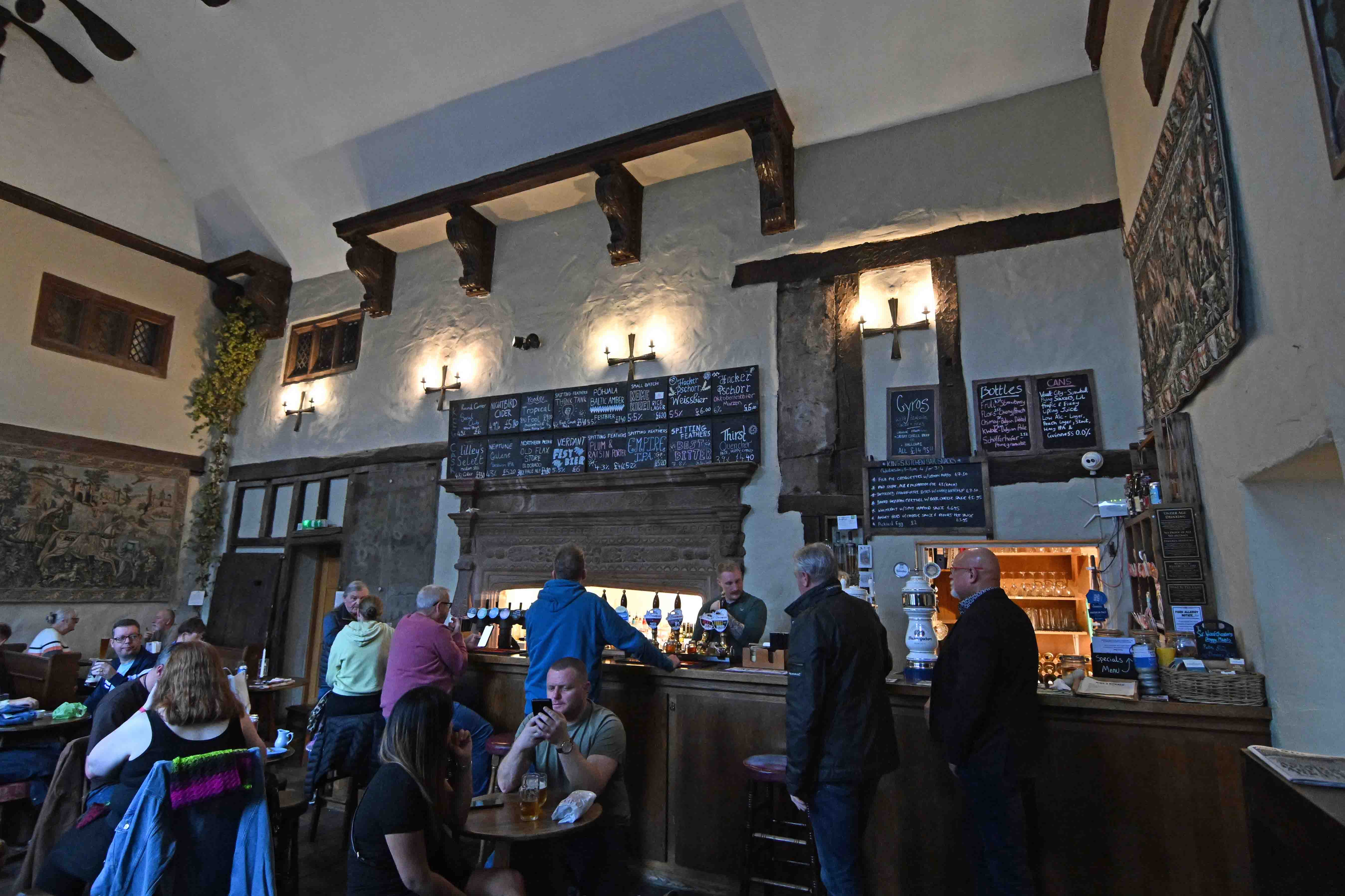
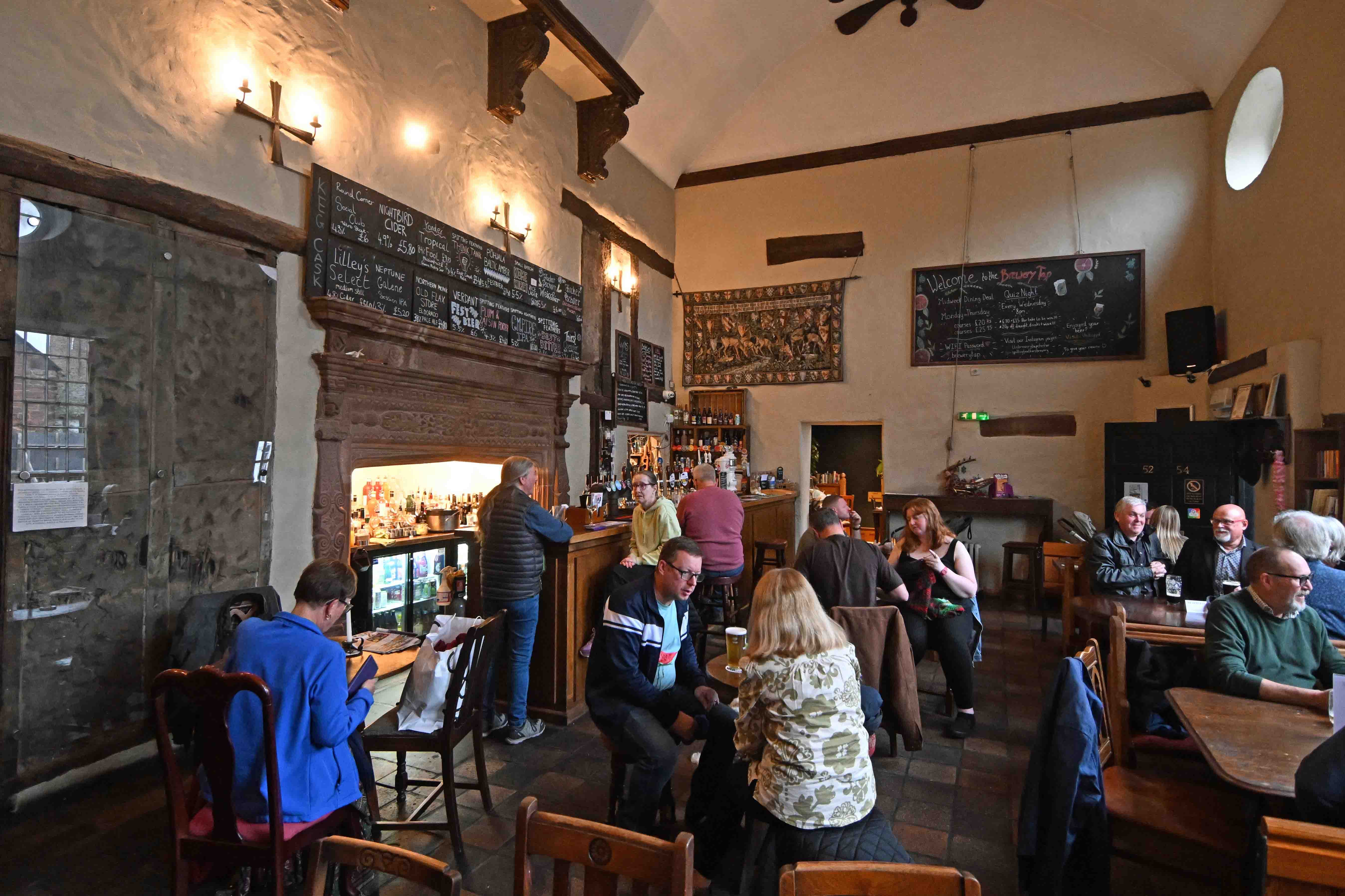
Having stuffed ourselves we walked back into the town centre to head to an amazing old building which has only been a pub since 2008 when it taken over by Spitting Feathers brewery. The Brewery Tap (originally called Gamul House) has a long history, with parts of the building dating back to the 1500s. There’s few pubs that can boast such an impressive, high-ceilinged interior. There’s a great range of real ales on offer too.
Tempting as it was to try other venues we both decided to call it a day and head back to Bigland Towers in exile. Now we’re having a quiet night catching up on various bits (like blogging!) before a busy day tomorrow.
I’ve a small favour to ask… If you enjoy reading this or any of the other blogs I’ve written, please click on an advert or two. You don’t have to buy anything you don’t want to of course – although if you did find something that tickled your fancy that would be fab! – but the revenue from them helps me to cover some of the cost of maintaining this site (which isn’t cheap and comes out of my own pocket). Remember, 99% of the pictures used in my blogs can be purchased as prints from my other website – https://paulbigland.zenfolio.com/
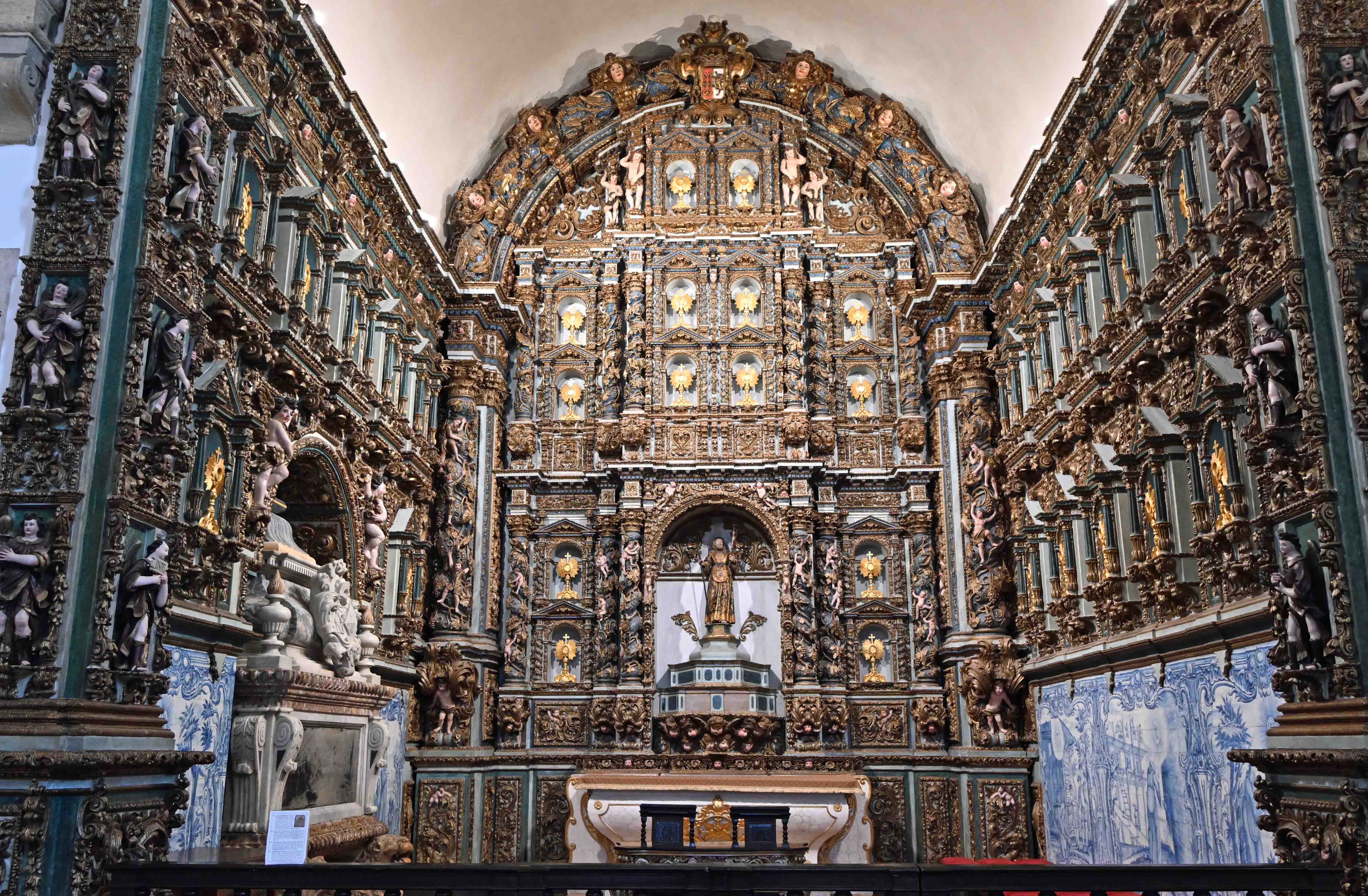
We’ve had a hectic first full day here in Faro, exploring the old and new towns, soaking up the sunshine and enjoying the local cuisine. We both love fish, so Portugal (a country synonymous with Sardines) is right up our street. Our wanderings took us through the narrow backstreets of the old town and into the delightful cathedral, which is a baroque dream. The roof of the belltower also doubles as a fantastic viewpoint across the town, and provide an ideal place to watch planes taking off from the airport nearby.
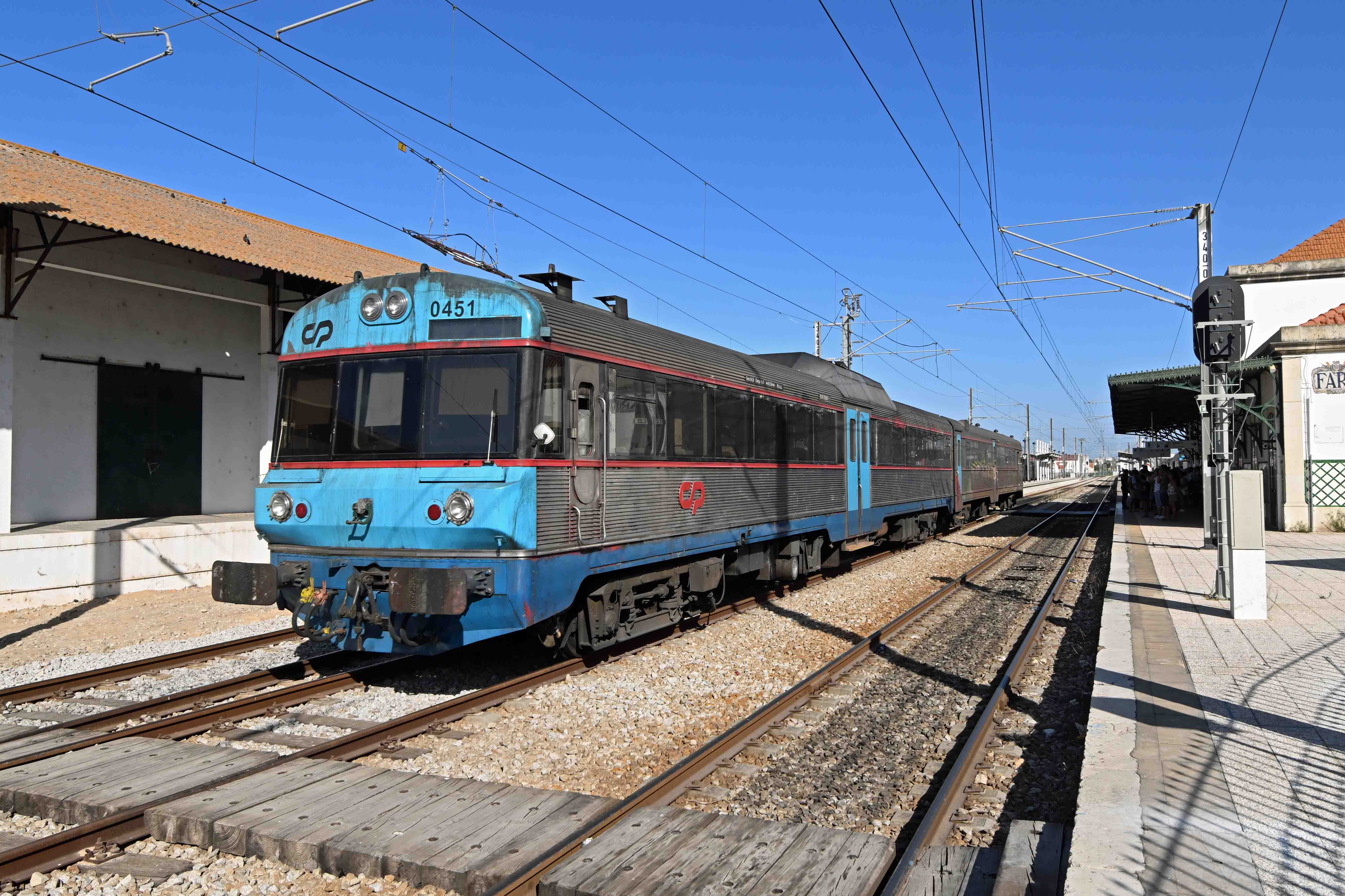
The railway station’s only a stone’s throw from where we’re staying, so I managed to pop in and get my railway fix in advance of us catching the train to Porto tomorrow. All in all, it’s been a really enjoyable day. There’s a big music festival happening across the old town tonight but as the weather’s changed due to sea mist and drizzle rolling in across the town we decided discretion was the better part of valour. Instead, we’ve adjourned to our hotel in order to rest our weary feet, full stomachs and pack – ahead of a silly o’ clock start in the morning as we’ll be on an 07:00 train.
Here’s a few pictures from today.
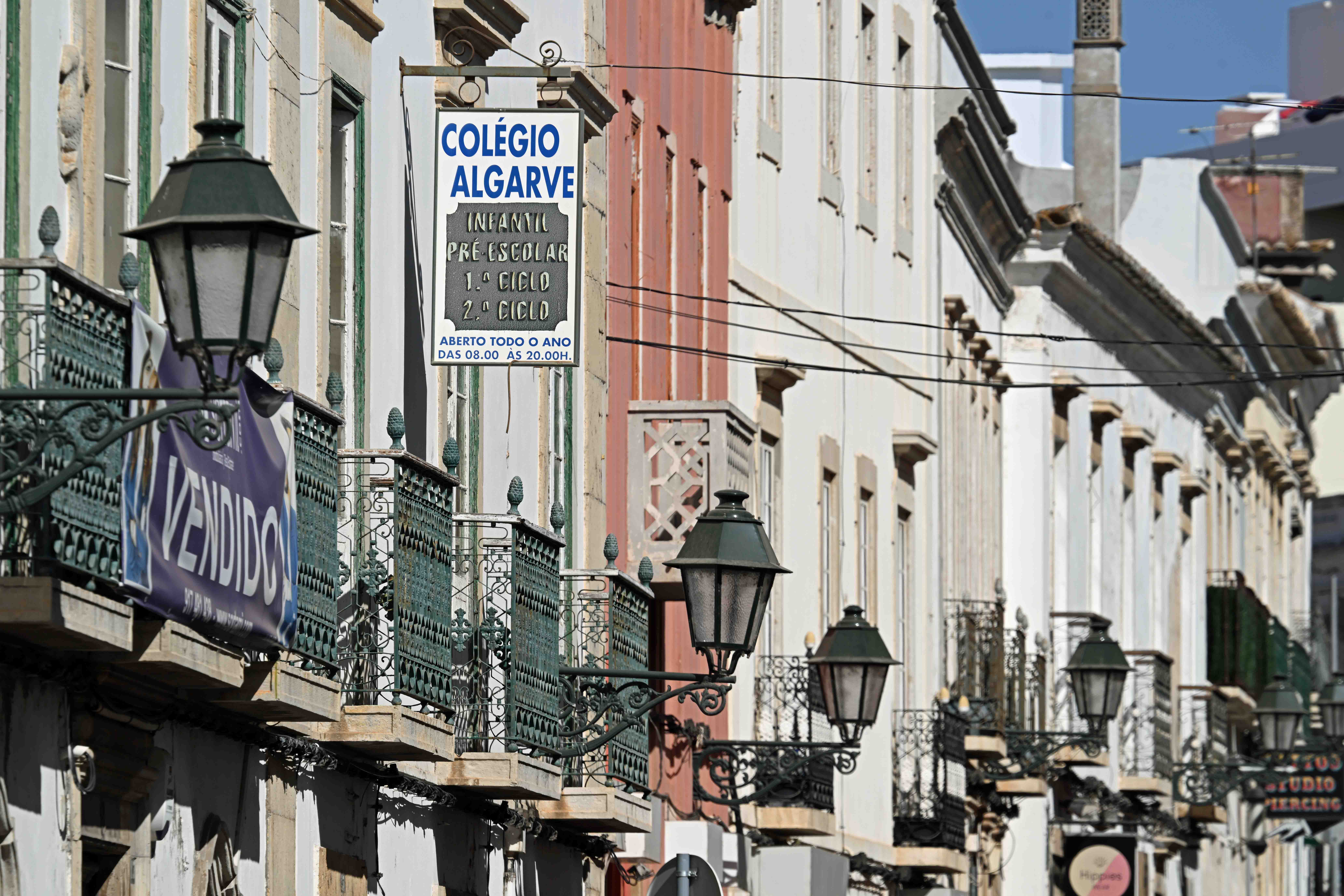
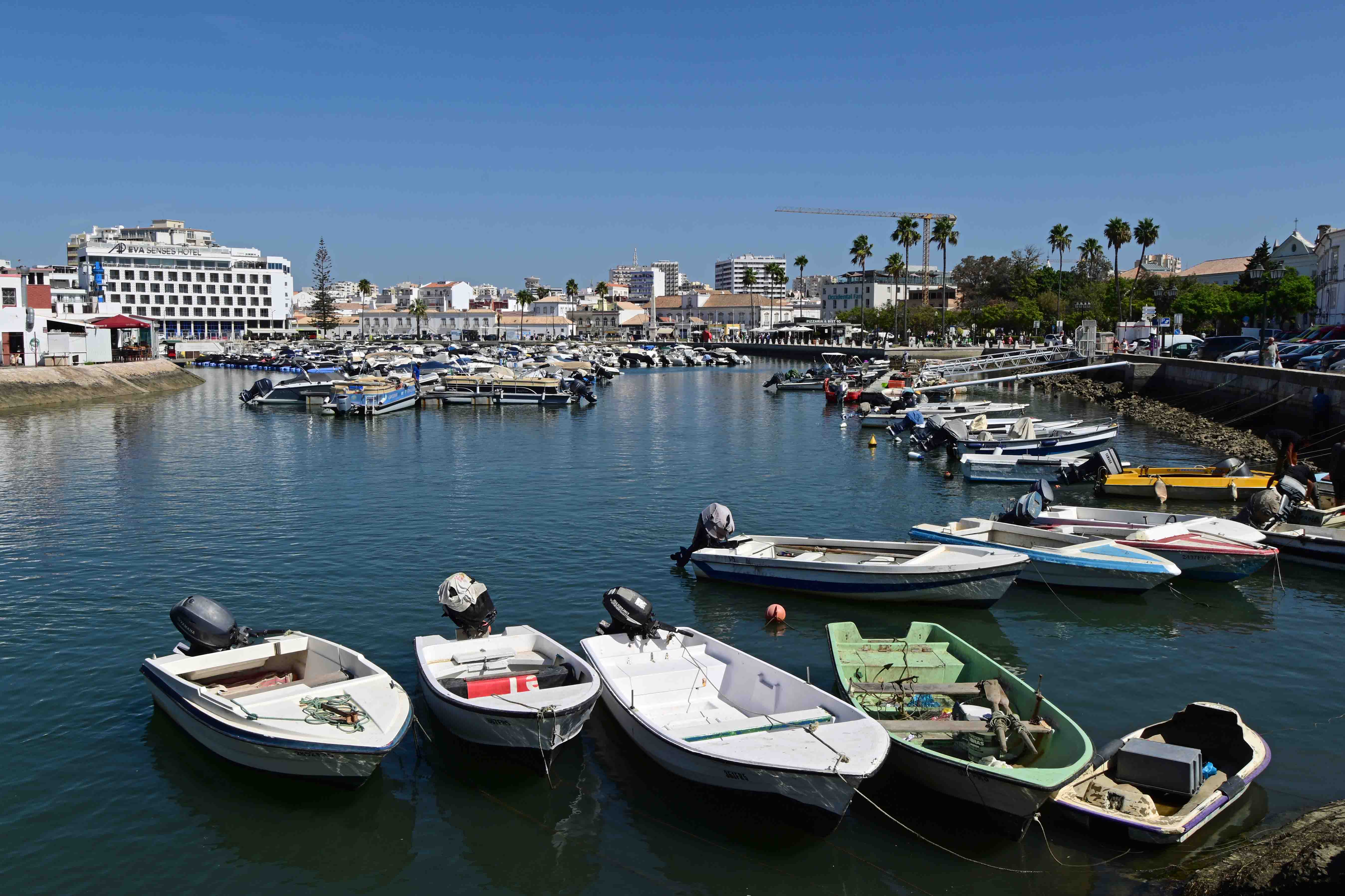
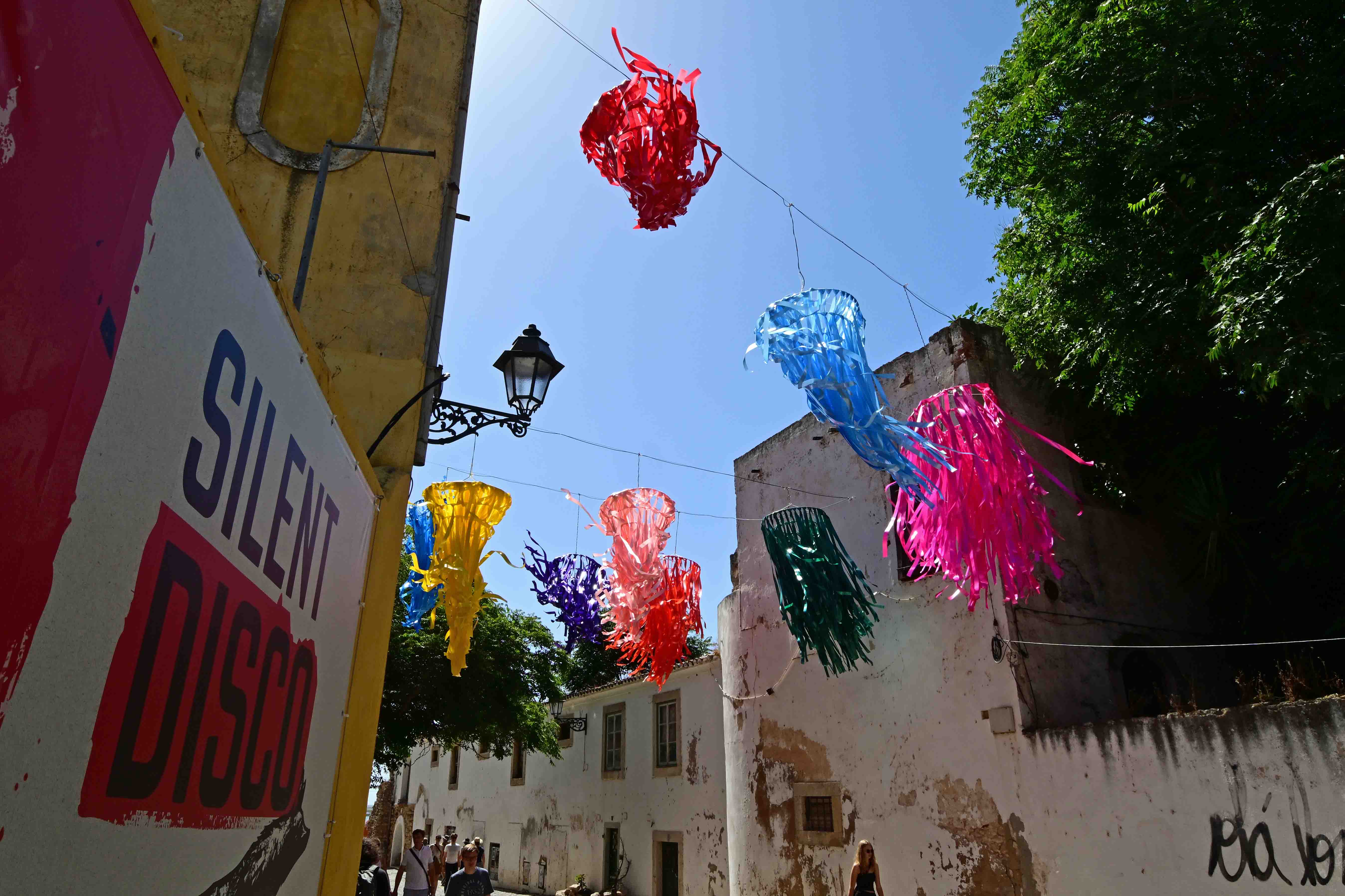
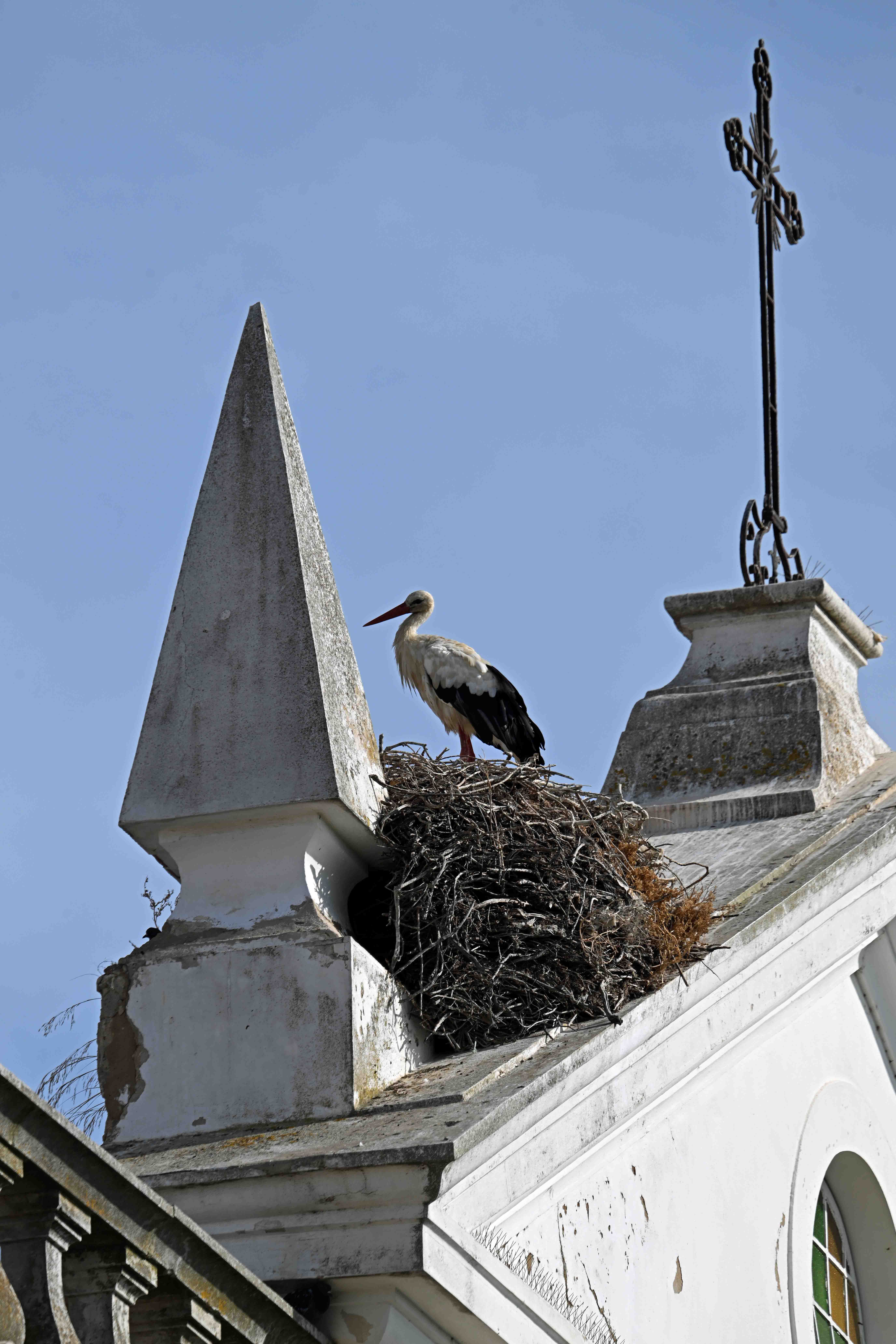
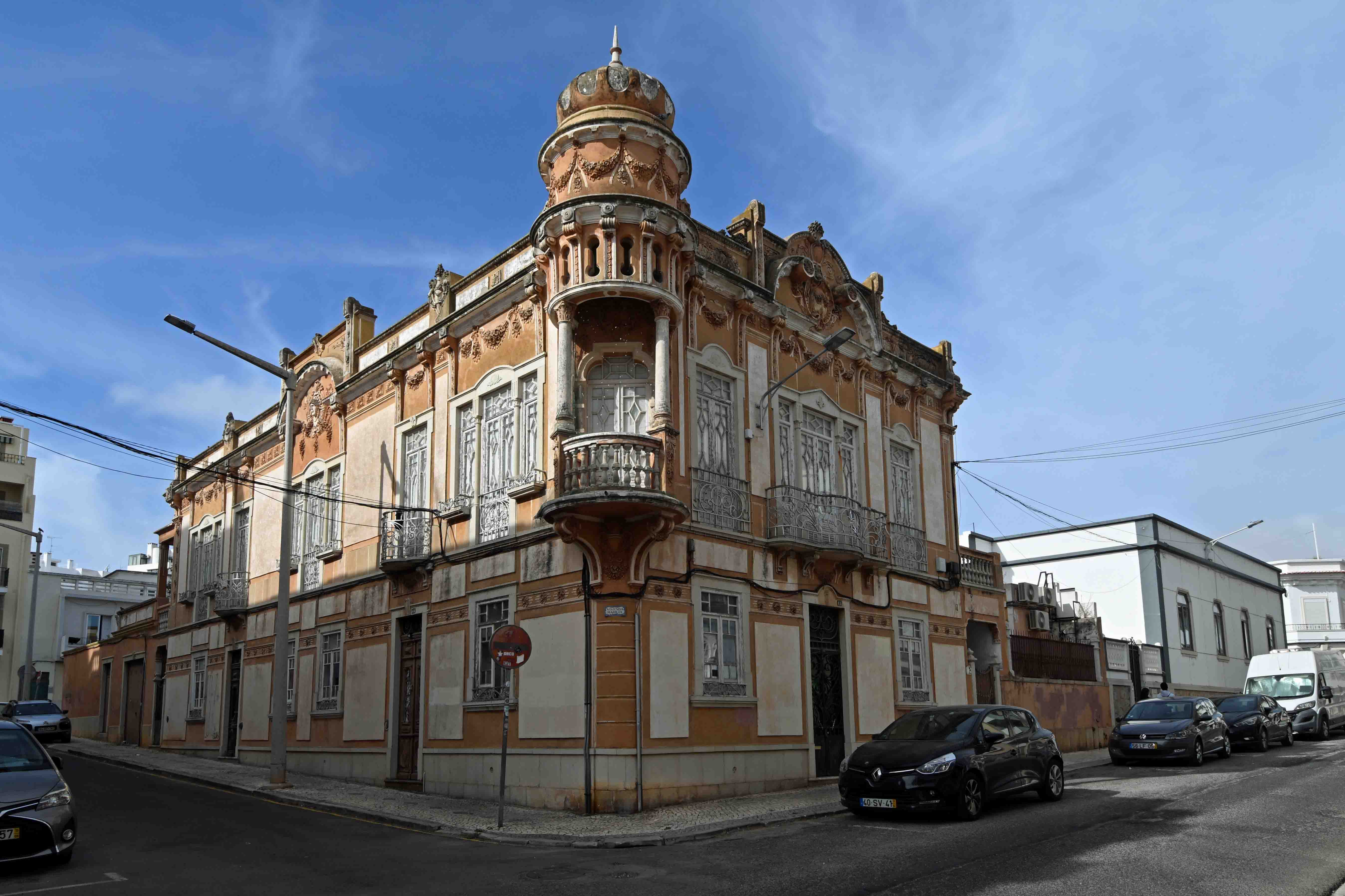
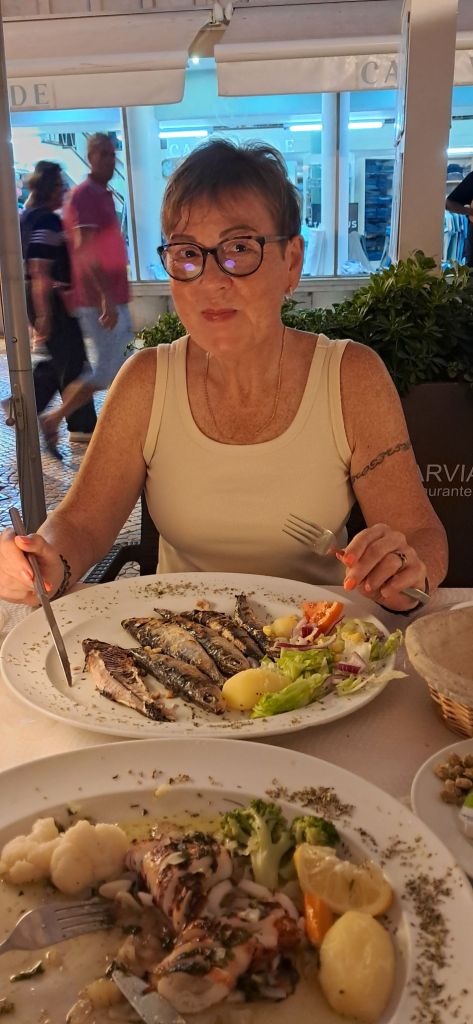
These diesel units provide local rail services around Faro. They’re not in the best of external condition due to regular attacks from grafitti vandals. 19 of these units were built by Portugese company Sorefame in 1965 as Class 0400. They were modernised in the late 1990s and reclassified Class 0450. Cast iron balcony railings and ornate street lamps are a theme of Faro.The marina in the centre of Faro is a pleasant place to sit and watch the world go by. Fun and frolics in the old town, which has a vibrant artistic and youthful feel to it despite the age of the buildings.When I said the cathedral was a baroque delight, I wasn’t kidding! – and more…Faro is well known for Storks building their nests on some of the old buildingsWe were wandering the back streets near the municipal market when we stumbled on this architectural delight!Oh, remember I mentioned Sardines? Whilst Dawn tucked into a plate of them I’d opted for the Squid. Unfortunately, my squid was overcooked, but the Sardines weren’t bad. Sadly, we’d had to take pot luck when it came to eating as the place that was our first choice had a knackered card machine and could only take cash. We’re looking forward to getting better in Porto and Lisbon. Even so, this was a healthier and tastier option that some. The queue of local ‘Deliveroo’ riders outside the back of McDonald’s was both instructive, and depressing.
I’ve a small favour to ask… If you enjoy reading this or any of the other blogs I’ve written, please click on an advert or two. You don’t have to buy anything you don’t want to of course – although if you did find something that tickled your fancy that would be fab! – but the revenue from them helps me to cover some of the cost of maintaining this site (which isn’t cheap and comes out of my own pocket). Remember, 99% of the pictures used in my blogs can be purchased as prints from my other website – https://paulbigland.zenfolio.com/
This morning the weather was less than kind to us here in Church Stretton. We were greeted by low, grey clouds over the Long Mynd along with sporadic showers, so we were in no rush to get out. When we did the plan that developed was to drive down to Leominster across the border into Herefordshire. It’s a town I’ve never visited although I’ve passed through by train many times.
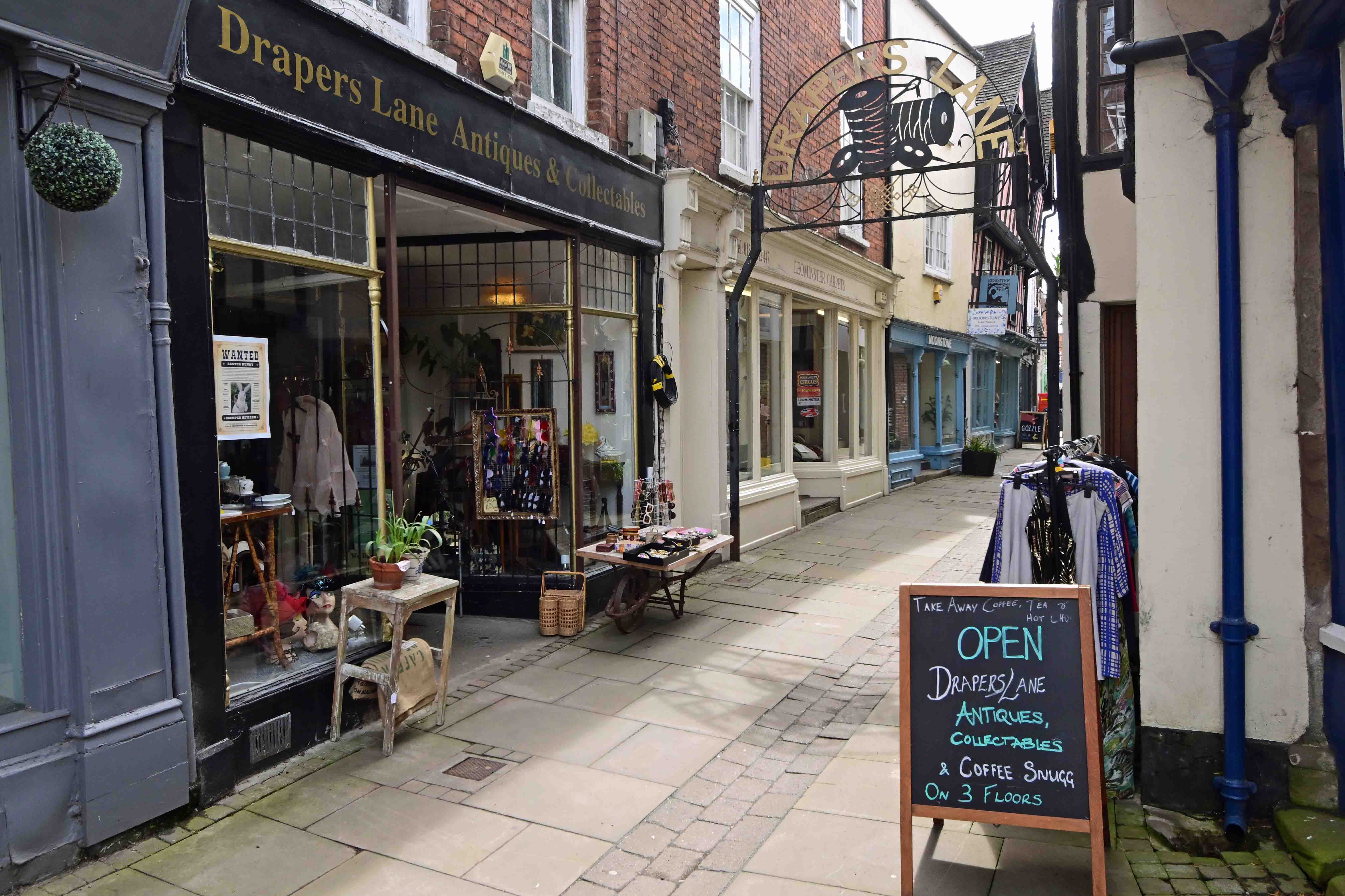
Our experience of Leominster was mixed. Architecturally it’s fascinating with building design spanning hundreds of years. The layout of much of the town centre is still mediaeval, although many buildings have been replaced (not always sympathetically). But, compared Ludlow to it’s very shabby. Many of the buildings are in a poor state of repair. Plus, there’s a lot of vacant properties. But what the town centre does have in abundance is seamstresses and antique shops. Hence Drapers Lane.
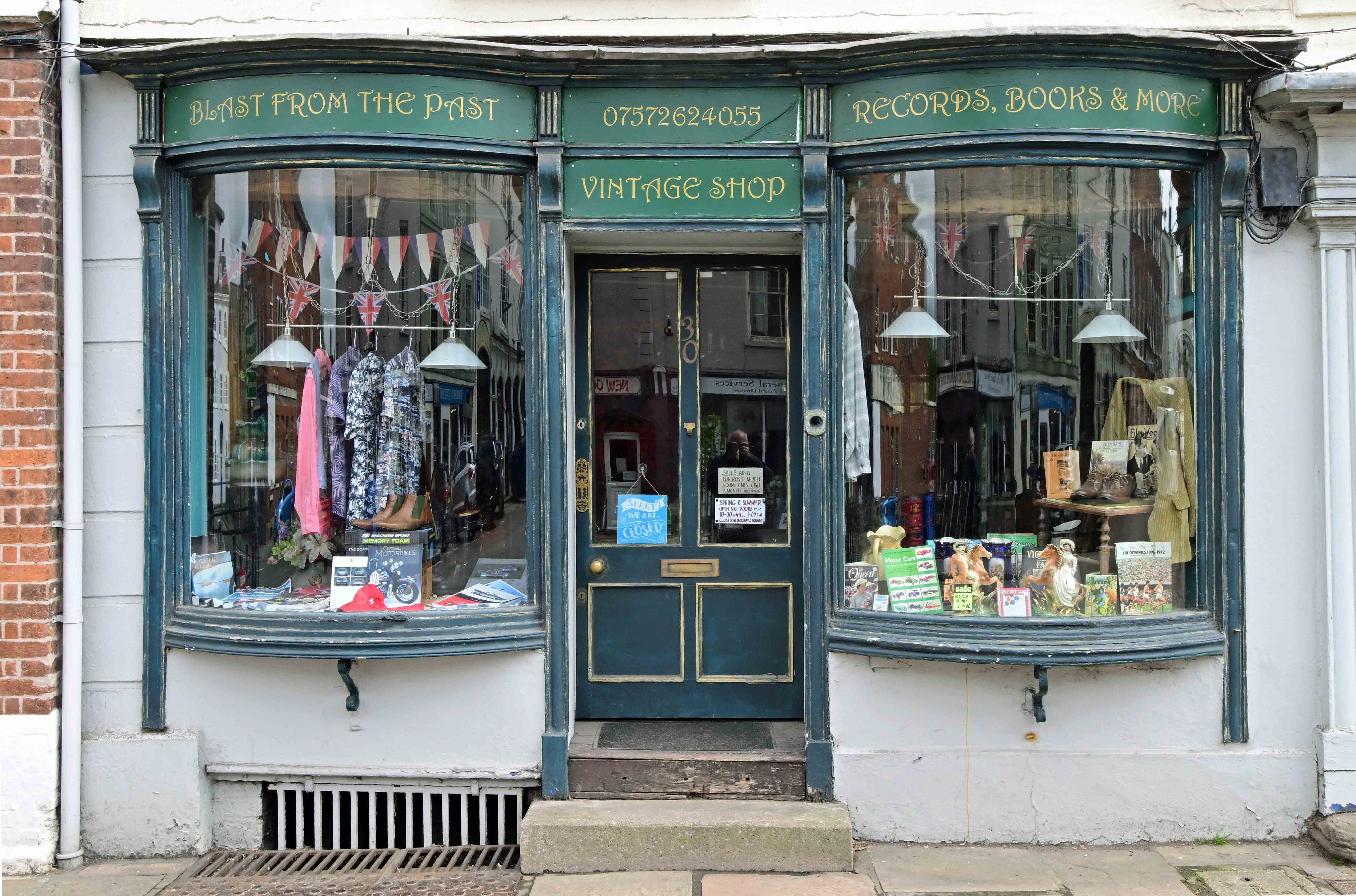
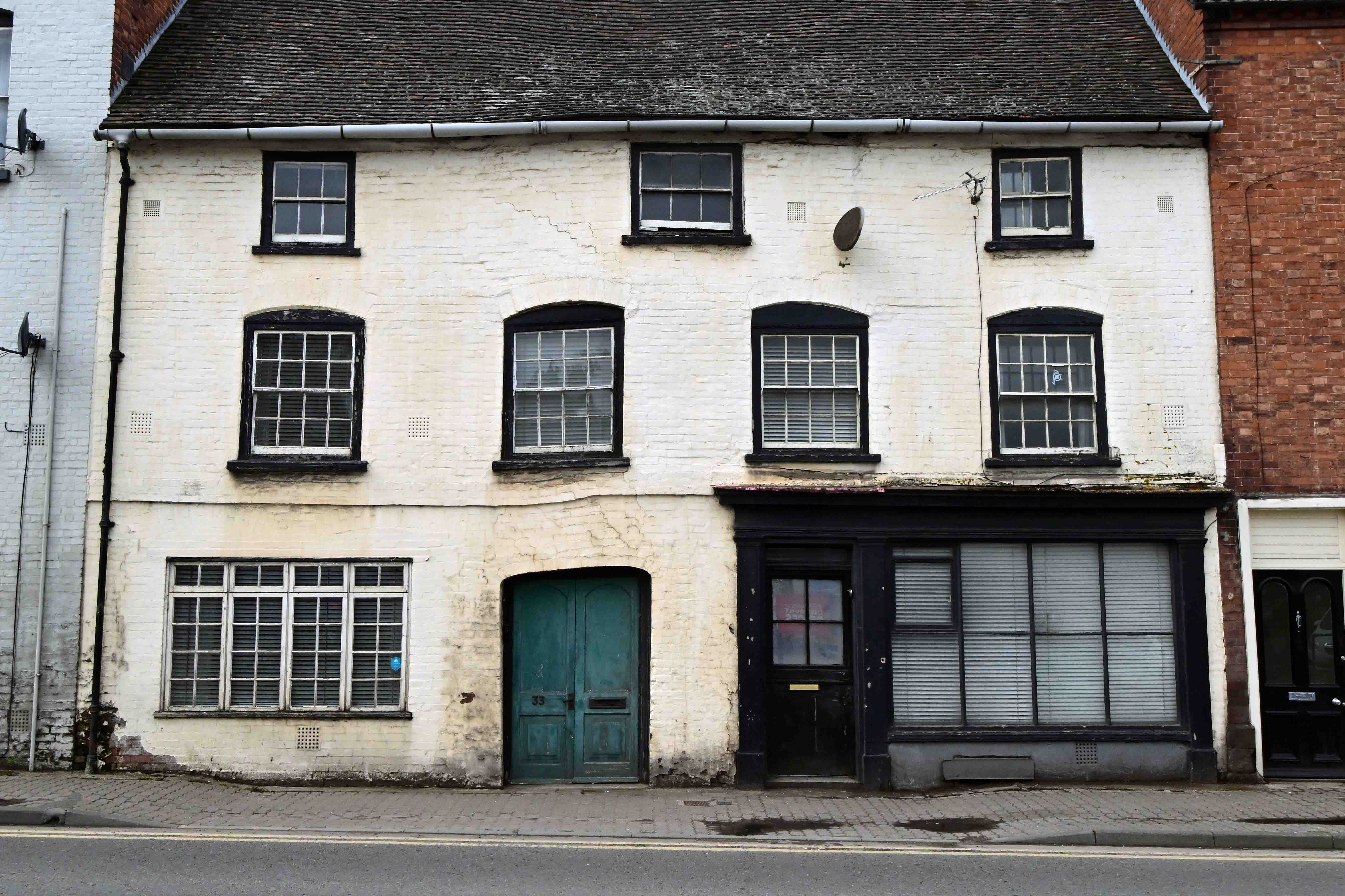
Here’s another couple of pictures from Leominster.
I love the old shop windows here. Talk about in need of some TLC. Subsidence is a real issue for old buildings in this neck of the woods.
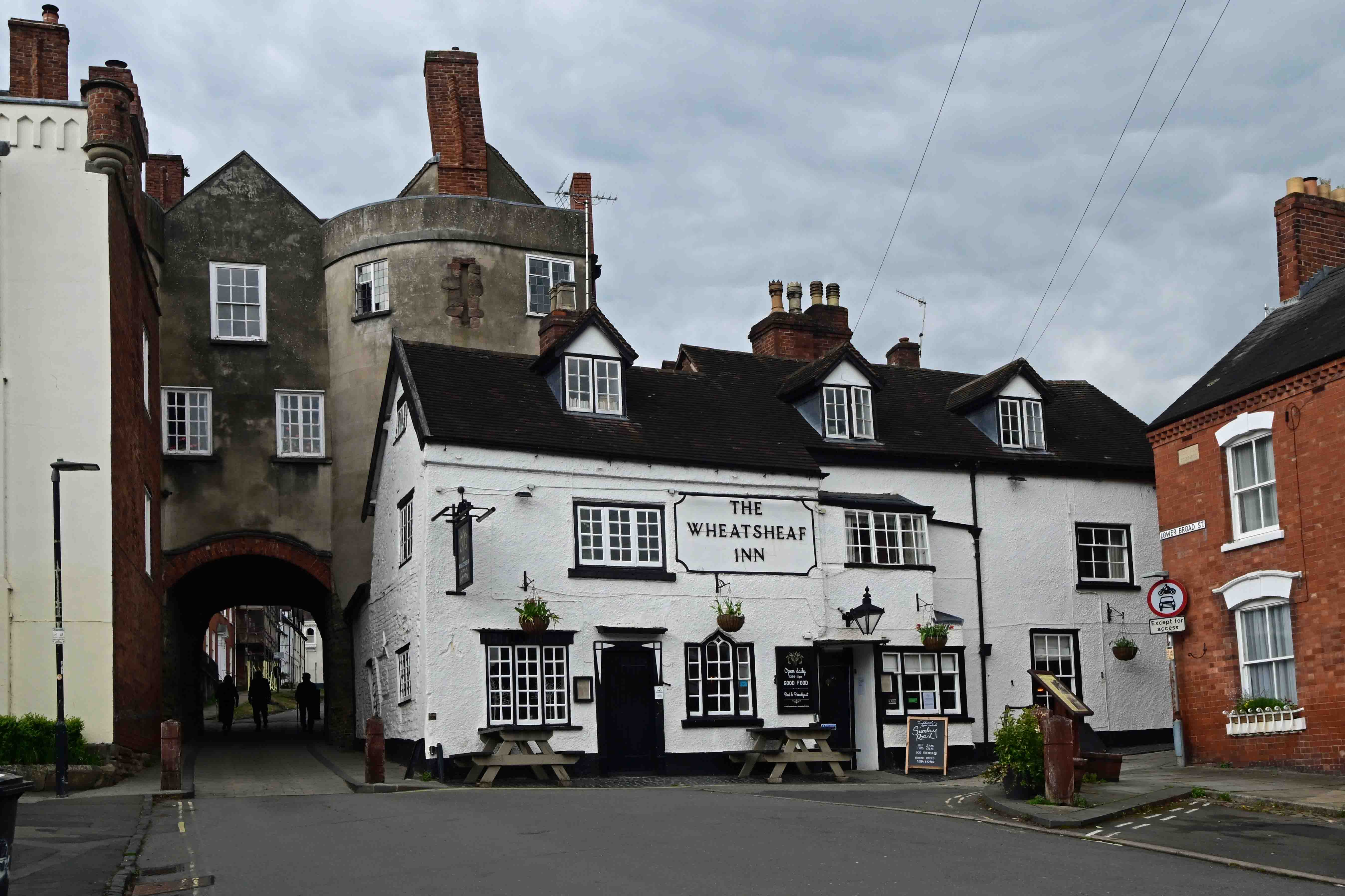
Escaping Herefordshire and its bad roads (noticeably different to Shropshire) we headed back to Ludlow for lunch and a mooch around a town which we really like. It’s far better maintained and more affluent than Leominster, although you can see a common heritage.
The last original gate in the former walled town of Ludlow, with a handy pub outside.
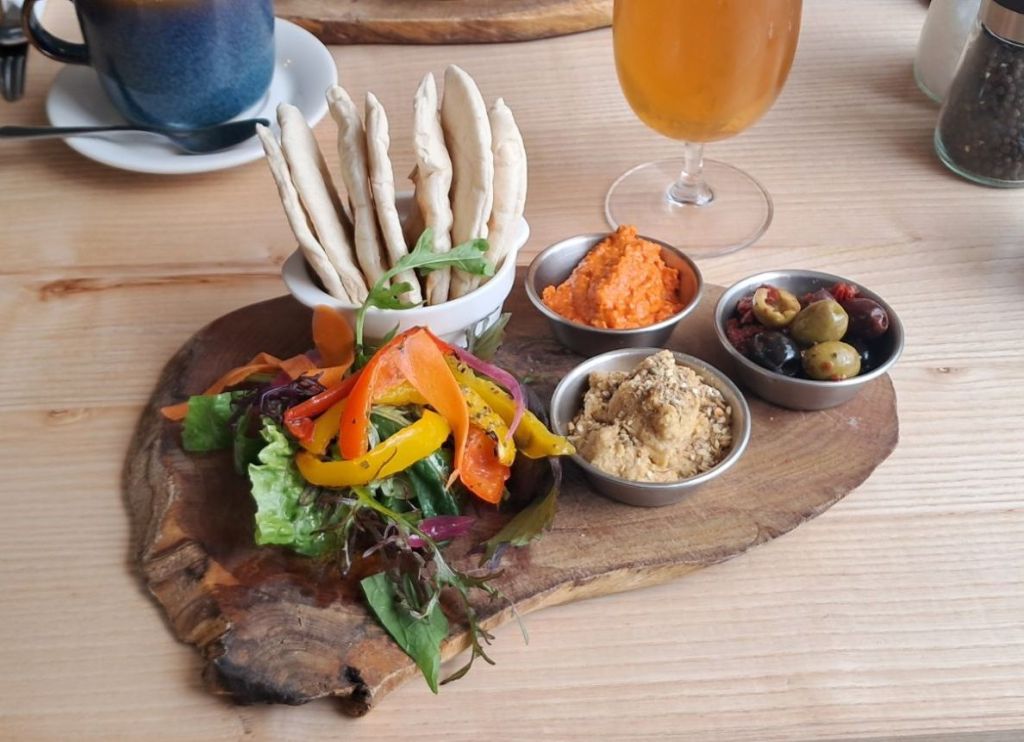
Today was one of the market days so a good time to have a wander. At lunchtime lunch we we ate at Kin Kitchen on Old St, which is a modern cafe bar in an old building they’ve refurbished. If the weather’s good there’s a great garden at the back. Both of us opted for the Meze plate which was really tasty.
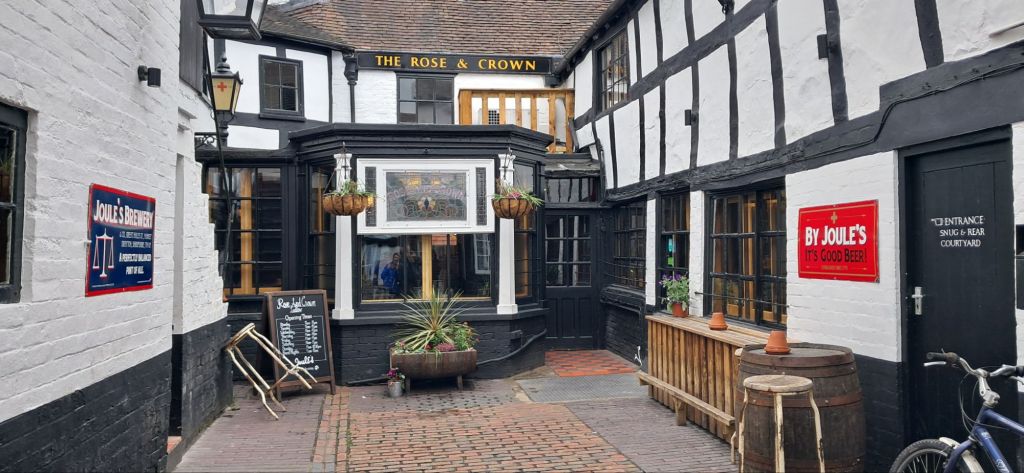
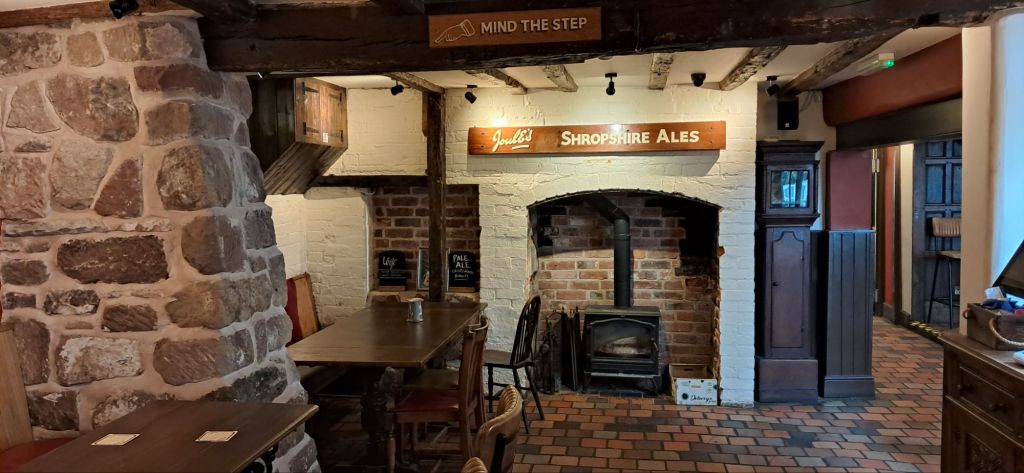
After lunch we continued our exploration of the town. The variety of old buildings is fascinating – as are the nooks and crannies with cottages tucked away in the most unlikely places. Whilst the properties look amazing I’d hate to think what the maintenance costs must be as it’s obvious Ludlow suffers similar subsidence problems to Leominster. We stopped for on last drink in what’s allegedly the oldest pub in Ludlow, the Rose and Crown. It’s another Joule’s brewery pub which offers a good range of ales and also serves food.
Back at Church Stretton we had a relaxing evening at home. Dawn cooked another amazing veggie meal whilst I nipped out to get a couple of pictures at the railway station.
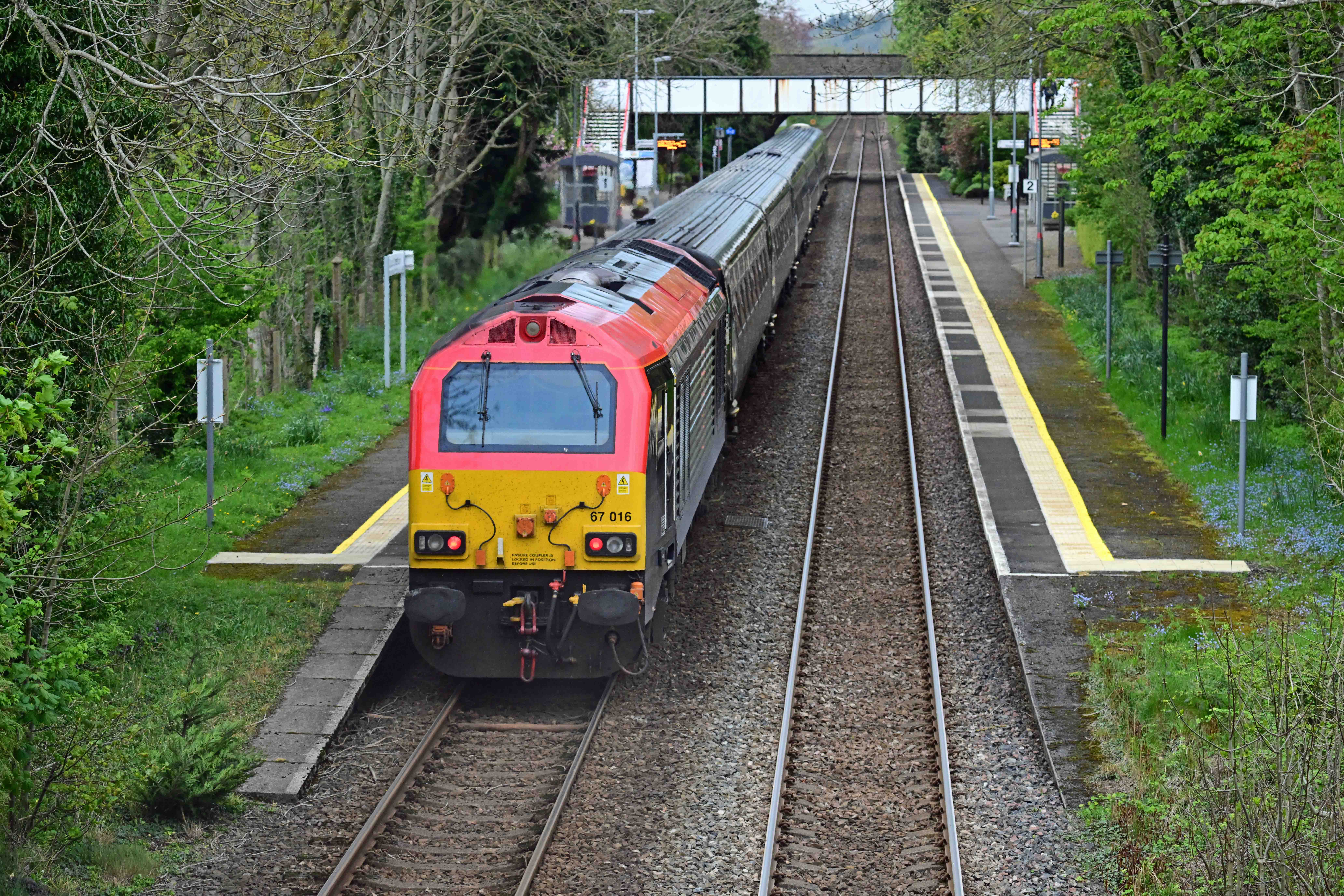
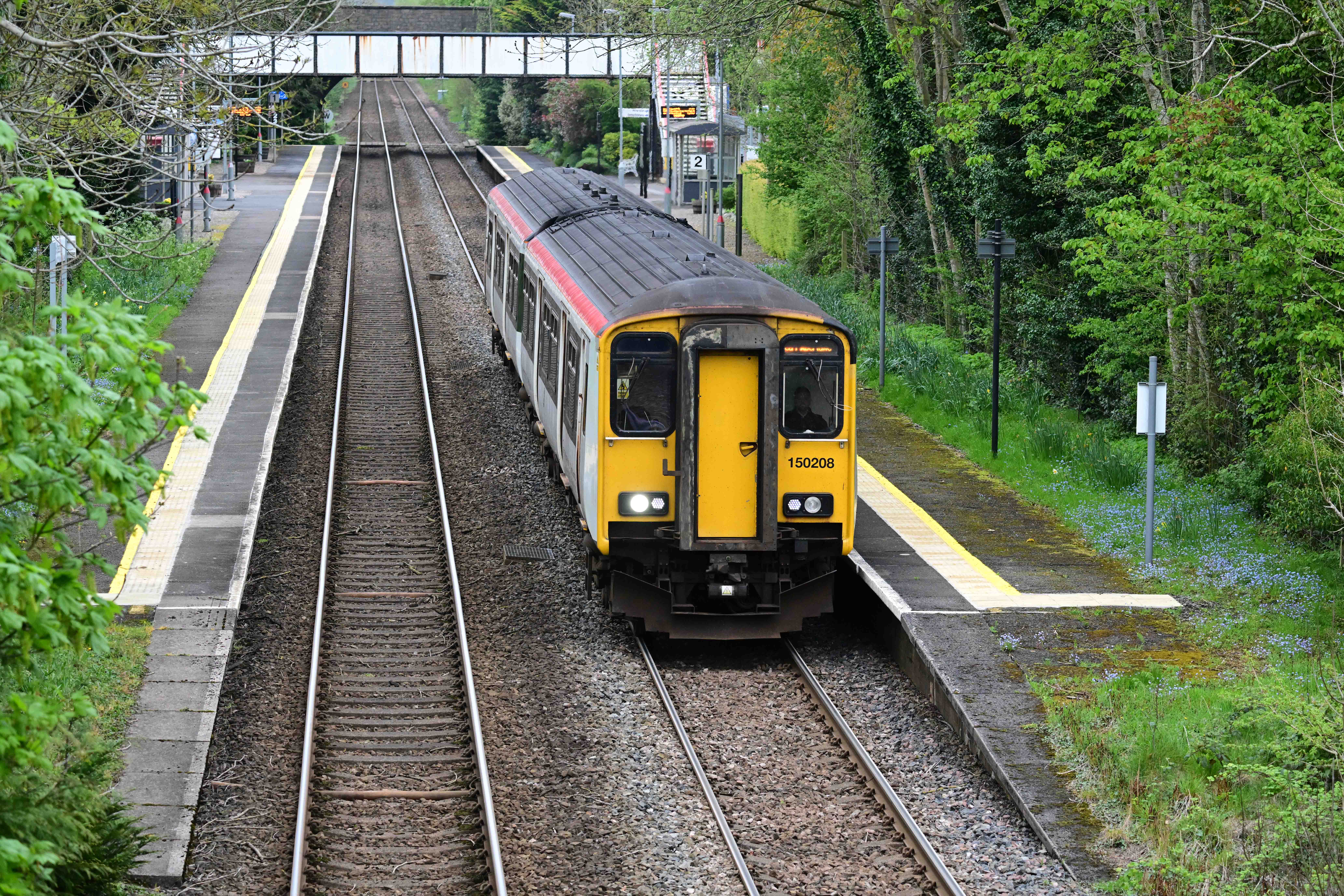
A Transport for Wales Class 150 calls at Church Stretton whilst working 2V30, the 1835 Shrewsbury to Swansea service via the Heart of Wales line.One of Transport for Wales hired-in Class 67s thunders through the station non-stop on 1W96, the 1722 Cardiff Central to Holyhead.
Tomorrow we’ll be staying local to enjoy the improving weather and local walks.
I’ve a small favour to ask… If you enjoy reading this or any of the other blogs I’ve written, please click on an advert or two. You don’t have to buy anything you don’t want to of course – although if you did find something that tickled your fancy that would be fab! – but the revenue from them helps me to cover some of the cost of maintaining this site (which isn’t cheap and comes out of my own pocket). Remember, 99% of the pictures used in my blogs can be purchased as prints from my other website – https://paulbigland.zenfolio.com/
Whilst I was up in Newcastle for the Community rail awards I did have a couple of hours spare each day where I was able to nip out and explore in order to get a few pictures. On the Thursday I opted to explore part of the Tyne and Wear metro system as they’re introducing new trains to replace their existing fleet which dates from the opening of the system in 1980.
The weather was less than ideal due to constant heavy rain showers but I was lucky enough to hit clear weather at the right time. Time constraints meant I couldn’t go too far afield, but I did make it out as far Pelaw, which is the junction of the T&W metro routes to South Hylton and South Shields as well as the national rail routes to Sunderland and the former Leamside line which has been abandoned since the early 1990s
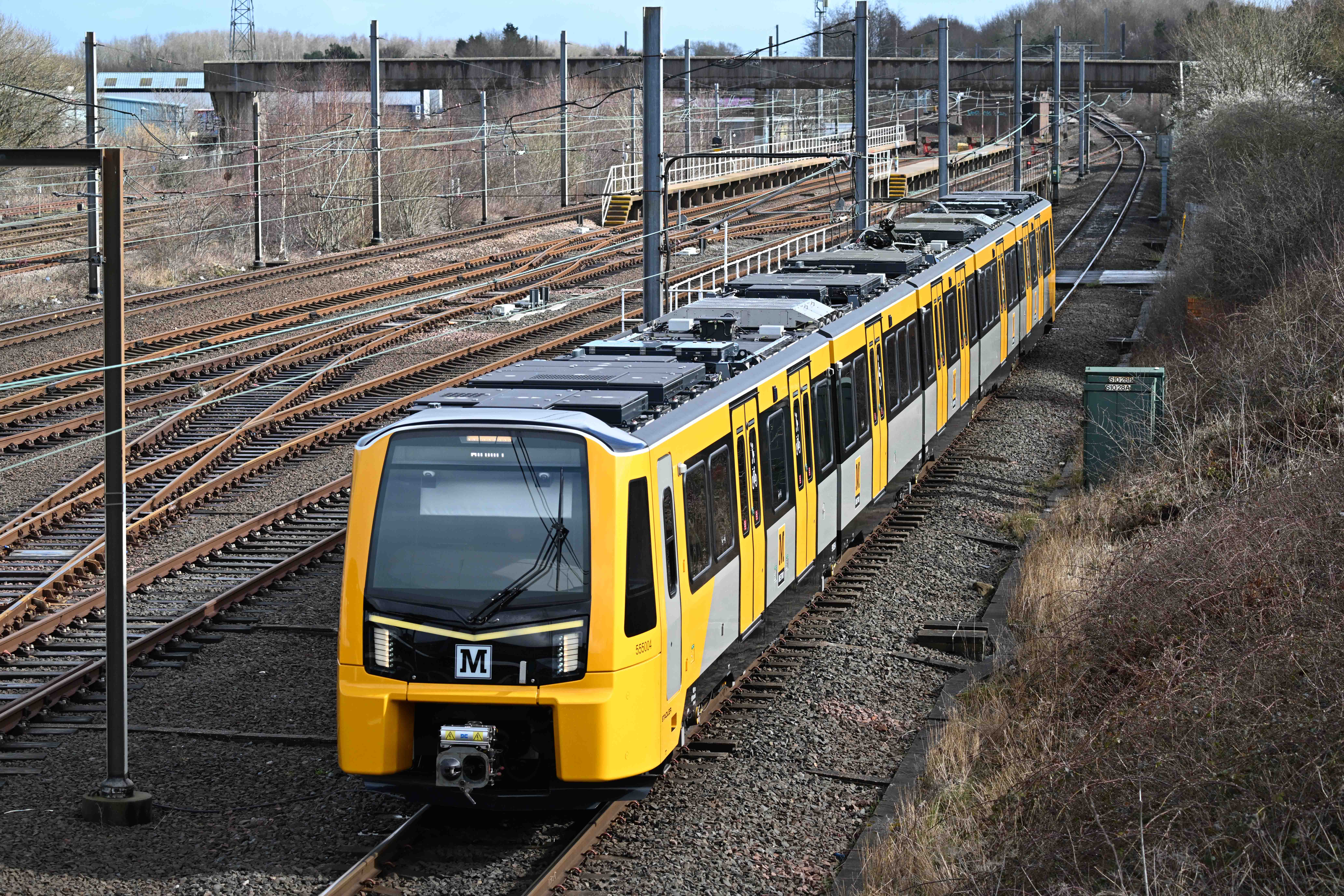
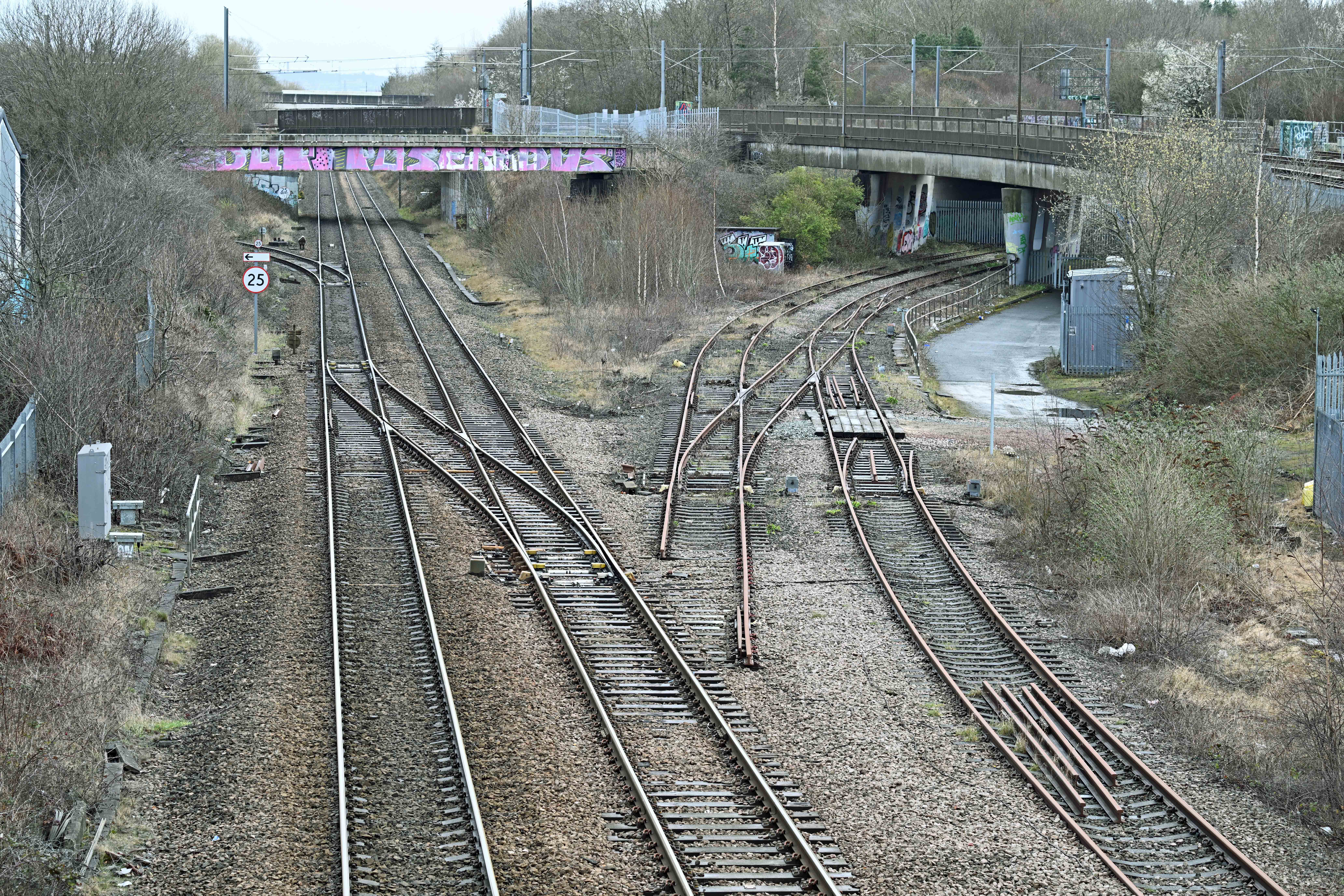
The truncated remains of the Leamside line at Pelaw junction disappear under the T&W metro flyover to the right. The national rail route to Sunderland, Hartlepool and Middlesbrough are in the centre whilst the single track to the left is the spur to Jarrow oil terminal.One of the new Stadler built Class 555s (555004) arrives at Pelaw whilst working the South Hylton – Airport line. This is the first of the new sets I’ve seen since they entered passenger wervice in December 2024. 46 of these 5-car trains are on order. They’ll replace the 90 Metro-Cammell built Class 599s which have worked the system since it opened. A pair of the original T&W sets (4029 and 4085) pass Felling on their way to South Shields. One of the pleasure of travelling in these seats is the fact the drivers cab only takes up a third of the front, allowing passengers grandstand views of the route from the adjacent seats.
Having sussed out some likely photographic locations on my trip to Pelaw I retraced my steps to Felling station where I found some fascinating (and tragic) local history as well as a surprising survivor of the original railway route.
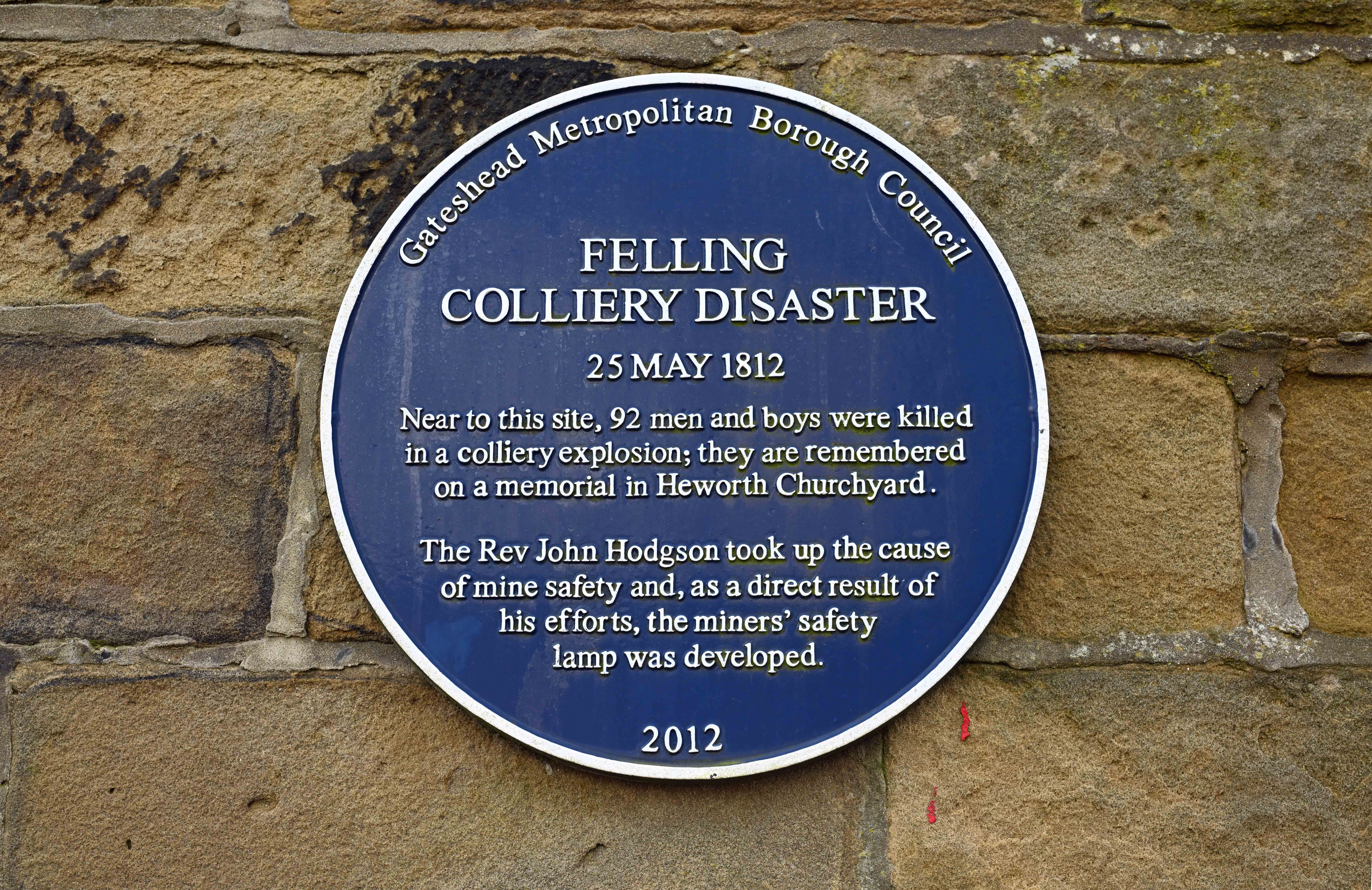
Just to the East of Felling station are the steps of an old footbridge. On the Northern pier is this blue plaque which commemorates the Felling mining disaster of 1812 in which 92 people were killed. The rail connected pit was just to the North-West of the bridge although nothing remains of the site now.
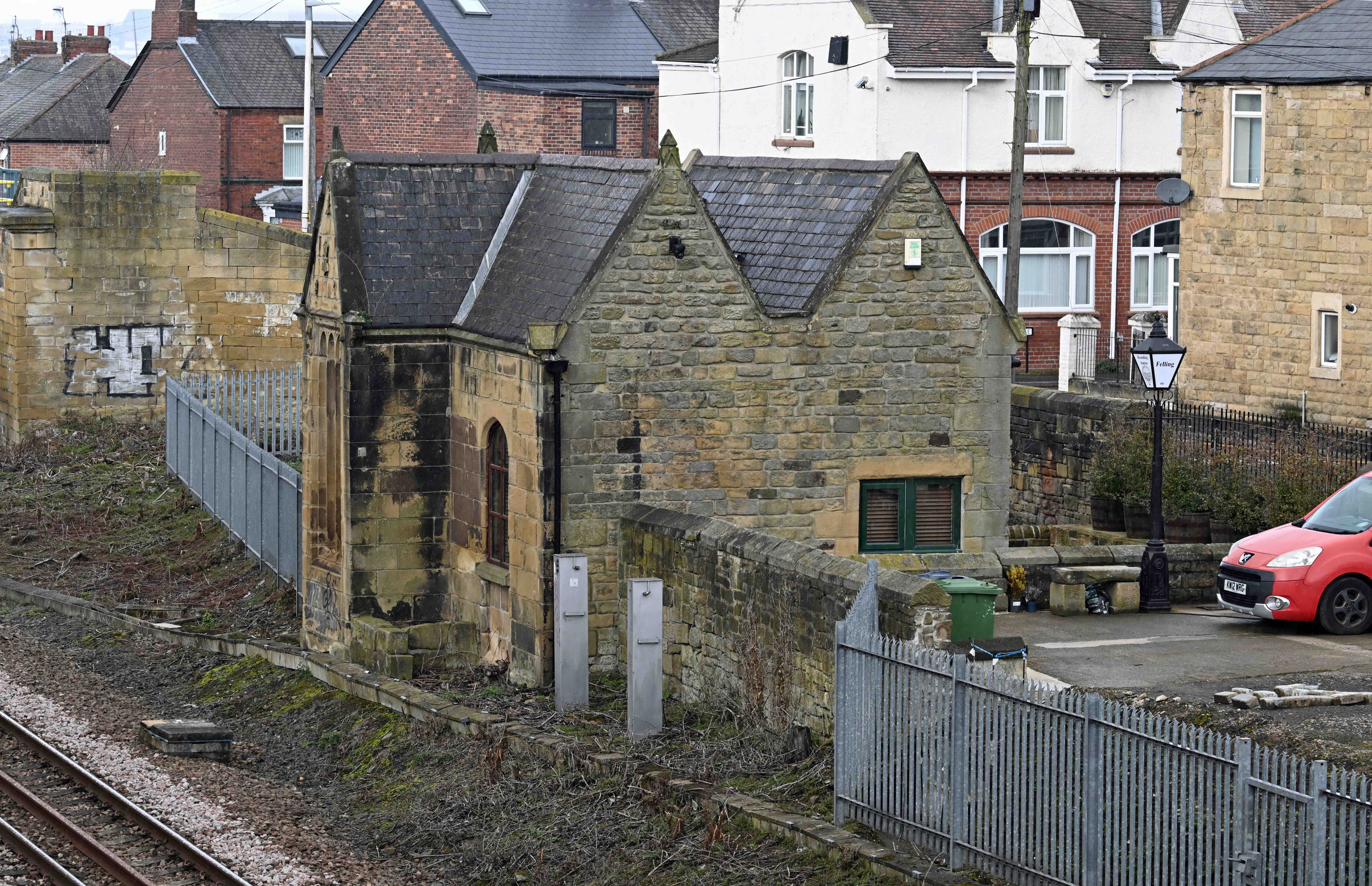
Next door to the old footbridge is the original station building which dates from 1843. It was built by the Brandling Junction railway and remained in use until 1896 when it was replaced by a new station on the widened lines (which are four-track here).
I wish I’d had time to explore further but the clock and the weather were against me. But, I can see me making a return trip soon as there’s lots to explore in the area. Who knows what unexpected gems I’ll find next time?
I’ve a small favour to ask… If you enjoy reading this or any of the other blogs I’ve written, please click on an advert or two. You don’t have to buy anything you don’t want to of course – although if you did find something that tickled your fancy that would be fab! – but the revenue from them helps me to cover some of the cost of maintaining this site (which isn’t cheap and comes out of my own pocket). Remember, 99% of the pictures used in my blogs can be purchased as prints from my other website – https://paulbigland.zenfolio.com/
Today’s been another day working from home – which has been rather frustrating as the weather’s been superb. Wall to wall sunshine and rising temperatures that would have been ideal for getting out with the camera. Problem is – I’ve too much to do. Much of today’s been spent editing the pictures I captured yesterday and dealing with emails. One of which has changed our weekend plans completely. An old friend has invited the pair of us to be his company’s guest at the Confederation of Passenger Transport Awards in Manchester on Saturday. How could we refuse? Not only will it be great to catch up with Richard, it’ll also be an opportunity to meet up with other friends and colleagues before our own Community Rail Awards in Newcastle next week – which is completely sold out – and the biggest one we’ve ever had. As I’d planned to be working this weekend you can see why being stuck at home today’s worked out. The word serendipity springs to mind.
Of course, whilst I’ve been busy picture editing I’ve had another screen open which has kept me up to date with the latest madness coming out of the White House. If – 30 years ago – you’d pitched this as a script to a film company, they’d have tossed you out the door as it was too far-fetched. Now, every day delivers idiocy that makes you realise America has fallen to Putin. I’d love to know what ‘Kompromat’ the Russian Dictator has on Trump, but it must be weapons-grade. It’s fascinating (and horrifying) to see some US politicians asking what else could Trump do if he wasn’t a Russian asset? (very little: Ed). What’s been good to see is the way America’s neighbours either side of the border have called Trumps bluff over tariff’s, resulting in a reverse-ferret. But the damage is done. The farce gets worse, as now it’s reported that Trump is reining in (unelected) Elon Musk, telling him that he has no power to sack government employees. This is turning into the mother of all shit-shows!
Meanwhile, Europe has seen which way the wind’s blowing and uniting – and re-arming. Billions of Euros are being committed to Europe and Ukraine’s defense. It’s ironic really. Trump isn’t making America ‘great’ again, he’s actually sidelining it as untrustworthy and not someone to buy weapons from. The double irony? Putin’s done exactly the same. Much as I hate the idea of £bns spent on weapons, I can see the logic from a European perspective. The political world really could be changing on its axis and I’m not entirely sure the dictators in the Kremlin and White House understand what they’ve done.
OK, enough of politics. The shit-show is going to be around for some time yet. In the meantime, here’s another picture from today’s editing marathon.
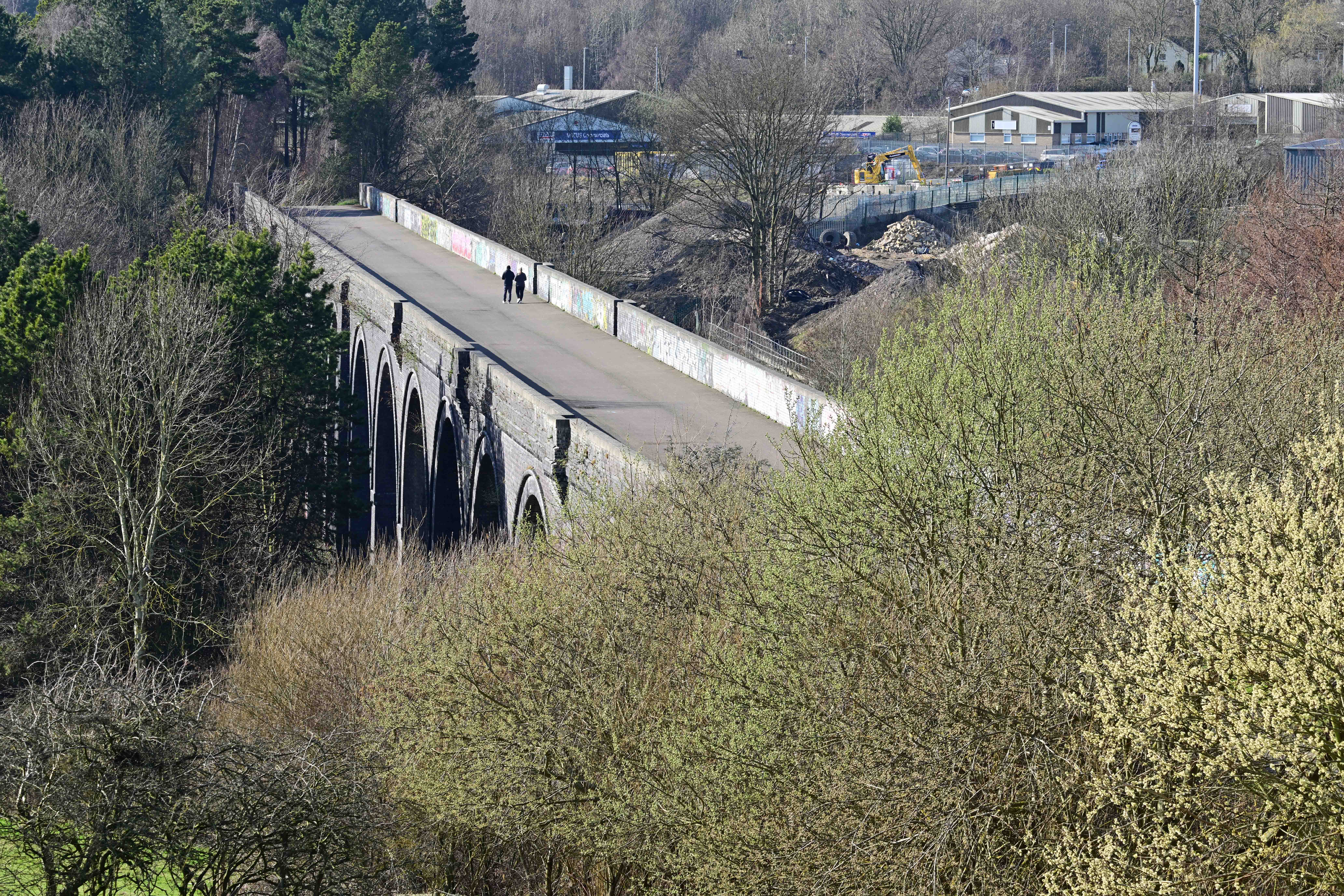
This is the Bradley viaduct in …Bradley, just to the East of Deighton and on the edge of Huddersfield. It’s an impressive, 15 arch structure that bridges the River Colne and the Huddersfield wide canal. It had a very short life as a railway. It was constructed by the Midland Railway in 1910 as part of a line from Mirfield they intended to build to Bradford to compete with the Lancashire and Yorkshire railway. The line never made it further than Newton in Huddersfield, which became a goods depot. The extension was killed when the L&Y gave the Midland running powers over their route. It was made redundant in 1937. By then the Midland and L&Y had been amalgamated into the London, Midland and Scottish Railway (LMS) which built a new connection from the former L&Y route at Red Doles Jn nearer Huddersfield, rendering this section of line redundant after just 27 years. Today it’s part of a cycleway and footpath.
I’ll be working at home again tomorrow, so expect Wednesday’s blog to be expanded now I’ve all the pictures edited.
I’ve a small favour to ask… If you enjoy reading this or any of the other blogs I’ve written, please click on an advert or two. You don’t have to buy anything you don’t want to of course – although if you did find something that tickled your fancy that would be fab! – but the revenue from them helps me to cover some of the cost of maintaining this site (which isn’t cheap and comes out of my own pocket). Remember, 99% of the pictures used in my blogs can be purchased as prints from my other website – https://paulbigland.zenfolio.com/
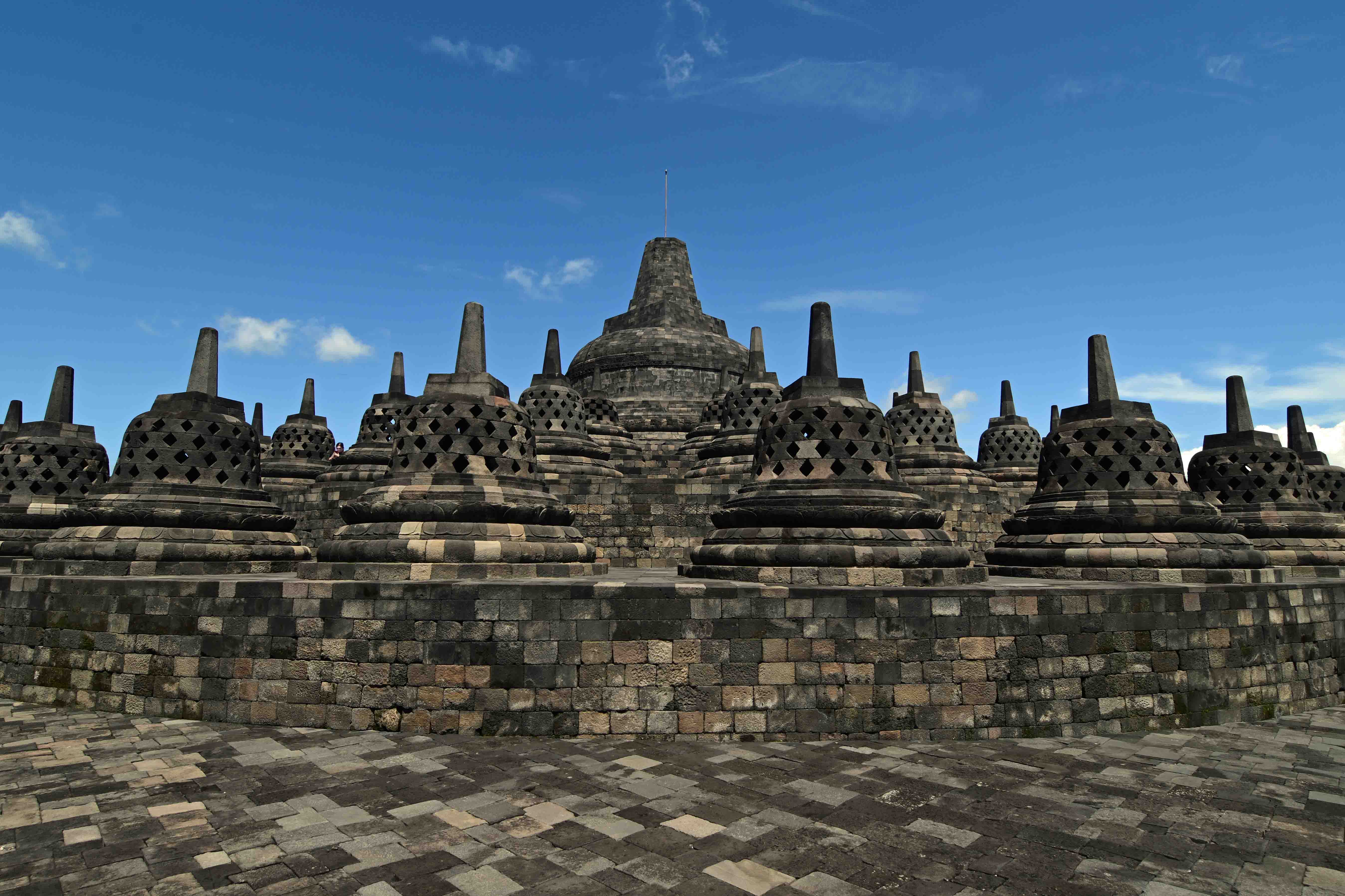
It’s evening here in Indonesia and the pair of us are relaxing at our little homestay (an old house in the back streets of Yogyakarta), listening to the thunder and the torrential rain bouncing off the roof and into the little pool in the courtyard. It’s been a long, sweaty but enjoyable day that started at 06:55 when we were picked up by our driver who took a small group (just 4 of us) on a tour that took in the magnificent 9th century Buddhist temple at Borobudur and the huge Hindu temple complex of Prambanan (also 9th century).
I’ve visited both before, first in 1992 and again in 1998, but a lot changes in 26 years, as I was to find out. The biggest changes are at Borobudur. Tourists can no longer wander around the structure willy-nilly. Now there are strict controls. You can wander around the grounds until your heart’s content, but if you want to ascend to the top you have to book a 1 hour time slot (running from 08:30) and numbers are limited to 1,200 people a day in order to preserve the monument from wear and tear due to the increasing numbers of tourists visiting.
Now, you arrive at a brand-new, sprawling tourist complex full of shops to gain entry. First off is getting your paper wristband with a QR code, then you’re given a pair of flip-flops to replace your own shoes in order to lessen damage even further – and a bottle of water. The slippers are actually rather cool and comfy and come with a monogrammed bag, making them a nice souvenir! Once the formalities are over you’re taken by stretched golf buggy to a compound nearer the monument where you meet the guide who will escort you around the temple and make sure you’re off on time. We were lucky with both the weather and with our guide who was a lovely older chap with a keen sense of humour. The low clouds that have dogged us most days cleared away, which was great for pictures but the heat and sun were fierce. As the temple’s built atop a hill there’s often a decent breeze, but that doesn’t stop you frying! Here’s a couple of the pictures I took. I’ve loads more to edit when we get to Bali. Last time I visited I was still shooting film and had to be sparing with it as I was travelling for 18 months and the slide film I was using (Fuji Velvia) wasn’t easy to come by. This time I could indulge myself and also see what the Nikon Z9 could do…
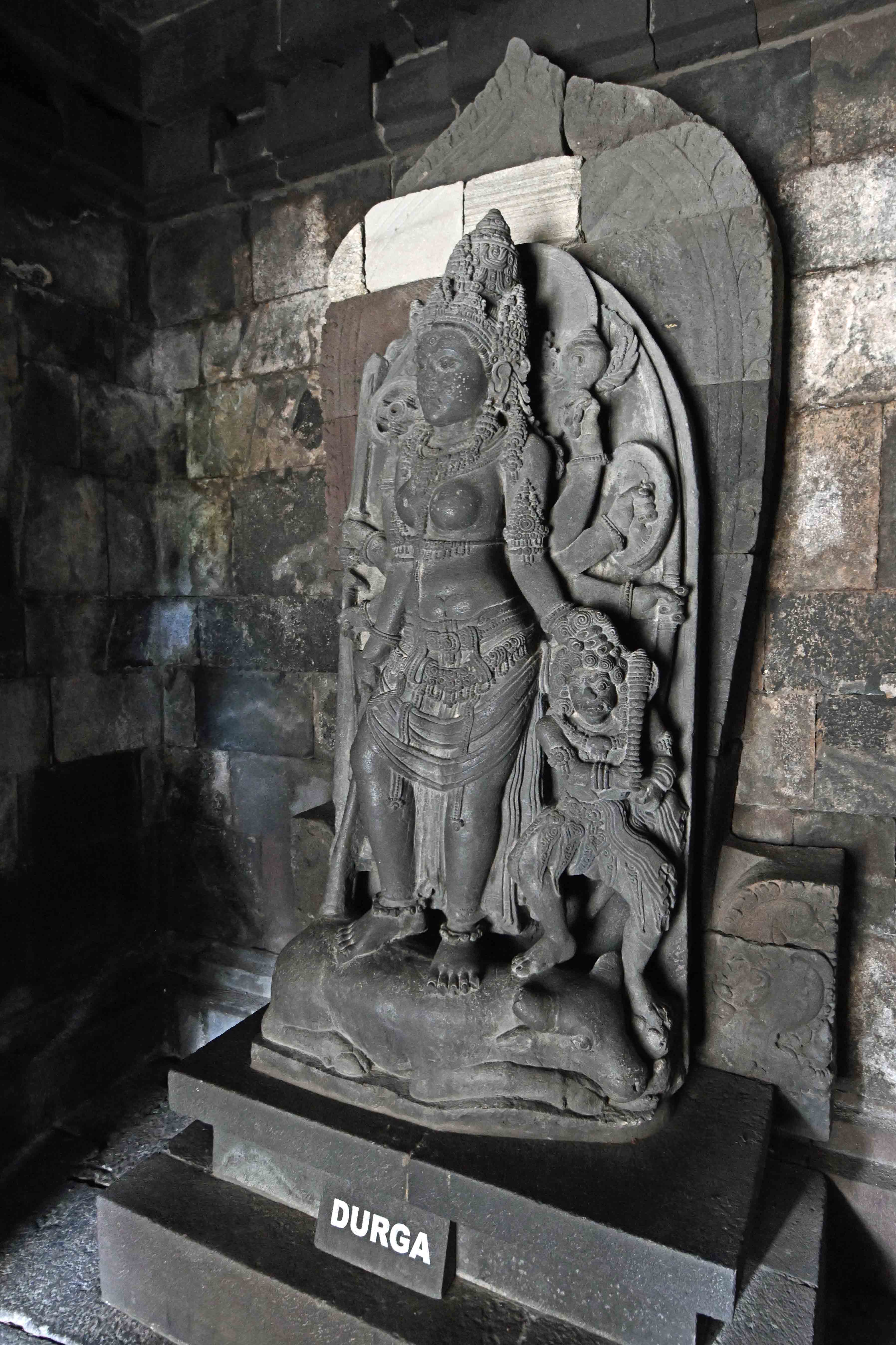
With time up we left and headed off to Prambanan which doesn’t have the same restrictions as it’s a very different site. It’s actually a series of temples spread around a large site but this most impressive is this…
I’d have struggled to get this shot on a film camera. There are 4 statues in the main tower, this one is (as the nameplate suggests) Durga. For camera cranks, this was taken hand-held with a 50mm lens, F5.6 at 1/20, 5000asa.
We sweated (and I mean sweated) our way around all the other temples before our time was up and we had to head home where the first priority was a shower, then a drink. Tomorrow morning we leave Yogyakarta by train to hit Surabaya for the night and chance to catch up with an old rail-enthusiast friend, so expect some railway related images in tomorrow’s blog.
I’ve a small favour to ask… If you enjoy reading this or any of the other blogs I’ve written, please click on an advert or two. You don’t have to buy anything you don’t want to of course – although if you did find something that tickled your fancy that would be fab! – but the revenue from them helps me to cover some of the cost of maintaining this site (which isn’t cheap and comes out of my own pocket). Remember, 99% of the pictures used in my blogs can be purchased as prints from my other website – https://paulbigland.zenfolio.com/
Our time in Wales ran out today, which was sad as we’d both really enjoyed the area we’d stayed in – and the AirBnB we’d occupied. The weather picked up somewhat too, so we were in no rush to head off, instead we revisted Abersoch during the day when businesses were open. Well, the ones that hadn’t closed down due to the end of the season anyway! This neck of the woods has tourism all year round but it’s plain that the beaches are a big draw so high summer sees the place rammed whilst this time of year many places are winding down. It reminds me of the Greek Islands in that respect. Only with more sheep. And rain.
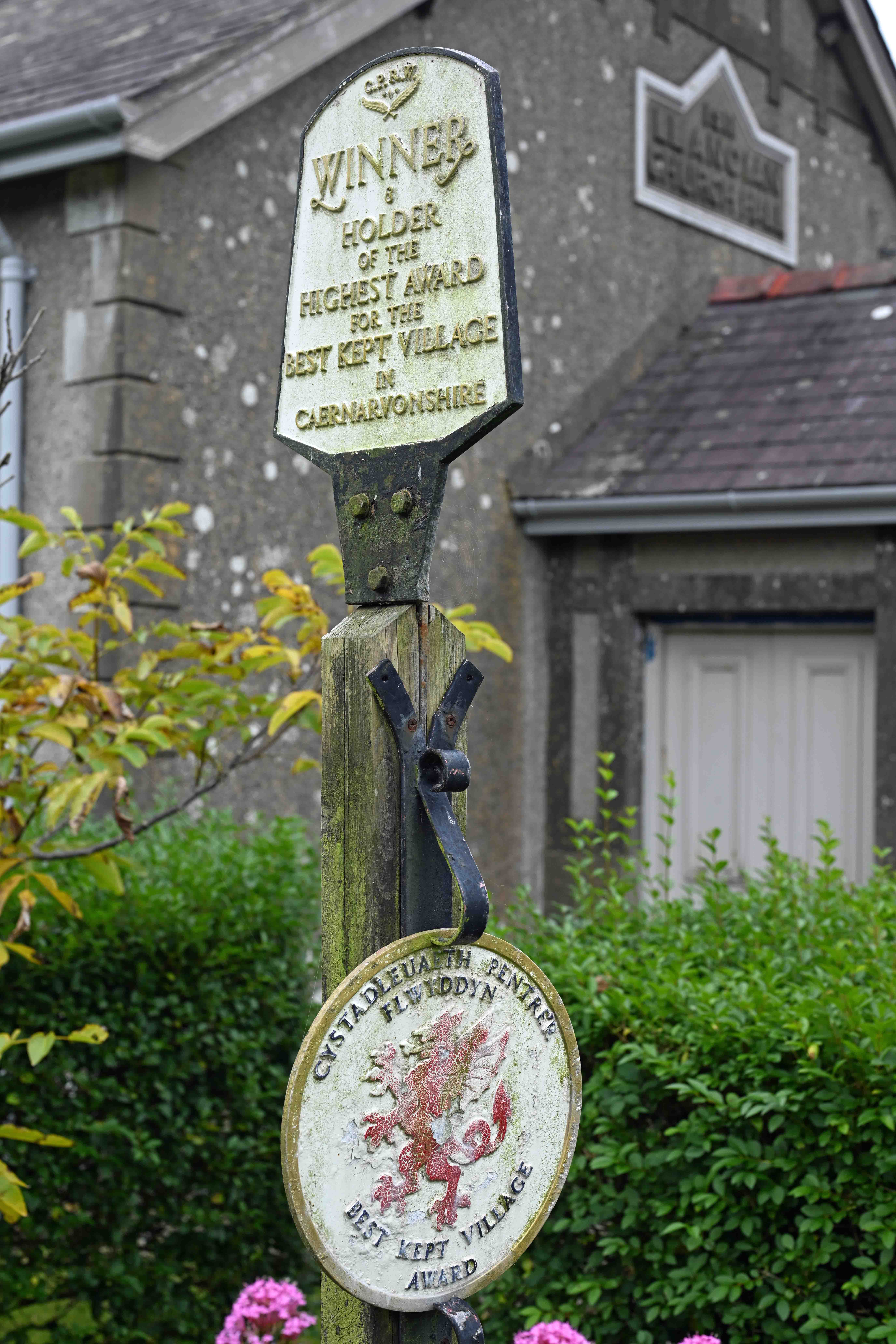
One place Dawn wanted to stop at was a pretty little hamlet we’d passed through previously. Nestling at the bottom of a valley, Llangian is less than 2 miles from Abersoch. There’s little to the place, although unlike some it still boasts a shop. Oh, and an award – for being a well-kept village! I’ve no idea when this accolade was awarded, apart from the fact Caernarvonshire was abolished on 1974…
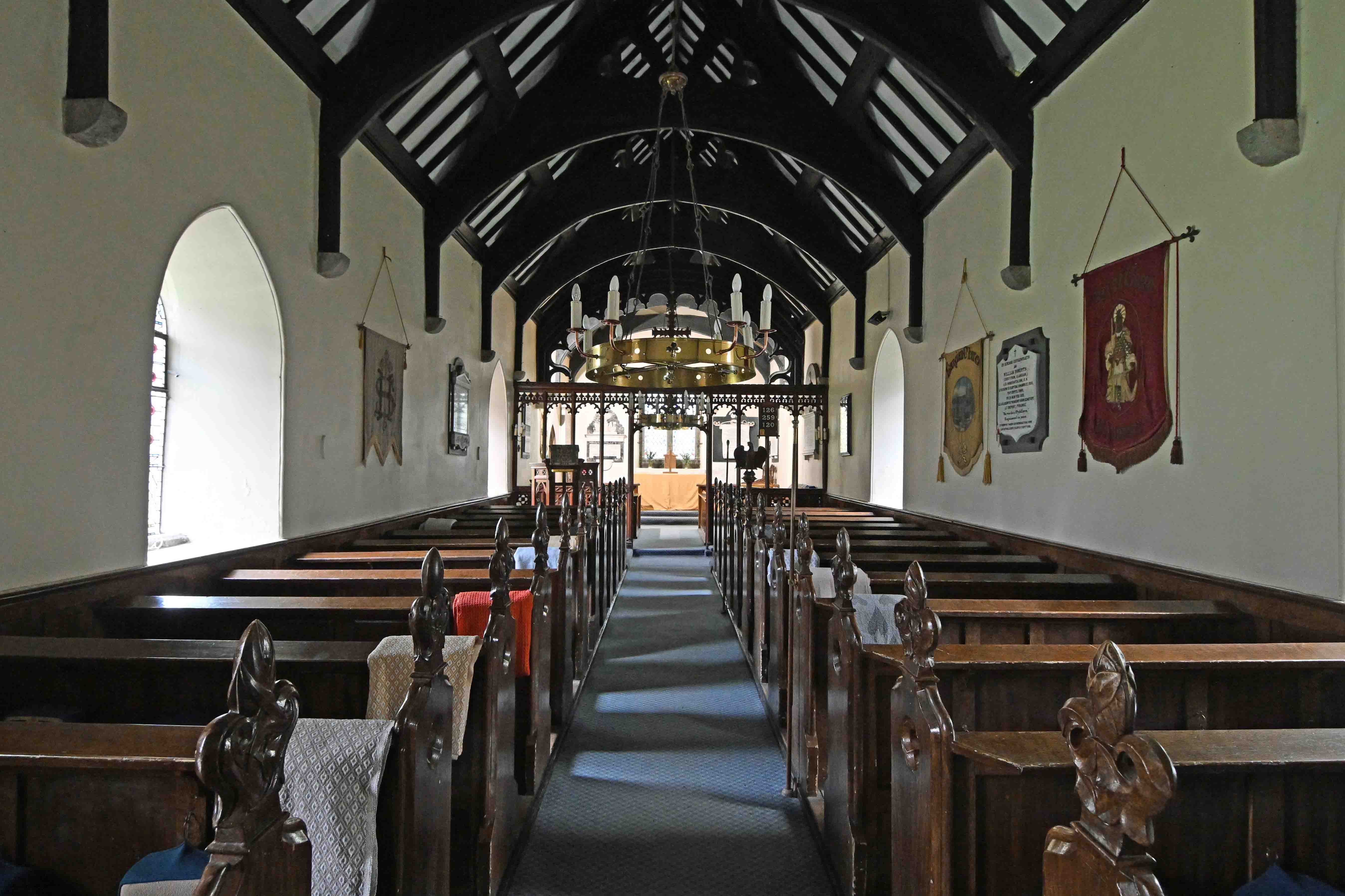
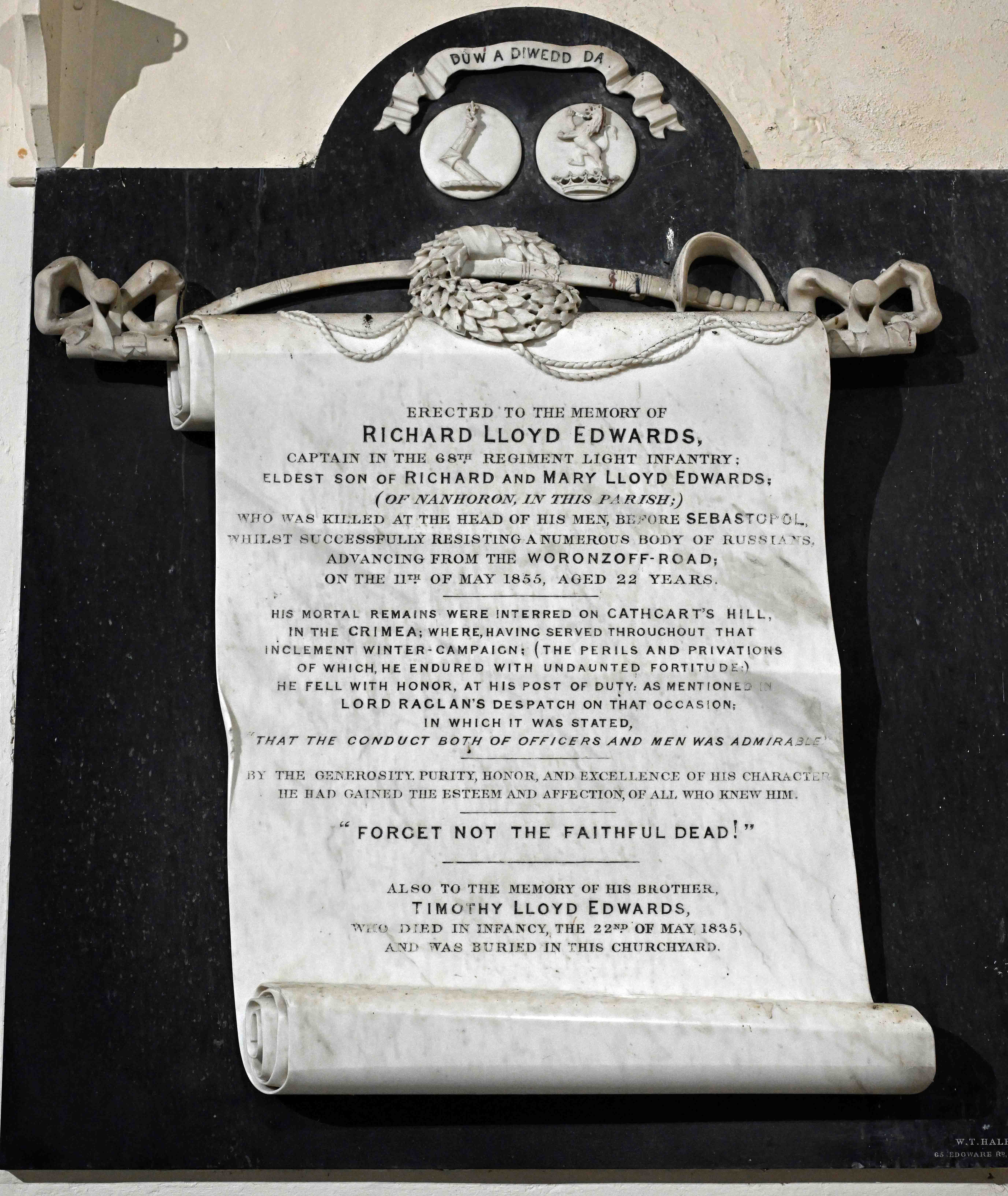
I do like exploring country churches as you never know what you’re going to find. In this case it was a memorial to a local man (well, youth really) from a well to do local family who was killed in action during the Crimean war in 1855.
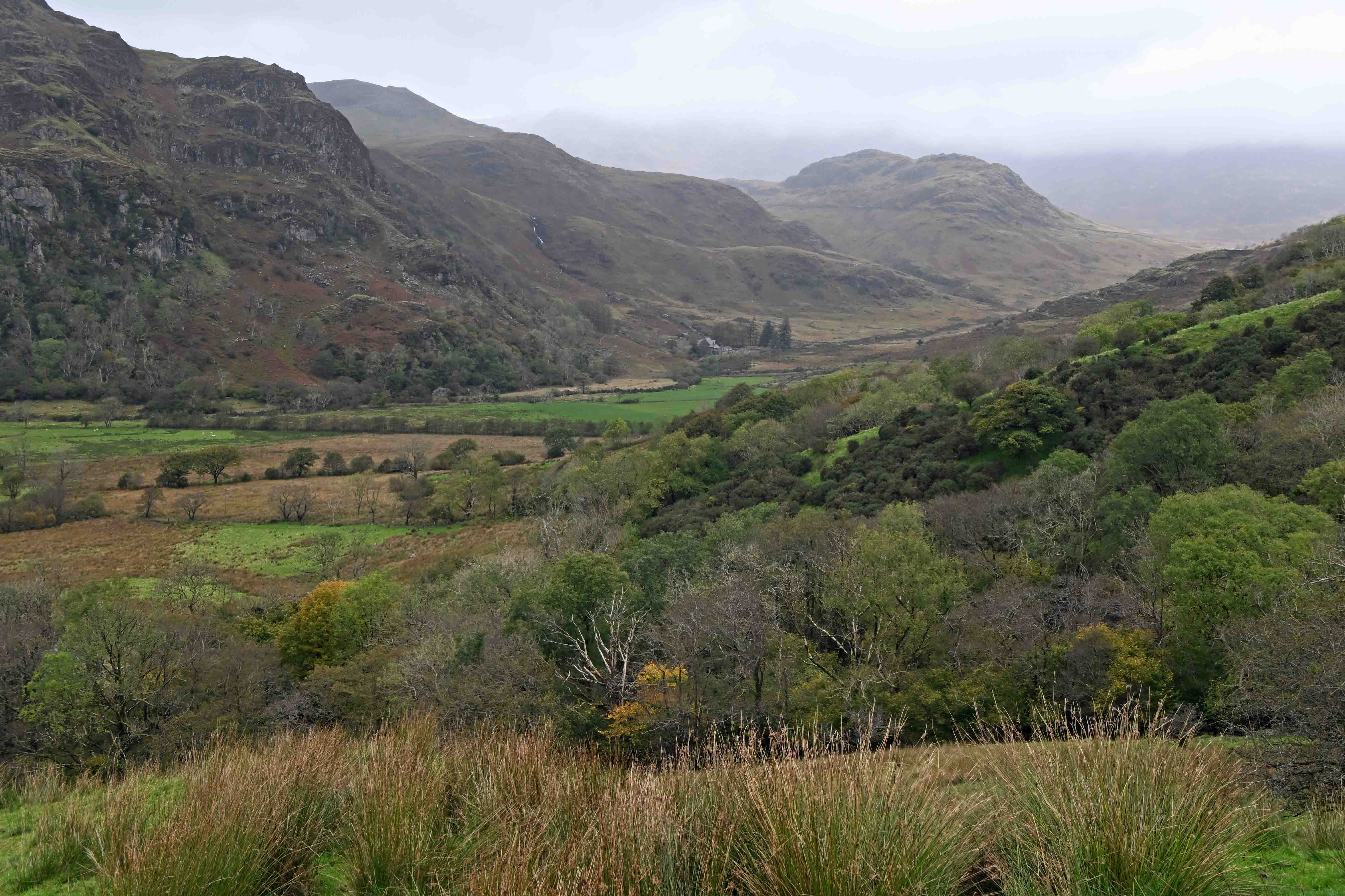
Much as we’d liked to have explored further it was time to head home. We didn’t go direct, instead we headed back via Beddgelert. I was half-hoping to get a shot of a train on the Welsh Highland railway but (bizarrely) the railway seems content to keep its timetable a secret. None are displayed on the station and the company’s website does its best to hide details too. It’s quite bizarre. So, as we hadn’t got a clue what was running (or when) we drove back along the A498 to traverse the Nant Gwynant Pass and stunning autumnal scenery just ahead of the rain.
The beauty of the The Nant Gwynant Pass.
We stopped for a bite to eat and perusal of the multitude of outdoor shops in Betwys-y-Coed. The place was busy but not unbearably so, which made a pleasant change. There’s often bargains to be had here. Dawn treated me to an early birthday present in the form of a new daypack from Trespass which was reduced by 50%. I’d been looking for a new one for ages but I’m picky as one has to meet my needs. The fact it did – and was a bargain was a real result! (thank you Dee x)
Betwys was our last stop. From there we cut across country Northwards to reach the A55 near Conwy, then sped home. Ish. Being ‘poets’ day the main roads were packed – which was a shock after the empty tarmac we’d enjoyed around the Llŷn peninsula. By the time we hit the English motorways the traffic was a real pain as we hit jam after jam on the M58, M6 and M62 which added 30 mins to our journey time. Still, we’re home, dry and safe – and tomorrow’s another day – although I suspect it will involves a lot of picture editing and writing as next week will see me back on the rails before an interesting weekend away in the Lakes…
I’ve a small favour to ask… If you enjoy reading this or any of the other blogs I’ve written, please click on an advert or two. You don’t have to buy anything you don’t want to of course – although if you did find something that tickled your fancy that would be fab! – but the revenue from them helps me to cover some of the cost of maintaining this site (which isn’t cheap and comes out of my own pocket). Remember, 99% of the pictures used in my blogs can be purchased as prints from my other website – https://paulbigland.zenfolio.com/
We’re back at our Welsh retreat after a relaxed morning and enjoyable day exploring the peninsula.
We’re staying near to Nefyn on the North side of the peninsula so it made sense to check out the coast by Morfa Nefyn. This possesses a narrow outcrop of rock jutting into the Irish Sea which contains some interesting archeology, a profusion of wildlife, fantastic coastal views – and a pub (the Tŷ Coch Inn) which is a rare beast. You can’t drive there. You can only visit on foot or by boat.
Having left the car on the beach road (the parking restrictions are much easier this time of year) we walked along the sand and pebnles getting broader with an ebbing tide. The weather even blessed us with unexpected sunshine. On reaching Porthdinllaen we decided to delay a pub visit in order to make the most of the weather and complete a coastal circuit first. The views were glorious. Sadly, there were no sightings of Dolphins or Seals, just Oystercatchers – and this.
Poor Dawn got horribly confused when we arrived back at the pub as she hadn’t studied the map and realised our route traversed a long teardrop of land that was only a few hundred yards long!
The pub’s a bit of a gem. This time of year it’s cosy but not too crowded. The weather’s mild enough to use the large outside seating area to watch over the beach and the antics of the many canines being taken for a walk. Dogs love beaches. There’s so many interesting things to sniff or dead things to roll in!
Moving on we decided to head to Aberdaron which was a 30 minute drive on very quiet roads – although I expect they’re anything but in the height of the tourist season!
Aberdaron’s a curious place. It’s a gorgeous location, with a wide beach surrounded by cliffs, but the village feels like it’s seen better times. A number of shops had closed down – and I’m not sure it was just because the season’s over. St Hywyn’s church on the foreshore’s a fascinating but melancholic place too.
There’s a large graveyard scraped out of the hillside that bears testament to the power of the sea and fragility of humankind. Here’s an example.
Over 100 sailors lost their lives when HMS Stephen Furness was torpedoed and sank before the ships lifeboats could be launched. This poor soul was never identified.
On the bright side, next door is Tŷ Newydd, a large hotel and bar with a huge verandah overlooking the beach. The staff were very friendly, the local ale in excellent condition and the views sublime. We really enjoyed out visit and would certainly return in the future. Now it’s time to call it a day and curl up in front of the log fire in the cottage. The wifi is as fast as a tortoise tonight, so most of this blog’s been typed on my phone.
The weather’s predicted to be wet tomorrow. How wet we won’t know until it arrives, but it won’t stop us exploring the area further.
I’ve a small favour to ask… If you enjoy reading this or any of the other blogs I’ve written, please click on an advert or two. You don’t have to buy anything you don’t want to of course – although if you did find something that tickled your fancy that would be fab! – but the revenue from them helps me to cover some of the cost of maintaining this site (which isn’t cheap and comes out of my own pocket). Remember, 99% of the pictures used in my blogs can be purchased as prints from my other website – https://paulbigland.zenfolio.com/
*I originally wrote this as an article in RAIL magazine, where it appeared in April 2024.*
One complaint that’s levelled at the new HS2 railway is that it’s hardly going to be Britain’s most scenic rail journey! With 105km of tunnels on the section between London and Birmingham that’s no surprise. Much of the rest will be in cuttings. HS2 will be Britain’s most invisible railway. But there are a few structures that will afford views from the train (however fleeting) as well as provide iconic landmarks that can be admired from afar.
One such structure is the Wendover Dean viaduct which is being built just a few Km South of the town. In January RAIL was invited to take a look at construction progress in the week after the first 90 metre section of the deck had been pushed out onto the piers that will carry it. It’s an impressive structure which crosses above Durham Farm, a portion of Bowood Lane (which is being realingned) and parallels King’s Lane – which will allow views down over the structure.
A crane used to lift the infill panels into place. A stack of panels can be seen in the foreground. This view is looking South.
Built by EKFB with ASC (Arcadis, Setec, Cowi JV) as its design partner and Moxon as the architects the design has used as inspiration similar French structures like the Vicoin viaduct on the LGV Bretagne – Pays de la Loire high-speed line. When complete the viaduct will be 450m long, sitting on nine piers, some of which are 14 meters high, giving the structure a maximum height of 20 meters (not counting OLE masts). This method of construction is well known in Europe but it’s a first for the UK.
Traditional decks tend to use what is effectively a continuous block of concrete. A drawback of this is that concrete manufacturing is one of the most carbon-intensive parts of such structures. Instead of being constructed of concrete sections built in situ before lifted atop the piers then fixed together, at the Wendover Dean site, EKFB is using a pair of long ‘I’ beams of weathering steel sandwiched between two slabs of concrete with a hollow inner. These beams are constructed by specialists in France before being delivered to the Wendover site in 25 metre sections. They’re then welded together at ground level on the launching platform – a much safer method than having to do it in-situ at height.
This double composite structure is both super strong and lightweight. Compared to the traditional method (pre-cast concrete beams lifted into position with cranes) the overall carbon footprint gives a carbon reduction of 56% over the lifetime of the project. Most of this is in the materials themselves, with transport the next largest contributor. This method should save an estimated 7,433 tonnes of embodied carbon – the equivalent of someone taking 20,500 return flights from London to Edinburgh.
Another interesting aspect of the engineering is the nine piers that will support the deck. The foundations (piling began in June 2022) themselves aren’t unusual They consist of four piles between 38-45 meters deep. A steel cage is inserted into each borehole before being filled with concrete, then topped with a pile cap. Then, a steel cage is built above the pile cap with pre-cast concrete shells slotted over them. Finally, a hammerhead shaped shell is added as the final piece, with a steel cage dropped into it before the shell is filled with concrete. Having these pre-cast concrete shells made off-site at a facility in Northern Ireland is one of the ways that HS2 has managed to reduce disruption to the local area in Wendover as well as control the quality of the finish compared to being built on-site. It’s also a good illustration of how HS2 is generating jobs and income right across the UK, not just on the route. Northern Ireland’s contribution to the project amounts to £140 million in tier two contracts.
Looking North from atop one of the piers. The haul road can be seen to the right of the picture. The red structure on the end of the girders is there to allow the permeant bridge to be guided into place. The first section after being pushed into place, with some of the infill panels already positioned.
The deck is being assembled in three stages ranging from 90m to 180m sections, with each one pushed out from the north abutment before the next section is attached behind it. This slow and painstaking process means that the weight of the deck will increase with each push, up from an initial 590 tonnes to 3700 tonnes by the end of the year. With the deck moving at roughly 9m/hour, the process will take most of 12 months with the finish point at the South abutment approximately 1.8m higher than start point. The deck is pushed out over temporary bearings, sliding across Teflon plates which are fed across the bearings by hand. Pushing power is provided by cable winches which are anchored to the massive Northern abutment which was specially designed for this purpose – hence its size and weight.
Looking South from the Northern abutment.
When you visit the site you appreciate just how constrained the layout is. The HS2 Hybrid bill defined the limit of land that could be used to built HS2. As you’d expect at a viaduct site, this is quite narrow with most of the site to the West of the viaduct. There’s just enough room to store the concrete panels that form the top and bottom of the viaduct as well as the plant and other machinery needed for construction, plus the offices and welfare facilities which are on a temporary site nearby. One difficulty is the need for a haul-road to pass by the site. This is to allow for the movement of spoil from constructing cuttings to the South towards Wendover where it will be reused. To do this an extra strip of land had to be purchased to the East of the trace so that wagons could traverse the site without interrupting work on the viaduct. This land will be returned to its owners once work is finished.
Looking South from atop one of the piers. The wood on the horizon to the left of the pier is the (in)famous Jones’ hill woods which anti HS2 protestors occupied whilst falsely claiming it had a link to Roald Dahl. Their abandoned camp still lies there, rotting, polluting the very woods they claimed to have been trying to ‘save’.
Our visit allowed access to the top of one of the piers where we had a grandstand view of construction and an impression of how the viaduct was set in the landscape. On the edge of the rise to the South-East corner is the (in)famous Jones’ Hill ancient woodland, the edge of which (0.7 Ha) had to be felled for HS2. This privately-owned wood had been occupied by protesters who falsely claimed it was linked to author Roald Dahl. Their camp still exists, abandoned and rotting, polluting the very land they claimed to be trying to ‘save’. In mitigation, HS2’s planted 4.1 Ha of mixed woodland, some of which is adjacent to Jones’ Hill.
Seeing the red-painted launching-girder attached to the bridge deck at eye-level is quite a sight, as is knowing you’re standing atop a pier that will soon be carrying high-speed trains between London and Birmingham. Our guides also took us to the Northern abutment to see the temporary bearings and show us the Teflon plates that were used as flat rollers, allowing the weathered steel beams to be launched Southwards. Once the completed deck is in place it will rest on jacks which will gradually lower the whole structure onto the permanent bearings that will support it thereafter.
One of the temporary bearings used whilst the bridge deck is pushed out. Demonstrating how the Teflon plates are used to slide the bridge girders along the structure.
After the main viaduct deck is complete the parapets will be installed along with derailment walling and noise barriers. The parapets will be creased rather than flat. The crease will create inward and outward leaning surfaces that catch light and shade making the structure much more interesting, attractive (and photogenic). Once the civils side is finished the structure will be handed over to the rail systems teams to allow track, signalling and overheads to be installed.
Finally, the adjacent historic field boundaries and hedgerows will be recreated to provide uninterrupted access for farmers and local residents, leaving little to no trace of the construction compound and years of activity.
I suspect this viaduct will become a popular site for photography as it’ll be one of the very few locations where HS2 will be able to be seen in the context of the landscape it passes through. The sight of 400m long trains whizzing through the Chilterns atop a viaduct at speed will be one not to be missed!
I’ve a small favour to ask… If you enjoy reading this or any of the other blogs I’ve written, please click on an advert or two. You don’t have to buy anything you don’t want to of course – although if you did find something that tickled your fancy that would be fab! – but the revenue from them helps me to cover some of the cost of maintaining this site (which isn’t cheap and comes out of my own pocket). Remember, 99% of the pictures used in my blogs can be purchased as prints from my other website – https://paulbigland.zenfolio.com/