This article originally appeared in RAIL magazine back in October 2023.
Built as a single track line by the Wycombe Railway and opened in 1879, the line between Princes Risborough and Aylesbury has always been a bit of a Cinderella line. Its only claim to fame was the fact it was the last place in the UK to run BR built Class 121 ‘bubble cars’ which were finally retired in May 2017, having been introduced to the line by Chiltern railways in 2003. However, thanks to the arrival of Phase 1 of High Speed 2, this sleepy backwater’s currently having a makeover. HS2 will pass under the existing line to the West of Aylesbury. To do so the EKFB Alliance and Network rail have closed the line from August 19th until the 30th October. The closure has allowed a culvert close to Aylesbury to be rebuilt and a new 1.8km long embankment and bridge to be constructed to replace the 1879 formation. To future-proof the line the new bridge can carry two tracks and the linespeed has been raised from 40 to 90mph. Unlike other bridges on or over HS2, this bridge has been built by sinking four 2.4m diameter piled piers to a depth of 57 meters, making them the biggest piers on HS2. Each pier took between 36-48 hours to pour. Atop the piers sits a 100m long double-track width steel bridge which was built in 30m sections in the North-East before being transported South and assembled on site. To complete the work Network Rail has used 3000 sleepers and 14,000 tonnes of fresh ballast on the new alignment. A high-output track laying machine installed the rails over a single weekend.
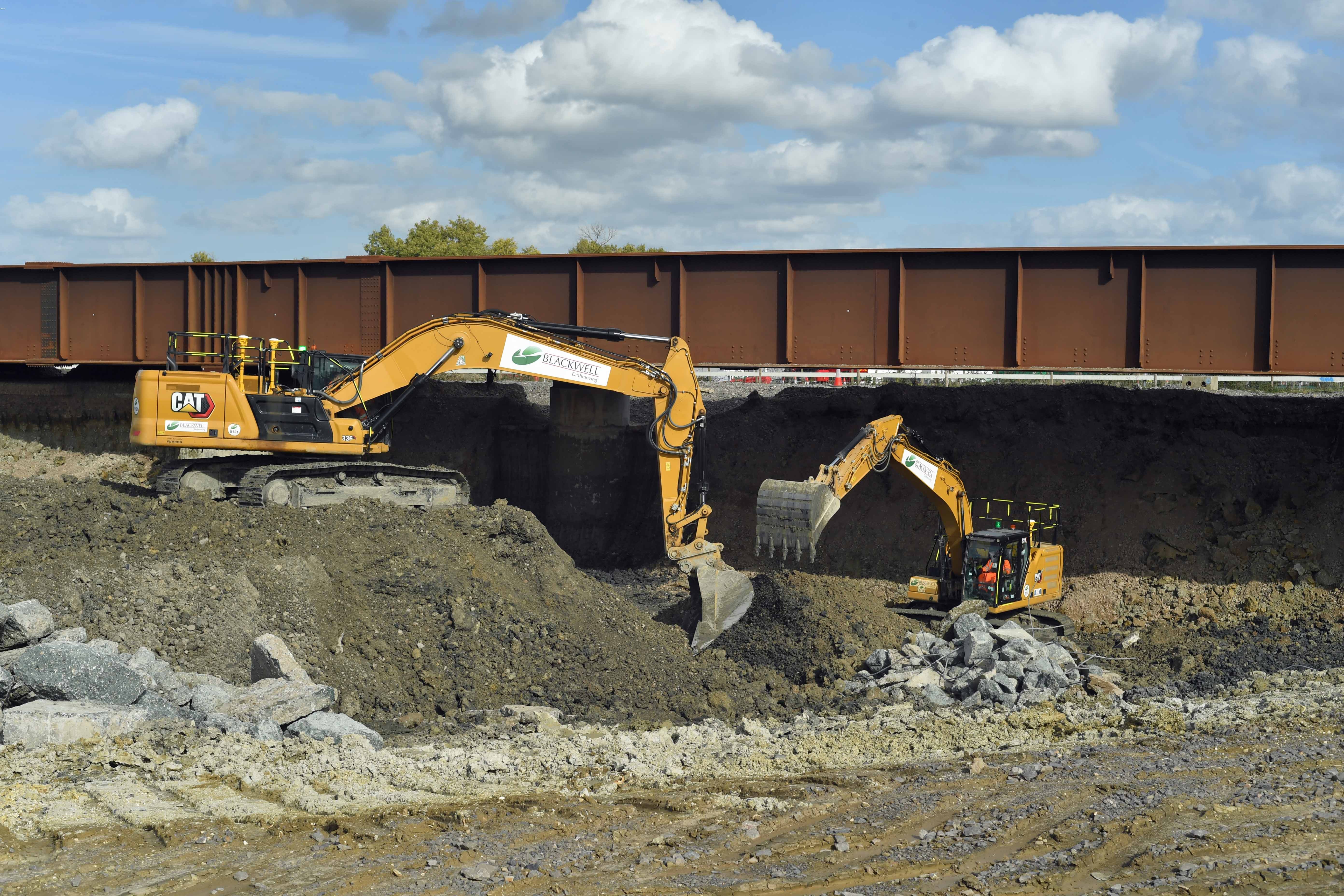
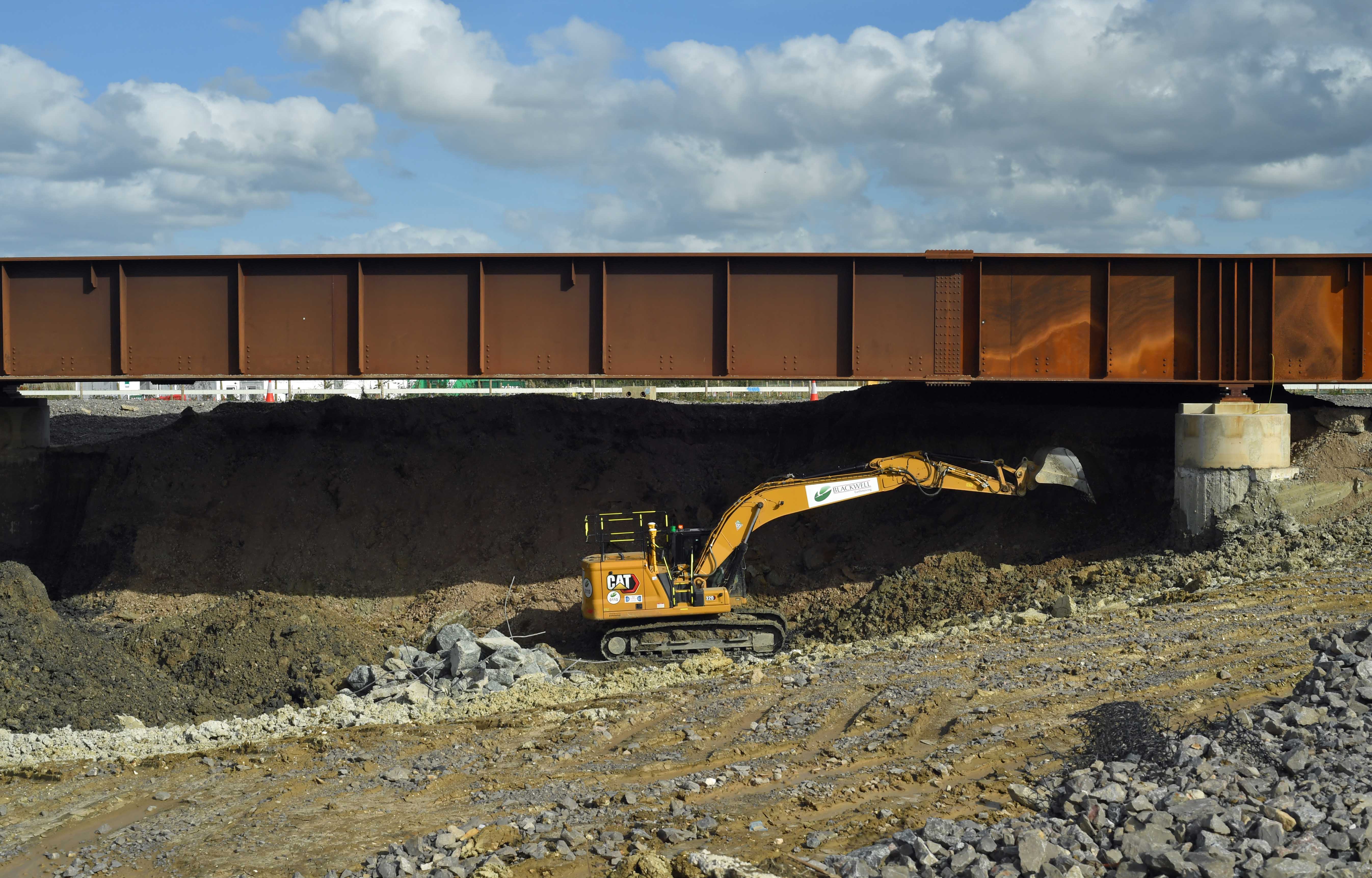
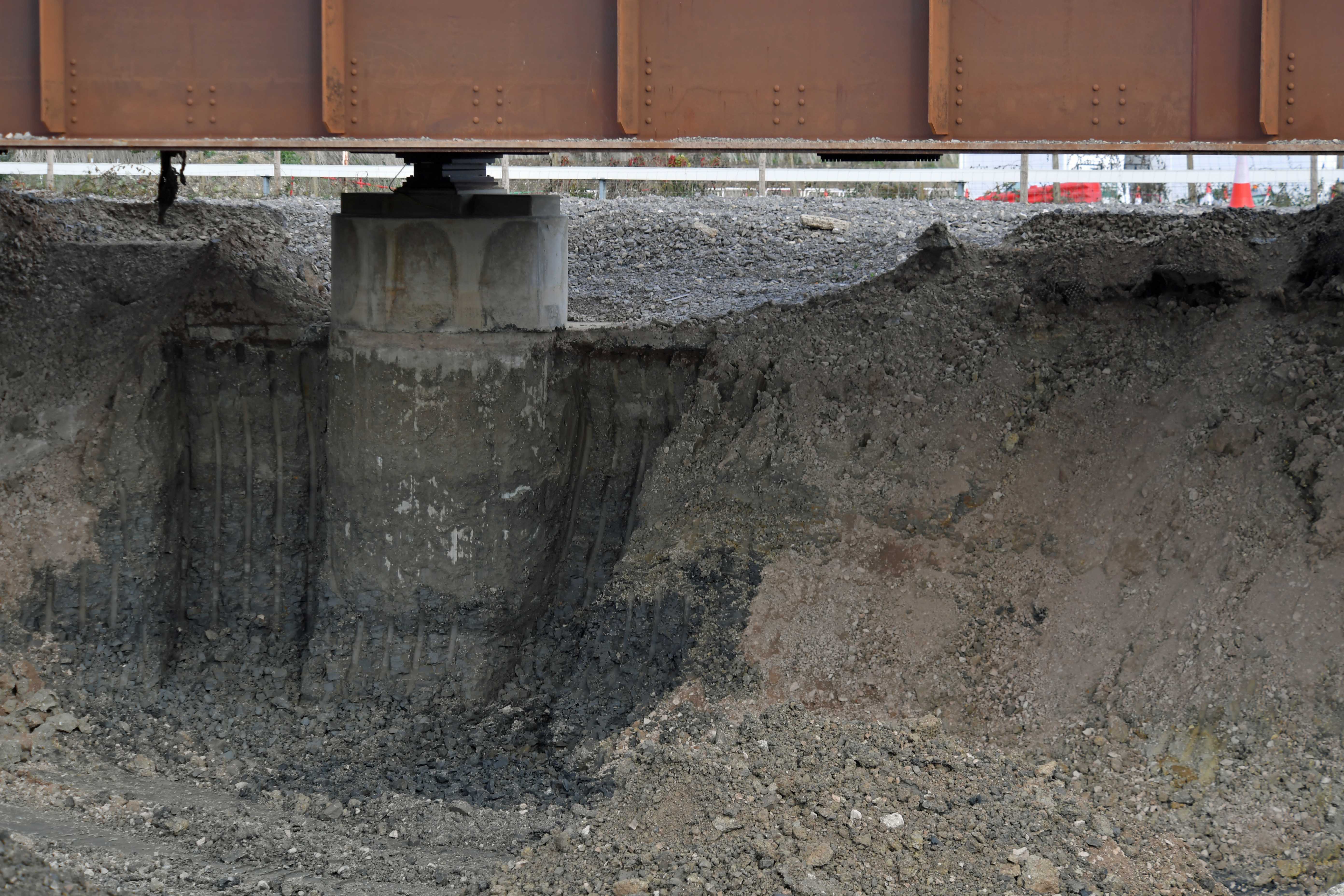
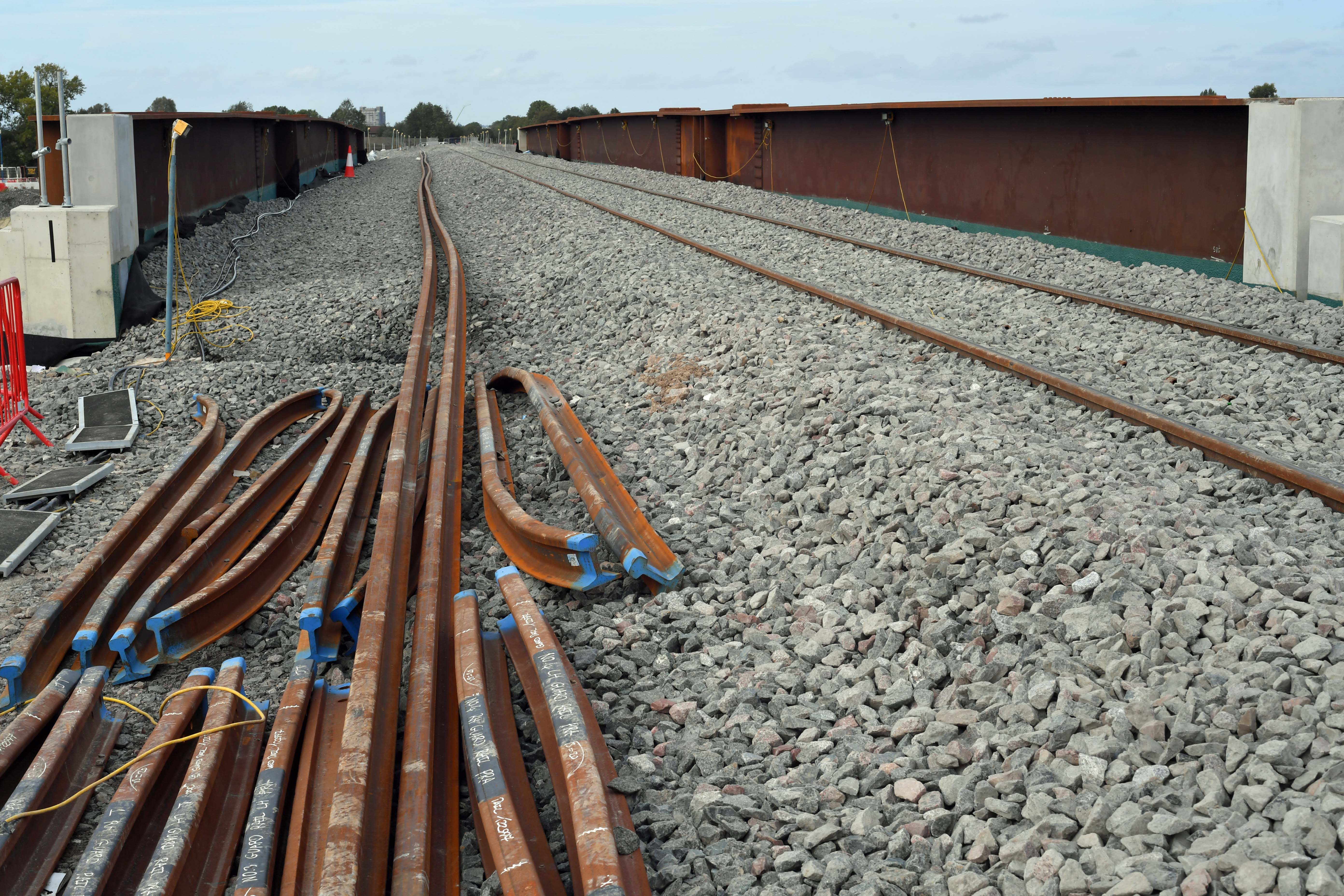
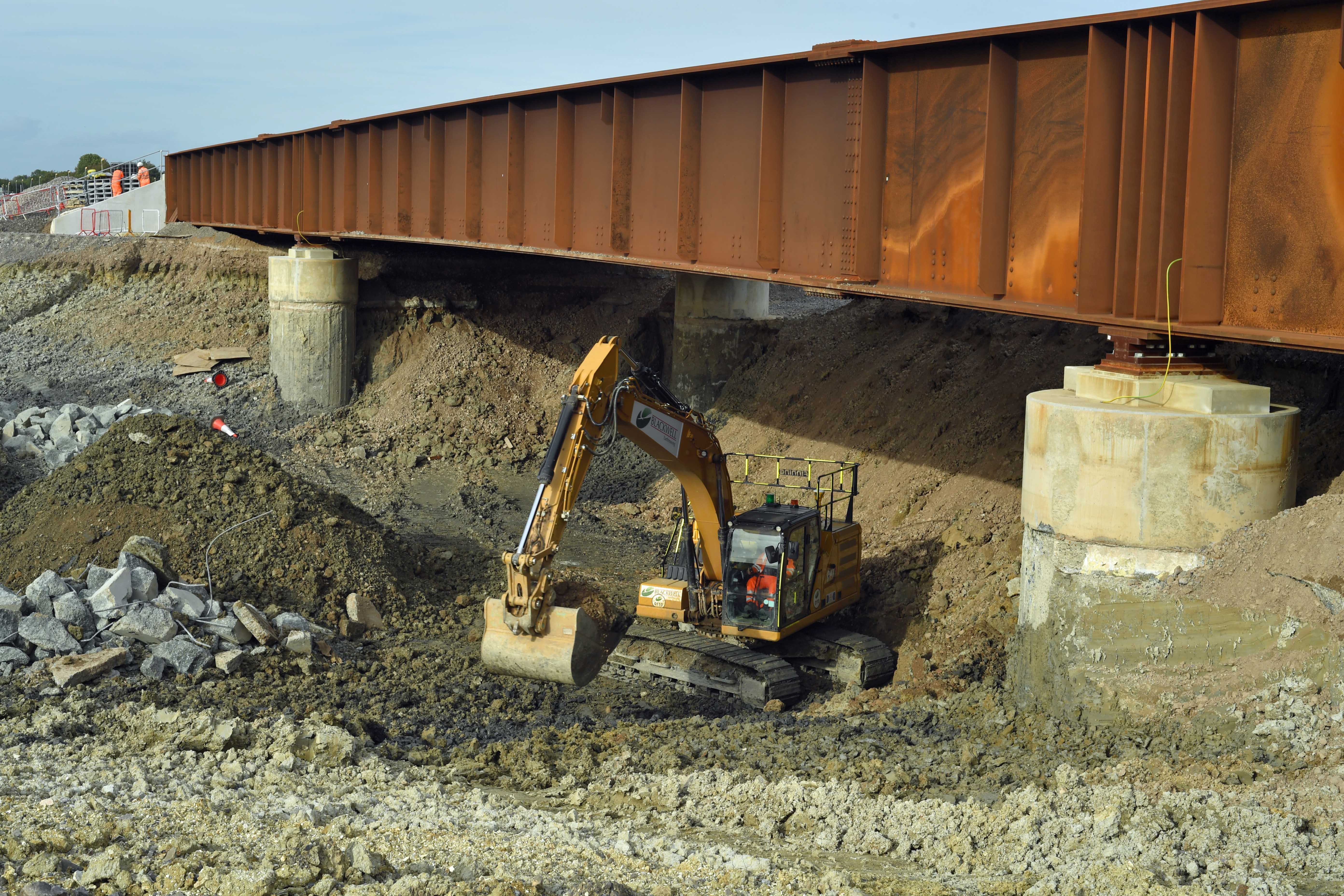
When I visited on September 25th 2023 Colas Rail had begun tamping the new track ready for the lines reopening. Once tamping is complete 200 tonnes of check-rails will be installed on the bridge to mitigate against the chance of any possible derailment on the bridge affecting HS2 services. Meanwhile EKFB had begun excavating the clay underneath the bridge to form the HS2 cutting which is exposing the top 8 meters of the piers. This bridge is unique amongst HS2 bridges in that it was constructed at ground level and then the ground’s being dug out from underneath it.
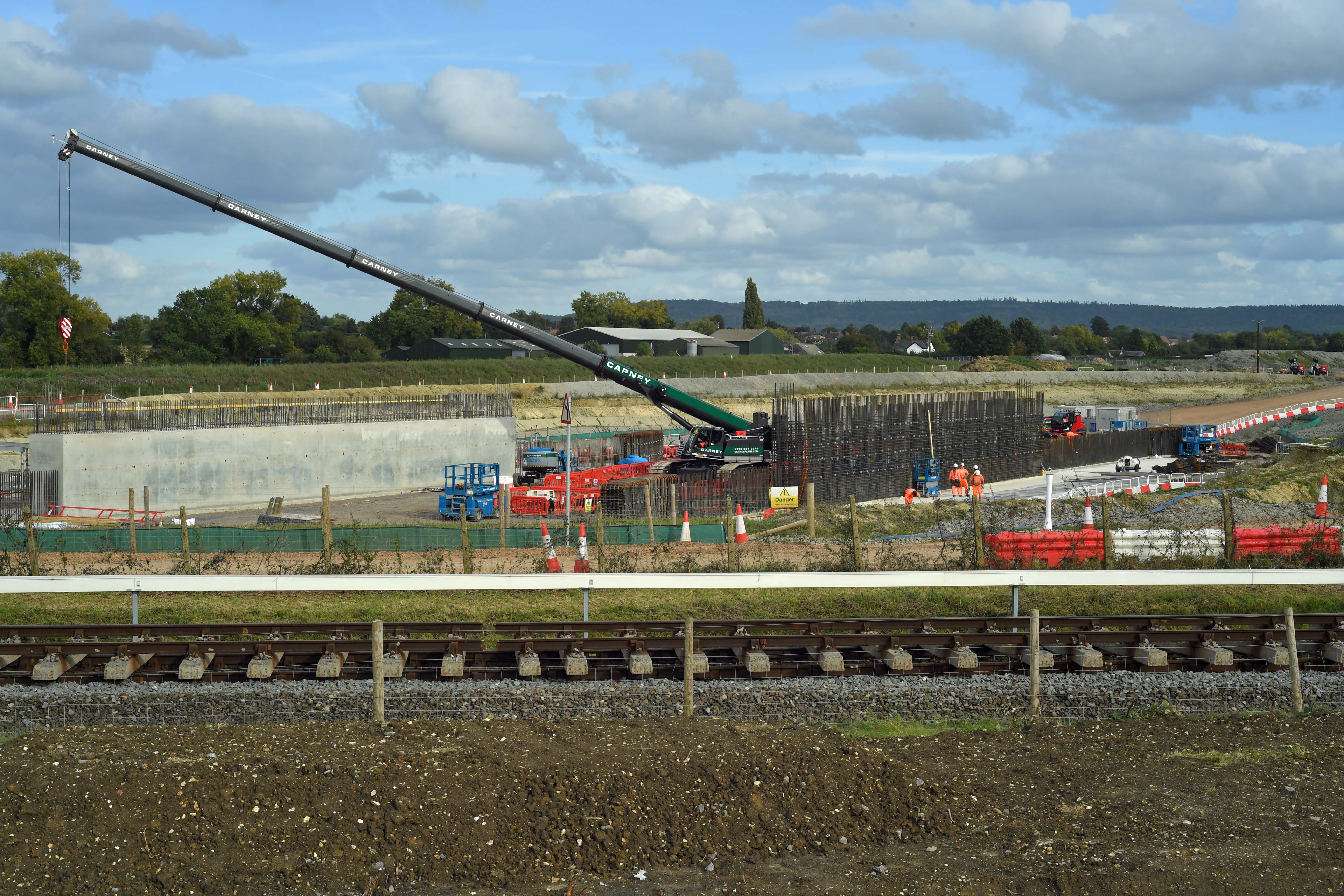
The new bridge on the Aylesbury-Princes Risborough line with excavators beginning to dig out the route of HS2. This view’s looking South towards LondonBeginning to excavate around the bridge piers.The first few meters of a pier’s exposed.
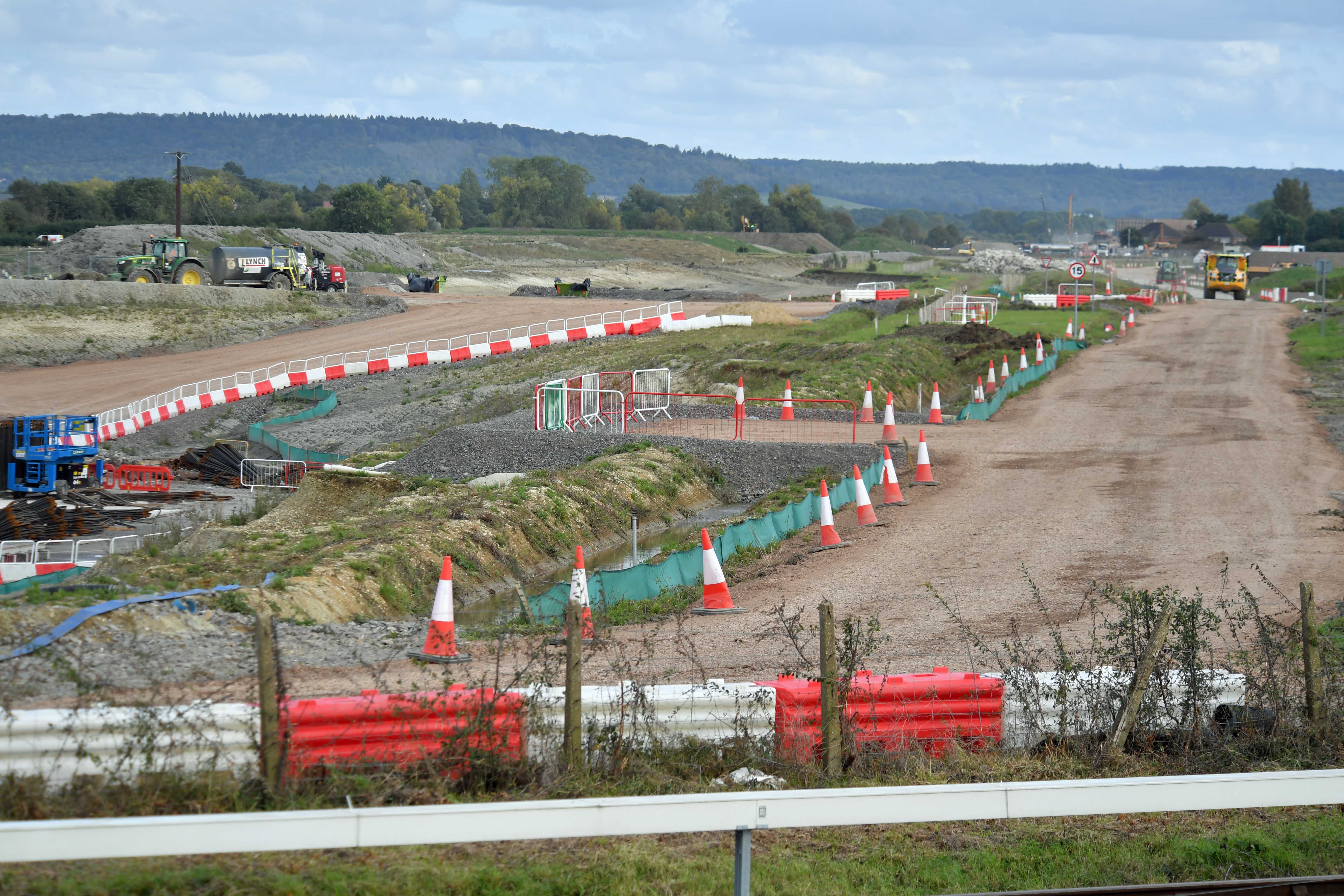
The excavation work’s being done in stages from the North to the South due to the proximity of the old railway formation which still carries fibre-optic signalling cables and has the disconnected track still in situ which will be recovered at a later date. On the South of the old formation EKFB are building the piers and deck of a road bridge over HS2 as passive provision for the South-East Aylesbury Link Road (SEALR) whilst another road bridge over HS2’s being built further to the North-West as part of another link road scheme.
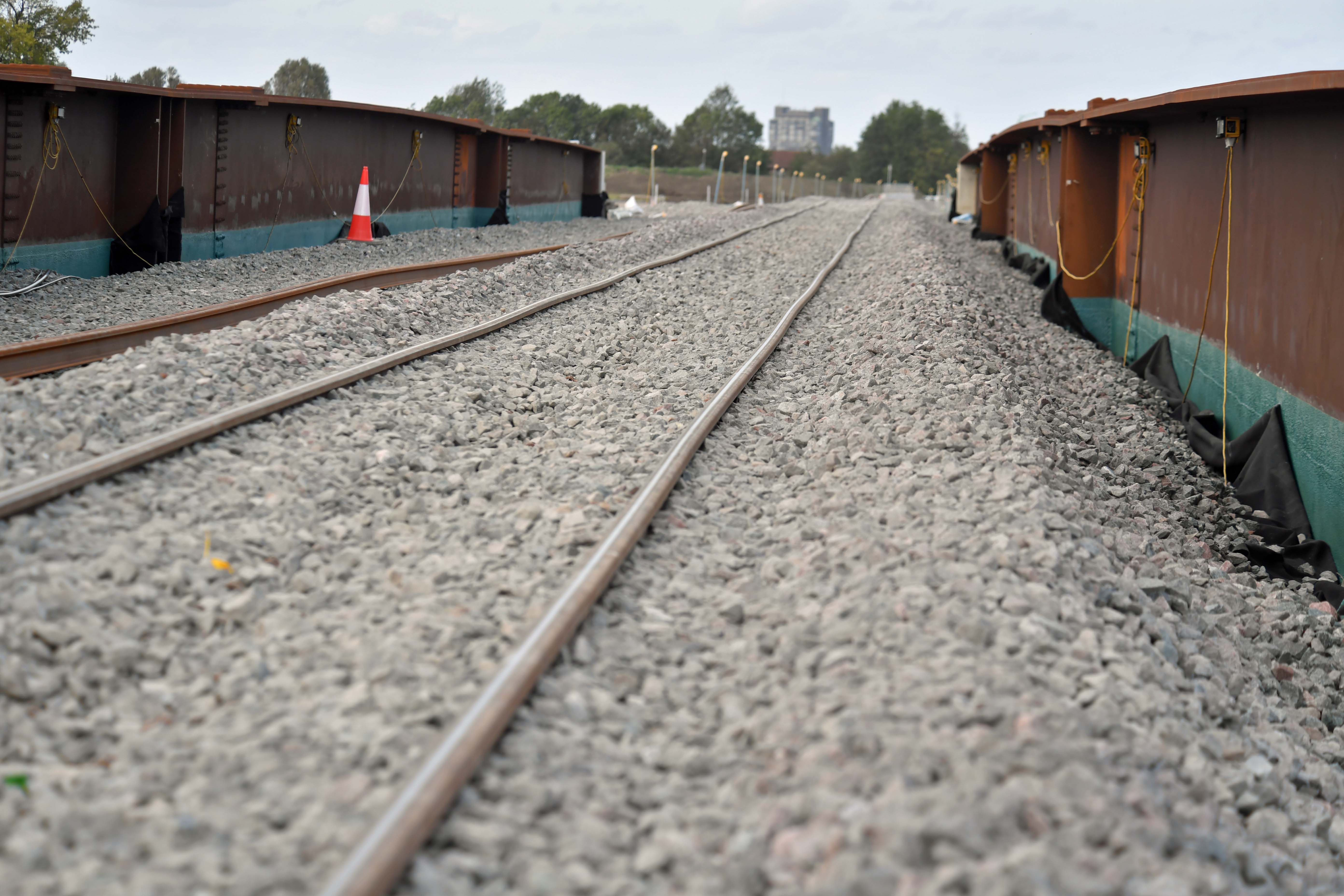
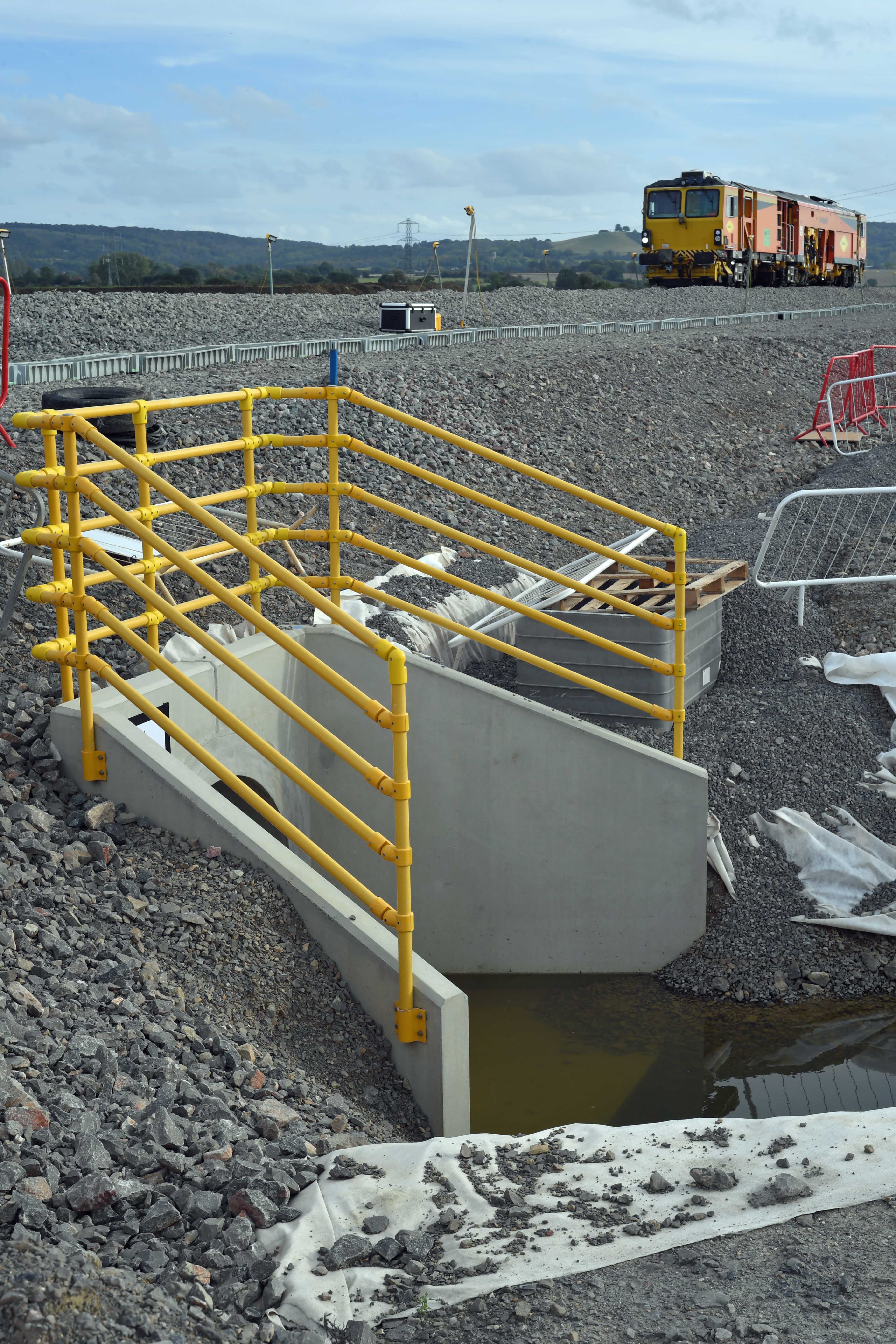
The new bridge with track in situ looking towards Aylesbury.Check rails waiting to be installed on the bridge after the line’s been tamped and levelled. In the foreground is the old railway line. Behind it in the light coloured troughing are the signalling cables which have been lifted and protected whilst work goes on. Looking South from the new railway bridge along the trace of HS2 towards London.The Colas tamper waits to begin work. In the foreground is one of the new culverts which improve drainage on the Aylesbury-Princes Risborough line. This photo gives a better impression of the length of the new bridge over HS2.
Future work to the line will see the half-barrier level crossing at Marsh Lane near Little Kimble upgraded and replaced with full-width barriers (which will allow linespeed improvements) and resignalling.
I’ve a small favour to ask… If you enjoy reading this or any of the other blogs I’ve written, please click on an advert or two. You don’t have to buy anything you don’t want to of course – although if you did find something that tickled your fancy that would be fab! – but the revenue from them helps me to cover some of the cost of maintaining this site (which isn’t cheap and comes out of my own pocket). Remember, 99% of the pictures used in my blogs can be purchased as prints from my other website – https://paulbigland.zenfolio.com/
There’s a short blog from me I’ve been up to my neck in archive pictures for most of the day. Not because I’d planned it that way but because I had a rather unusual request which involved digging through various hard-drives to find pictures of a particular event going back 20 years, which took a fair bit of digging. I haven’t looked at one of the hard drives for several years so I was relieved to find what I was looking for – and more! I rediscovered some pictures I’d filed away and thought were lost which would have been frustrating as they’re of historic interest now. To be honest, it was a good day for being stuck in the office as we had another morning of torrential rain. I had to walk into Sowerby Bridge for an appointment and ended up wearing my full set of waterproofs to do so – not something I expected to be doing at the end of August!
I’ll be spending much of tomorrow to complete the exercise and also to add some more of the pictures I’ve discovered to my Zenfolio website, starting with images from what’s now the new East-West rail link. I visited the line in 2011 when the idea was still being considered and long before construction actually started. Here’s one such shot taken at a location that’s unrecognisable today – and not just because of E-W rail, but also HS2.
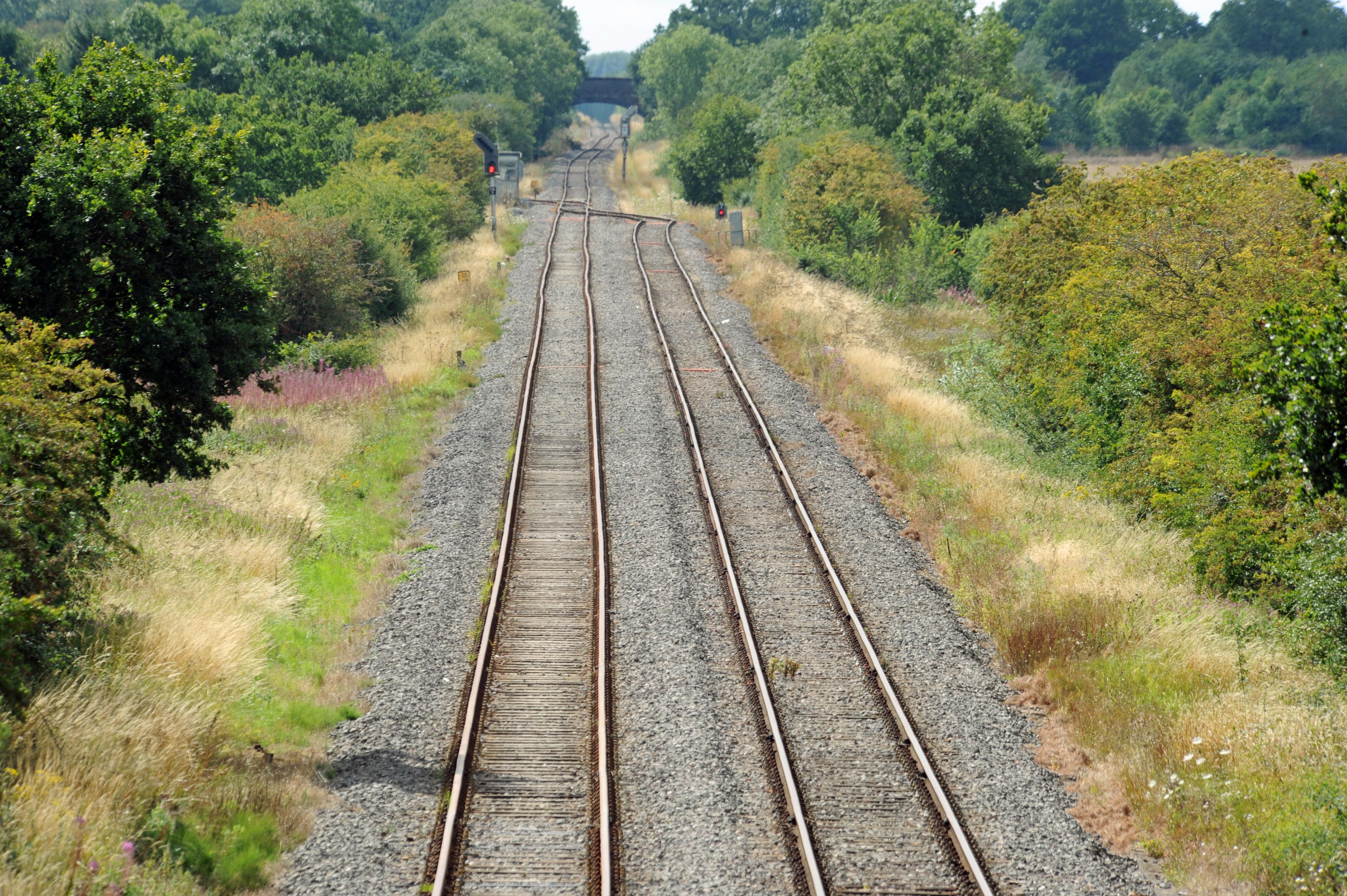
This is Calvert in Buckinghamshire. Looking West towards L&NE junction and the single line to Bicester beyond. A spur runs off to the left towards Calvert and the old Great Central line. Only one thing in this shot remains intact (but not for long) which is the road overbridge in the distance. This picture was taken on the 11th August 2011 from the Addison Rd overbridge, which has also disappeared although it’s replacement has yet to open.
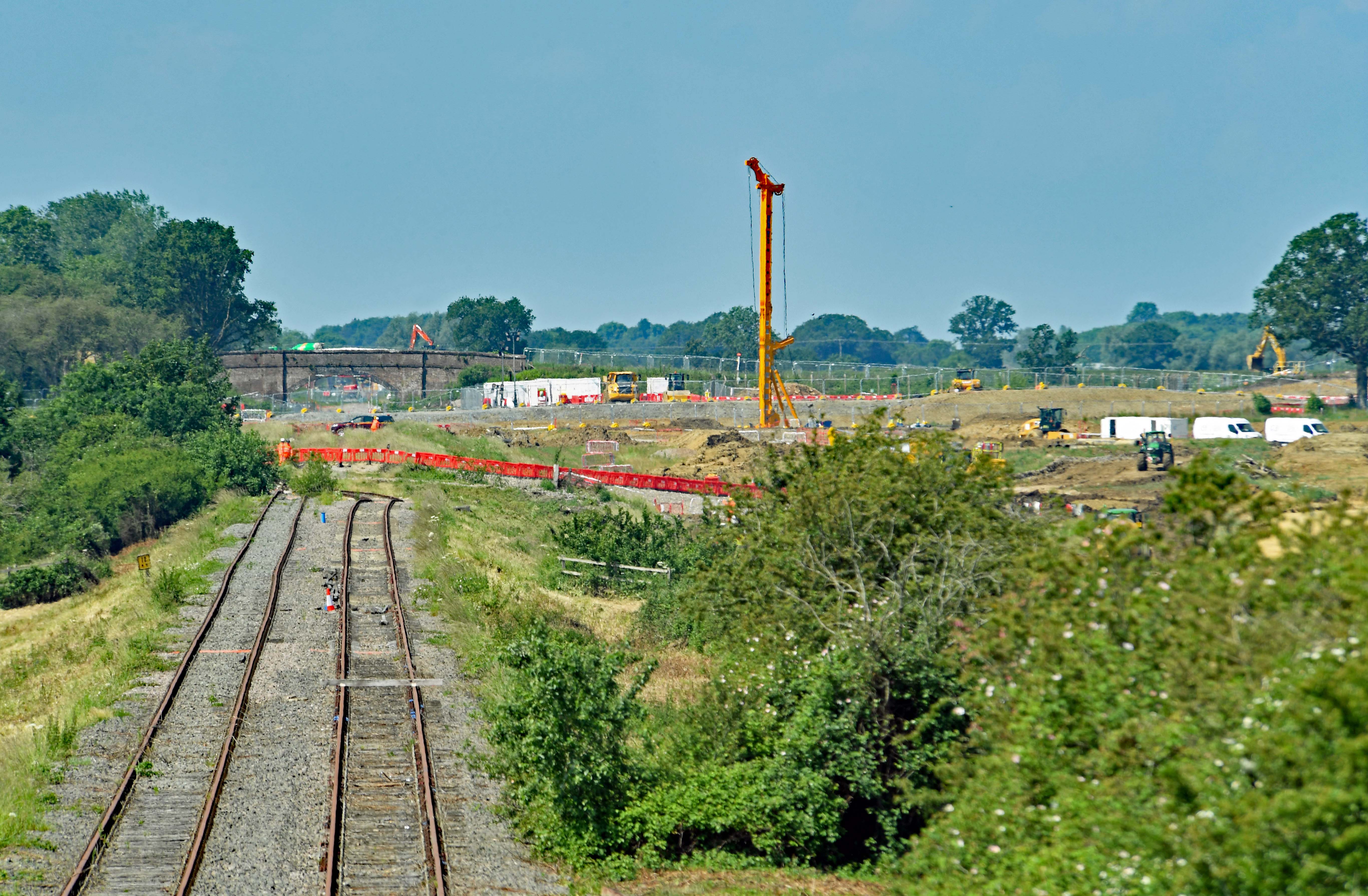
Here’s the same view almost exactly a decade later on the 23rd June 2021
The tall piling rig is standing where High Speed 2 will pass from Left to Right, underneath the reopened E-W rail link, the trackbed of which is being raised to almost the level of the old overbridge beyond. Meanwhile, the land to the right of the picture is being transformed as it’s the site of the HS2 Infrastructure Maintenance Depot (IMD) and sidings.
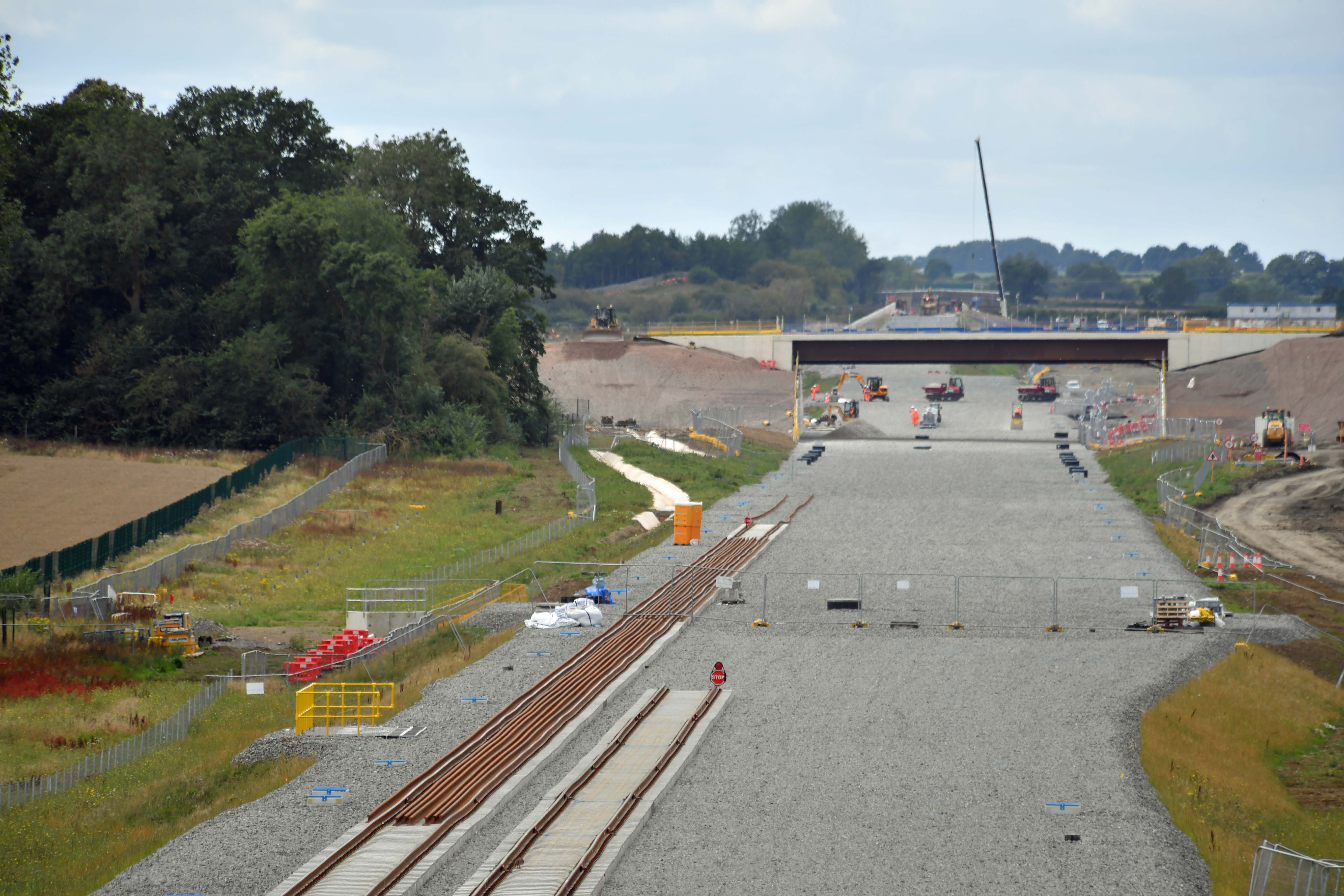
Here’s a more recent picture. I can’t do an exact comparison as Addison Rd is still closed. But here’s how the area looked on the 1st August this year.
Taken from further East, this is the new Addison Rd bridge under construction. The E-W trackbed has been widened on the Northern side to accomodate the tracks which will lead into the IMD.
How things change in 12 years! You can find more E-W rail construction pictures here. It’s the place you’ll be able to find the 2011 pictures too when I’ve had chance to add them tomorrow.
I’ve a small favour to ask… If you enjoy reading this or any of the other blogs I’ve written, please click on an advert or two. You don’t have to buy anything you don’t want to of course – although if you did find something that tickled your fancy that would be fab! – but the revenue from them helps me to cover some of the cost of maintaining this site (which isn’t cheap and comes out of my own pocket). Remember, 99% of the pictures used in my blogs can be purchased as prints from my other website – https://paulbigland.zenfolio.com/
Ugh, another silly o’ clock start as I’m heading back North to Morpeth to explore the Blyth and Tyne railway for a future magazine article. I was up there the other week but the weather was appalling and we were trapped on a train where we could only see the work to rebuild the line for passengers from inside. This time I’ll be lineside and have a local guide for part of the trip. But first I’ve got to get to Morpeth. Feel free to keep popping back to see how the day unfolds…
06:30.
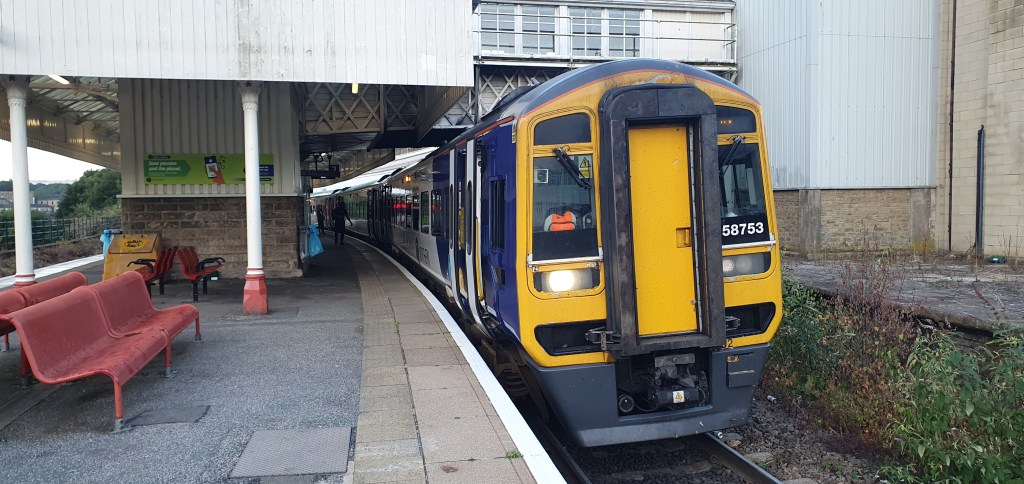
After what was a lovely early morning stroll under cloudless skies and rising temperatures through deserted streets I’m now on Northern’s 06:17 from Halifax to Hull. This morning it’s operated by a long-standing member of the Northern fleet in the shape of 3-car 158753. This unit’s been allocated to the area for donkey’s years.
Whilst it’s been lightly loaded from Halifax it’s filled up at Bradford Interchange.
07:35.
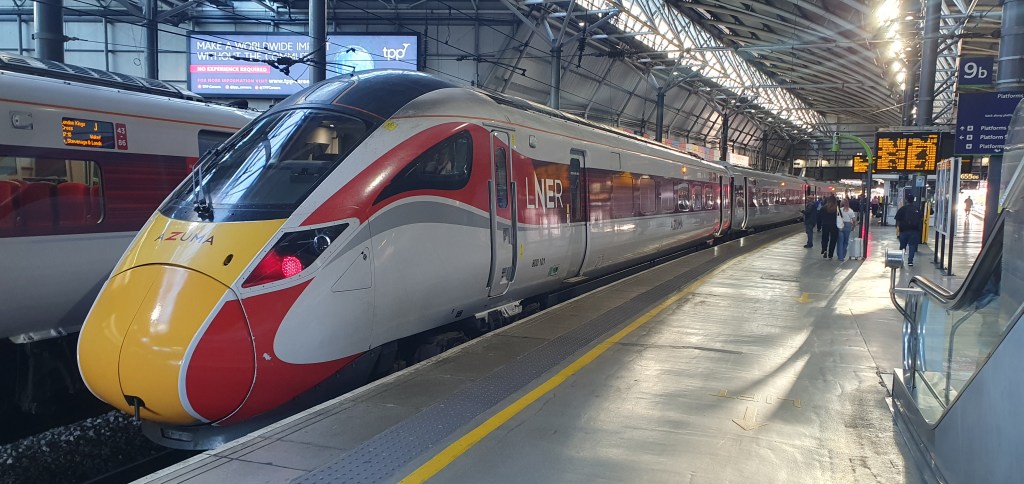
On arrival at Leeds I noticed TPE was up to its usual tricks of cancelling services. Thankfully, my next train was LNER’s 07:08 to Aberdeen, worked by a 9-car bi-mode ‘Azuma’ which had arrived empty from Doncaster Carr depot.
800101 begins its day…
07:50.
We’re currently speeding along at 123mph through the Vale of York en-route to Darlington. Sadly, the blue skies that stayed with me all the way to York are being invaded by low, dappled cloud from the East which are meant to cover the whole of Northumberland by the time I arrive. In some ways that’s not too bad as I don’t have to worry about heavy shadows and backlit shots. Even so, a bit of contrast would be nice. At least conditions will be better than on my last visit when the rain p*ssed down all day!
15:30.
Apologies for the long break but I’ve just been on a whirlwind tour of the Blyth and Tyne in the company of Paul Young of Ontrackimages, who’s a former B&T signaller. Paul graciously acted as local guide and chauffer, taking me to places I haven’t visited since 1989. I’ll add more pictures (and comparison shots) later but here’s a couple to be going on with.
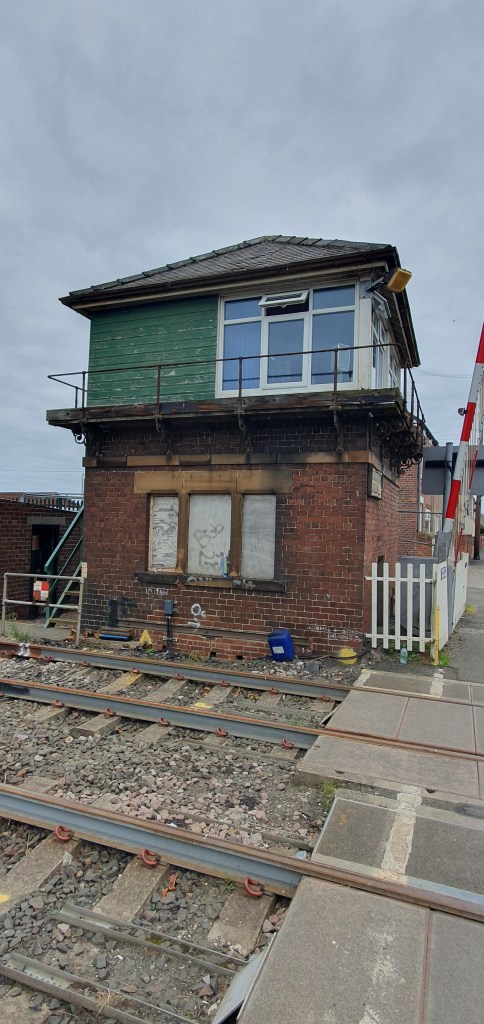
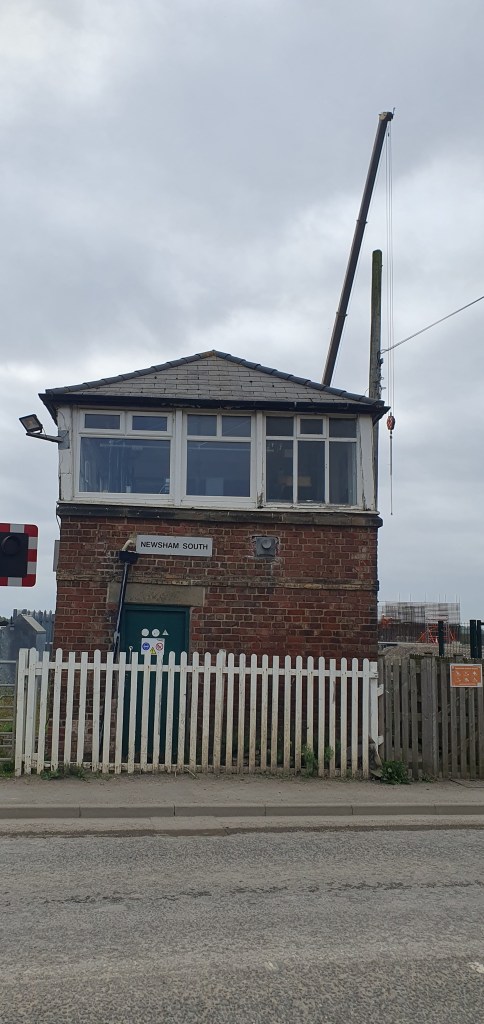
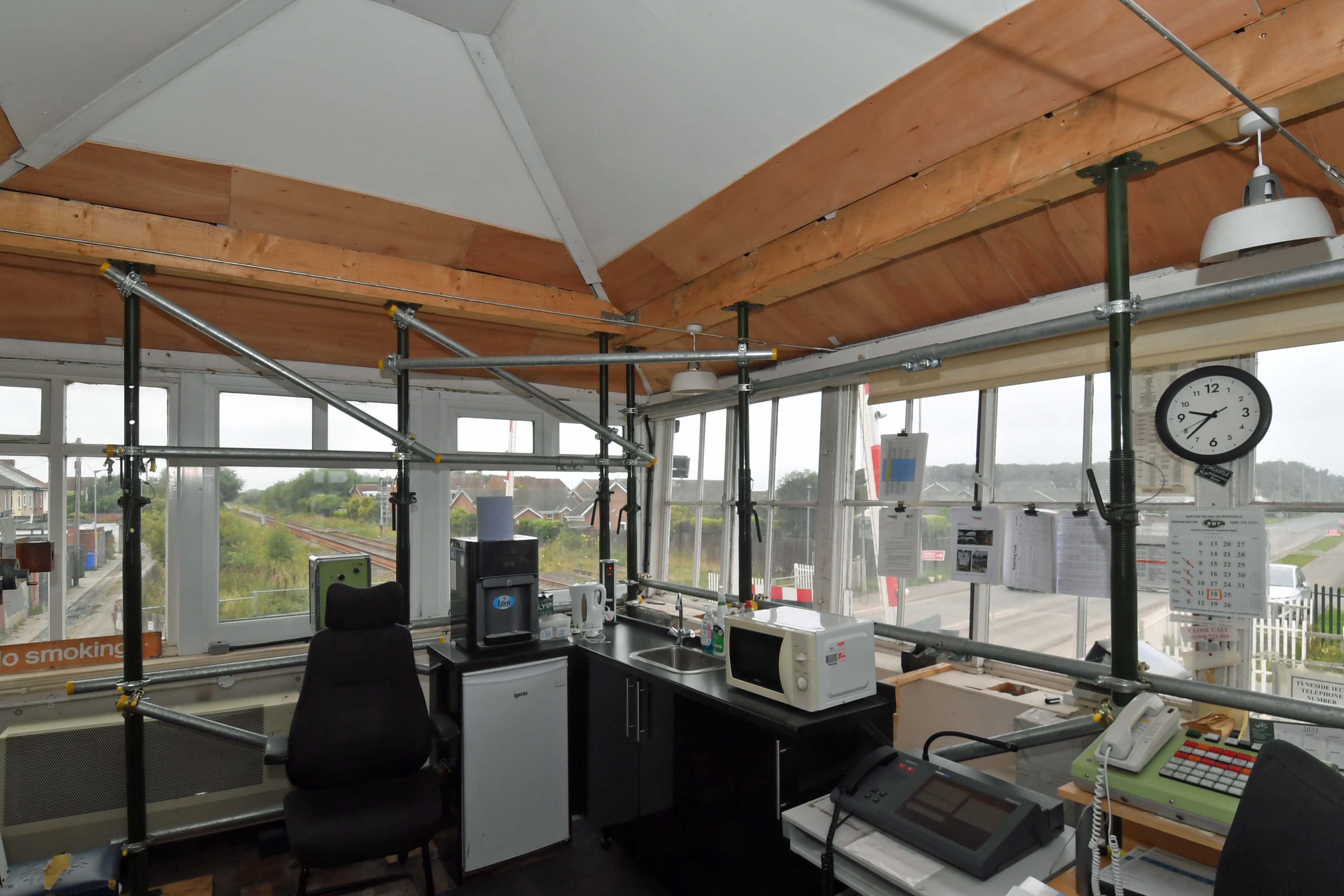
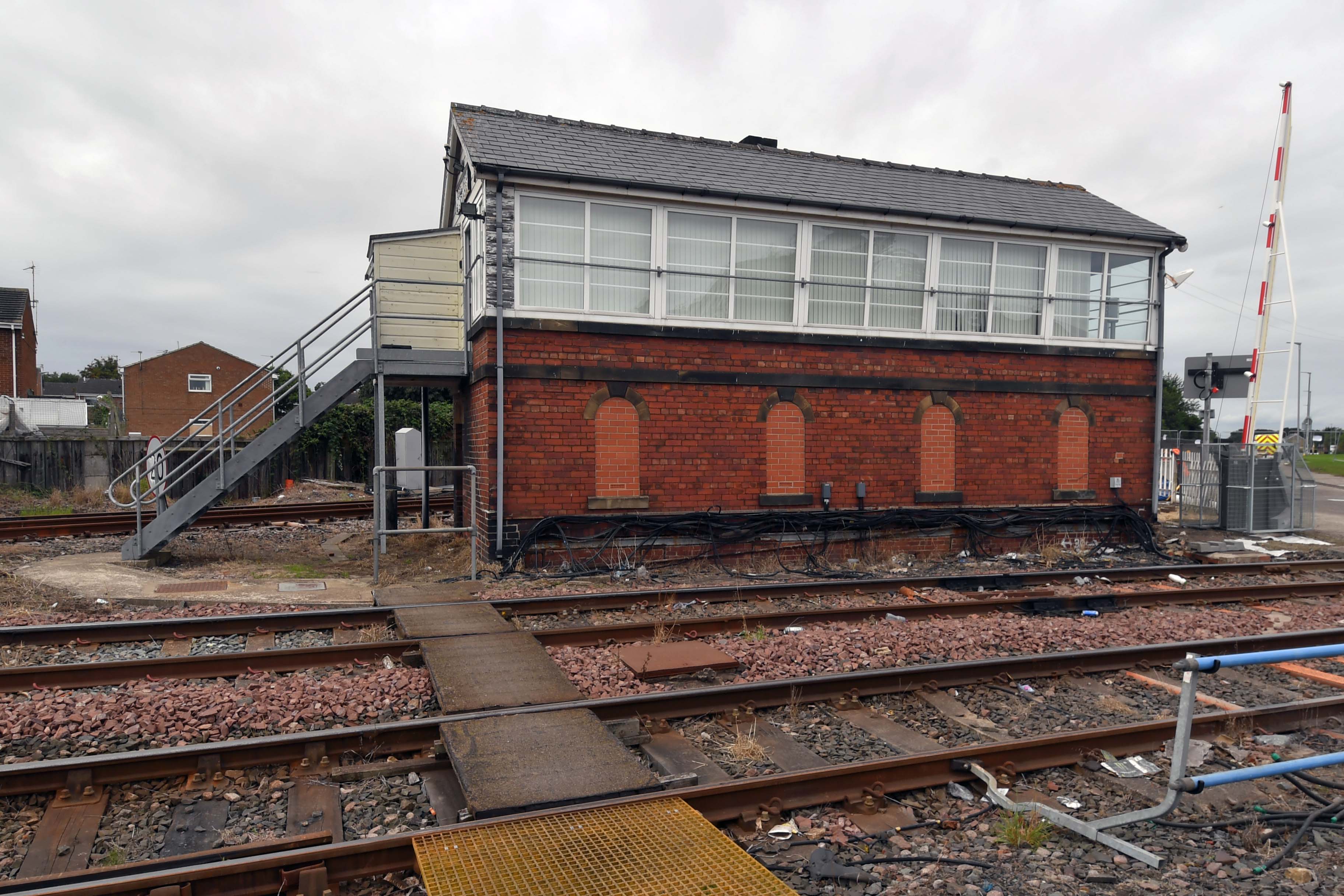
The old box at Marcheys House. I have a similar view from December 1989 which I’ll add later. The level crossing and signalbox at Newsham South will both be redundent. In the background’s one of the cranes working building the new road flyover. The signalbox is in poor condition.You may notice the way the wooden structure’s leaning towards the track. What you can’t see is that the inside of the box is shored up with scaffolding!
See what I mean?
17:30.
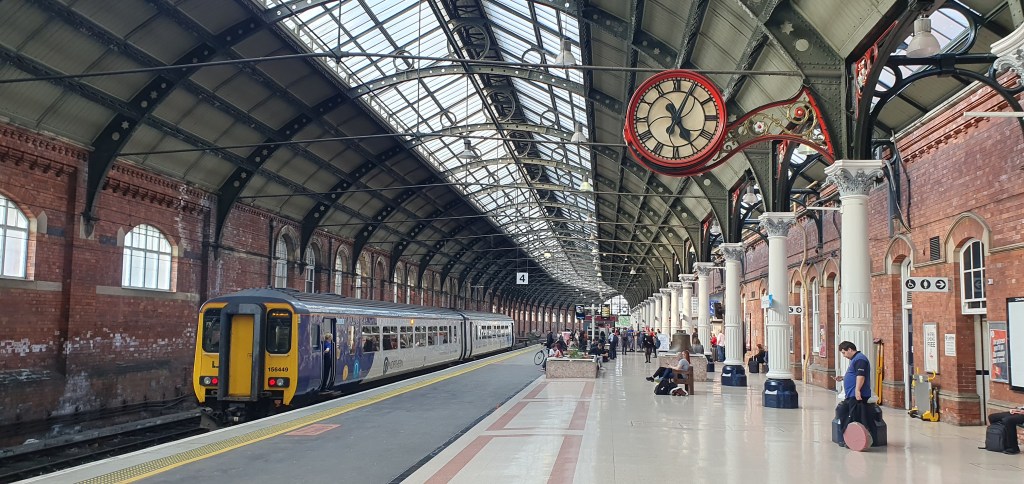
I’m making my way home in very different weather. The sun’s dialled up the mercury so conditions are now hot and sticky. I couldn’t resist stopping of on my way home, so here’s a shot from Darlington.
18:10.
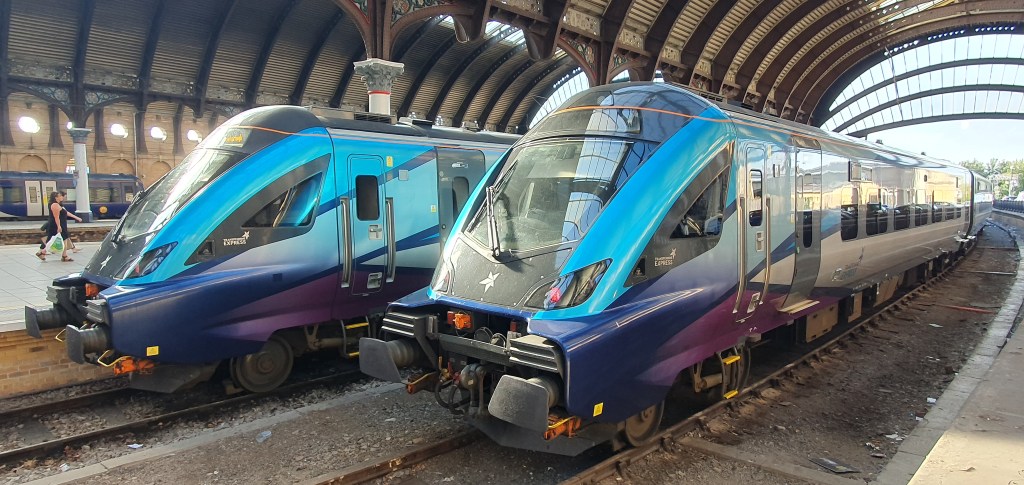
Time to change trains at York and take a little pitstop. Here’s what I’m seeing.
Double trouble. A pair of CAF built driving trailers.And relax! The York Tap.
20:05.
Suitably refreshed I caught a TPE service that was actually running. The Scarborough-Leeds service was diverted via Milford Jn and Castleford so entered leads from the ‘wrong’direction, but at least it got me there and wasn’t cancelled like many of its bretheren. Despite being ‘renationalised’ TPE is still a complete mess as a train service, which rather proves ownership isn’t the root of the problem. Now I’m sat on a Northern service to Chester which should have left at 19:42.
20:12.
Oh joy! The Chester train’s been cancelled as there’s no Guard for it so I joined the happy throng heading from platforms 4 to 1 to catch the 20:12 to Manchester Victoria. Needless to say – it’s busy. Not just with passengers but also displaced Northern crews who’re trying to join their trains elsewhere.
22:00.
Home again. Dee was happy to pick me up for the station so I wasn’t home at too daft a time, which has given me chance to download and edit a last few pictures from today’s trip.
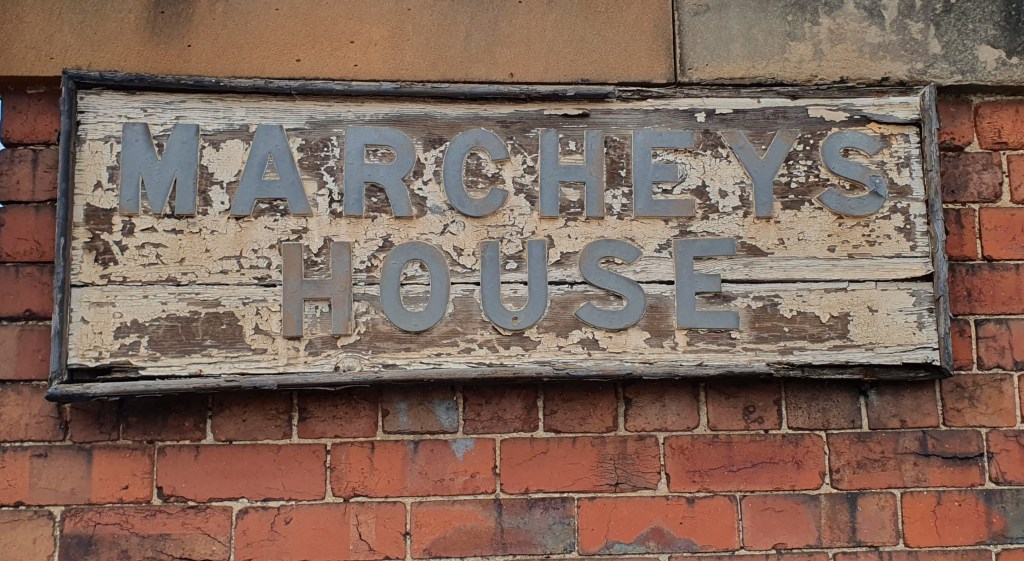
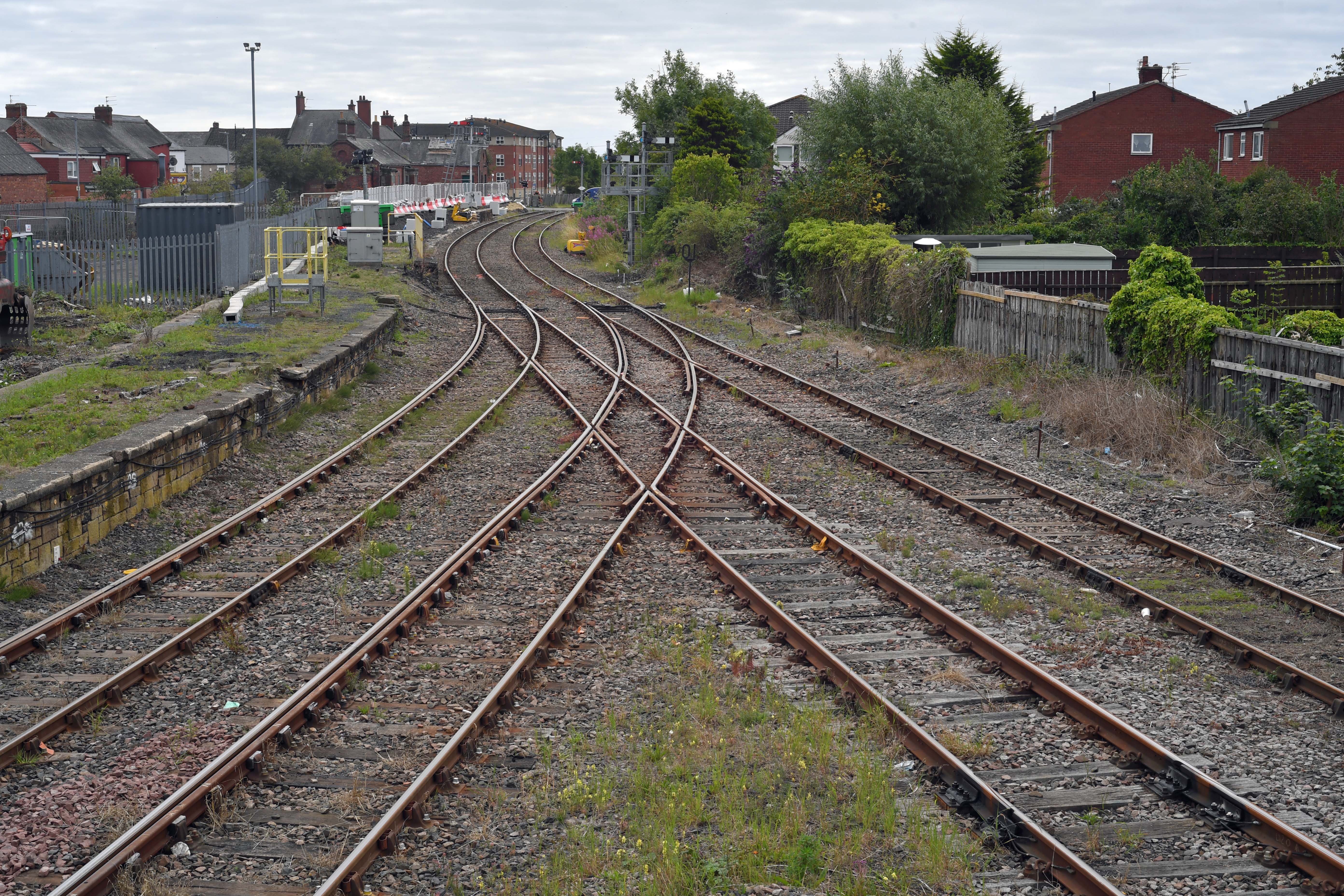
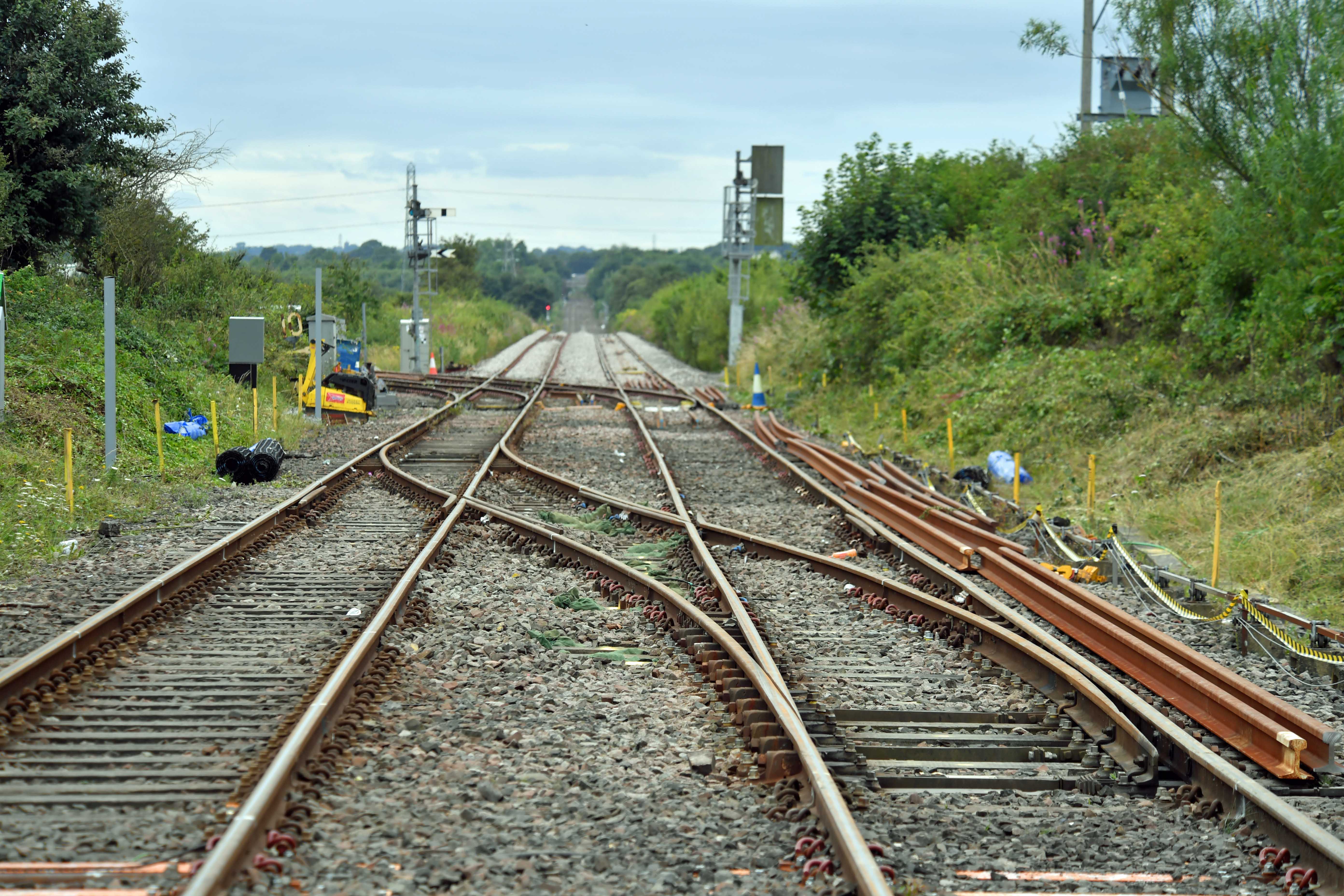
Bedlington North Junction with the remains of the old station on the left. This will be rebuilt for the new passenger service to Ashington which will use the lines to the left. The tracks to the right lead to Morpeth. Bedlington North Junction signalbox. The Morpeth line runs behind the box whilst the line to Ashington and Blyth is in the foreground. Marchey’s House Junction looking back towards Bedlington with the line to North Blyth diverging to the left. The crossover in the foreground will be removed and the track plain-lined in a blockade which started at 22:00 today.
UPDATE:
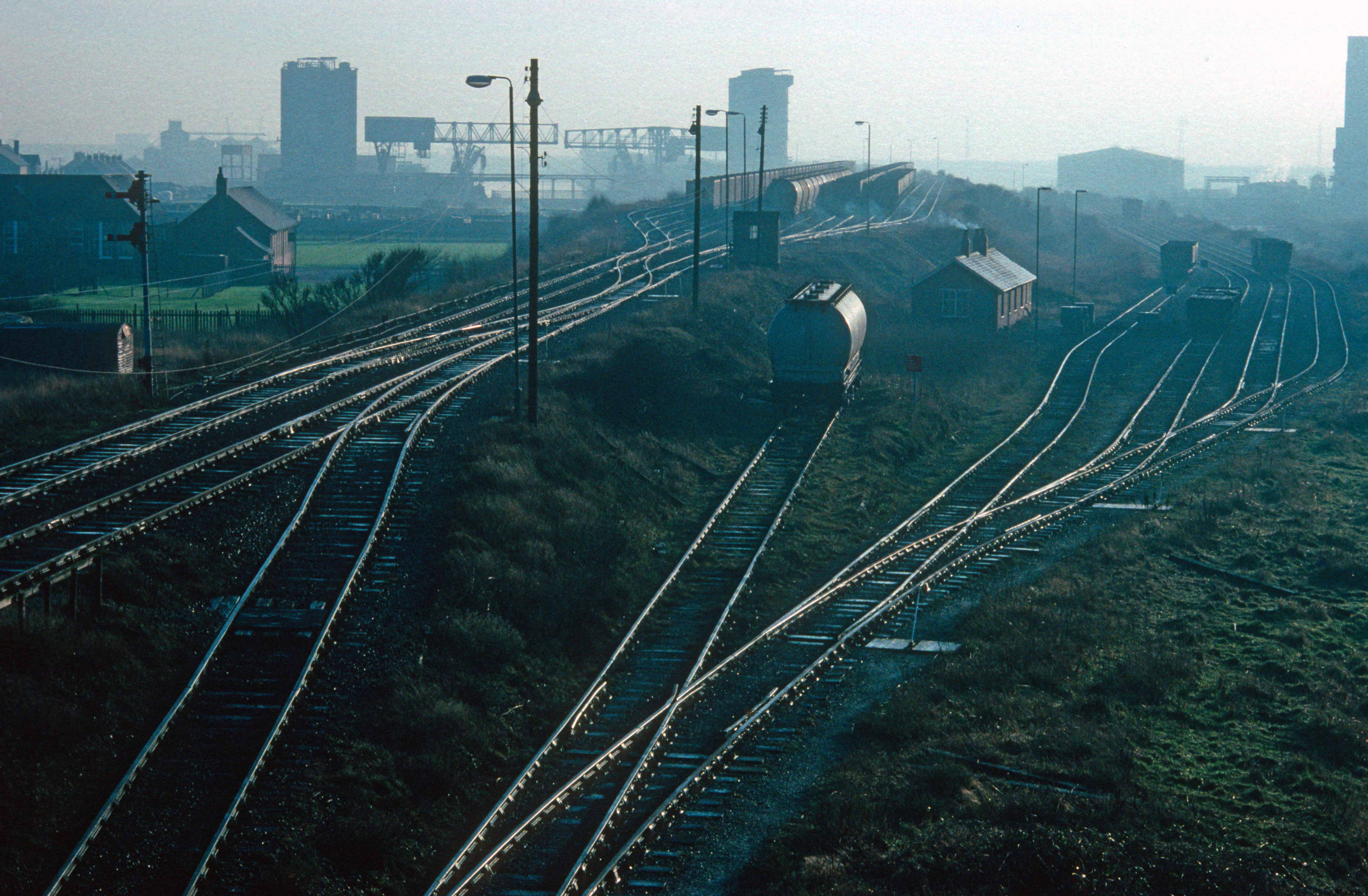
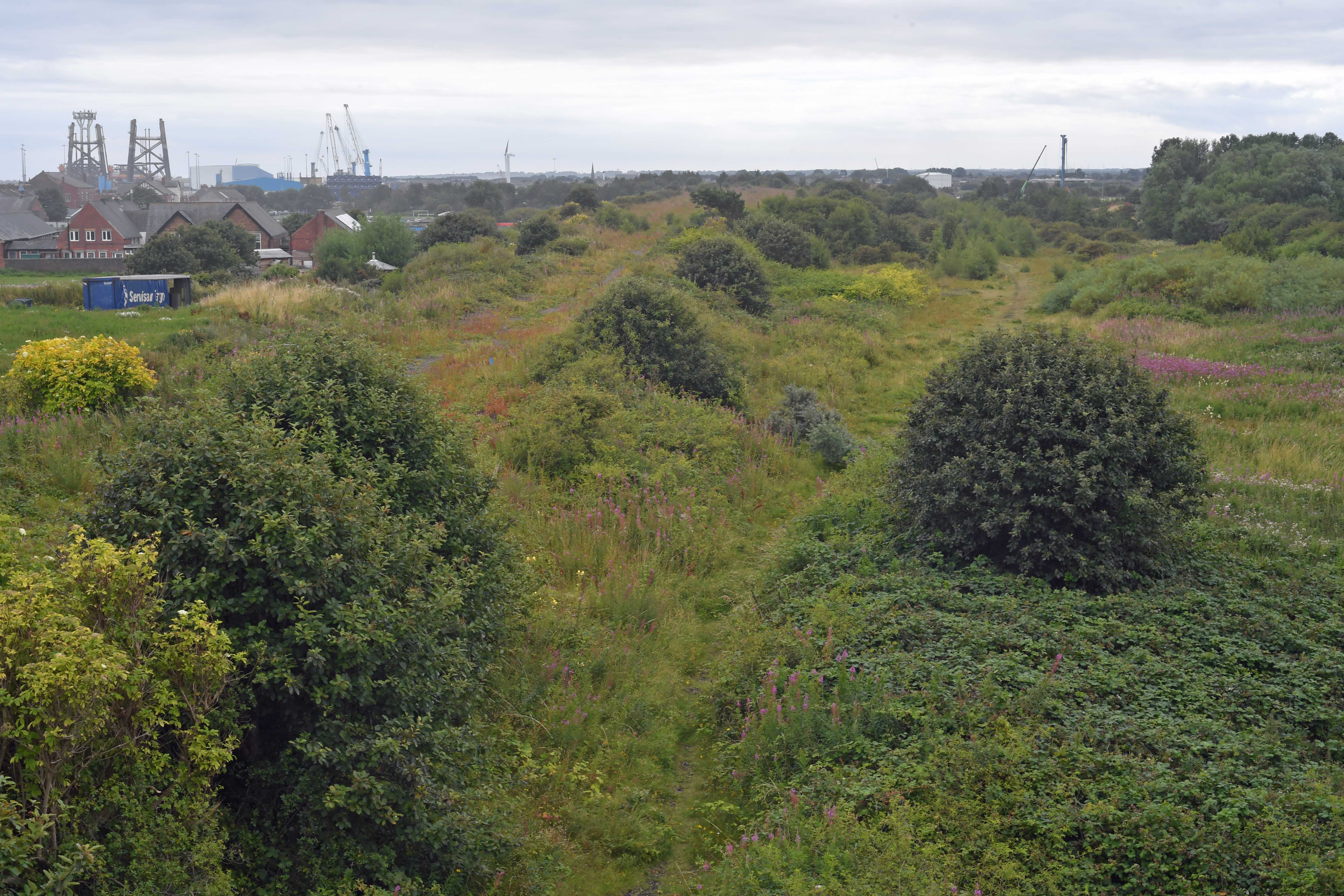
Yesterday I promised you a comparison shot. Here it is. This is Blyth staithes yard seen on the 27th December 1989 and a picture from the same spot yesterday.
Almost nothing remains, apart from the old railway bridge that we were stood on.
I’ve a small favour to ask… If you enjoy reading this or any of the other blogs I’ve written, please click on an advert or two. You don’t have to buy anything you don’t want to of course – although if you did find something that tickled your fancy that would be fab! – but the revenue from them helps me to cover some of the cost of maintaining this site (which isn’t cheap and comes out of my own pocket). Remember, 99% of the pictures used in my blogs can be purchased as prints from my other website – https://paulbigland.zenfolio.com/
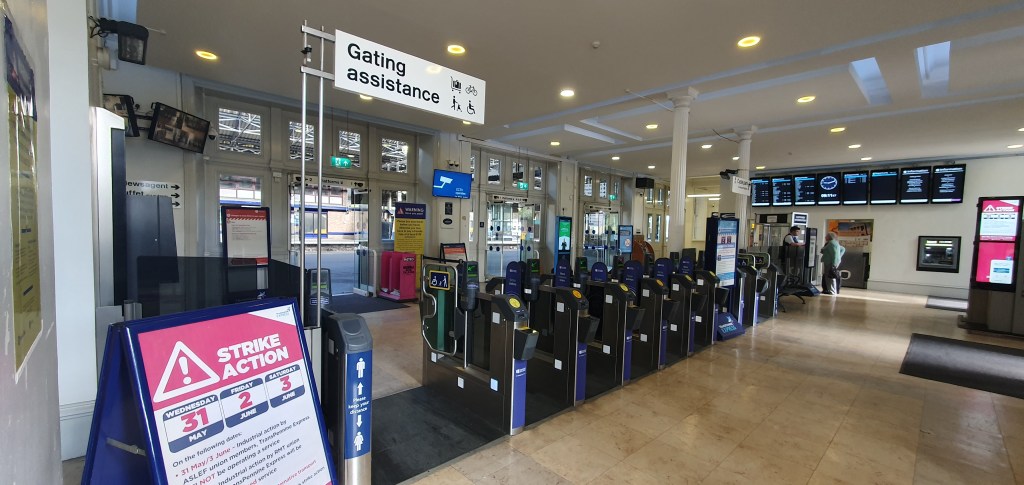
I’m currently in Huddersfield waiting for the first train of a strike day across the Pennines to Manchester, TPE’s 09:32. Dawn’s been a star and driven me over from home as there are no services through the Calder valley today (or tomorrow) which is making this job more challenging than usual.
Fortunately, the Northern service to Liverpool Lime Street that I’m due to connect with is also shown as running. The only question now is how busy they’ll be. Most people seem to have given up on the idea of travelling by rail today. Huddersfield station is unnaturally quiet. There’s a handful of RMT pickets outside and a few dozen people inside.
09:35.
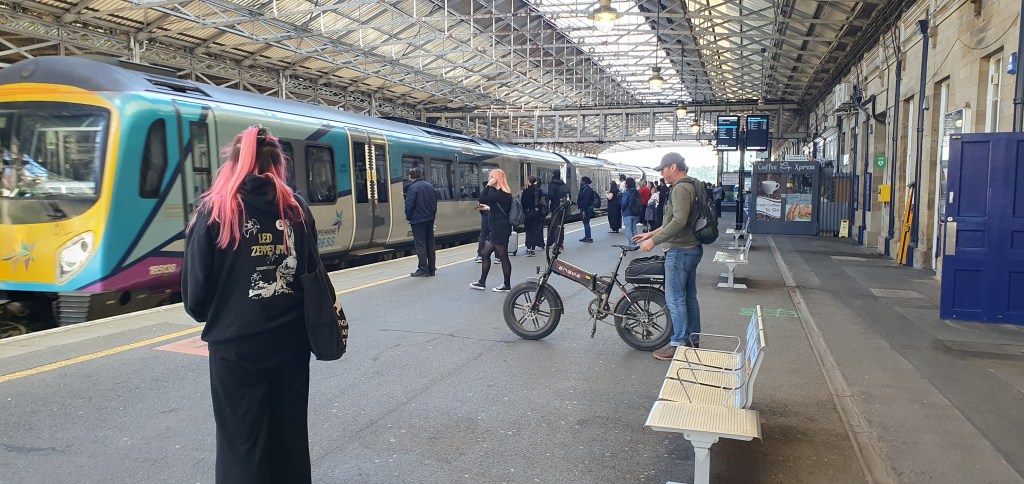
It’s a strike day and bugger-all is running, but TPE are still struggling to run anything to time! We’re being told the 09:32 is currently running 9 minutes late. Looking at ‘Realtime trains’ it’s shown as losing time at every station it’s stopped at. I count around 40-45 people here waiting to catch it, including several prams and one guy with a humongous e-bike.
All aboard…
09:50.
Rolling! We all managed to squeeze on with a few seats still spare. I can’t see us picking up vast numbers en-route and some folk will be getting off on the way. In fact, as I type this we’ve stopped at Slaithwaite where several from the front car have left, including the guy with the e-bike.
We’re running 10 late now but it’s not going to affect my connection at Piccadilly so there’s no stress there. Instead I can relax and enjoy the trip across the Pennines in glorious sunshine.
10:40.
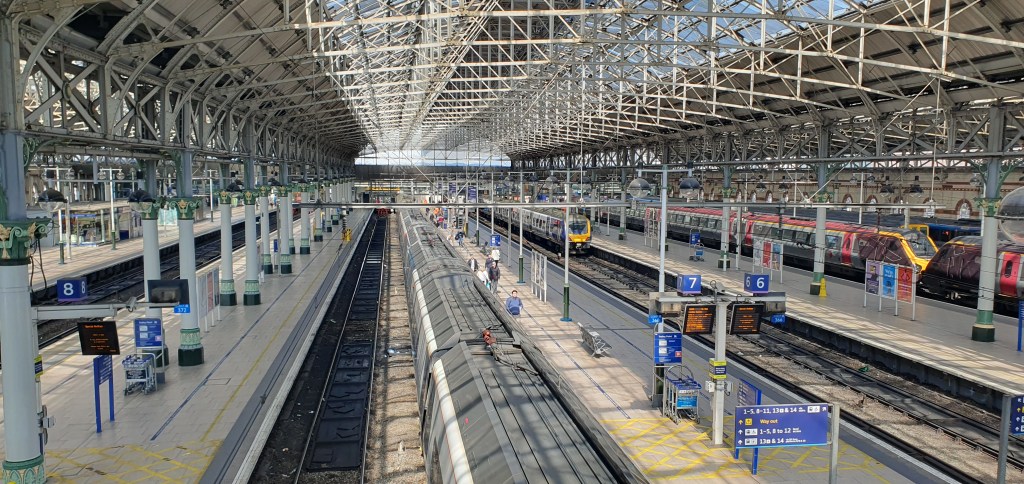
I arrived in Manchester late but unruffled, unlike the crowds waiting to board our train for the return trip to York! The platform was packed, with a few anxious faces wondering if they’d secure a seat. Piccadilly has several services running. Avanti, TfW, Cross-Country are operating as well as Northern and TPE. Over on pkatform 14 I saw TfW were operating a 2-car Class 197 to Llandudno, which is going to be ‘cosy’ judging by the amount of folk waiting to catch it. At least my Northern service to Liverpool’s diagrammed for a 6-car!
Piccadilly. Hardly a hive of activity.
11:30.
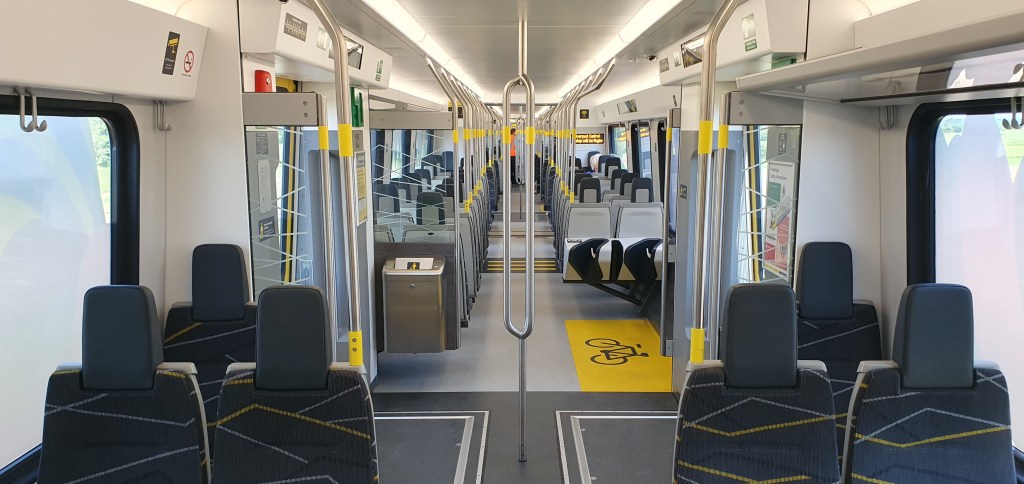
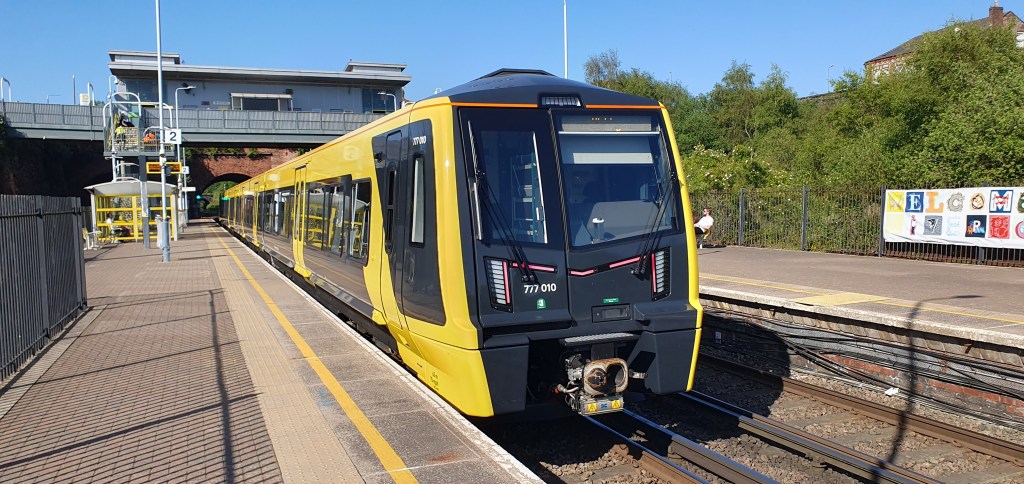
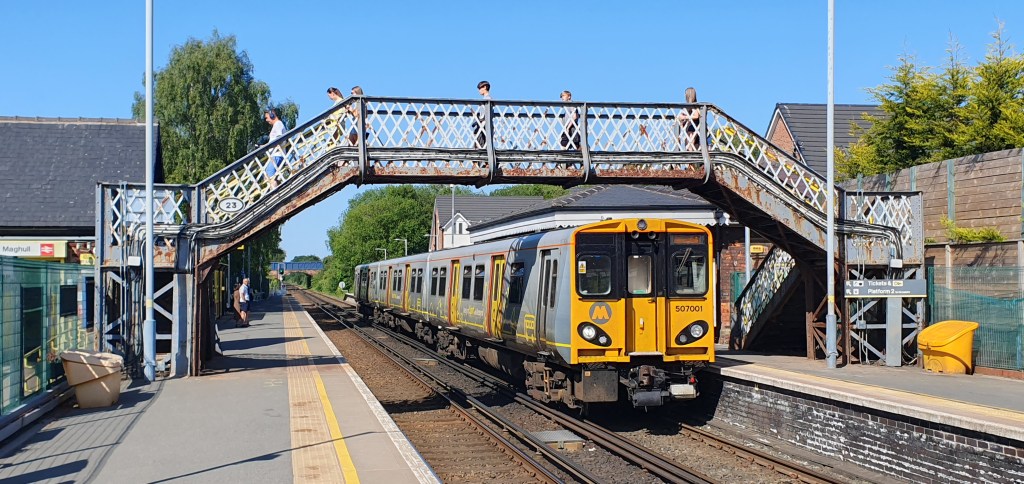
Success! I’ve set up the ‘mobile office’ aboard the 10:52 to Liverpool Lime St, having bagged a table in the front car. I’ll now be on time to meet old friend and colleague Pip Dunn so we can carry out a train test of the new Stadler built Class 777s which are slowly taking over Merseyrail services to displace the oldest electric trains on the national network, the BR built Class 507/508’s. I’ve a previous pictorial blog documenting their lives on Merseyside which you can find here.
I may be going off grid for a while whilst we’re working, but I’ll be back later…
18:00.
Job done, I’m back! I’m now heading to Southport where I’ll be stayiing at my sister’s this evening. Today’s been spent shuttling up and down between Liverpool, Ormskirk and Kirkby. My biggest challenge was to get Pip to realise the second K in Kirkby was silent so my fellow Scousers wouldn’t keep looking at him sideways whilst muttering “woolyback” under their breaths!
We journeyed on several of the new trains in order to get a decent sample, plus we talked to the crews. You’ll be able to read our views of the new trains in a forthcoming edition of RAIL magazine.
When Pip headed off I hung around to make the most of the glorious weather to get a few external shots of trains old and new. Here’s a couple of samples.
Shiny! The interior of one of Merseyrails new Class 777s.777010 calls at Kirkdale.The Daddy of the old fleet (507001) calls at Maghull with a service from Ormskirk.
I’ve a small favour to ask… If you enjoy reading this or any of the other blogs I’ve written, please click on an advert or two. You don’t have to buy anything you don’t want to of course – although if you did find something that tickled your fancy that would be fab! – but the revenue from them helps me to cover some of the cost of maintaining this site (which isn’t cheap and comes out of my own pocket). Remember, 99% of the pictures used in my blogs can be purchased as prints from my other website – https://paulbigland.zenfolio.com/
I’ve been looking at progress on the trans-pennine railway route upgrade for some time now, both the record locations before the work started and now as it progresses. Last month I visited Stalybridge to see the result of the long blockade. You can find that blog here.
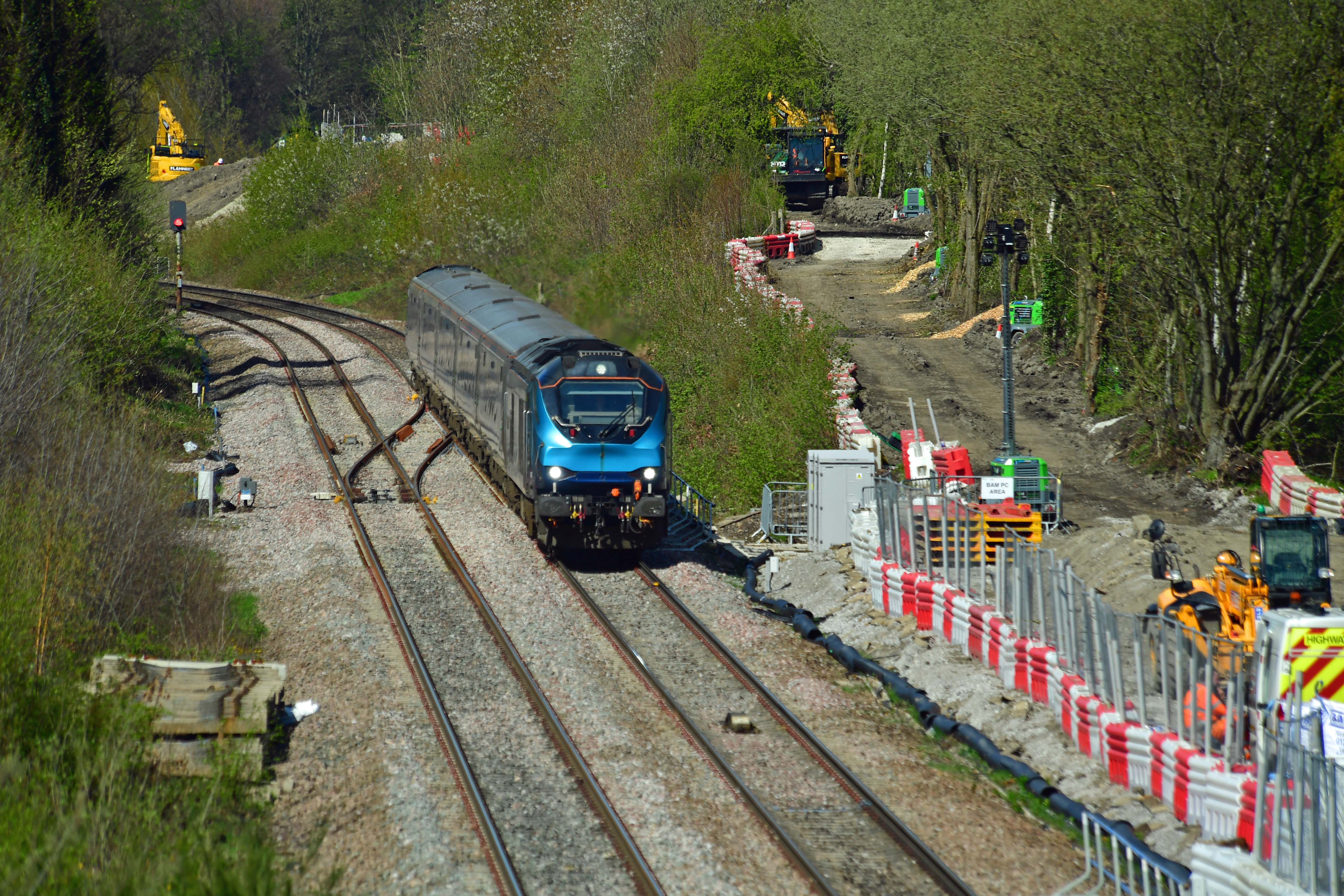
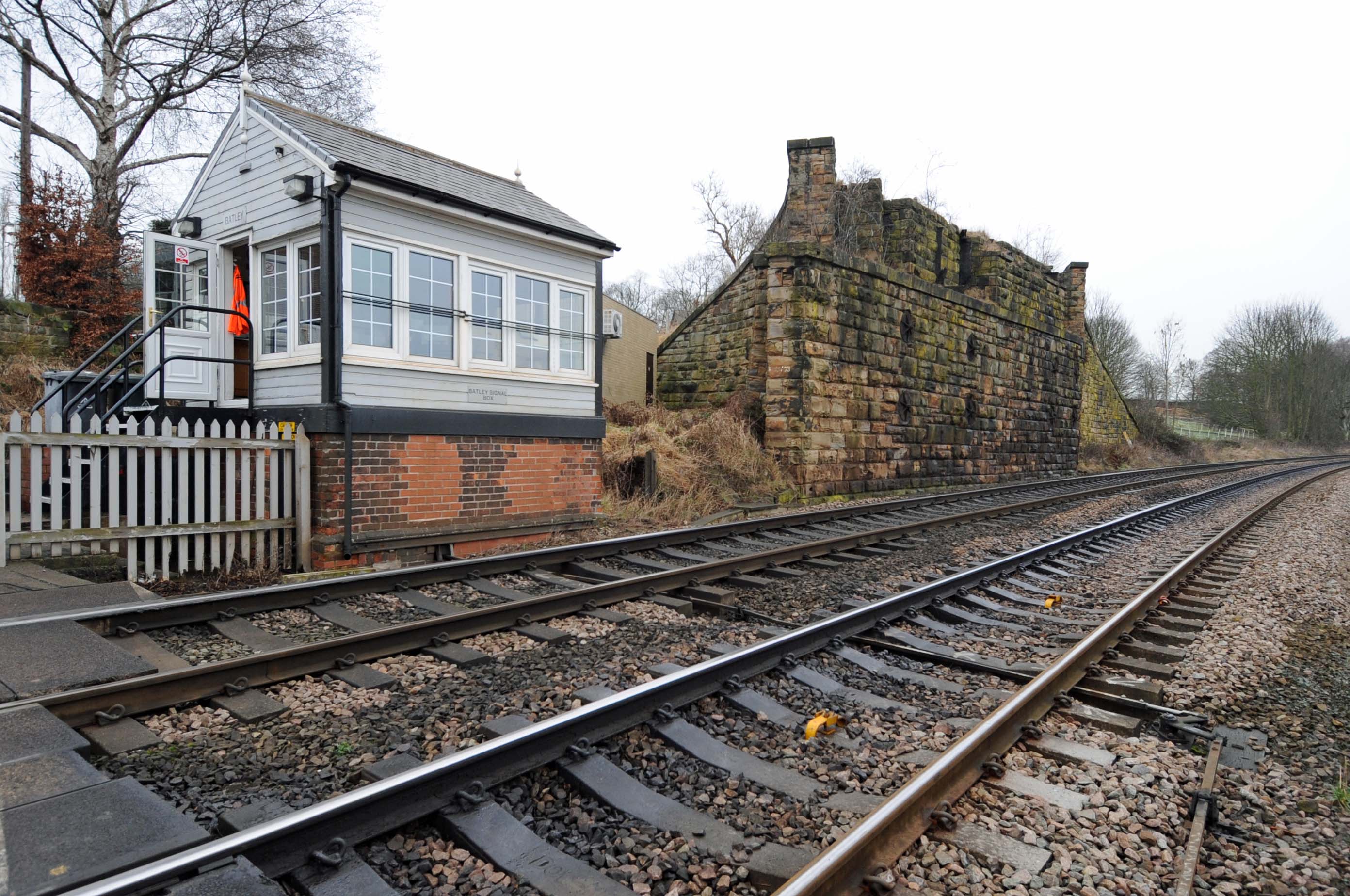
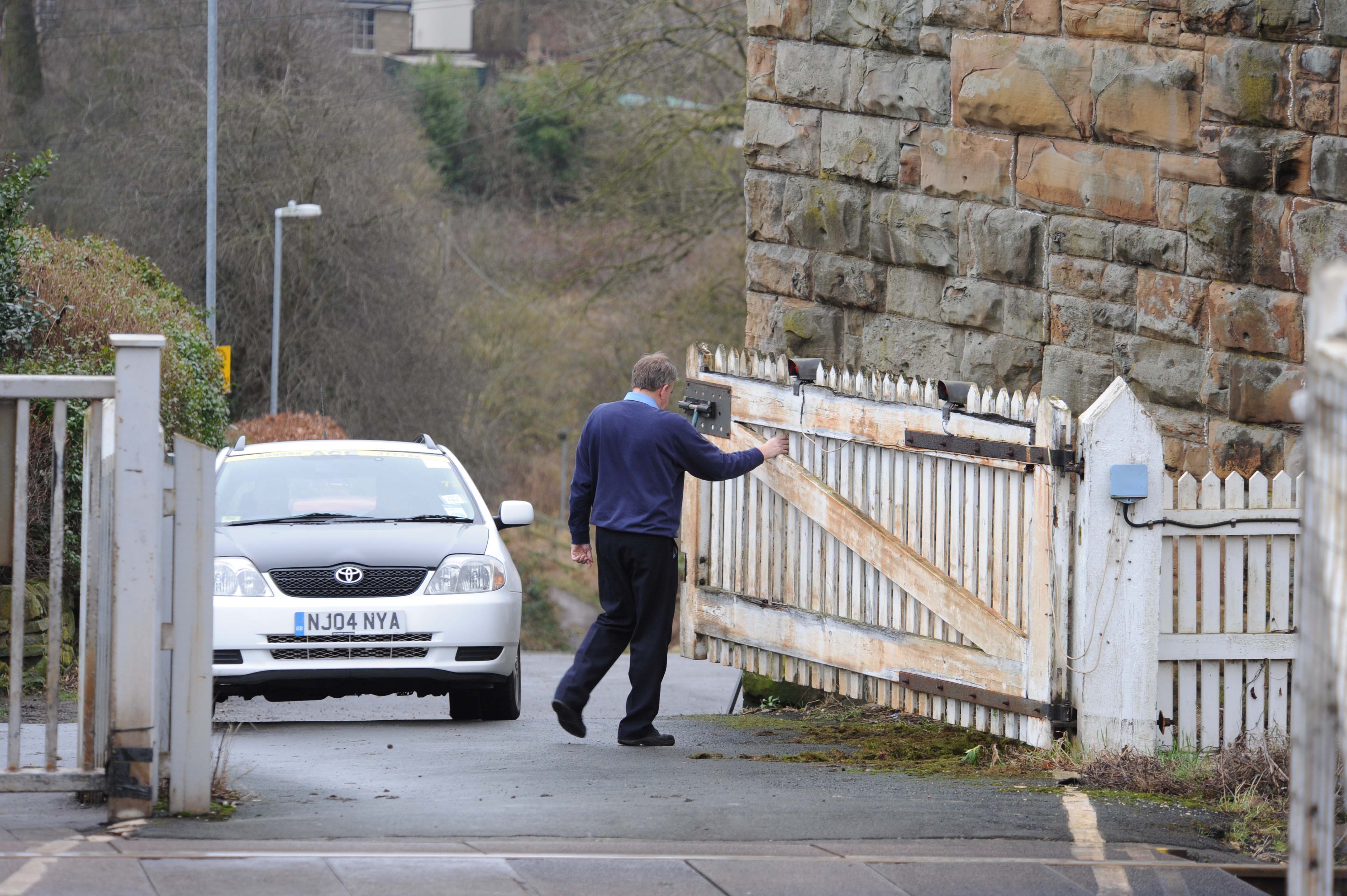
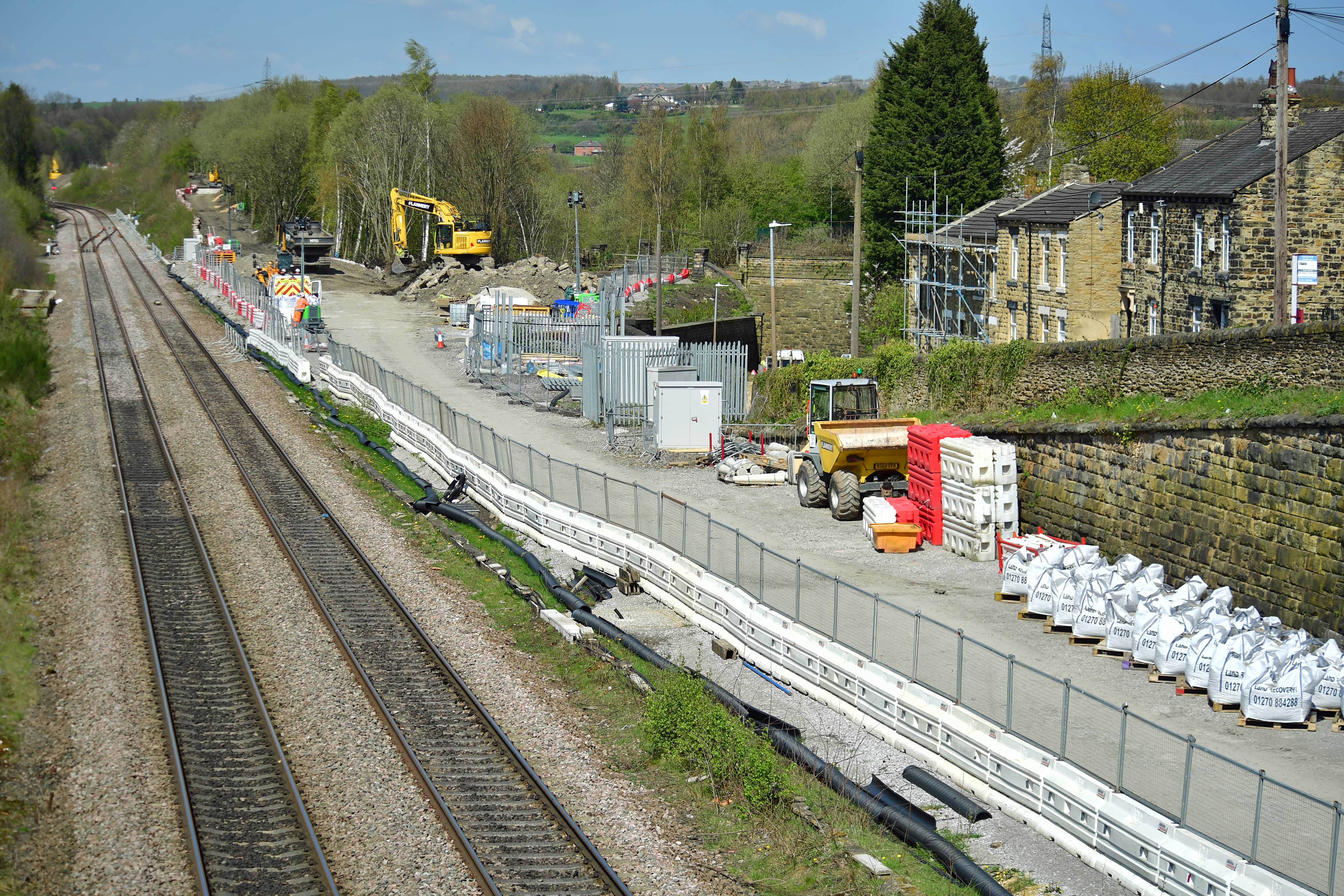
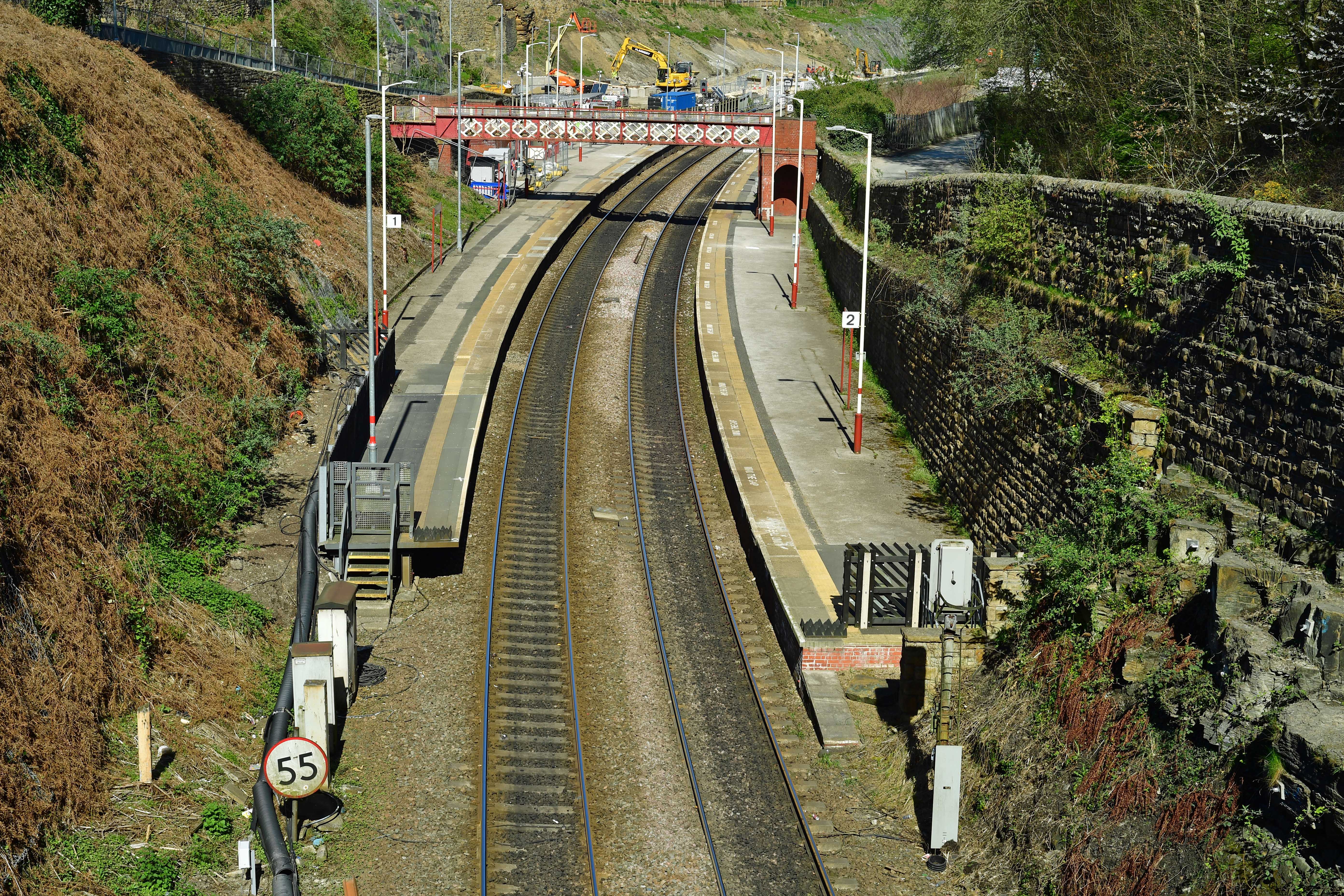
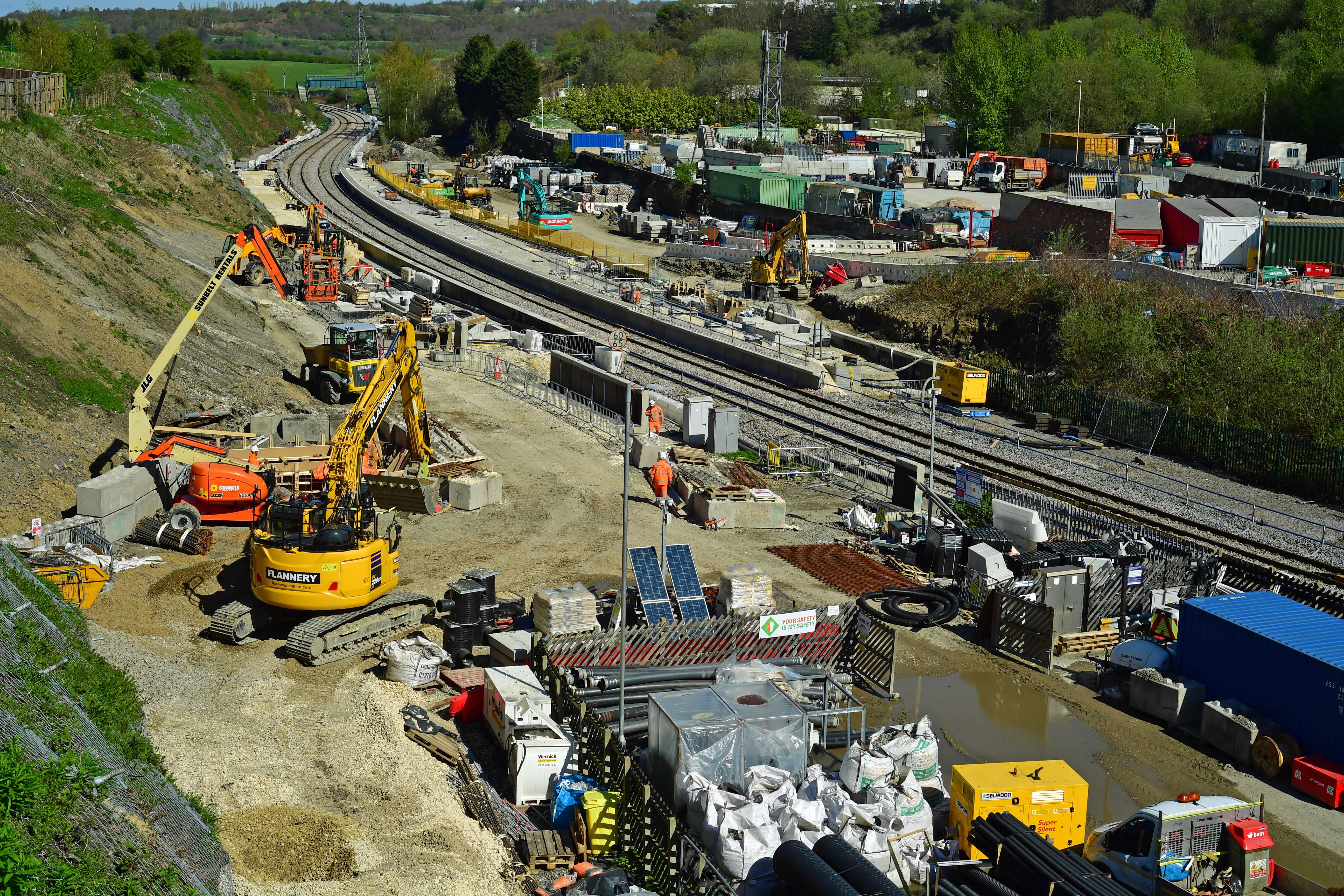
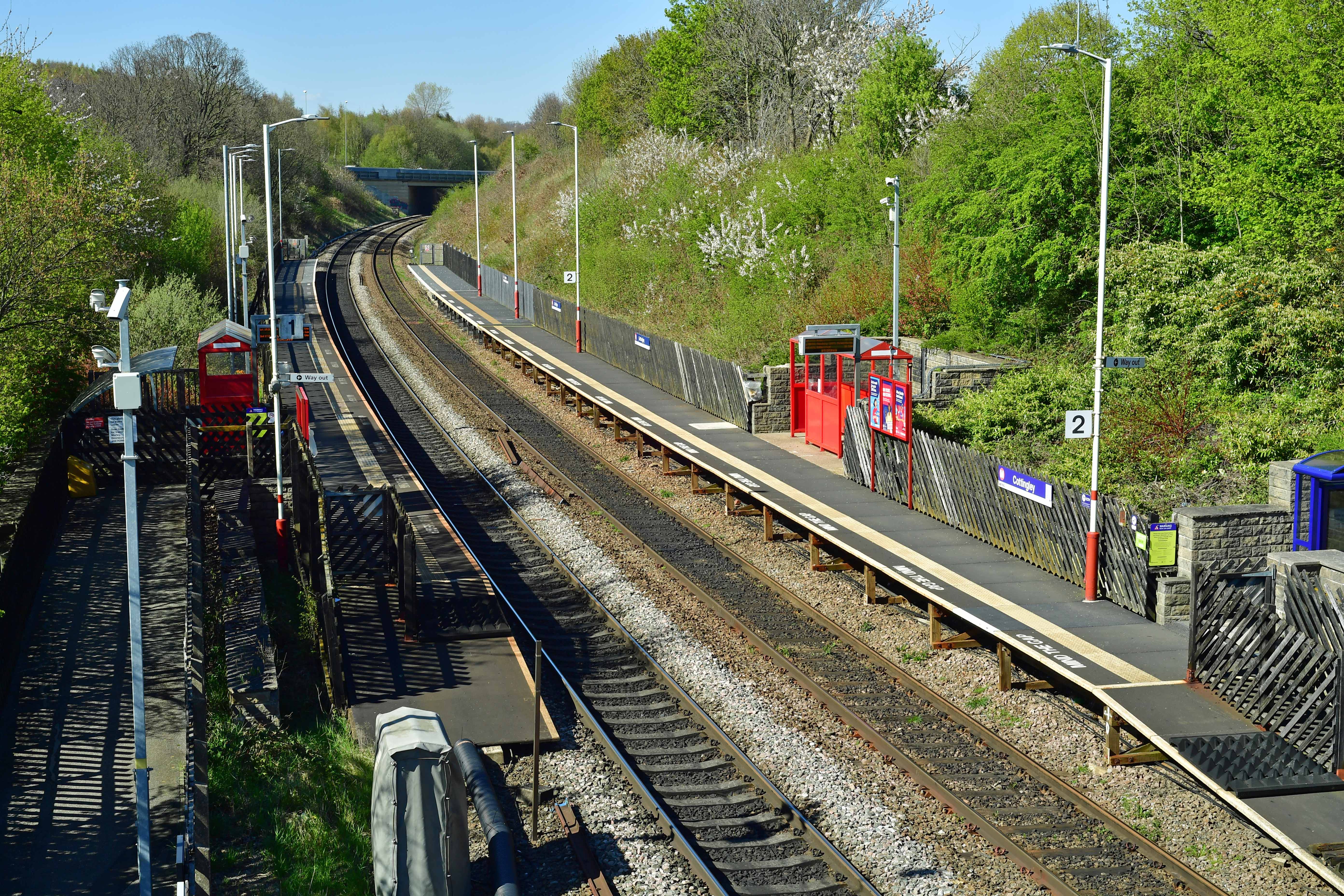
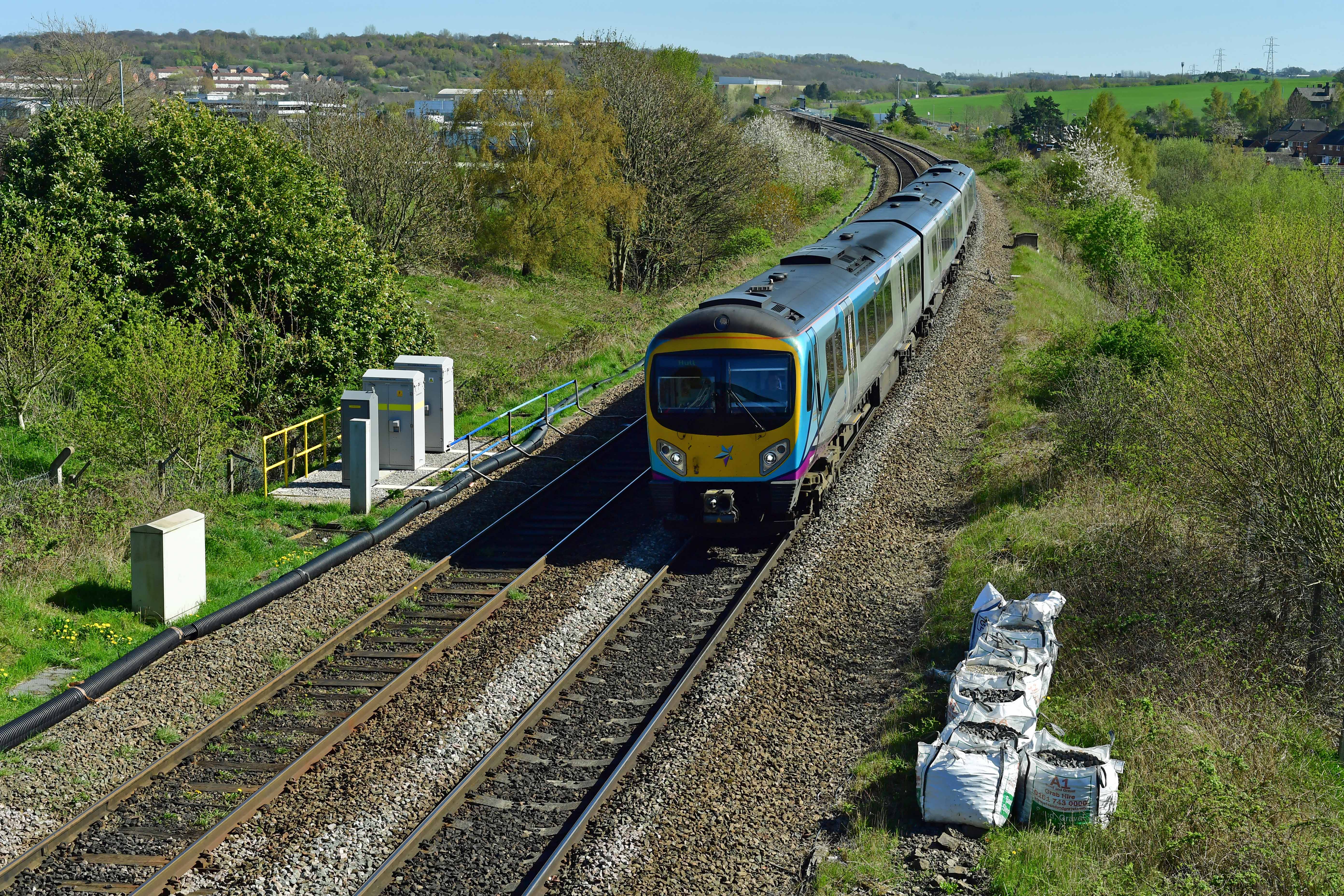
Yesterday I ventured out to an area I’d not visited since the upgrade began, the line between Batley and Cottingley. Some major work’s happening here in preparation for electrification. On this section it includes the physical relocation of two stations The first is Morley, the second is Cottingley where the new station will be renamed White Rose. Although happening during the TRU work, this replacement station had been planned for some time. Other works include the closure of Lady Anne crossing just outside Batley which involves removing the old Great Northern Railway bridge abutment to create the space to install a large footbridge. This will replace the road/foot crossing. It will also entail the closure of the last remaining manual signalbox on the route.
Here’s a selection of pictures from my trip.
Class 68 number 68025 ‘Superb’ approaches Batley with 1U52, the 1248 Scarborough to Manchester Piccadilly. It’s passing the newly laid crossing between Up and Down lines installed as part of the TRU upgrade to increase operational flexibility. The yellow digger above the signal is working grading the old GNR embankment at the site of Lady Anne crossing. The haul road on the right is built on the formation of the old GNR Batley branch which went to Birstall and Bradford, crossing over the present line at Lady Anne crossing. A 2009 archive shot showing the Signalbox at Lady Anne Crossing and one of the abutments of the old GNR line. The new footbridge will be built to the left of this picture.Seen from the opposite side of the tracks to the last picture, the signaller opens the gates to let a car across the line. The new footbridge is being built where the old bridge abutment is. Another view of Batley and the TRU work. It’s hard to imagine now but not only was this a four track line, it was also the site of three junctions. Between the yellow digger and the house on the right is the course of the GNR’s Beeston and Batley branch via Tingley. Where you can see the pile of sleepers in the cess on the left hand side of the tracks was the site of the junction for the single track LNWR Birstall branch.
Meanwhile, further up the line at Morley…
Here’s the existing station at Morley seen from above the tunnel mouth which literally on the stations doorstep. In the background you can see the site of the new station which is only a few hundred metres away. Work on the new station’s progressing well. As you can see, it’s a little more breathing room than the old station, but those reverse curves…Here’s Cottingley station which only opened in 1988. Passenger numbers have always been low, apparently, which is why its been proposed for replacement for quite some time. Seen from the footbridge at Cottingly station (behind the camera) TPE’s 185127 speeds past whilst working 1K23, the 1354 Liverpool Lime Street to Hull. In the background, just over the flowering Hawthorns you can see the buildings of the new ‘White Rose’ station.
I’ll be making regular visits to TRU locations over the next few months, showing the before/after as the route’s transformed.
I’ve a small favour to ask… If you enjoy reading this or any of the other blogs I’ve written, please click on an advert or two. You don’t have to buy anything you don’t want to of course – although if you did find something that tickled your fancy that would be fab! – but the revenue from them helps me to cover some of the cost of maintaining this site (which isn’t cheap and comes out of my own pocket). Remember, 99% of the pictures used in my blogs can be purchased as prints from my other website – https://paulbigland.zenfolio.com/
Yesterday HS2 Ltd announced that they’d launched yet another Tunnel Boring Machine (TBM) but this one had a couple of important differences to the five that are already in service.
Launched from the Atlas Rd construction site in North London by the Skanska Costain STRABAG joint venture (SCS JV), ‘Lydia’ is an upcycled TBM formerly known as ‘Ellie’. The TBM dug two sections of the Crossrail tunnels in the Capital – from Limmo Peninsula in Canning Town to Royal Victoria Dock, and between Pudding Mill Lane and Stepney Green completing a total of 2.23 miles.
Made redundant from that task the Shield head and cutting wheel along with other components were refurbished by the builder Herrenknecht. The 847m long TBM will now spend the next six months driving an 853 metre long tunnel to the Old Oak Common construction site. The TBM has an 6.2 metre internal diameter. Starting drilling at a depth of 5 metres below ground it will reach a maximum depth of 20 metres. 4,264 concrete segments will be used, forming 533 tunnel rings. The segments, each weighing over 3 tonnes, have been produced by Pacadar in Kent.
The new service tunnel will have two uses. The first is to be fitted with a conveyor belt that will connect with an existing conveyor at the Atlas Rd site to transport spoil to the HS2 London Logistics Hub at Willesden Euro Terminal where the spoil will be moved onwards to sites in Kent, Cambridgeshire (Foxton) and Rugby by rail. The second use will be to transport 8,010 tunnel segment rings to construct the HS2 tunnels from Old Oak Common to Euston. These segment rings are being manufactured by STRABAG in Hartlepool. Both sets of segments will be moved to sites by rail. HS2 Ltd estimate that the new service tunnel will save 70,000 lorry journeys being added to London’s roads. It’s an impressive commitment to making HS2 construction as green as possible, using rail and on-site services as much as possible to minimise disruption elsewhere.
The significance of this is that construction of the HS2 tunnels from Old Oak Common to Euston is still proceeding as planned – despite the delay to building Euston station itself. Let’s face it, if you’re not going to build Euston, you’re not going to need to build the expensive Euston tunnels!
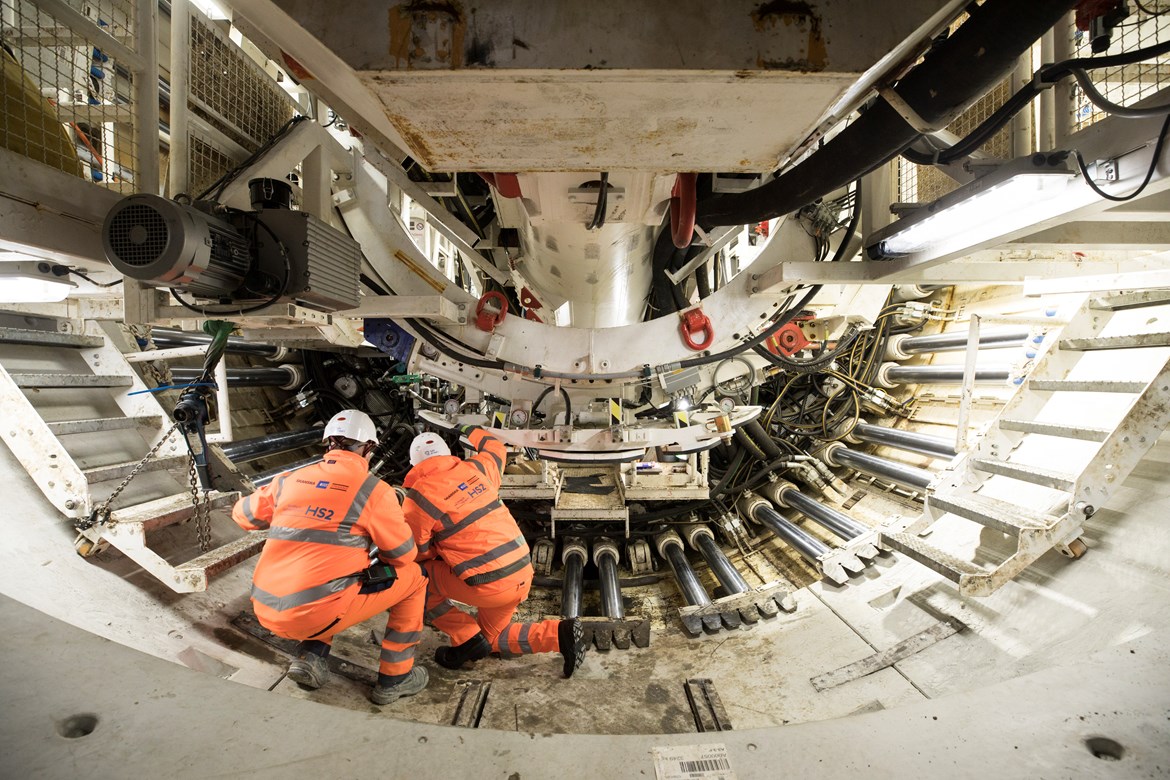
Workers checking over ‘Lydia’ before yesterdays launch (pic c/o HS2 Ltd).
I’ve a small favour to ask… If you enjoy reading this or any of the other blogs I’ve written, please click on an advert or two. You don’t have to buy anything you don’t want to of course – although if you did find something that tickled your fancy that would be fab! – but the revenue from them helps me to cover some of the cost of maintaining this site (which isn’t cheap and comes out of my own pocket). Remember, 99% of the pictures used in my blogs can be purchased as prints from my other website – https://paulbigland.zenfolio.com/
On Friday I paid a visit to Stalybridge station to see the result of the engineering blockade that had transformed the stations Western junction. This is been totally remodelled and resignalled. The resignalling has extended to the Eastern side of the station although the track layout here remains unchanged. As well as track and signals a large number of overhead electrification masts and portals have appeared, although there’s still many more to be installed at further weekend engineering possessions before the wires can be extended.
Here’s a selection of pictures showing how the place looks now.
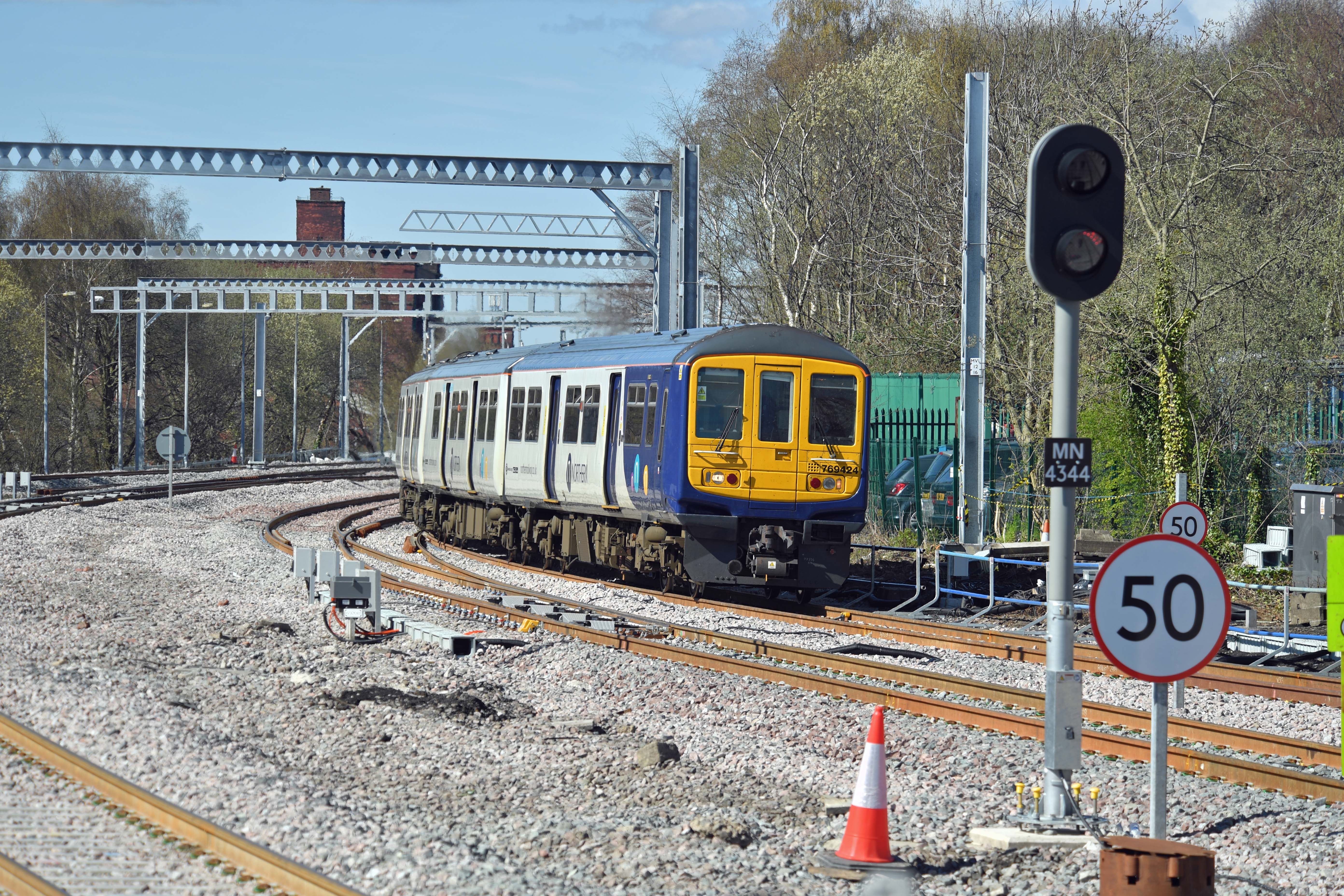
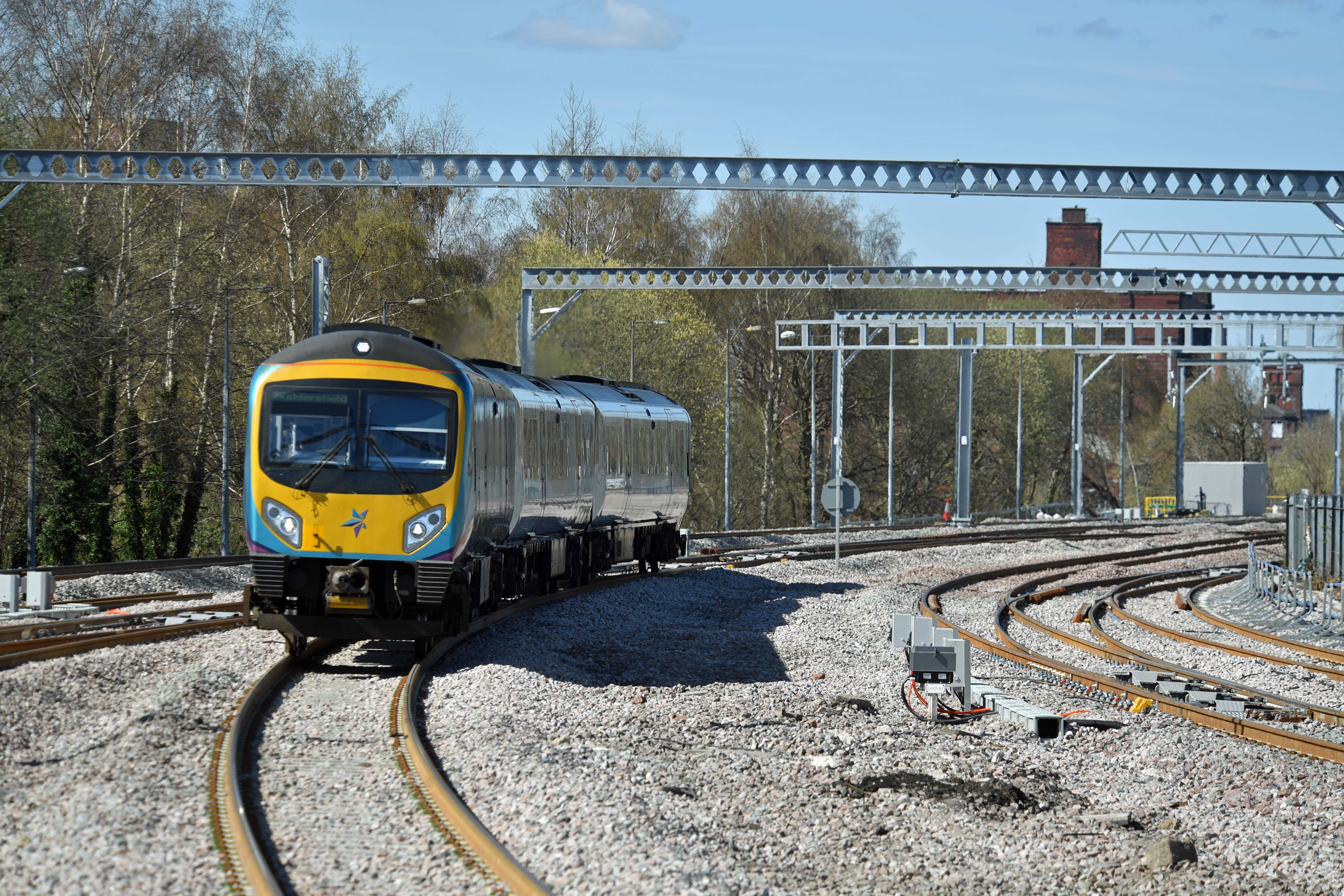
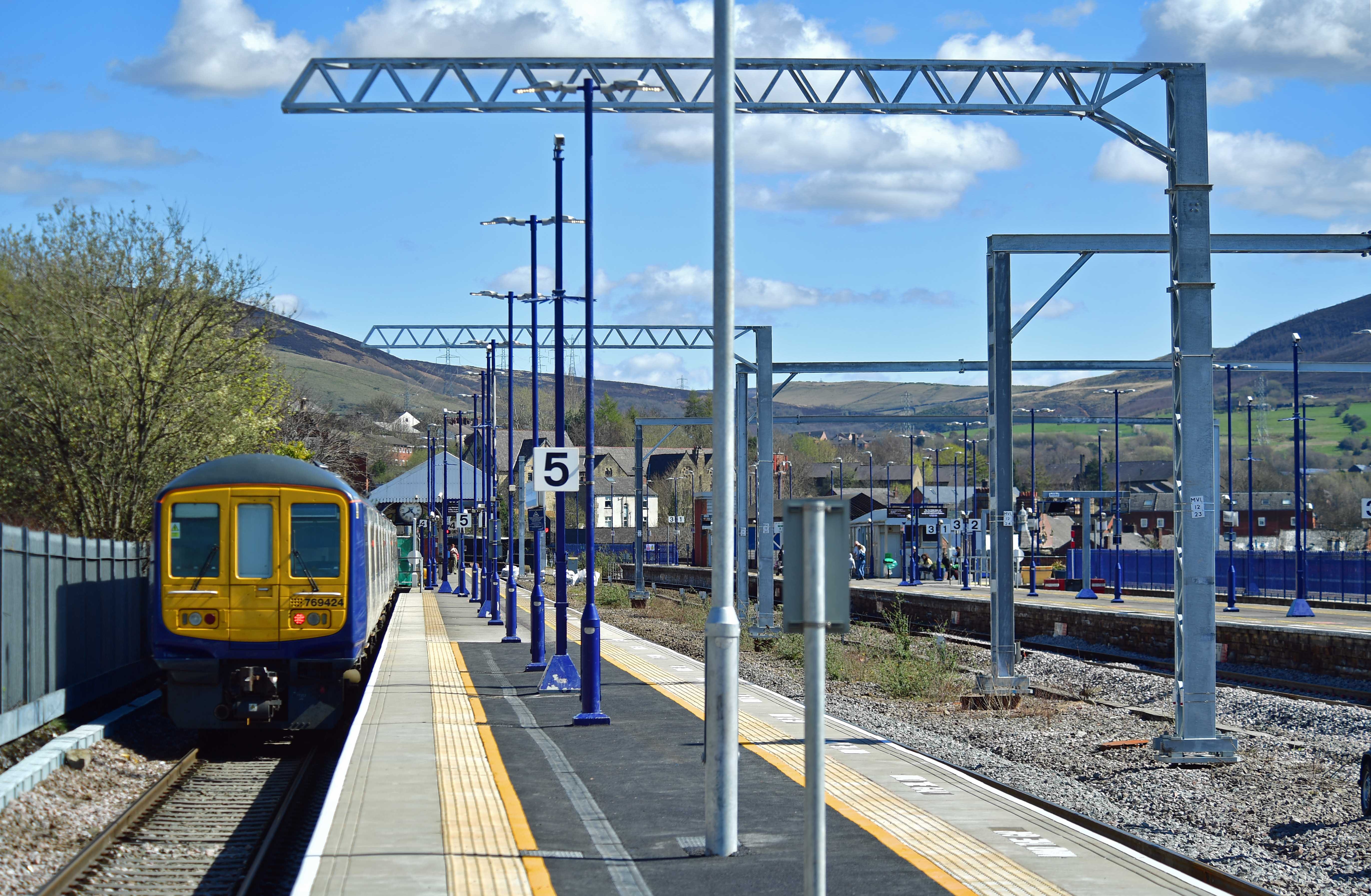
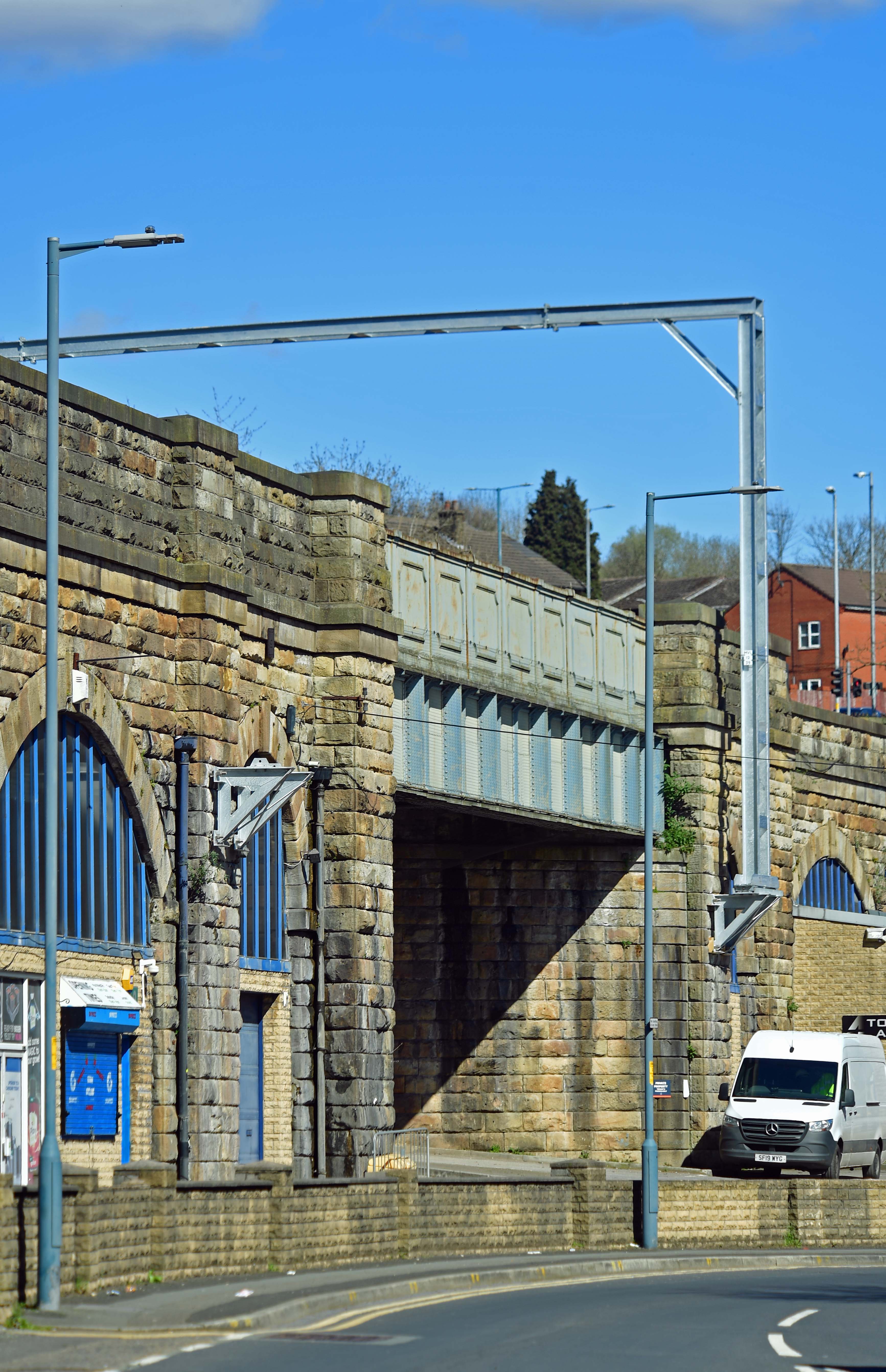
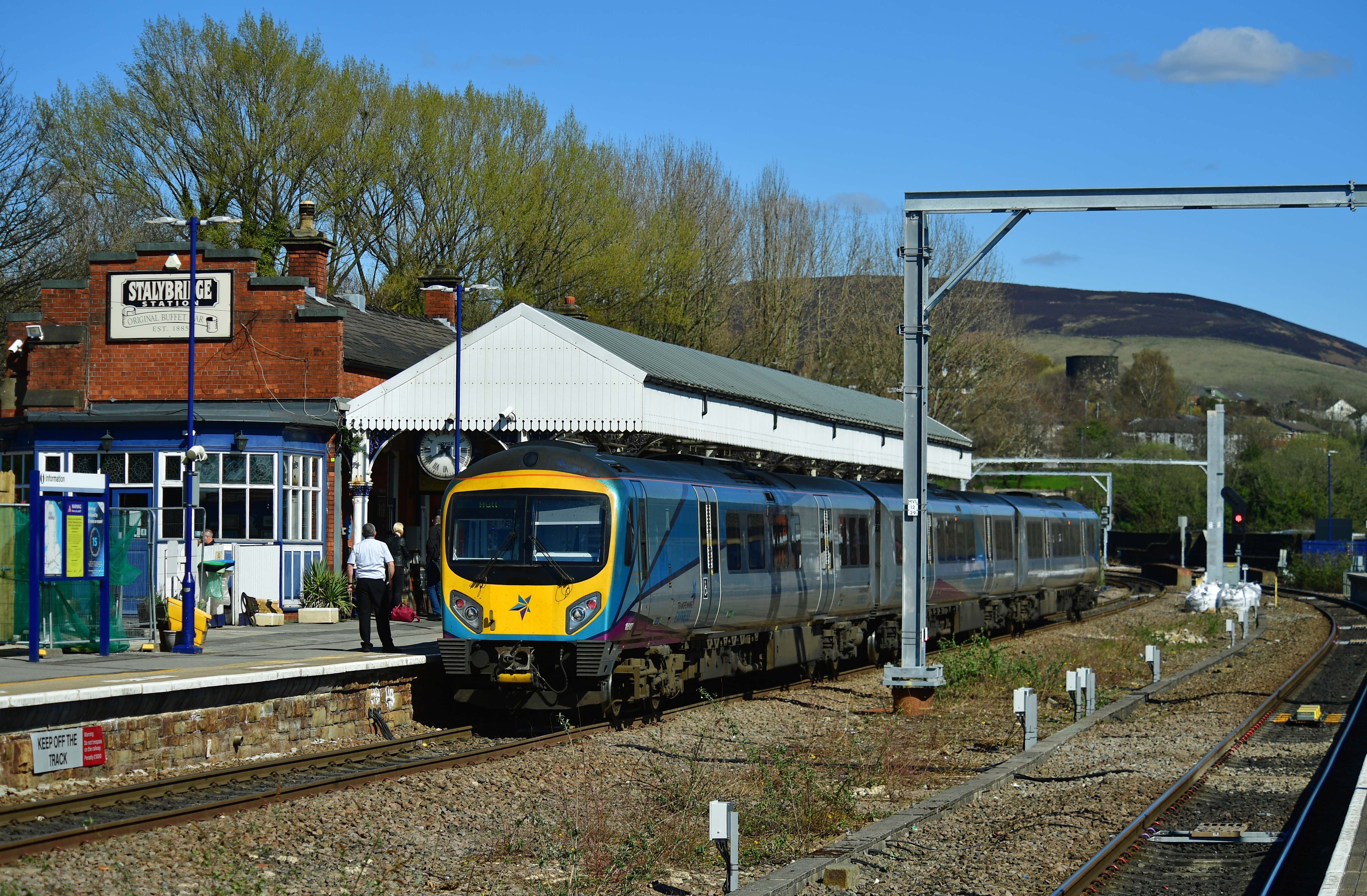
Looking West to Stalybridge Junction from the end of platform 3. This junction was remodelled as recently as 2011. This time some of the switches have been removed and replaced with a flat crossing (just out of sight around the curve). The formations been expanded by the removal of the old ATO oil siding in the far left, which has allowed tracks to be slewed. The remodelling appears to remove conflicts and certainly allows for faster line speeds across the junction. Bi-mode 769424 pulls into the bay platform 5 with a Southport-Stalybridge service. 185151 approaches platform 3 working 2E73, the 1158 Manchester Piccadilly to Huddersfield.185151 sits waiting time in platform 3. The newly installed portals are very much in evidence. 802208 approaches from the East whilst working 9M10, the 1006 Newcastle to Liverpool Lime Street. The new portals have usurped the signal gantry that was installed (at great expense) at this location in 2012. And there it was – gone! The substantial signal gantry that was installed as part of the original Trans-Pennine electrification scheme but (apparently) was now in the way of the revised scheme for some reason. It’s no wonder many rail improvements cost so much money when plans constantly change and investment like this is wasted. It’s seen here in 2016.New signalling and OLE masts that have been installed at the East end of the station between platforms 3 and 4.Looking East along platforms 5 and 4 with new masts and portals in place where the former through tracks were situated. Looking along the railway viaducts by Waterloo Road. The bracket where the 2012 signal gantry was fixed to the side of the piers remains. 185107 calls at platform 4 outside the famous buffet bar whilst working 1K23, the 1354 Liverpool Lime Street to Hull.
I’ve a small favour to ask… If you enjoy reading this or any of the other blogs I’ve written, please click on an advert or two. You don’t have to buy anything you don’t want to of course – although if you did find something that tickled your fancy that would be fab! – but the revenue from them helps me to cover some of the cost of maintaining this site (which isn’t cheap and comes out of my own pocket). Remember, 99% of the pictures used in my blogs can be purchased as prints from my other website – https://paulbigland.zenfolio.com/
Another silly o’ clock start. I’ve been up for an hour getting ready to head South to meet up with my ‘partner in crime’ for a couple of days exploring HS2 railway construction and mitigation sites, but first I’ve got to get to Banbury. The weather’s looking bleak. The rain’s already started here in the Calder Valley so Dawn’s being a star and giving me a lift to the station so that I don’t get a soaking from the off! I’ll be blogging throughout the day, so feel free to keep popping back to see what I get up to…
07:30.
Thanks to Dee I arrived at Halifax station dry and in plenty of time. Having bid Dawn au revoir I caught the 07:14 Halifax-Hull, an earlier train than planned which gives me an extra 6 minutes in the bank. As it’s starting from Halifax it’s also far less crowded, despite being worked by a 2-car Class 158 today. No doubt that situation will change once we’ve reached Bradford and beyond.
Even so, I’ve bagged a table seat, plugged my phone into the USB socket to keep it charged and begun to catch up with the waking world.
Almost as soon as we left the cheerful Guard conducted a ticket check. With the train being quiet we swapped cheeky banter as I asked when the trolley service came round!
07:40.
As I predicted, the train filled up at Bradford Interchange. My bay and the opposite table are now full. There’s a young businessman of Indian extraction sat opposite whilst the rest of the seats have been taken by a mother and daughters – also of Asian extraction but further South and East. I haven’t heard them speak so I can’t tell where they hail from originally.
Now we’re heading towards Leeds on a miserable day weather-wise. The sky’s a monotone grey, producing the light drizzle that soon has you soaked as it has the ability to permeate almost any clothing.
08:25.
My time at Leeds was brief, just 15 minutes. I hardly had time to get the camera out but then there wasn’t much of interest to photograph on such a grey day. Making my way to platform 15 I waited for Cross-Country’s 08:11 to Bristol Temple Meads which arrived spot on time. Consisting of two four-car Class 220s the service was reasonably busy. The was plenty of custom for it at Leeds, although several were only going as far as our next stop at Wakefield Westgate where we exchanged them for more long-distance travellers. The cross-country network is all things to all people. Some use it for short hops as the timings are convenient whilst others appreciate its reach and use it for far longer journeys – students and senior travellers especially.
Cross-country may not be the biggest operator but it’s certainly the most far-reaching. Although the network’s been cut back from its height its tendrils radiate from Birmingham afar as Penzance and Aberdeen. What a shame the dept of transport have no idea what to do with it other than cut its train-fleet by forcibly retiring their high-speed train fleet with no plan for replacement. Their capacity is desperately needed in the summer, especially now passenger numbers have bounced back and the state of the economy’s forcing more people to holiday in the UK.
11:00.
My trip to Birmingham was uneventful, although it gave great views of the HS2 construction sites at Washwood Heath and Curzon St, where the pillars for the elevated station deck are springing up like mushrooms. I filmed this as we passed.
Building HS2’s Curzon St station.
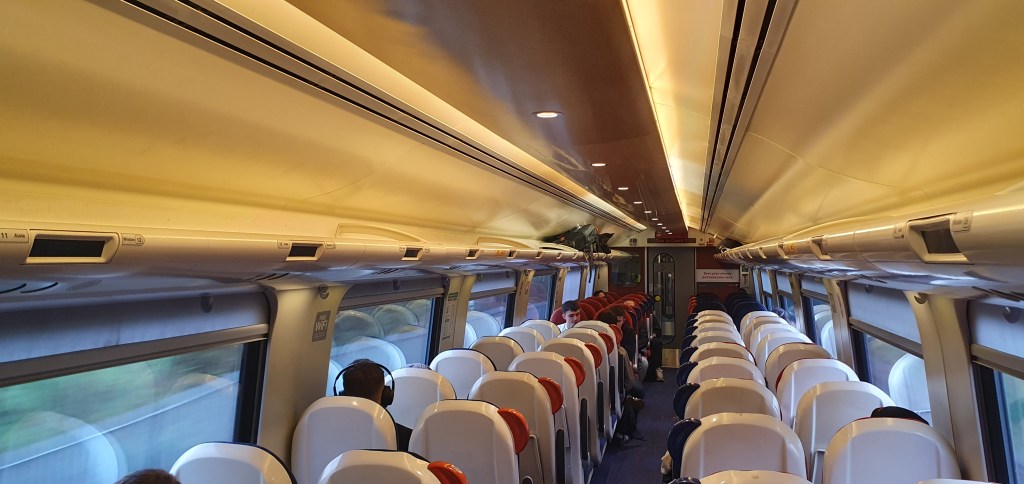
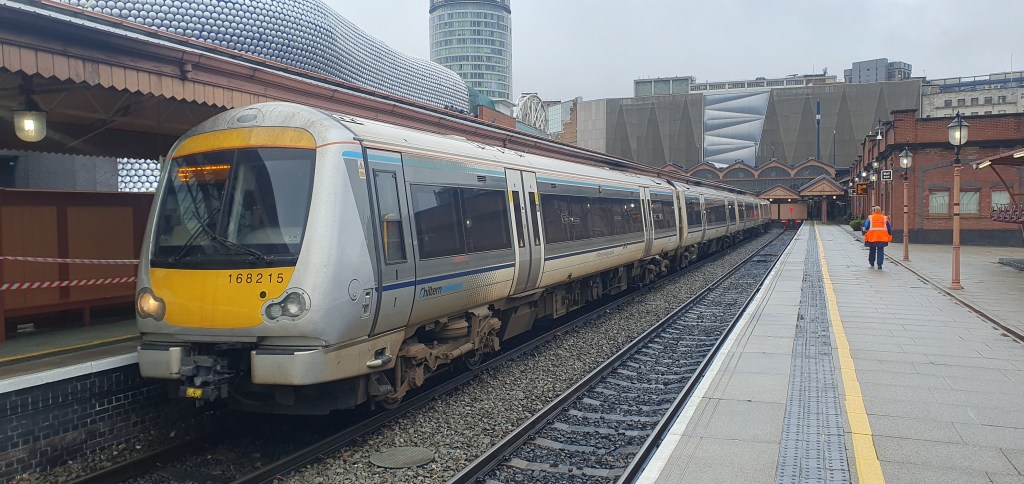
Birmingham’s wet. Very wet, so I was glad to seek shelter on Chiltern Railways 10:55 from Moor St which will carry me to my rondezvous in Banbury.
In a sign of the times I popped into a shop in New St which sells baguettes. It was always a busy place. For years the filled baguettes cost 99p and made a cheap and tasty meal. Then, post Covid they increased to £1.20. Today they’re £2.20. It may have been the time of day but the shelves were full but the shop empty. I was the only customer.
20:15
Apologies for the gap in blogging but we’ve been busy. I’m about to get something to eat then I’ll come back and fill in the gaps. In the meantime, here’s a few pictures to tease..
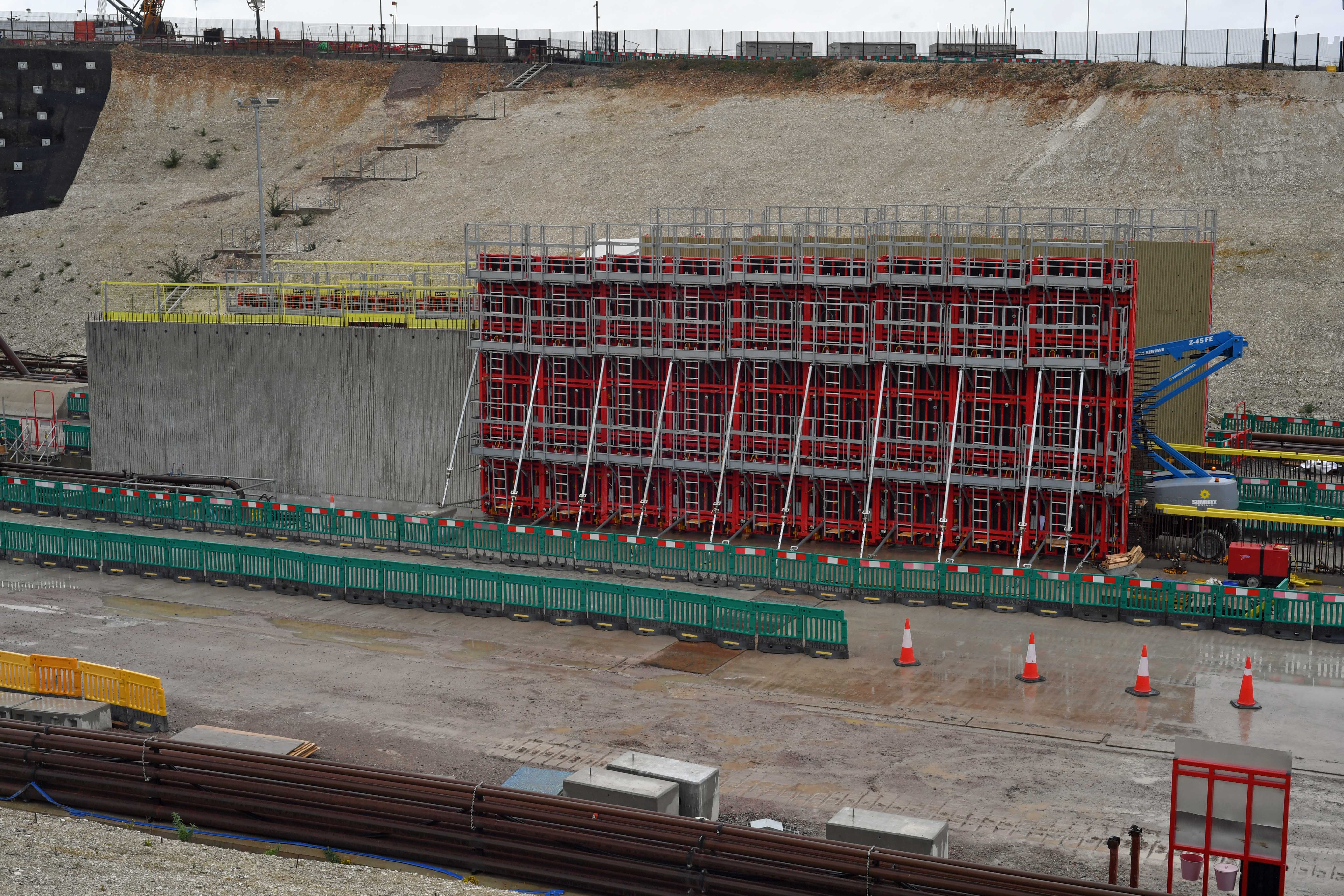
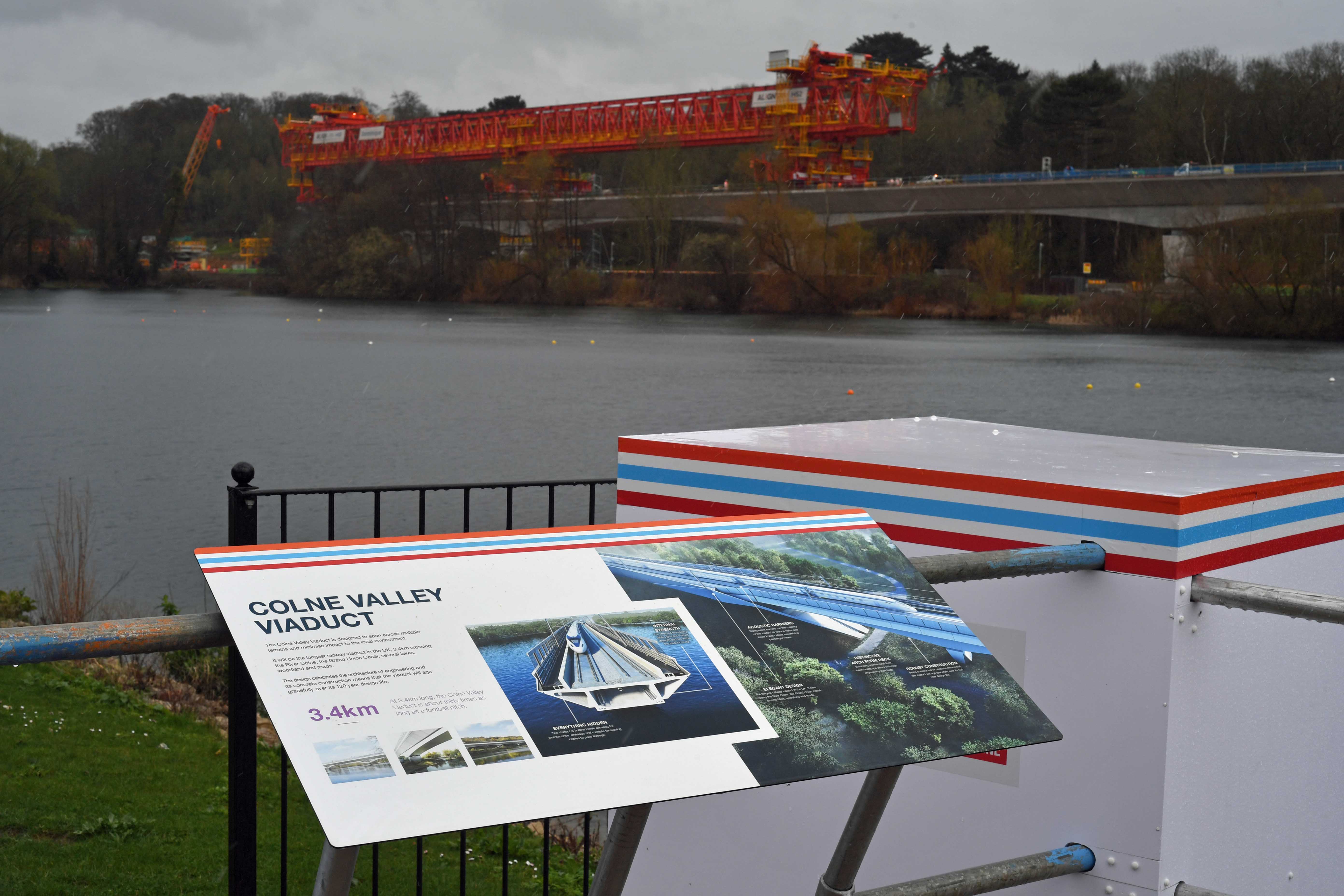
We were here at the Chiltern tunnels South portal where one of the ‘porous portals’ is being constructed now the area is cleared and the TBMs are over half way to the North portal. This one is over the London-bound track. Progress on the Colne Valley viaduct is impressive. It’s really come on since my last visit. Here’s a view of the launching girder ‘Dominique’ seen from the Denham waterski club site. One of the thousands of precast bridge segments that have been made on site at West Hyde is moved along the completed bridge to the launching girder ‘Dominique’ where it will be lifted and then turned before being dropped into position. The segments are made on site then moved from the factory along an internal haul road and onto the viaduct.
23:25.
Right, time for bed. It’s been a busy day although the latter part was foiled by the weather when the skies opened and stayed open, making photography next to impossible. Even so, we reconnoitered a few more HS2 construction sites which will allow us to pop back tomorrow when the weather’s improved before moving on to look at others.
I’ve a small favour to ask… If you enjoy reading this or any of the other blogs I’ve written, please click on an advert or two. You don’t have to buy anything you don’t want to of course – although if you did find something that tickled your fancy that would be fab! – but the revenue from them helps me to cover some of the cost of maintaining this site (which isn’t cheap and comes out of my own pocket). Remember, 99% of the pictures used in my blogs can be purchased as prints from my other website – https://paulbigland.zenfolio.com/
I’ve not blogged about these people for quite some time for the simple reason there’s been nothing of interest to blog about. But I wanted to do a round-up and potted history as I still get asked where they went and my last blog on the subject is way out of date. So, what did happen to them?
The short answer is, in 2022 their campaign collapsed completely with the demise of the Extinction Rebellion inspired ‘HS2Rebellion’ and the last remaining protest camp. Politically, their campaign had given up the ghost several years before.
This was always going to happen. Support had been ebbing away for years as it had become clear to all but the most blinkered that pretending HS2 could be stopped when construction was well underway was a fools errand. The protest camps were always a sideshow. They were an attempt to attract publicity and raise funds but they never stood a chance of success as they were poorly supported, many were in the wrong place and the people in them were such a rag-bag of conflicting ideologies and interests. A mixture of Nimbys, part-timers who just turned up to party plus a tiny hard-core of ‘professional’ protesters who drifted from one lost cause to another. The camps also attracted their fair share of ne’er-do-wells and damaged people, hence some camps getting reputations for thievery, sexual harassment and violence. Some young idealists attracted to the cause through social media soon had their dreams shattered by the reality of life in the camps and never returned. Plus, wealthy Chiltern Nimbys and a rag-bag of anarchists and left-wing dreamers (and a few thieves) were always going to be uneasy bedfellows – as it proved. Many opponents of HS2 in the Chilterns weren’t too sad to see the back of the camps.
The kamikaze tactics of people in the camps also limited their effectiveness as once people were arrested they had bail conditions imposed which kept them away from HS2 sites. Other had injunctions taken out against them which kept them away from places like the first protest camp at Harvil Rd near London. Support also waned when the camps nearest to London were evicted as that’s where the biggest pool of weekenders and party people came from. The final camp was in rural Staffordshire, far away from the Nimby heartlands of the Chilterns and London, plus local support was lukewarm to say the least. Money began to dry up too. In the past people had donated 10s of 1000s via various crowdfunders but these became mired in controversy as no-one ever knew where the money actually went. This led to some very public spats and fallings out which I’ve documented in the past.
The final nails in the coffin were the eviction of the ‘Bluebell’ camp in Staffordshire which fell extremely quickly. Three activists retreated into a tunnel that had been dug underneath the camp and stayed their for 47 days in an attempt to attract publicity, but they received very little. No-one was really interested in three people in a hole in the ground that was so far away from the Londoncentric media. Euston Sq gardens it wasn’t!
Meanwhile, events in the High Court in Birmingham were about to hammer home the final nail…
HS2 Ltd had applied to the High Court for a route-wide injunction that would ban any further disruptive protests or trespass on HS2 land. Over the years HS2 security and bailiffs had amassed a huge amount of evidence showing the dangerous, disruptive and violent nature of the protesters and this evidence was submitted to the Judge. Ironically, evidence was also provided by the protesters themselves through some of the video recording and livestreams they’d stuck on social media in an attempt to drum up support and funds. This backfired spectacularly in court! The old adage about ‘give ’em enough rope’ couldn’t have been more apt! There are thousands and thousand of pages of court documents, which you can find here.
After months of deliberations, Mr Justice Knowles granted the route-wide injunction on the 20th September 2022.
Contrary to claims from the protesters, the injunction did not make protesting against HS2 ‘illegal’. The injunction’s very specific in its wording about what it covers, which is;
(2) PERSONS UNKNOWN ENTERING OR REMAINING WITHOUT THE CONSENT OF THE CLAIMANTS ON, IN OR UNDER LAND ACQUIRED OR HELD BY THE CLAIMANTS IN CONNECTION WITH THE HIGH SPEED TWO RAILWAY SCHEME SHOWN COLOURED PINK, AND GREEN ON THE HS2 LAND PLANS AT https://www.gov.uk/government/publications/hs2-route-wide-injunction-proceedings (“THE HS2 LAND”) WITH THE EFFECT OF DAMAGING AND/OR DELAYING AND/OR HINDERING THE CLAIMANTS, THEIR AGENTS, SERVANTS, CONTRACTORS, SUBCONTRACTORS, GROUP COMPANIES, LICENSEES, INVITEES AND/OR EMPLOYEES
(3) PERSONS UNKNOWN OBSTRUCTING AND/OR INTERFERING WITH ACCESS TO AND/OR EGRESS FROM THE HS2 LAND IN CONNECTION WITH THE HS2 SCHEME WITH OR WITHOUT VEHICLES, MATERIALS AND EQUIPMENT, WITH THE EFFECT OF DAMAGING AND/OR DELAYING AND/OR HINDERING THE CLAIMANTS, THEIR AGENTS, SERVANTS, CONTRACTORS, SUBCONTRACTORS, GROUP COMPANIES, LICENSEES, INVITEES AND/OR EMPLOYEES WITHOUT THE CONSENT OF THE CLAIMANTS
(4) PERSONS UNKNOWN CUTTING, DAMAGING, MOVING, CLIMBING ON OR OVER, DIGGING BENEATH OR REMOVING ANY ITEMS AFFIXED TO ANY TEMPORARY OR PERMANENT FENCING OR GATES ON OR AT THE PERIMETER OF THE HS2 LAND, OR DAMAGING, APPLYING ANY SUBSTANCE TO OR INTERFERING WITH ANY LOCK OR ANY GATE AT THE PERIMETER OF THE HS2 LAND WITHOUT THE CONSENT OF THE CLAIMANTS
With the injunction in force it was game over for the protesters who’ve never attempted to set up another camp, or break the terms of the injunction. To reinforce the seriousness of their position, a couple of protesters were given jail time for contempt of court. As usual the protesters tried to spin this as being jailed for protesting. It was no such thing, but you flout the authority of the courts at your peril! One of the protesters, Elliott Cuciurean (aka ‘Jellytot) remains behind bars now.
In October 2022 one of the protesters named in the injunction (James Taylor, aka ‘Jimmy Knaggs’) started to raise money for an appeal, but his application was refused on the 9th December 2022. There will be no appeal. In typically underhand fashion, the news of the refusal of leave to appeal has been kept quiet. It’s not mentioned on any of the protest groups Facebook pages. Instead, there’s still a Crowdfunder running to raise money to fund the non-existent appeal – although no-one’s been mug enough to donate for quite some time. Here’s a screenshot from today.
No update since May 2022. No news the appeal was refused but the crowdfunder’s renewed for another 30 days every time it expires. With just 10 days left that means it was last renewed Early January – long after the appeal was refused!. Sounds like a scam to me…
So, it’s game over for the protest camps and the protesters trying to interfere with HS2. Now scattered to the four winds with many of them having simply disappeared, there’s no way back for them. HS2 ‘rebellion’ exists only as a few social media accounts which occasionally recycle the odd newspaper article critical of HS2 or try and raise more money for the lad in prison. No-one’s trying to stop HS2 anymore…
The political campaign died even earlier. Originally, there had been 2 main groups opposing HS2. The High Speed 2 Action Alliance (HS2AA) based in the Chilterns and ‘StopHs2’ based in Kenilworth in Warwickshire. HS2AA gave up in 2016 after getting the Wendover tunnel extension as that was on their doorstep. StopHS2 staggered on until 2020. They were only two people, Joe Rukin in Kenilworth and Penny Gaines in err…Bournemouth! Joe was the main mouthpiece who would do the media interviews where he’d often lie through his teeth – all to no avail! He’s left behind an interesting legacy on Social Media – a trail of lies and half-truths which really haven’t aged well.
During the injunction proceedings Rukin was named as a defendant and was forced to admit that StopHS2 had given up campaigning against HS2 in 2020!
As for the supposed ‘StopHs2 North’, it doesn’t exist. There’s no such organisation. You can’t find any trace of it anywhere. Stop HS2 have even given up posting stuff on their website now. From posting stuff daily they only managed 6 stories last year, the last of which was in June 2022. There’s been nothing in 2023 and I doubt there will be.
Political pressure was the only hope of stopping HS2 but it never stood a chance as it never had any real political support in Parliament, especially in the Lords which has always been very pro HS2. When the Phase 1 HS2 bill passed 2nd reading in 2014 only 41 MPs voted against the bill. More than half of them are no longer MPs!
The Phase 2a Bill (West Midlands to Crewe) passed 2nd reading on the 30th January 2018 with another crushing majority of 295 to 12. Interestingly enough, some of the 41 MPs who voted against Phase 1 voted FOR phase 2a whilst others abstained! I blogged about it at the time here.
Phase 2b (Crewe to Manchester) passed 2nd reading on the 20th June 2022. By this time those voting against had dwindled to just 6 whilst 206 MPs voted for. The 6 were the usual suspects, including Greg Smith the hardline Brexiter from Buckinghamshire and (equally Brexity) Bill Cash. In fact, a Venn diagram of MPs who’re rabid Brexit supporters but who also oppose HS2 would be an almost perfect circle. This would encompass the few former Labour MPs who opposed HS2, like Kate Hoey. Co-incidence? I think not. You can see the malign influence of the Tufton St cabal at work here. After the 2019 election when there was a new intake of MPs noises were made about reforming a Parliamentary group of MPs who opposed HS2 called the HS2 Review Group but it never came to anything.
The problem for these few MPs and the Tufton St cabal is there are no more Parliamentary votes on HS2 for quite some considerable time. Legislation to build HS2 all the way to Manchester has passed. 2nd reading is the only stage that really matters as that establishes the principle of the bill. 3rd reading in the Commons and the process in the Lords can’t change that. By the time the next Hybrid bill appears we’ll have a new Government. Barring a disaster the Tories will be out on their arses and Labour will be in with a huge majority – and Labour are committed to building HS2 in full.
So, there’s really nowhere for the remaining opponents of HS2 to turn. They’re a dead duck politically and the protesters are finished. All that’s left is a dwindling bunch of Nimbys, right-wing libertarians and faux ‘greens’ wasting their time ranting in their social media echo-chamber. No-one sees them as a threat to HS2.
Meanwhile, HS2 construction is speeding up unopposed. Many of the major structures on Phase 1 are already under construction (for example, the Chiltern tunnels are already 50% complete) and work will only ramp up more this year. Civils Work on Phase 2 a to Crewe will be starting shortly whilst the Petitioning Ctte for Phase 2b from Crewe to Manchester will be sitting through 2023. It will be interesting to see how many people actually petition this Ctte as there were always so few StopHS2 ‘action’ groups on this section of the line.
I suspect this will be my final blog on the anti Hs2 campaign as it’s ceased to exist in any meaningful way. Oh, there might be some mad ones to poke fun at sometime during the year, but that’s it. It really is all over now. Most of my time now will be spent reporting on progress building HS2, not on those who so spectacularly failed to stop it!
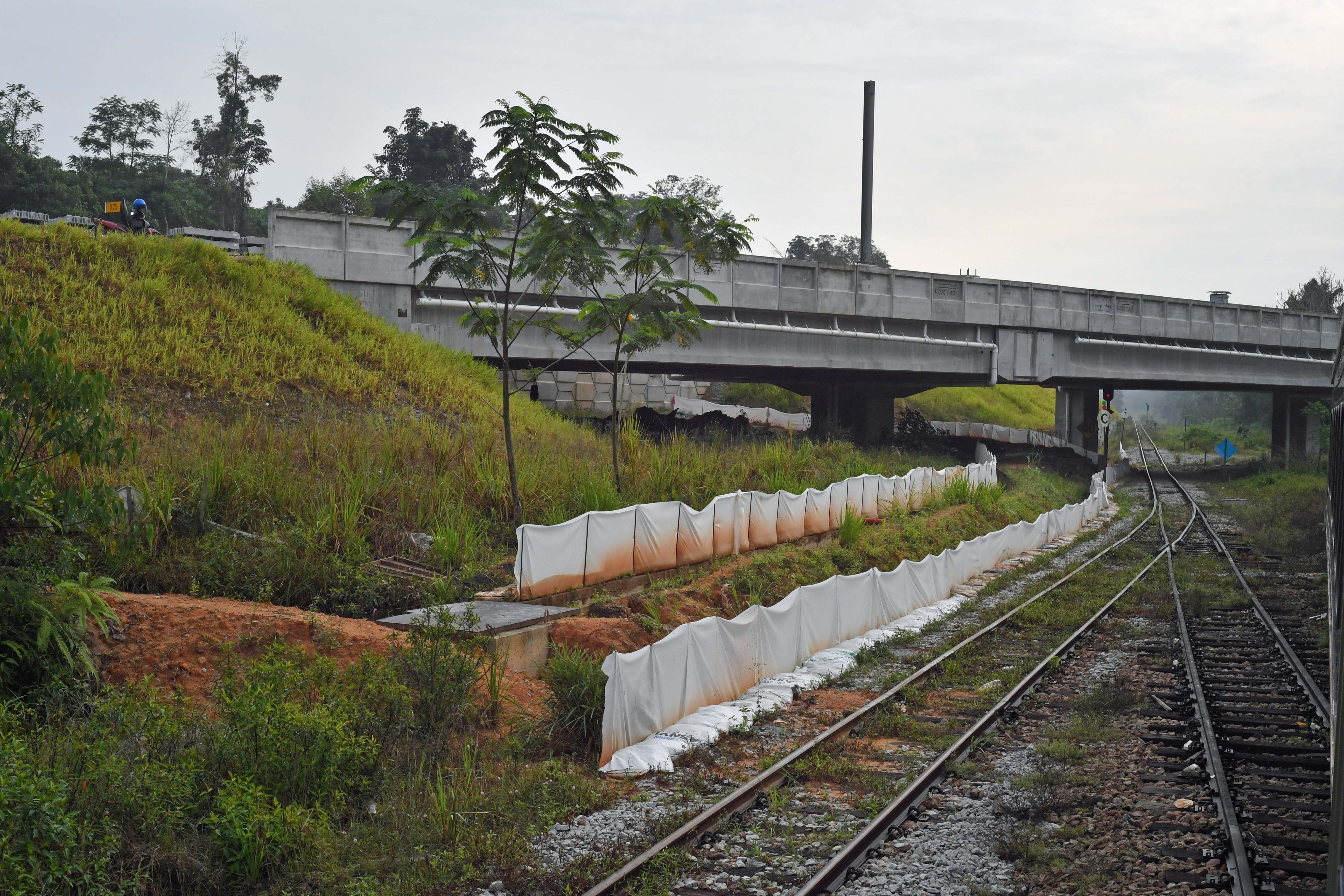
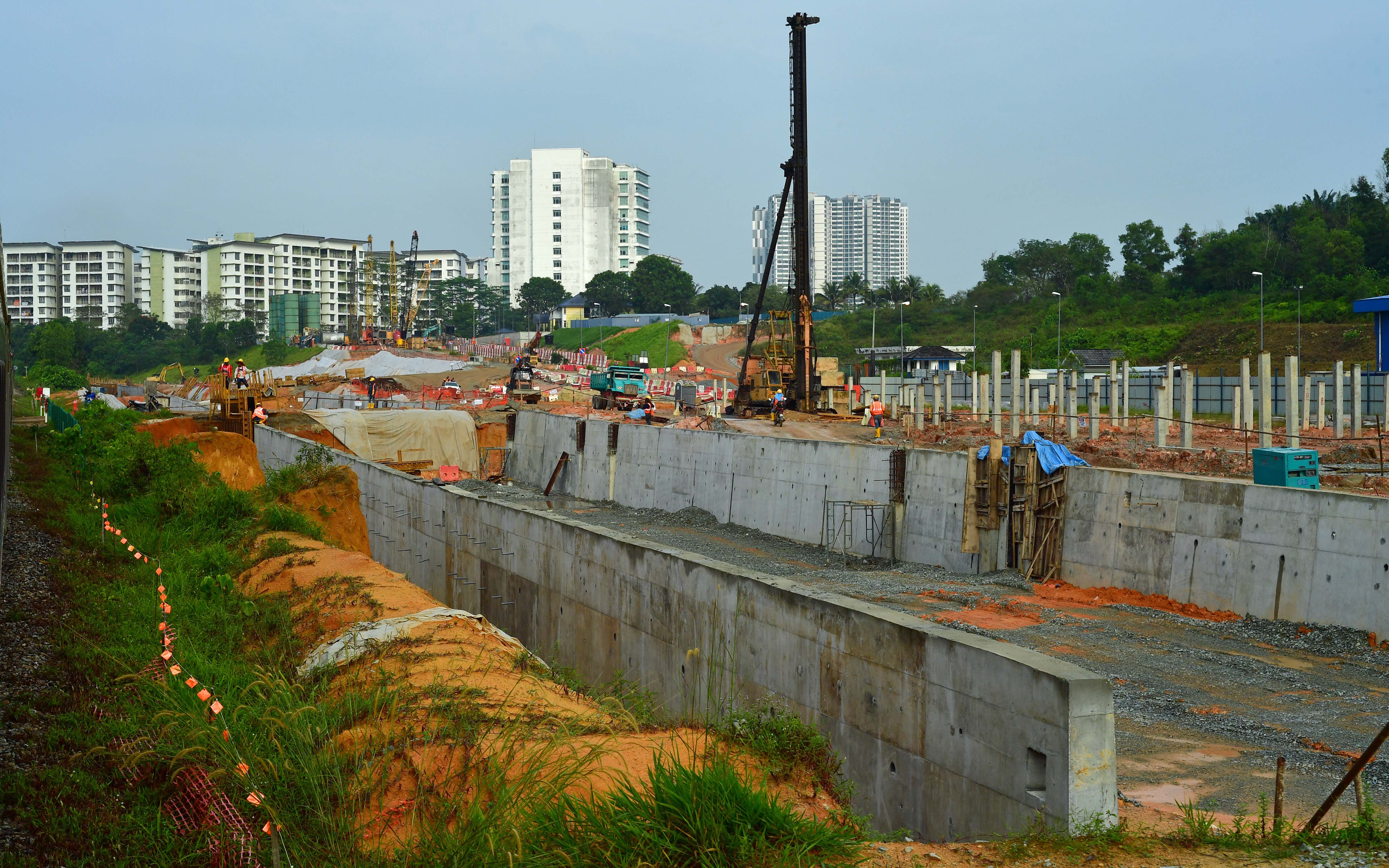
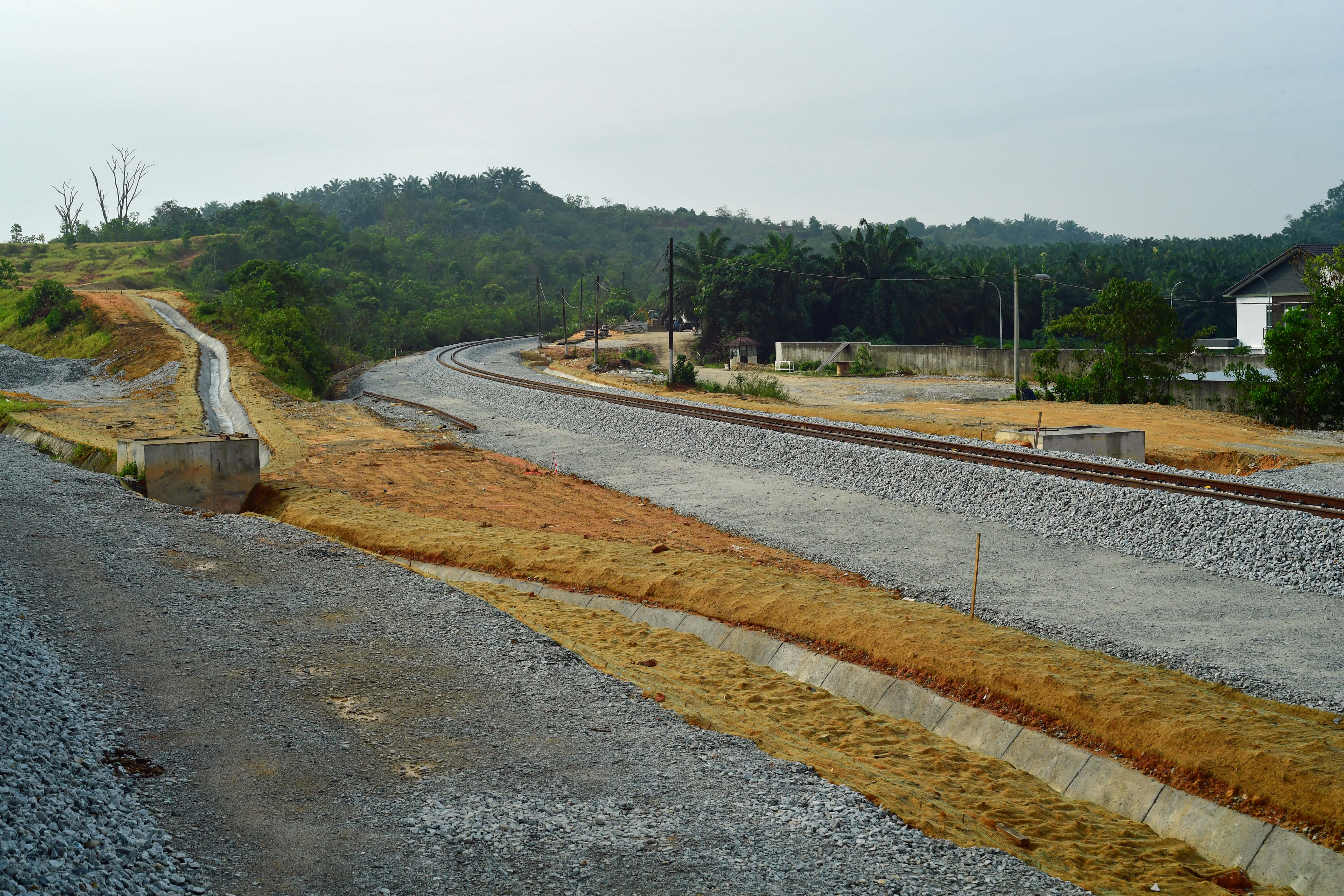
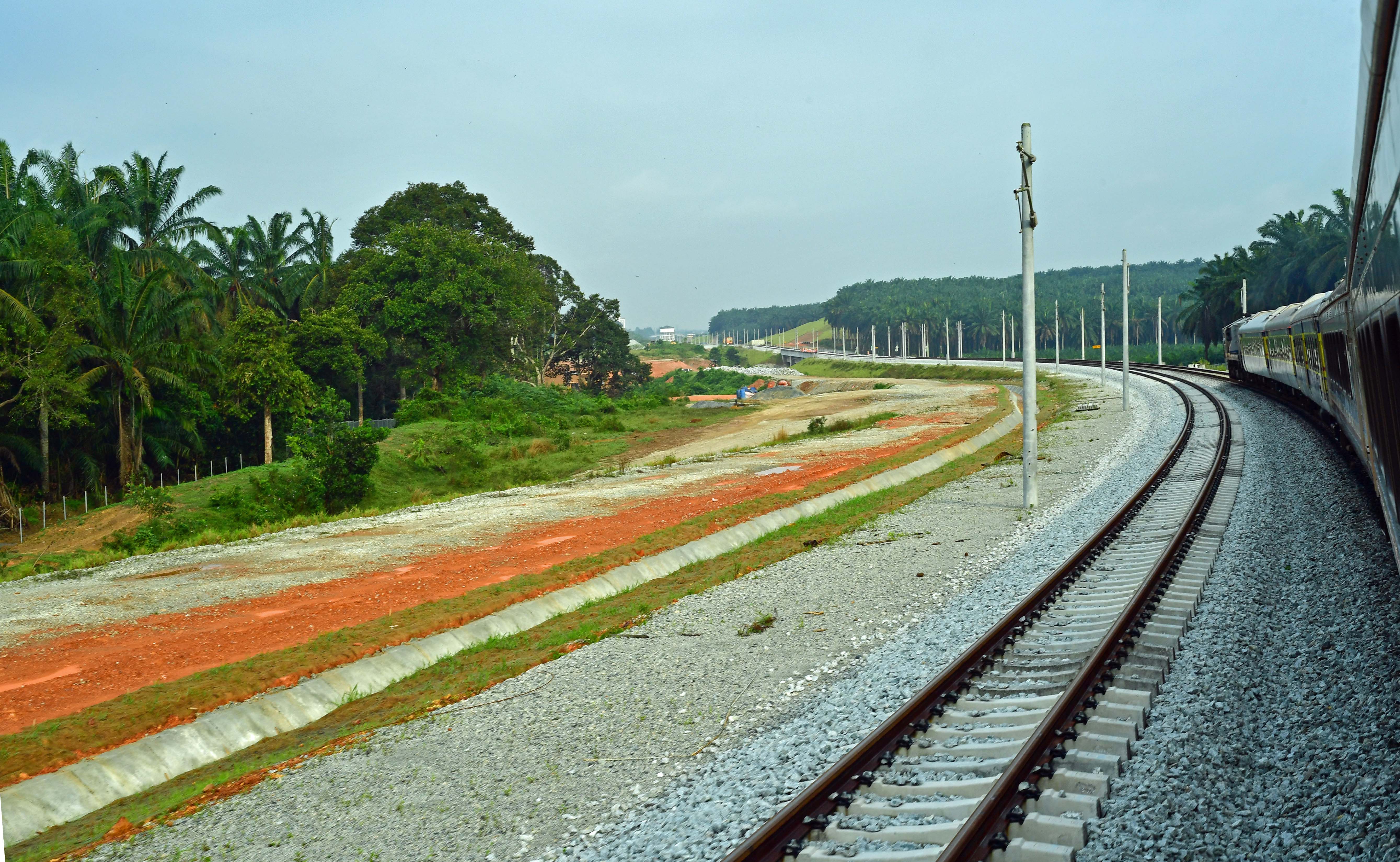
Folks familiar with Malaysian railways will know about the great strides the country has taken to modernise the railway from Padang Besar by the Thai border all the way down to the peninsula’s Southern tip at Johor Baru, opposite Singapore. What was a slow, antiquated, colonial-era, single track railway mostly under the control of Victorian semaphore signalling has been upgraded (stage by stage) into a double-track electrified railway with modern bi-directional colour-light signalling capable of speeds of up to 160kph.
The final stage – the 197km section from Gemas (Junction with the East Coast railway to Kuala Lipis) to Johor Baru is well underway, albeit late. The US $2.26bn contact to rebuild the route was won by the China Railway Construction Corporation (CRCC) and work began in January 2018 with an original completion target of 2021, this has now been officially extended until this year, but the delay shouldn’t detract from what’s an impressive piece of civil engineering.
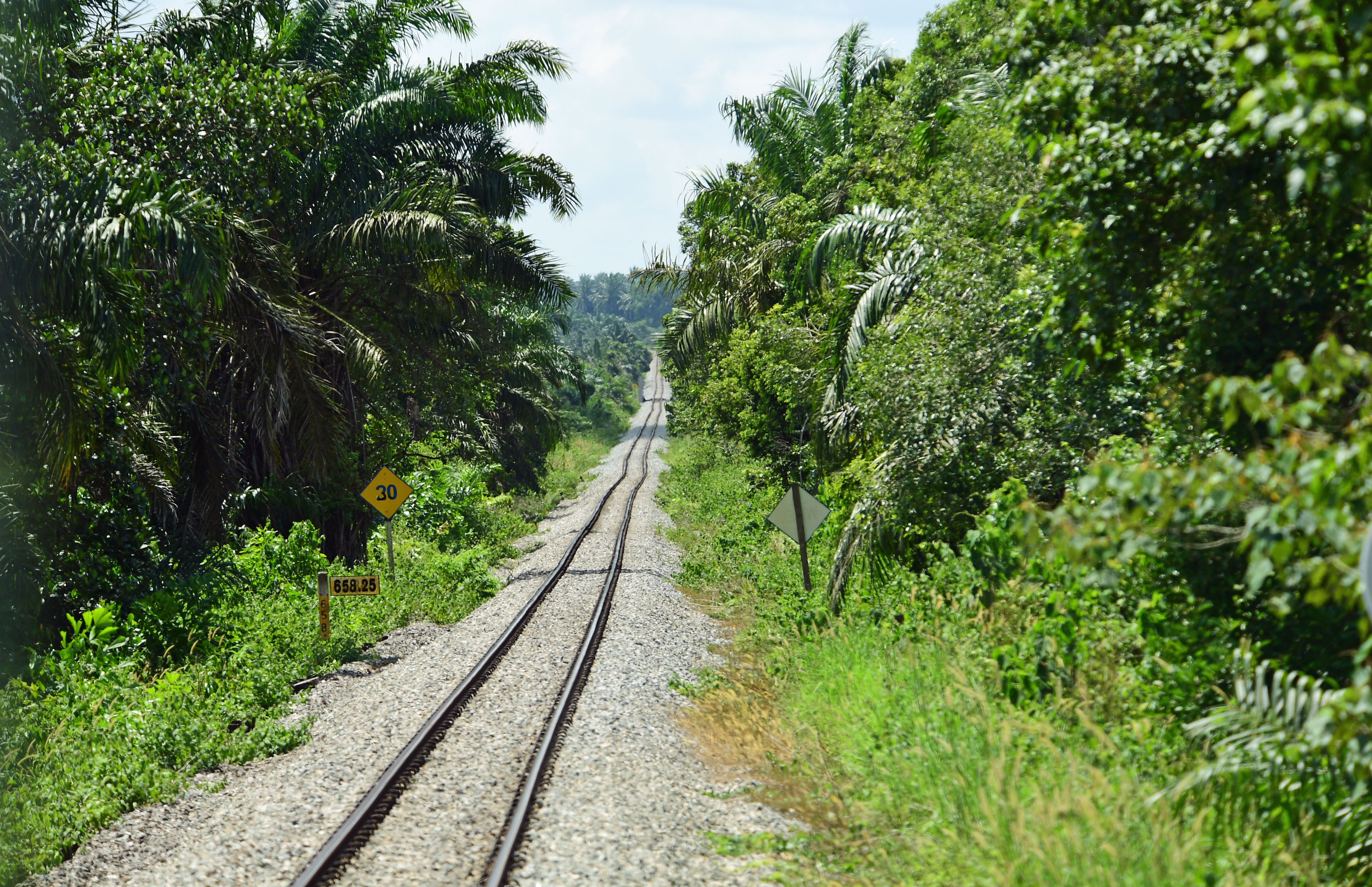
This isn’t just a case of slapping down an extra set of tracks next to the originals. In many cases the new line runs on a brand new alignment that not only takes the kinks out but also flattens gradients and crosses through towns on long viaducts. Then there’s the unseen work, the thousands of concrete piles driven into the ground to stablise the formation, the pinning and shotcreting of cuttings, plus the extensive drainage work. For those of you unfamiliar with the line, here’s a picture I took from the back of a train heading North from Johor Baru near Chemak in February 2017. A 160kph line? I think not…
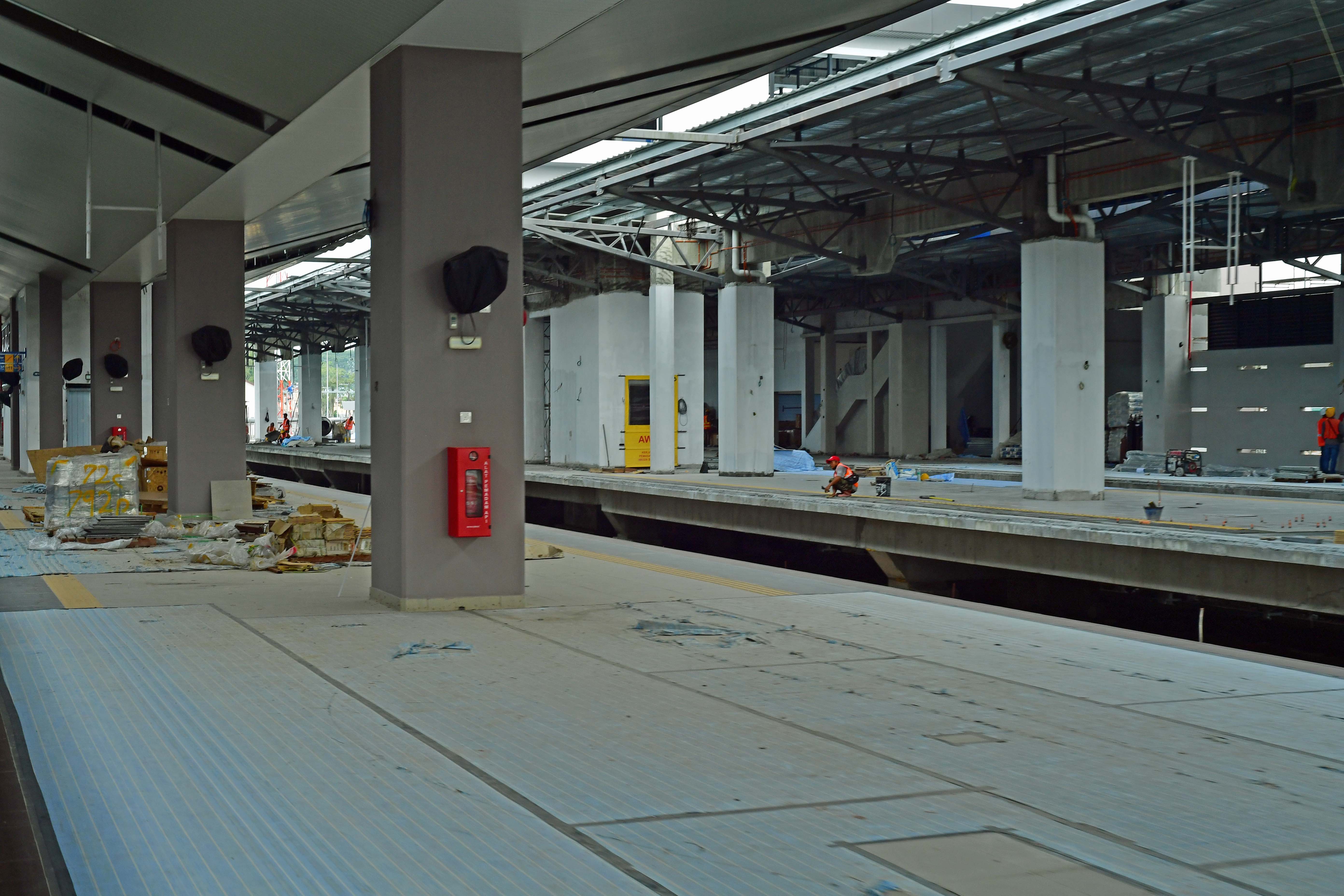
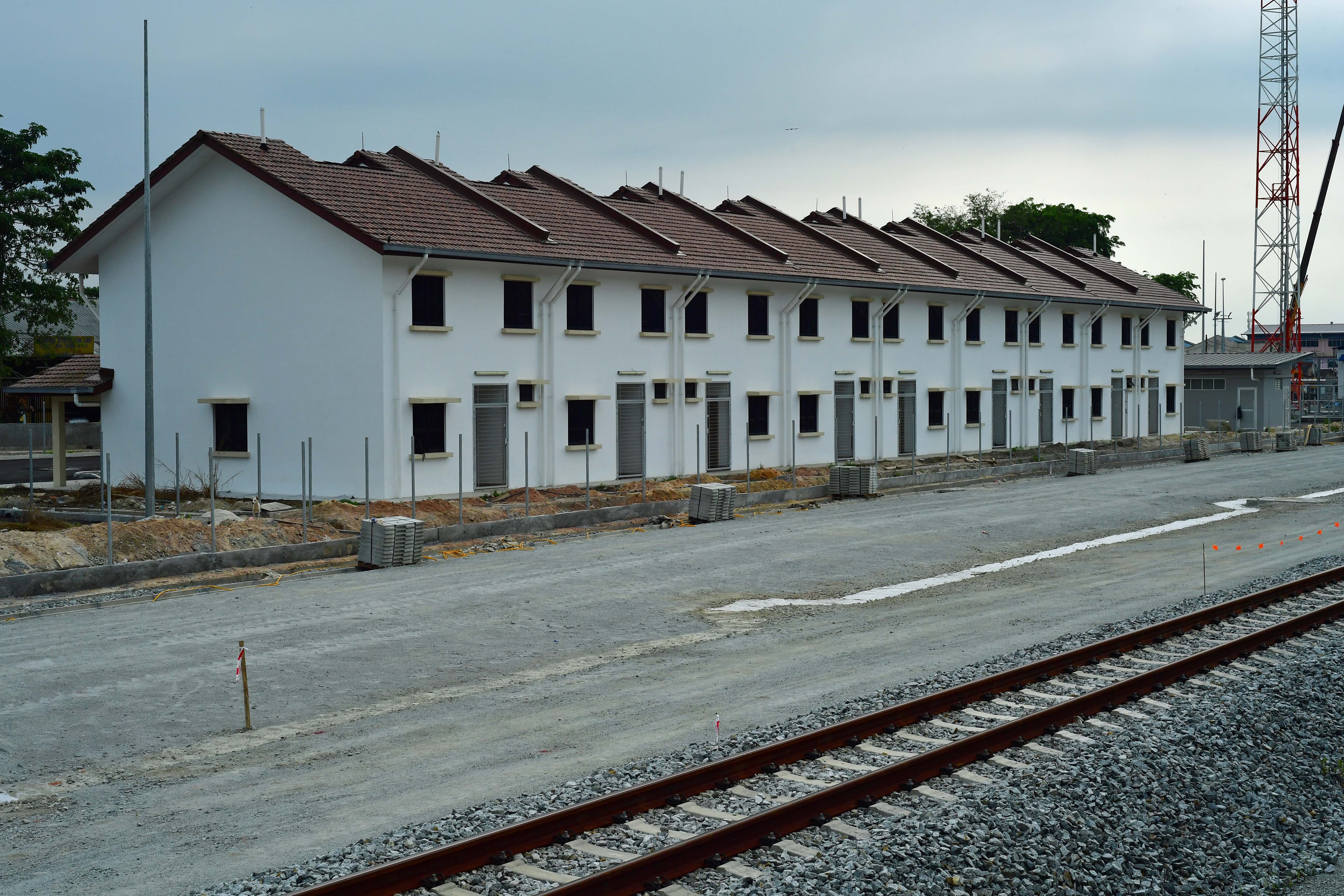
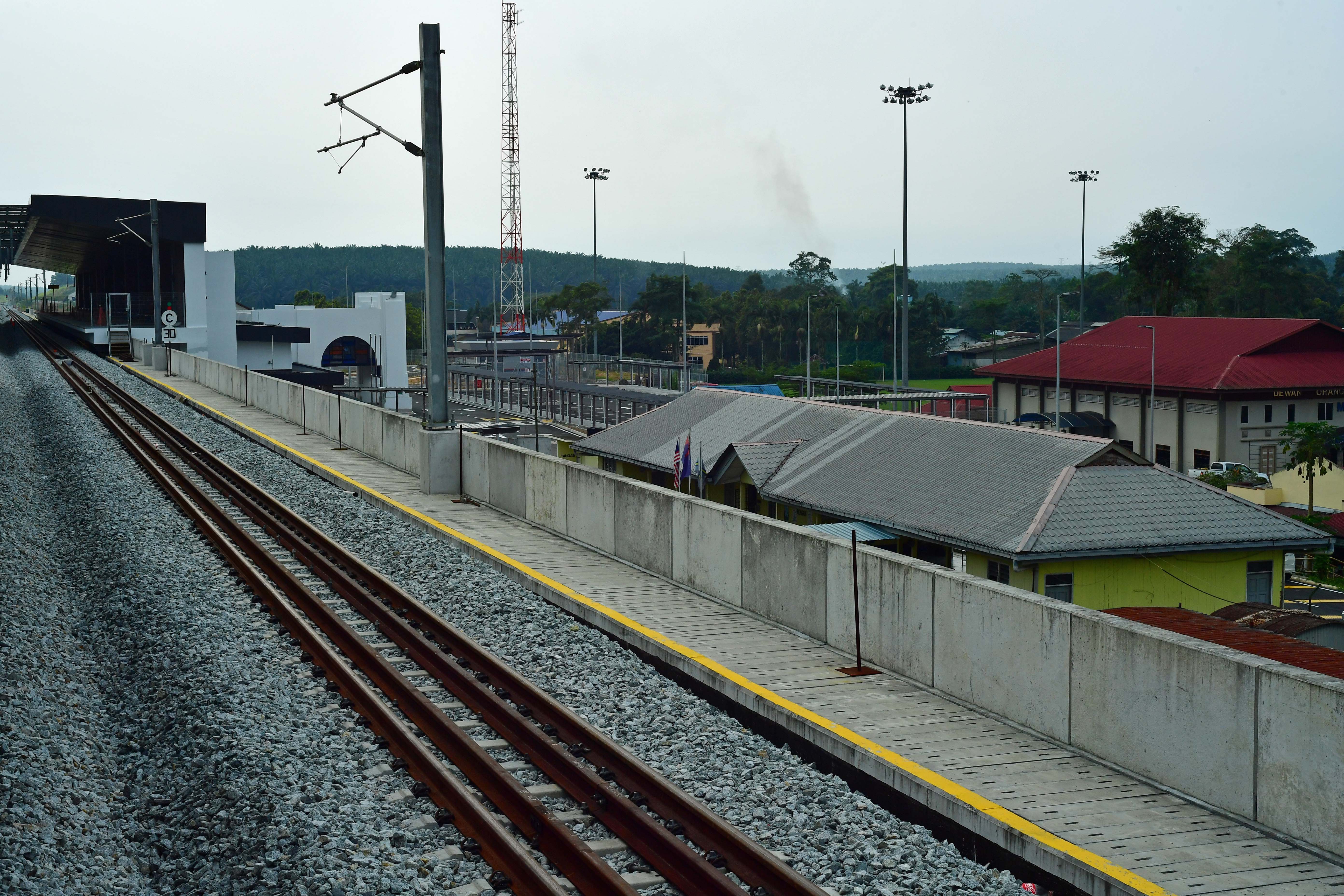
There’s also 11 brand new and substantial stations. Kempas Baru, Kulai, Leyang – Leyang, Rengam, Menkibol, Kluang, Paloh, Bekok, Labis, Genuang and Segamat, plus 3 entirely new ones at Senai, Chamek and Tenang. Some of these are large four-platform stops with associated freight yards and/or depots.
The completion of this section of line will see the demise of loco-hauled passenger trains on most of the West coast line. Currently, locomotives work the trains between JB and Gemas where passengers transfer to/from electric trains for Kuala Lumpur, Butterworth or Padang Besar. The only one likely to remain is the sleeper train between Tumpat on the East Coast line and Johor Baru.
Here’s a look at progress, seen from a loco hauled train from Johor Baru to Gemas on the 15th January 2023. Johor Baru station was rebuilt back in the early 2010s, the new line work starts a short way North, before the freight lines from docks at Pasir Gudnag and Tanjung Pelapas join the route. I’ve loads of pictures and can’t add them all to this blog, but you can find the rest of them in this gallery on my Zenfolio website.
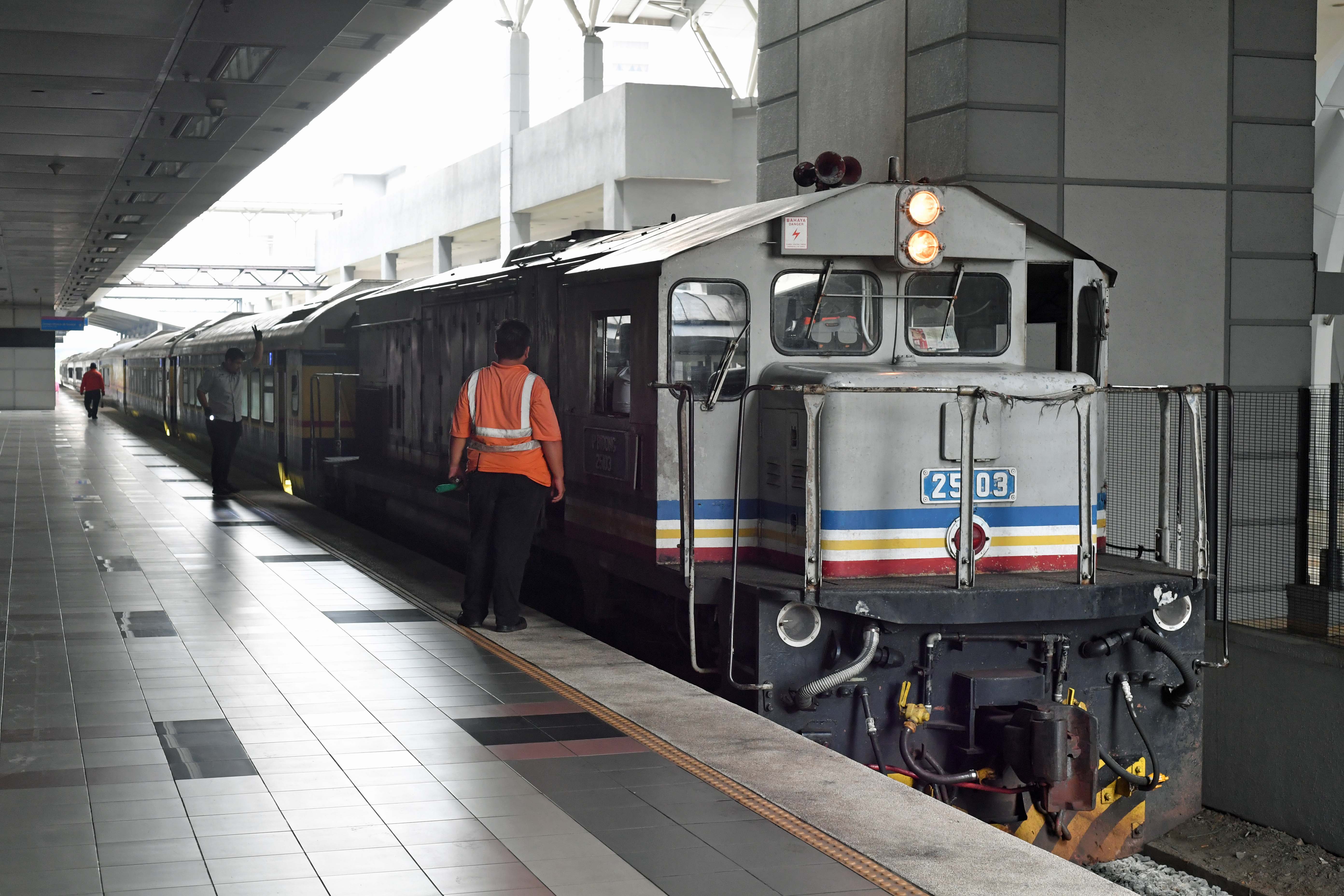
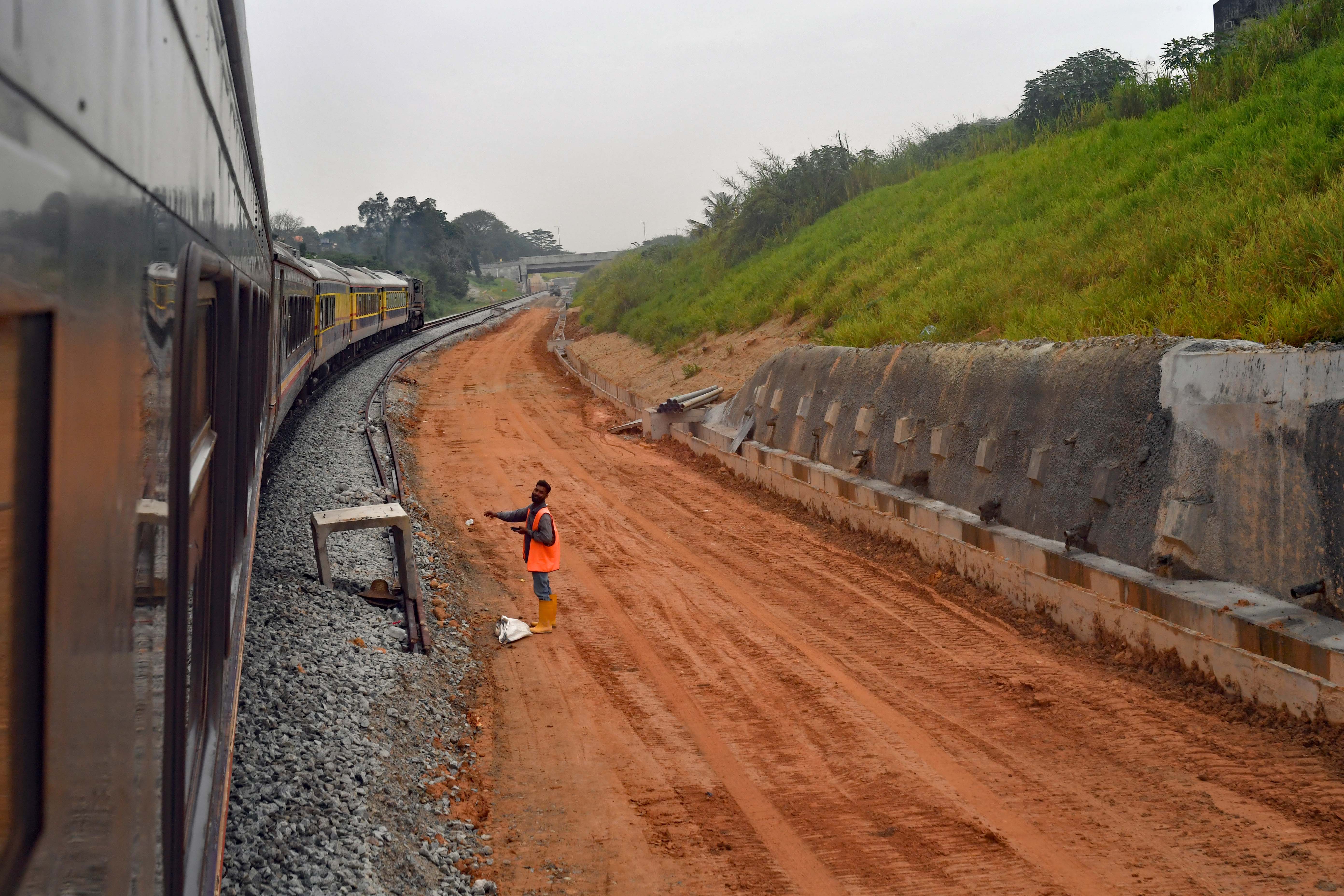
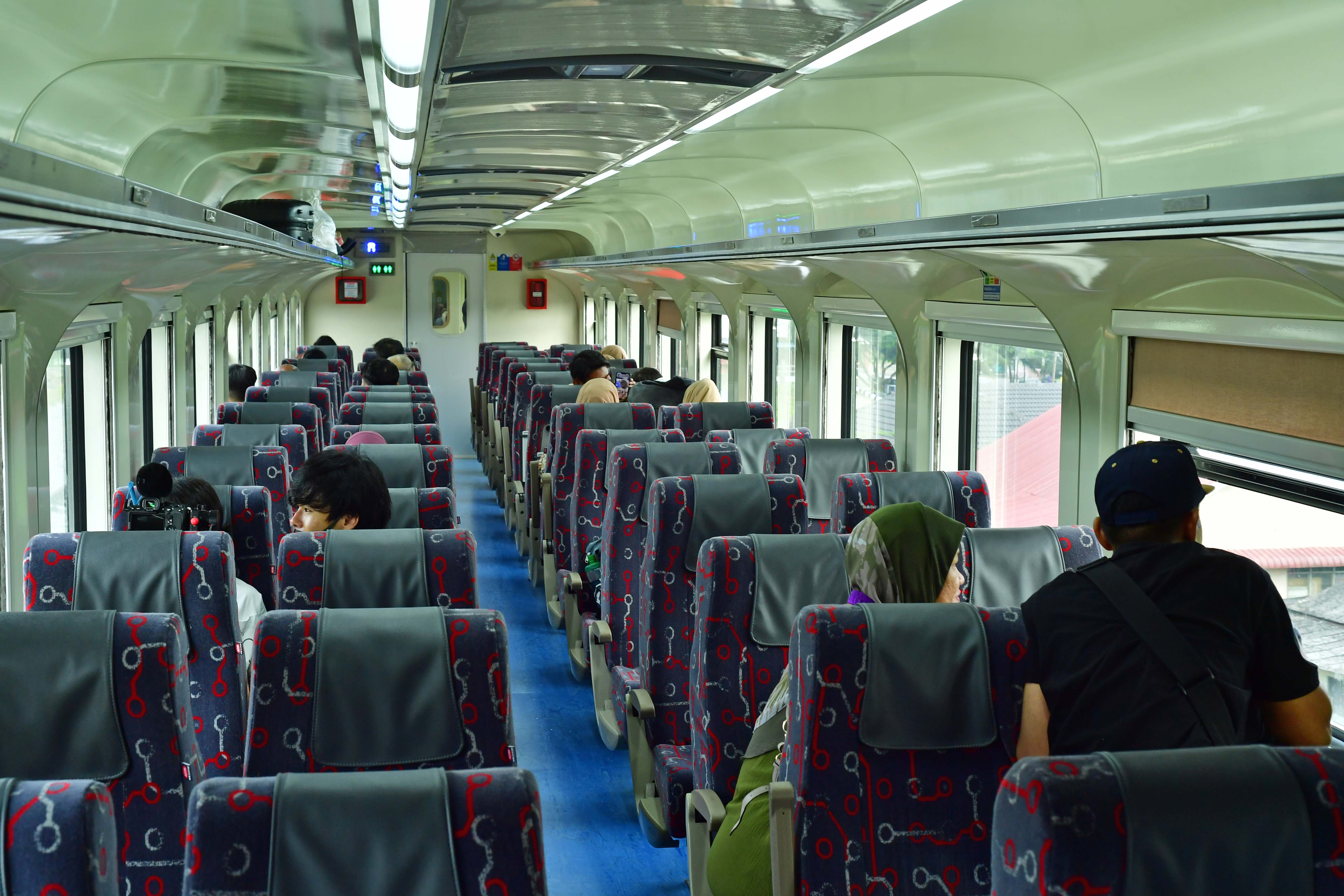
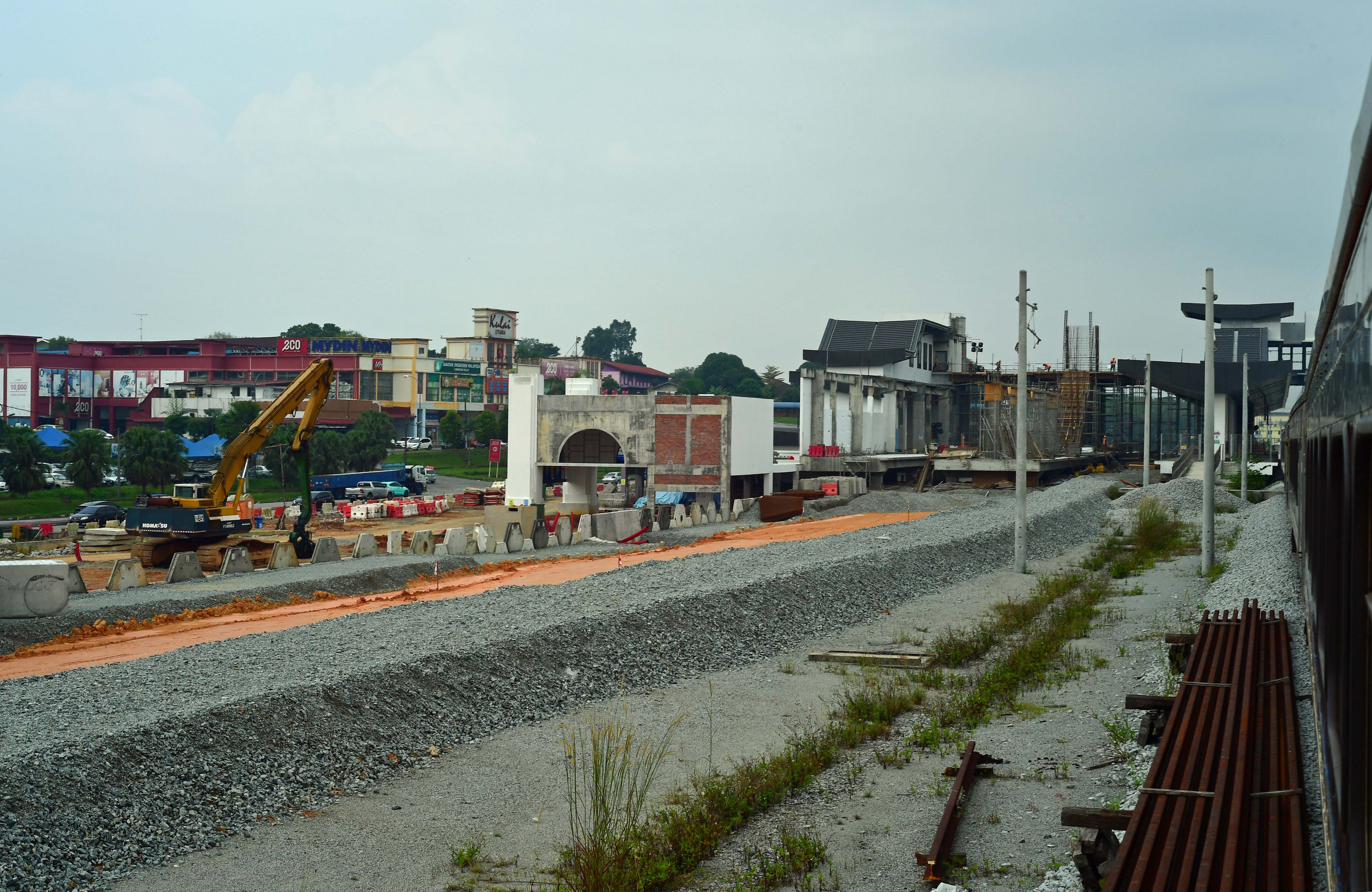
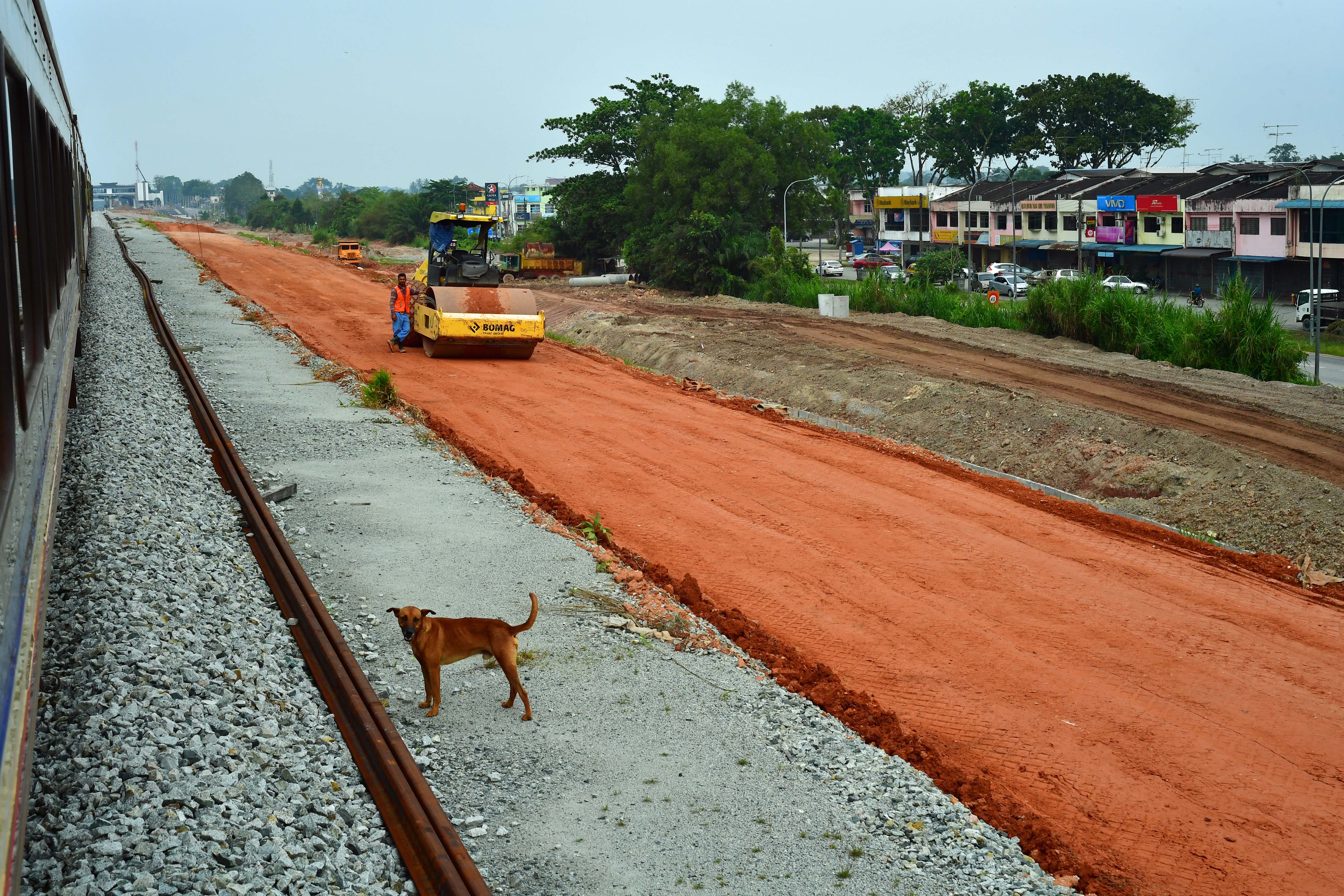
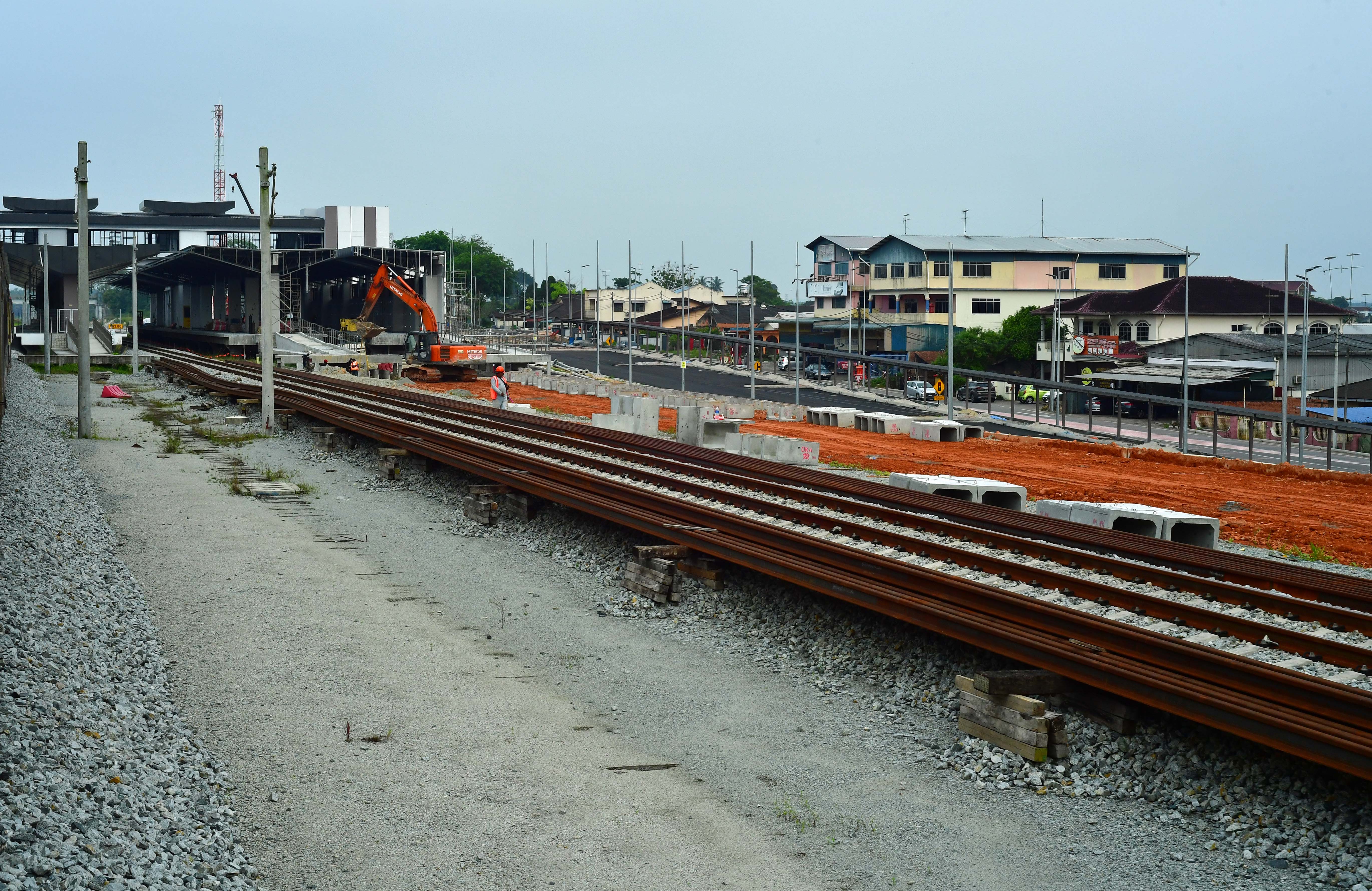
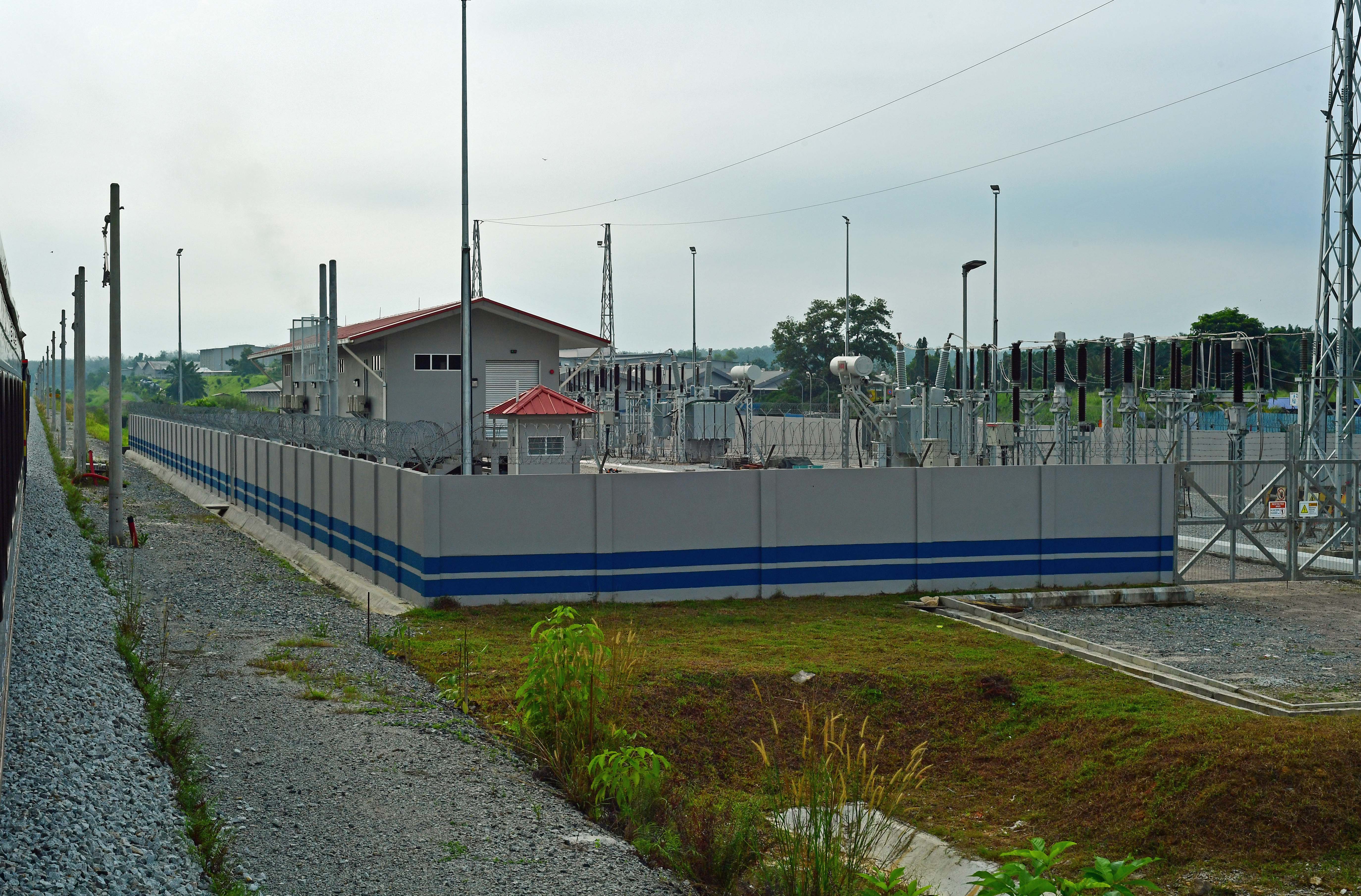
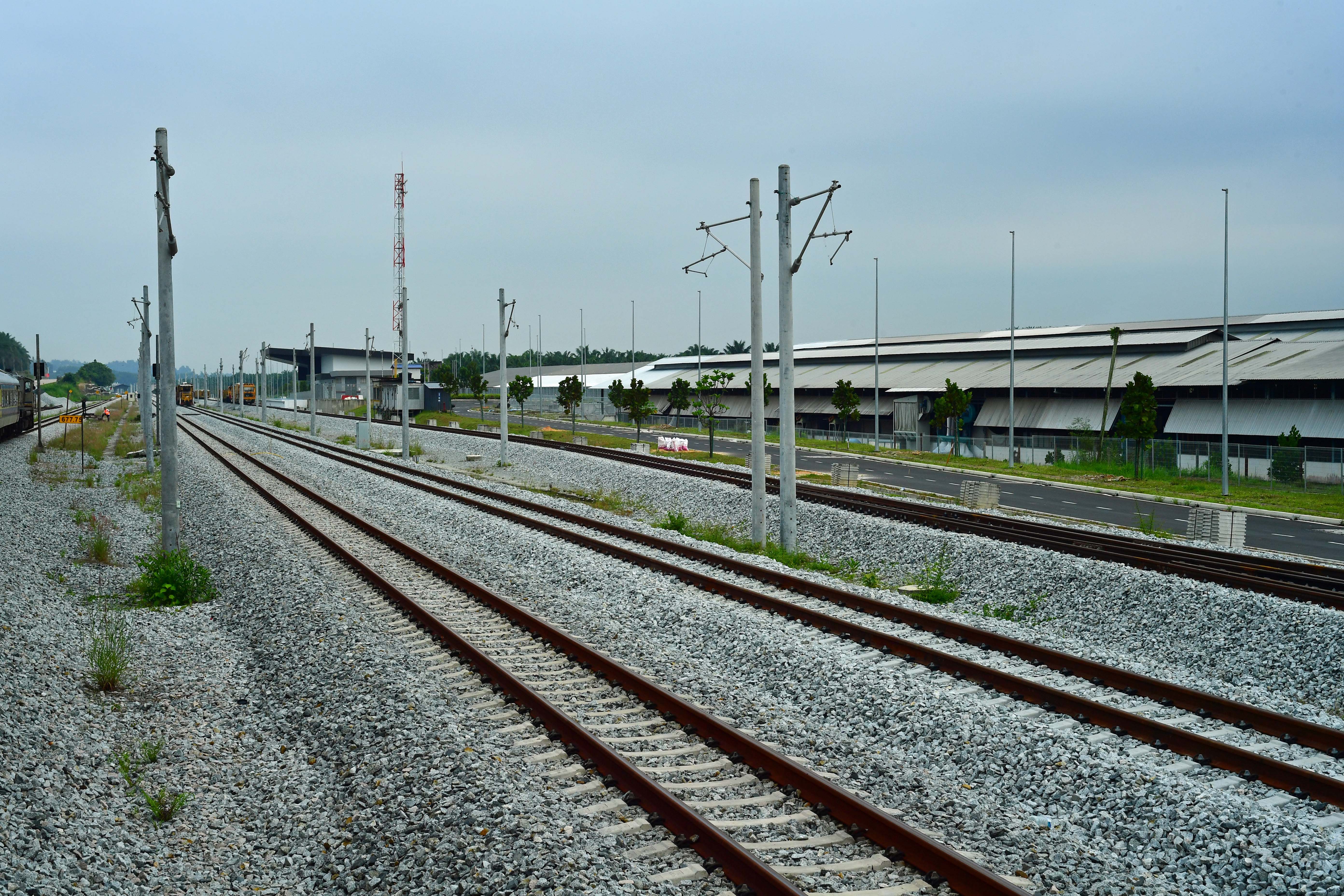
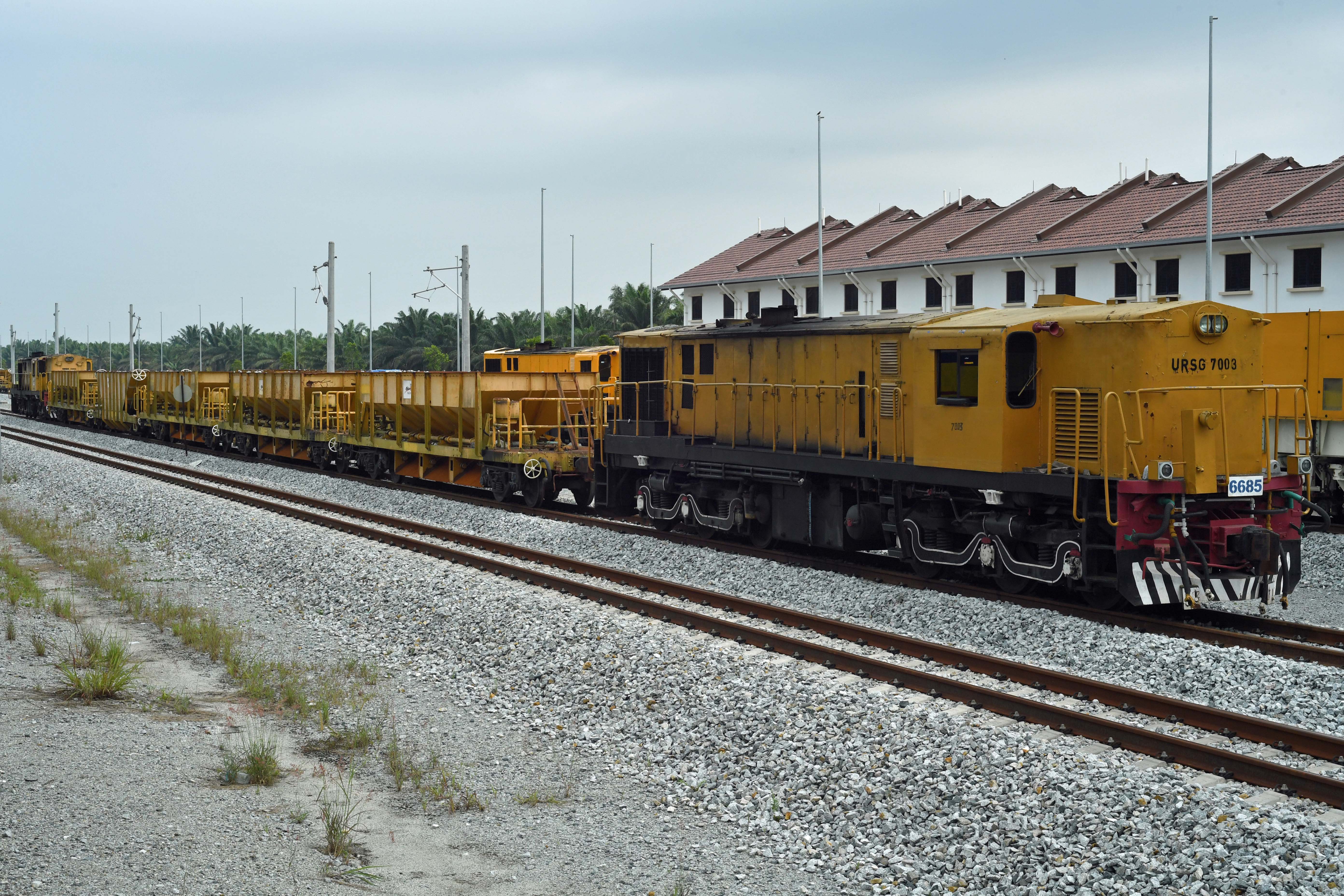
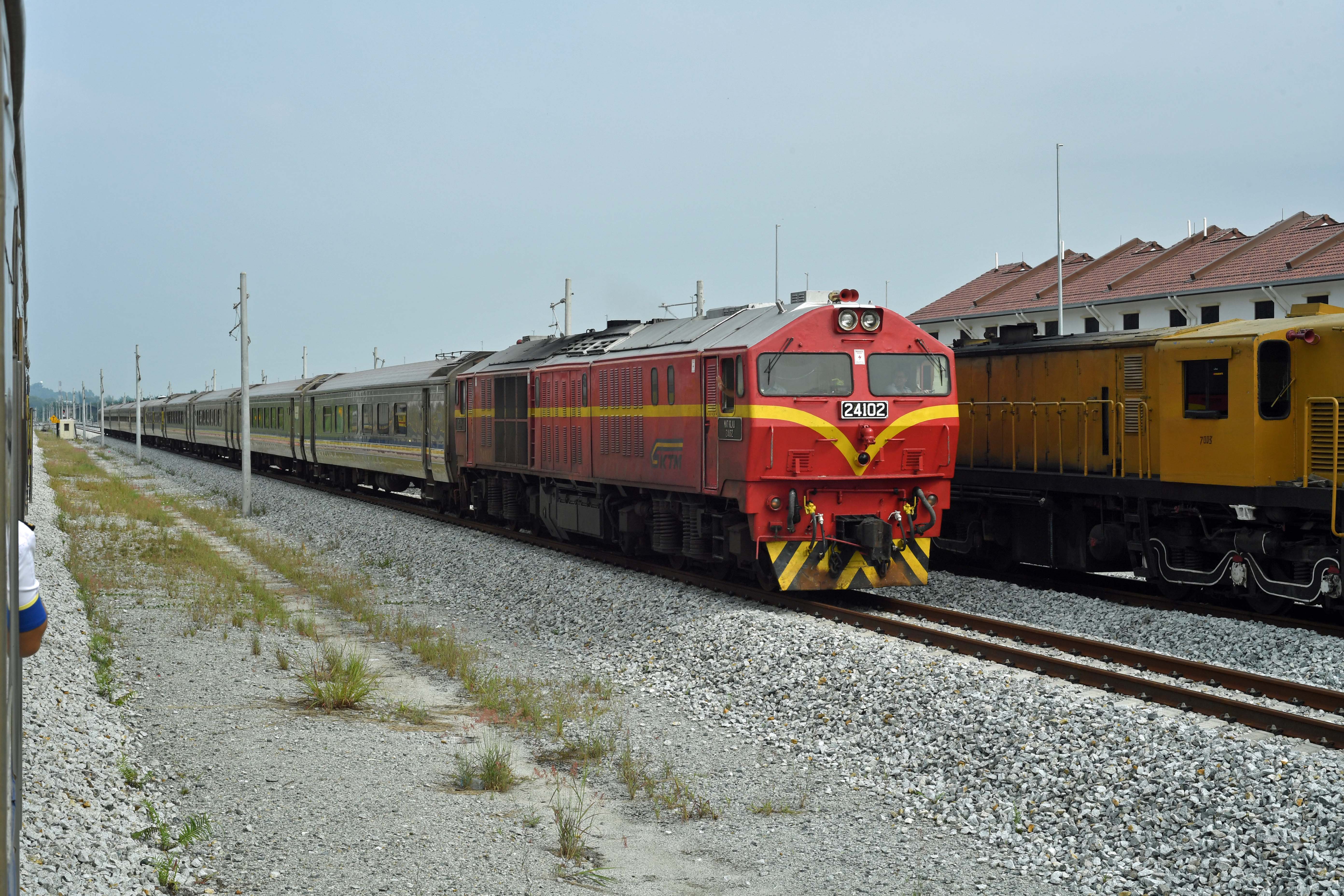
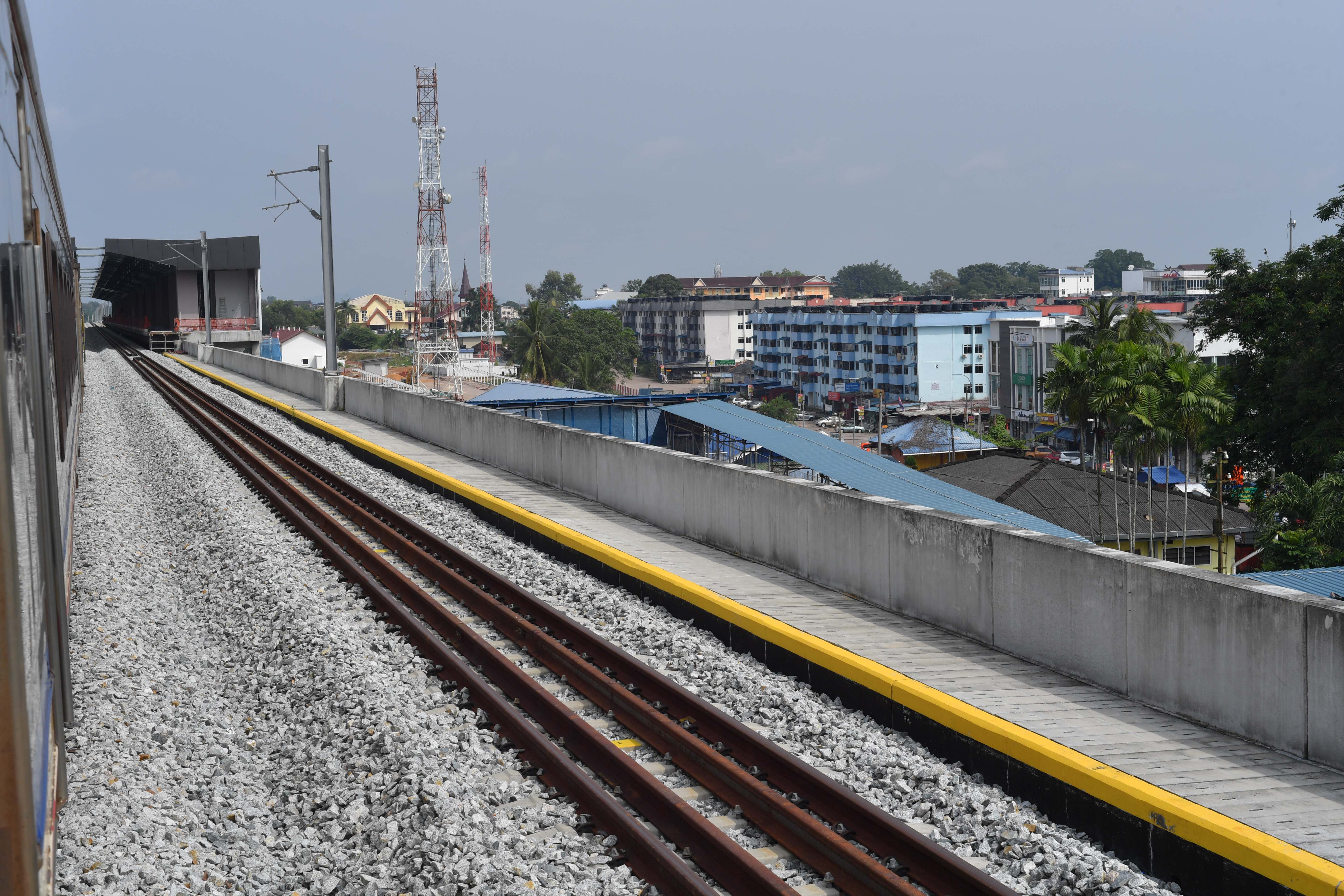
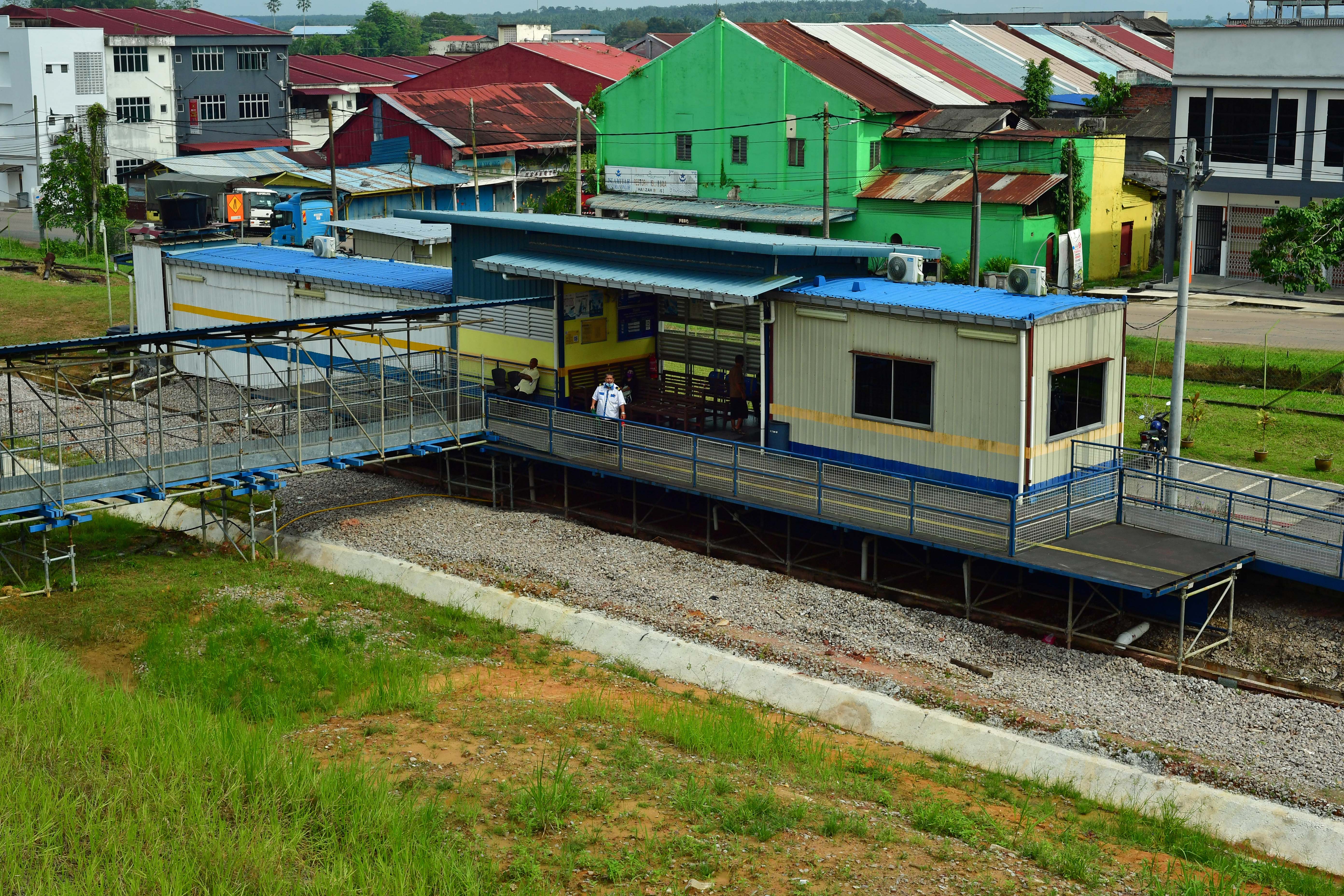
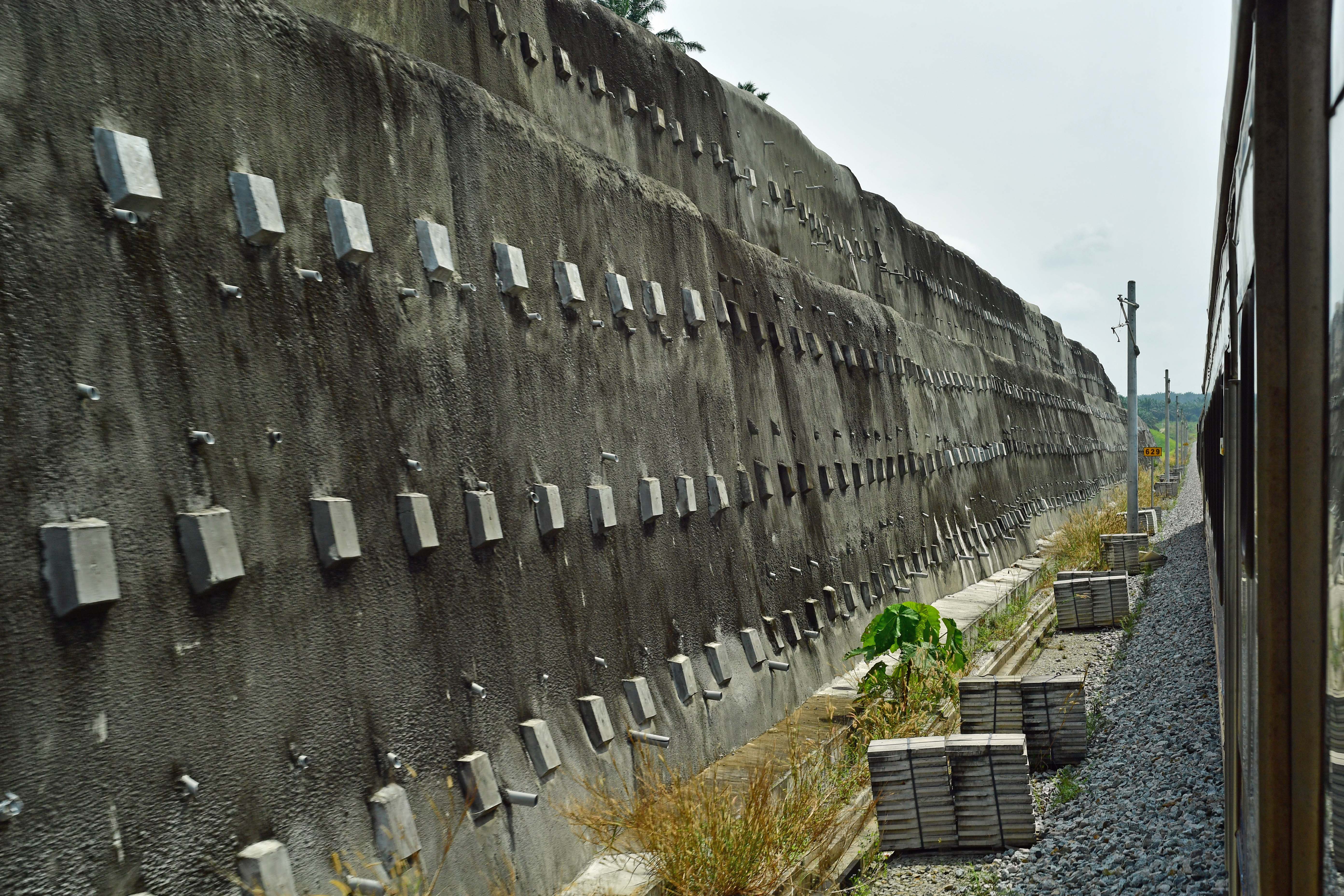
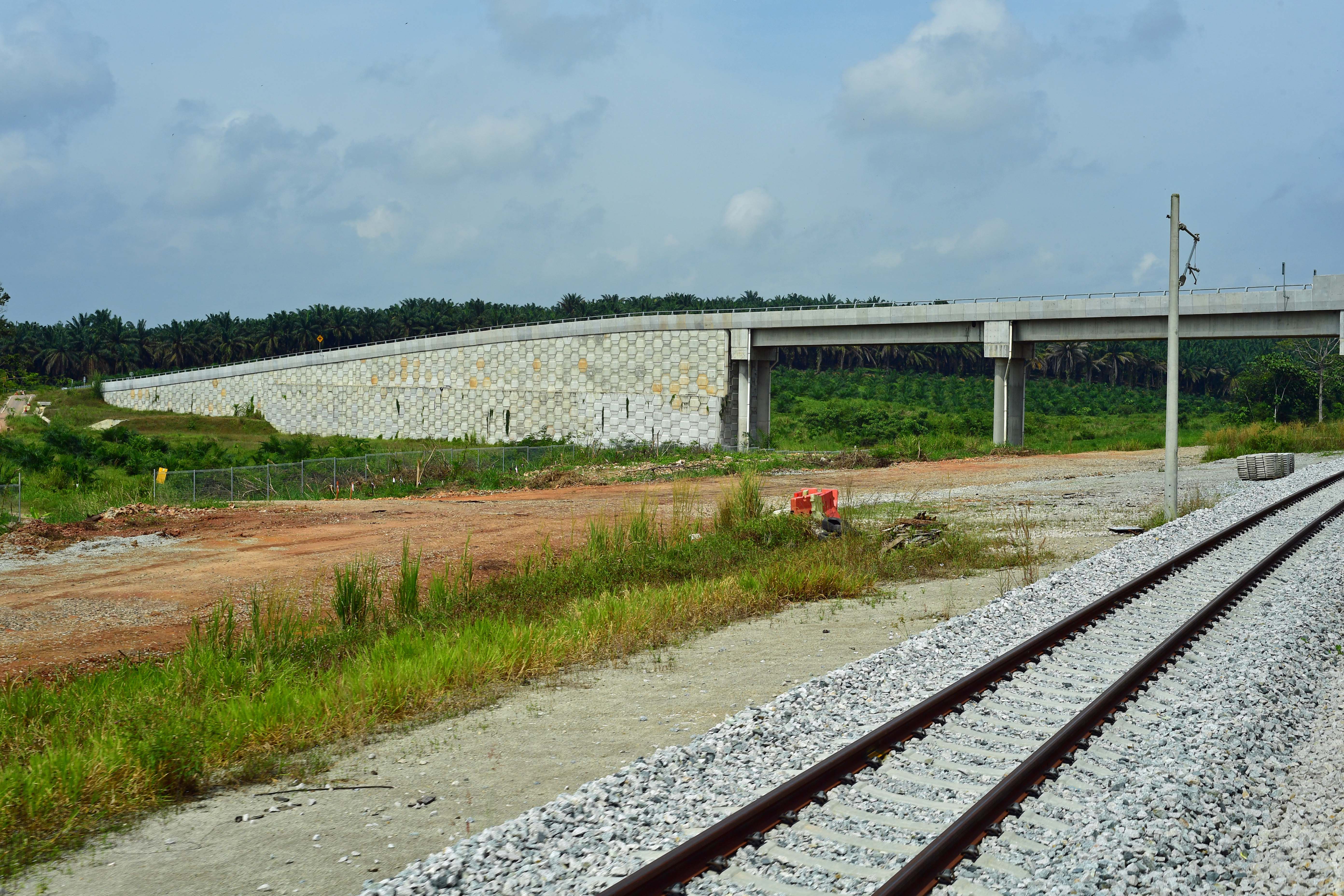
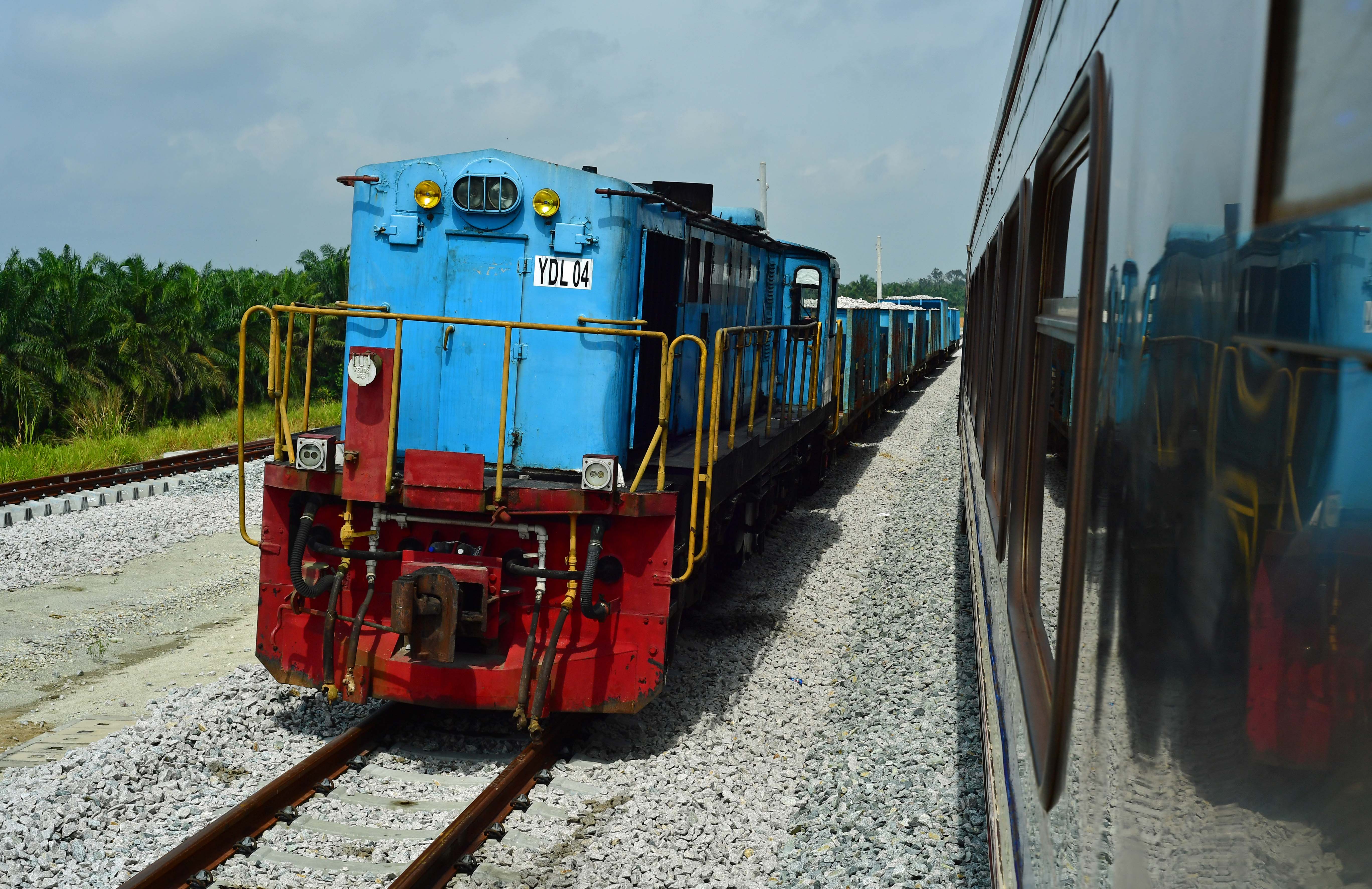
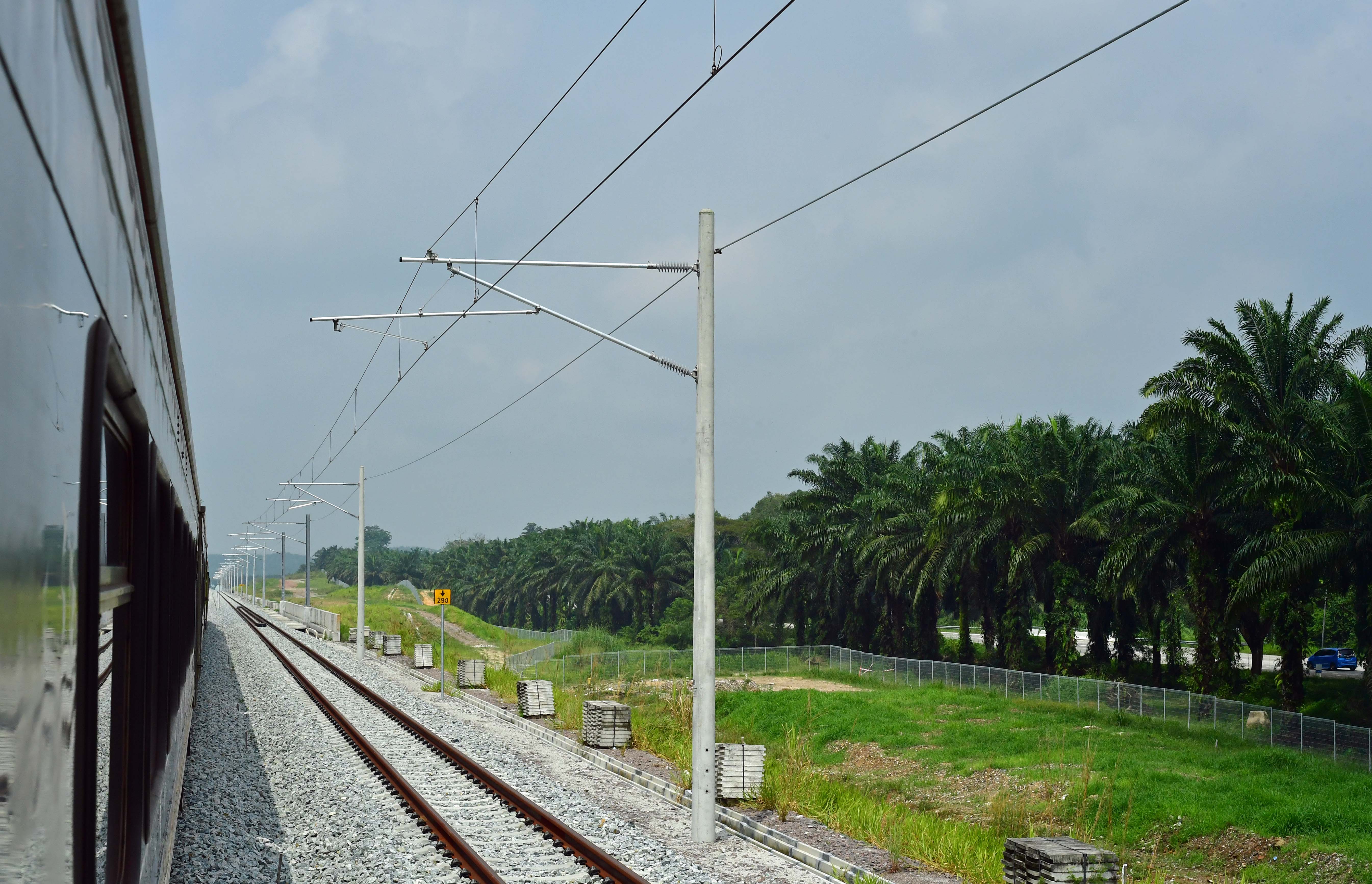
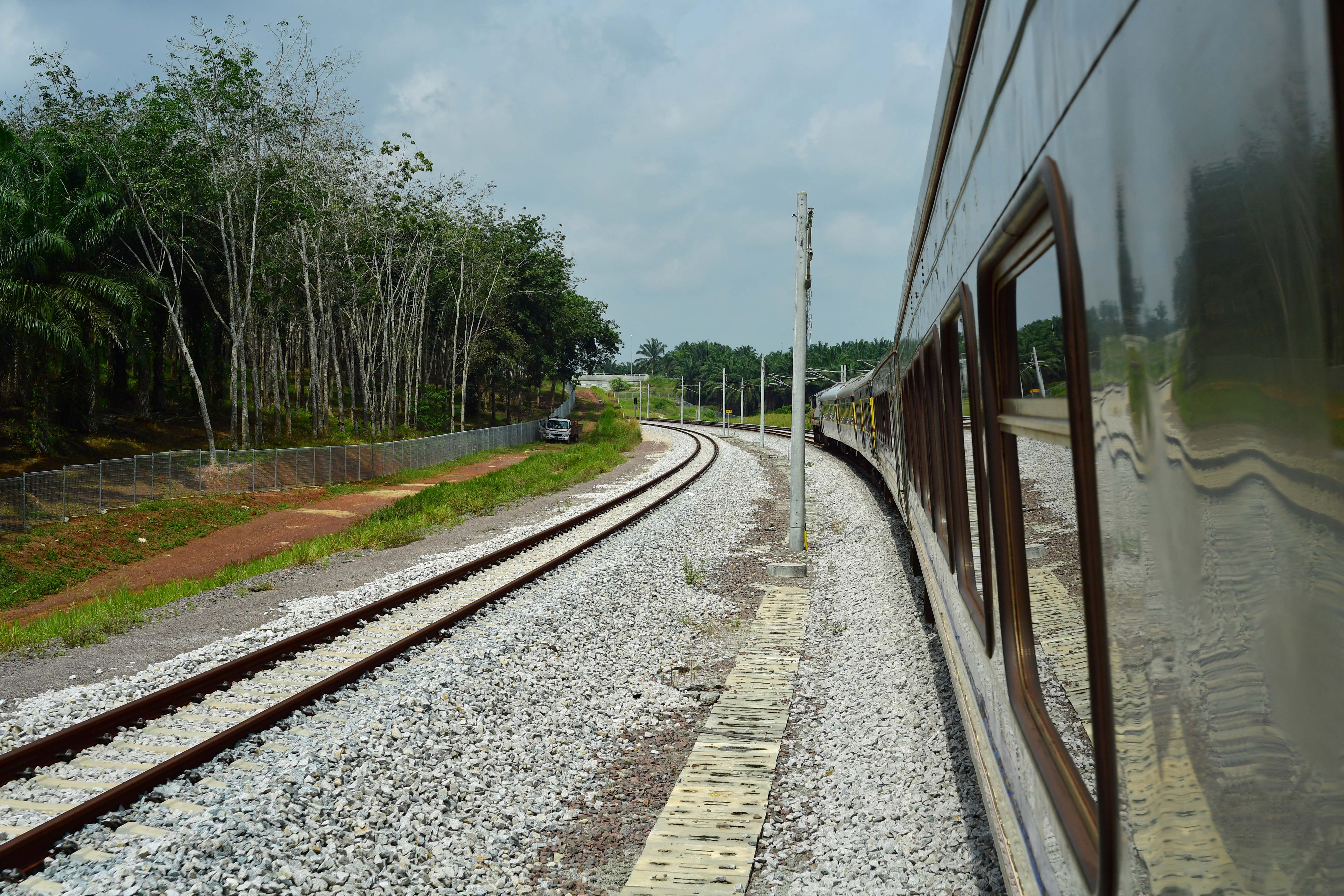
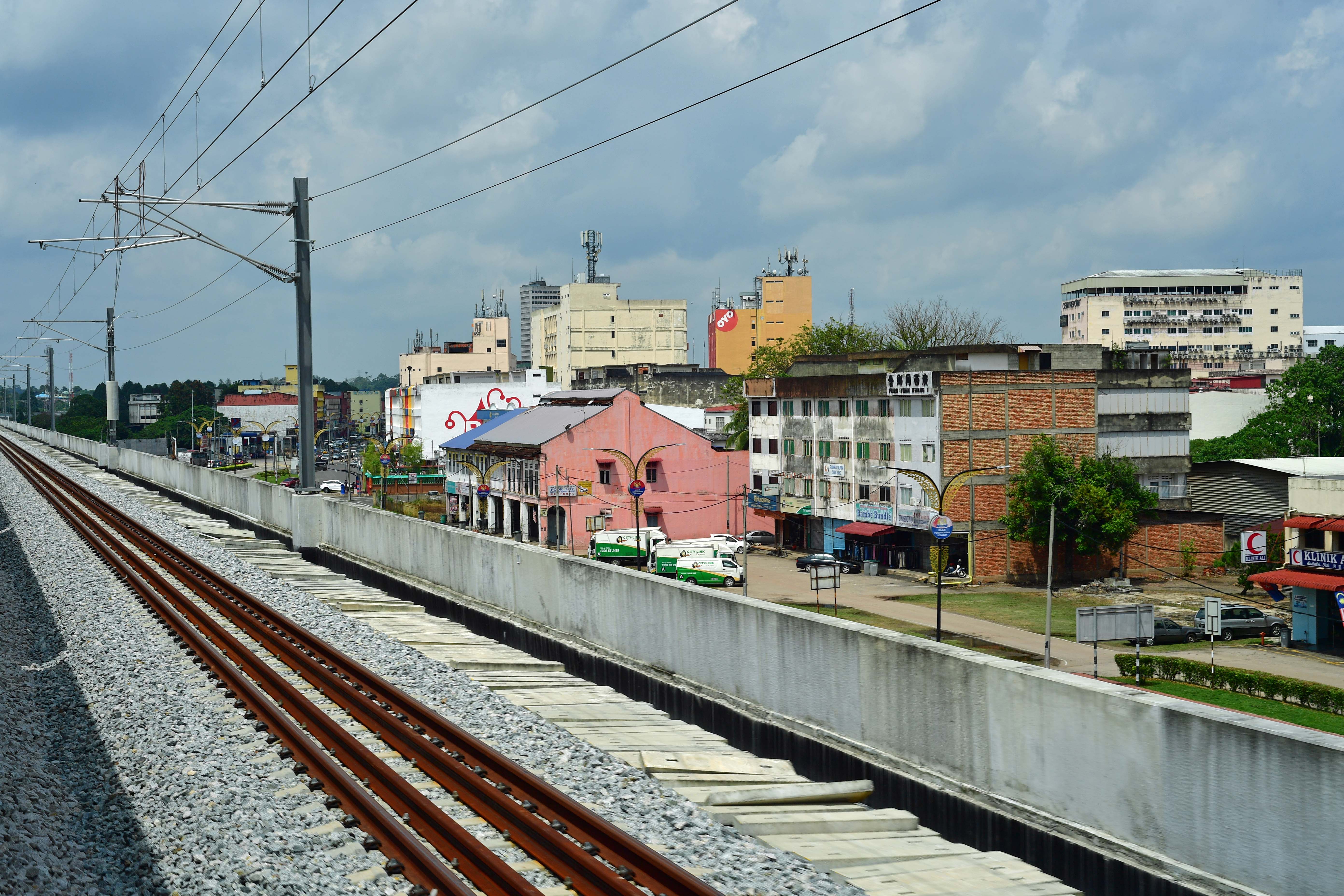
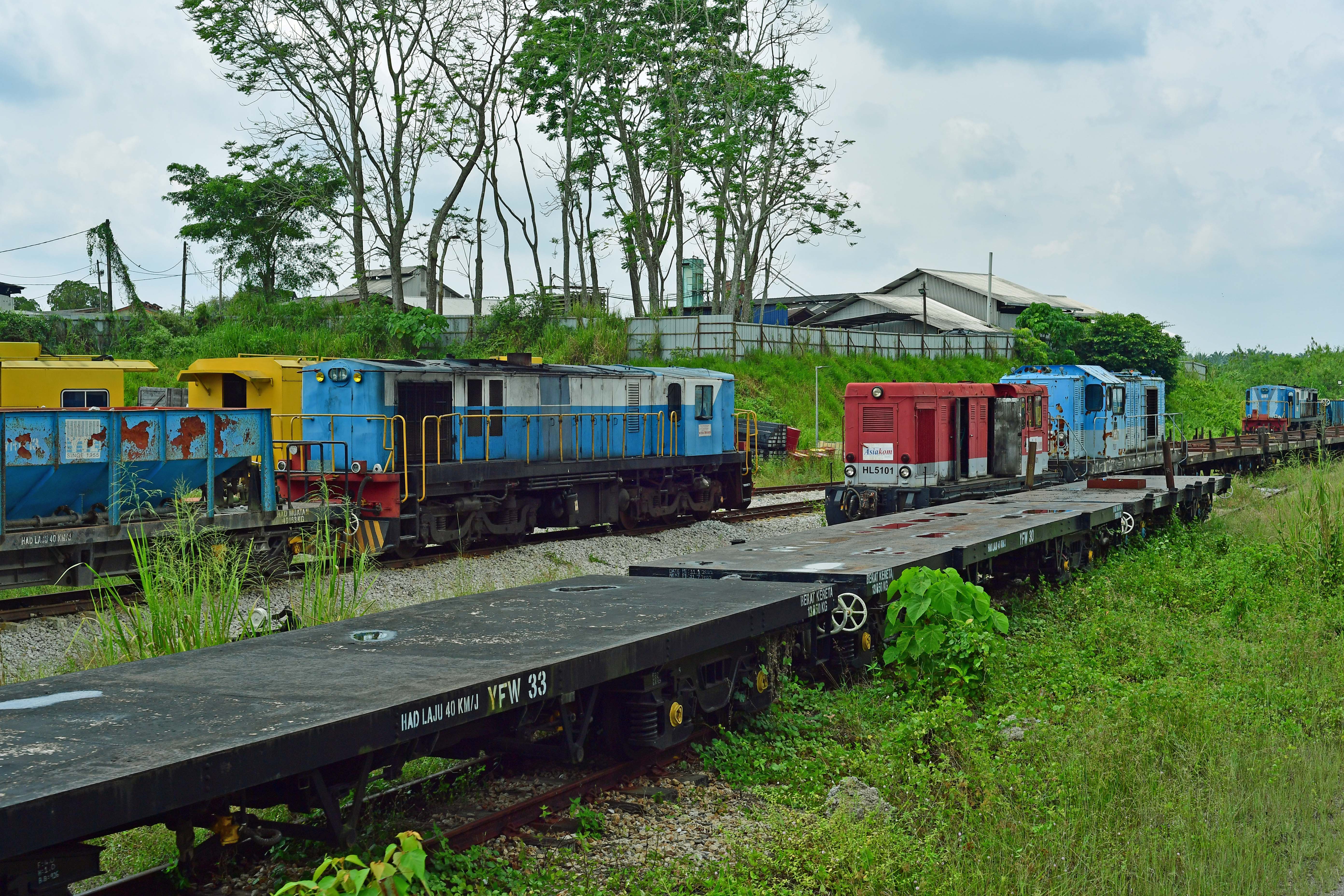
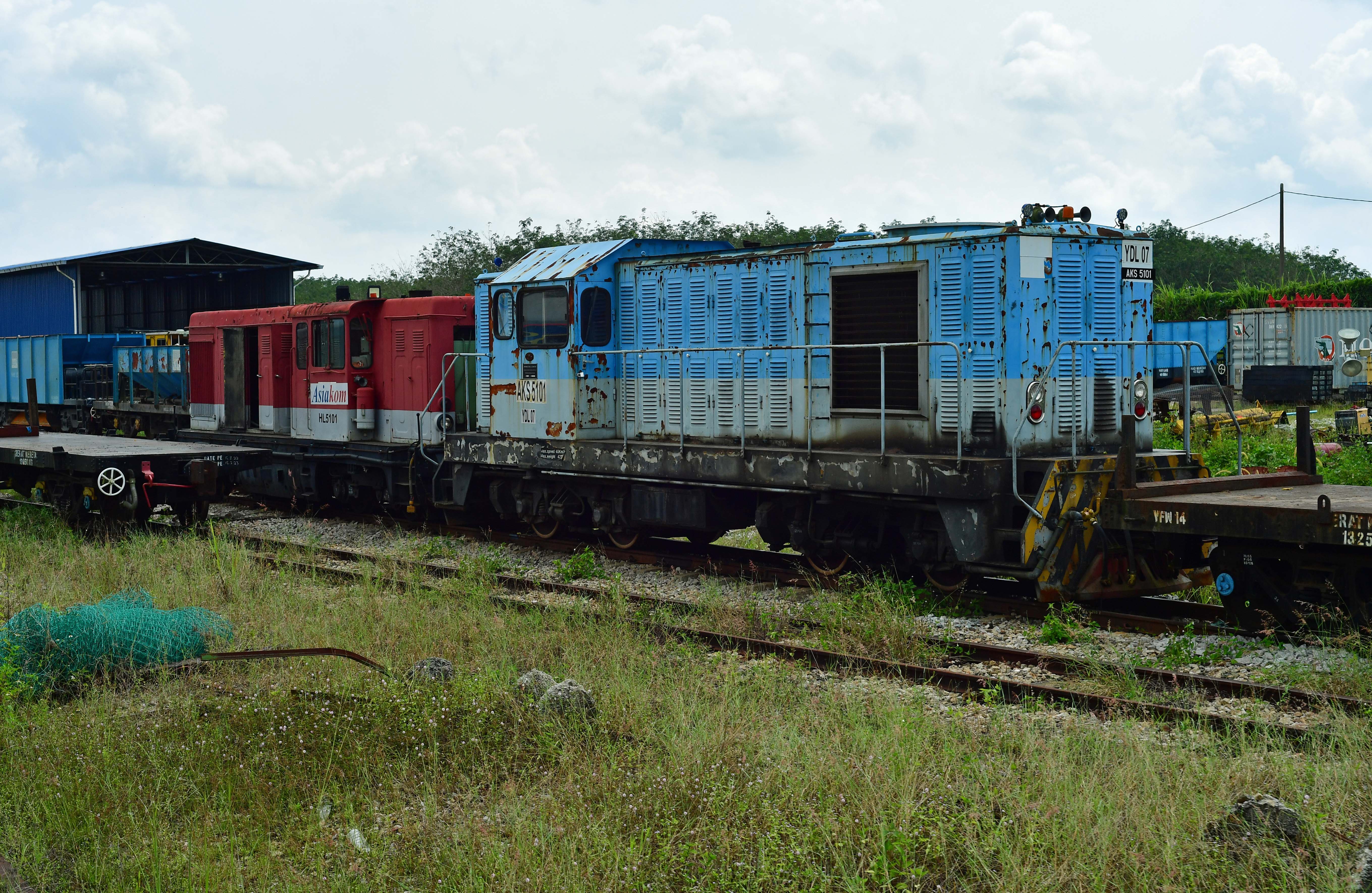
25103 named ‘Pulau Bedong’ prepares to leave Johor Baru with the 8-car (7 passenger coaches and a generator car), 08:30 to Gemas. 25103 is a 1500hp loco built by General Motors, Ontario, Canada. 12 were supplied in 1990 followed by another 5 (25201-205) in 2002. Our train leaves the outskirts of Johor Baru. The scale of the work involved can be seen, from embankment stabilisation to rebuilt bridges. The new (straighter and flatter) route passes over the old at the junction with the freight line out to the East of Johor Baru which serves a container terminal and a shipyard. Major civils work just North of Kempas Barou station. A new concrete box (presumably for the new line) is being built whilst a lot of piling work is going on between it and the new loco depot which is just out of shot to the right. The rebuilt connection with the line to the container terminal at the port of Tanjung Pelapas trails in from the left. Double tracking and installation of concrete OLE masts South of Kulai. The refurbished interior of the Hyundai coaches which made up part of our train.The substantial new station at Kulai takes shape. This will have four platforms. Double tracking preperations South of the new station at Layang-Layang which can be seen in the distance.Layang-Layang station showing the approach roads and other works which form part of the contact. The new stations are substantial with all modern facilities, including being fully accessible and with level boarding with the new trains.The modern take on railway cottages. Each station is being provided with staff housing. This is Layang – Layang.Here’s a real contrast that shows the substantial difference between old and new at Renggam. The new station’s been build on a viaduct. The roof to the right is that of the original station building on the original rail level. A new electricity substation at Mengkibol which will feed power to the 25kv overhead wires. Our train arrives at Mengkibol. The scale of the rebuilding becomes obvious in views like this. Mengkibol has been laid out with extensive sidings. At the moment it’s used as a base for a lot of construction trains, including this one,top and tailed by two ex-Indian Railways YDM4 locomotives. The sleeper train from Kuala Lipis on the ‘jungle railway’ as the East coast line is still sometimes called passes us at Mengkibol on it’s way to Johor Baru. It’s hauled by 24102 ‘Mat Kilau’, one of 26 such 2,400hp locos supplied by Hitacahi in 1987. Another greatly elevated station, this time at Kluang. The blue tin roof to the right leads down to the temporary station building from the makeshift platform on the other side of my train.
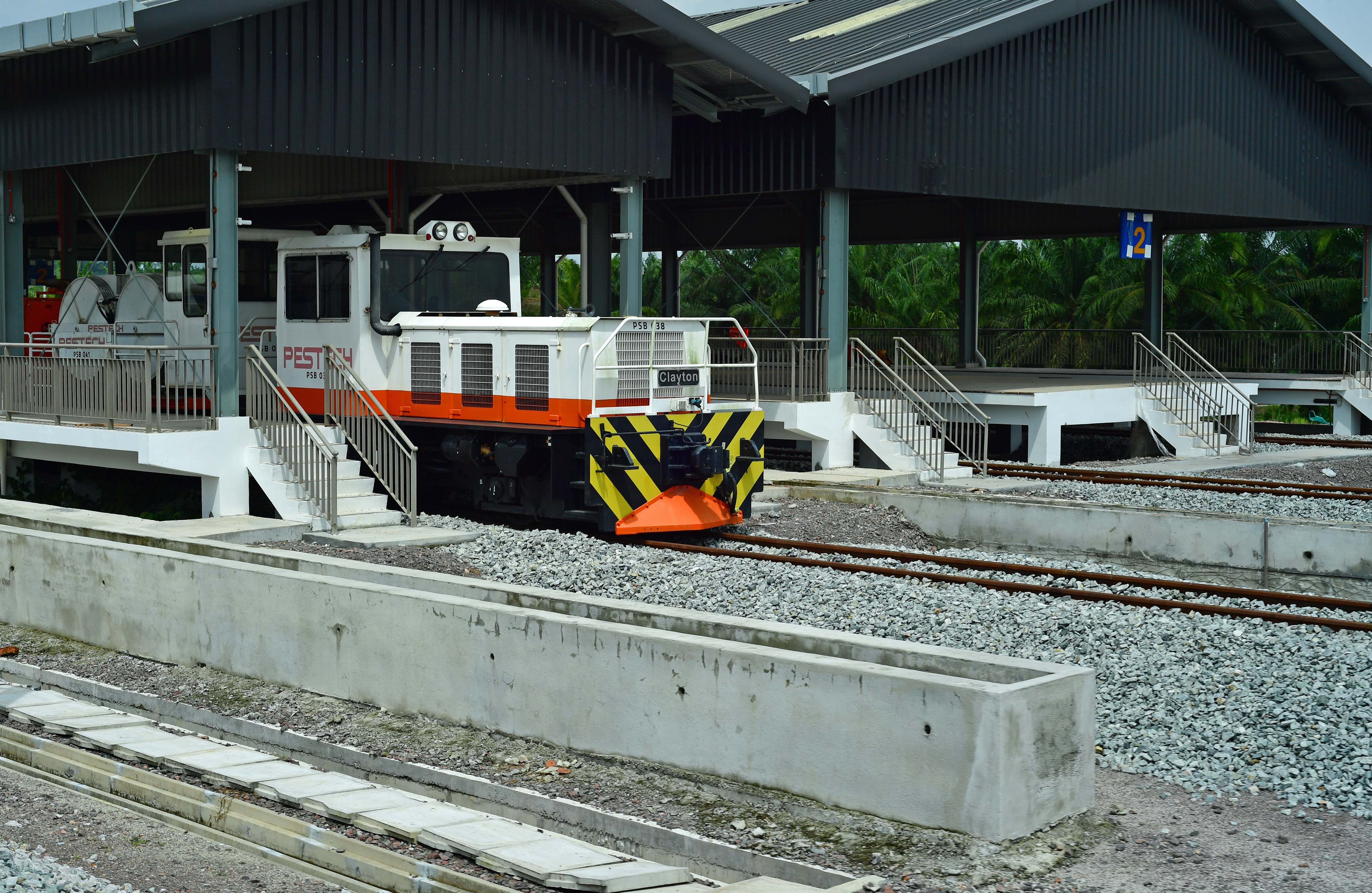
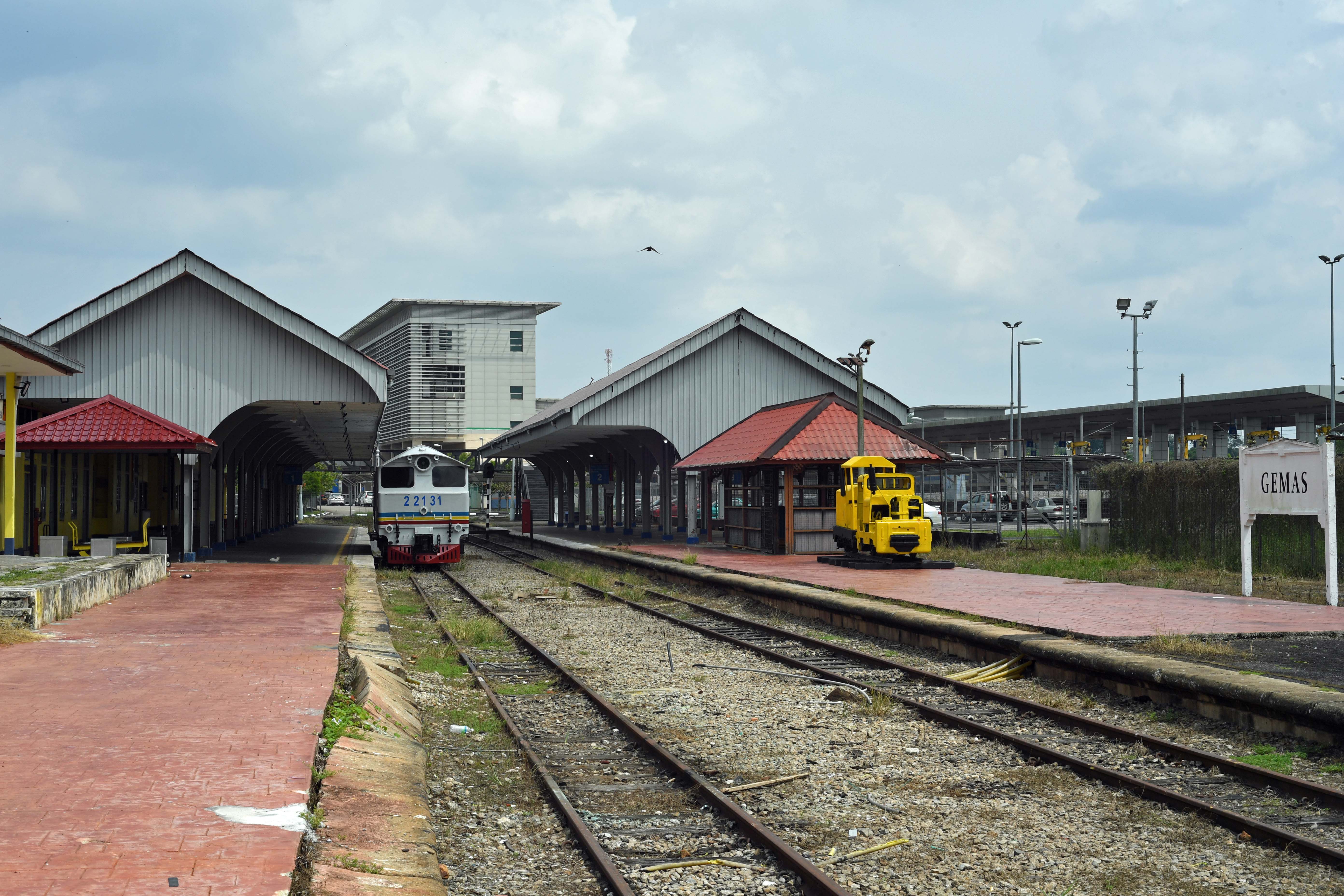
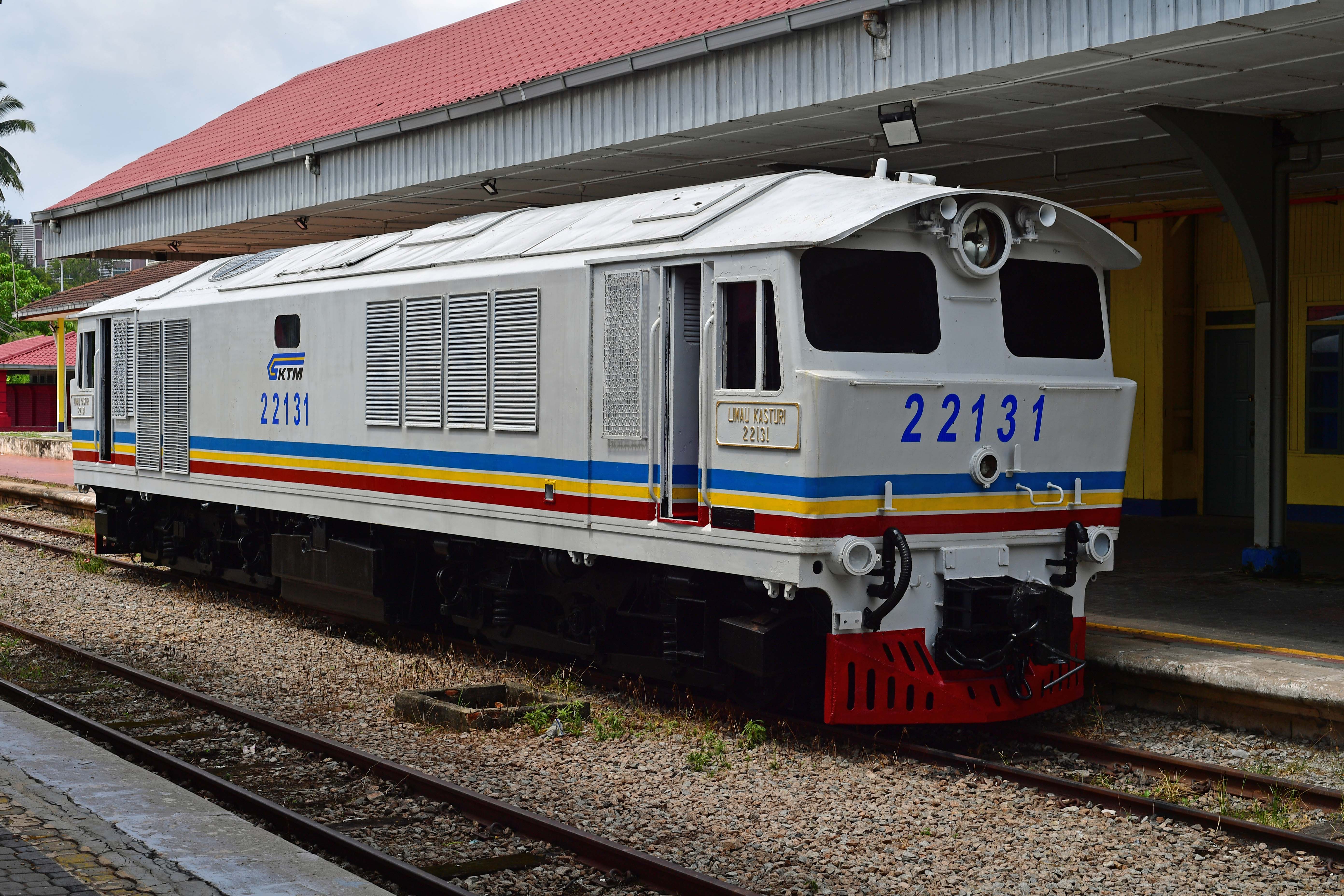
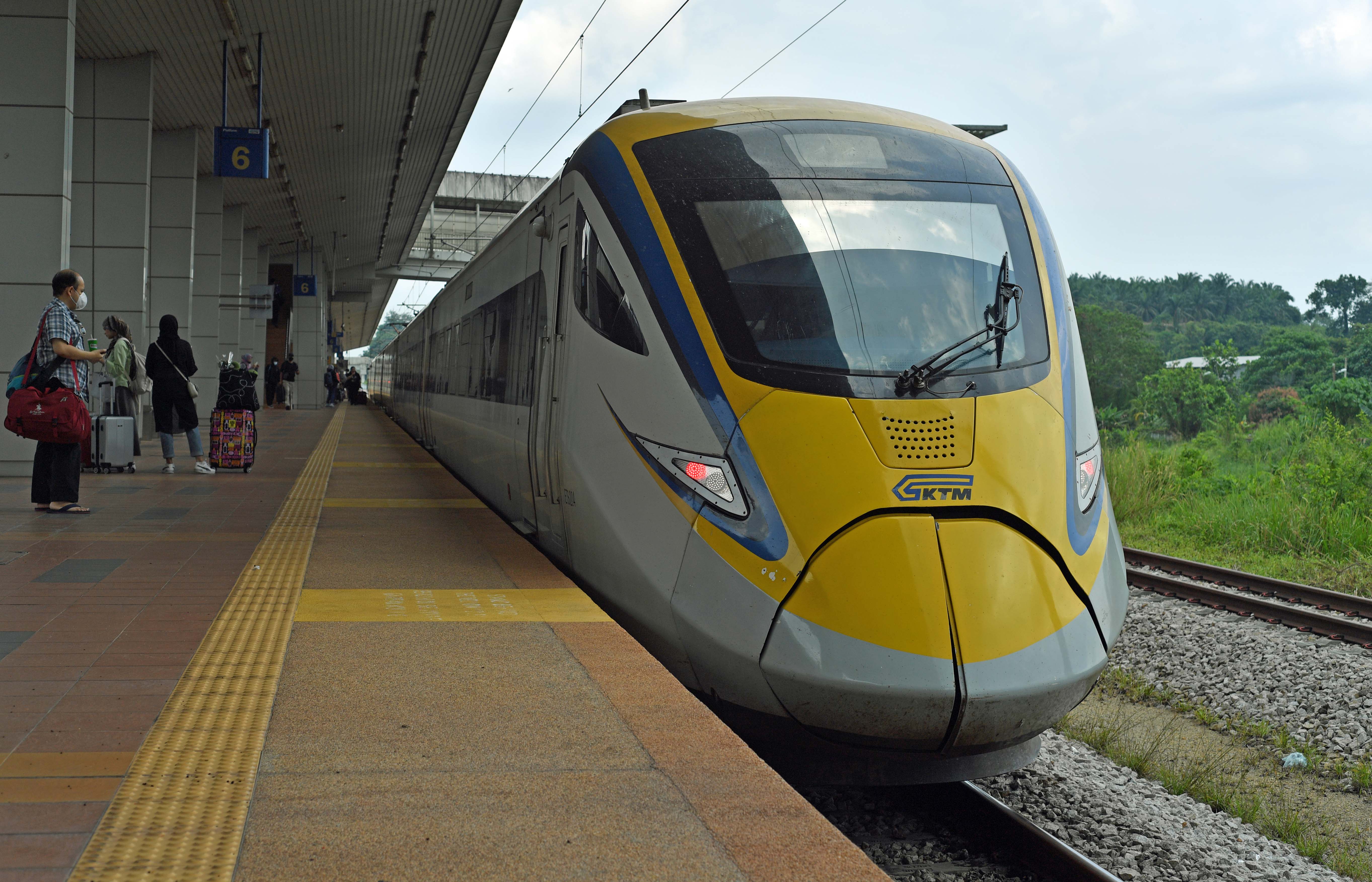
Another temporary station building, this time further North at Paloh.More substantial cutting stablisation. This time at Bekok.All the old railway level crossings have been abolished (and all the lineside fenced to stop two or four legged creatures straying onto the tracks) in order to raise line speeds and prevent the risk of a derailment. This bridge is between Bekok and Labis.Another ex-Indian railways Class YDM4 on ballast duties. This time at Labis. The ‘knitting’ (the actual overhead wires) start to appear from milepost 605, South of Genuang.Here’s progress on the rebuilding South of Genuang. Moat of the infrastructure’s complete, including the fencing protecting the line. All that remains is to complete wiring the OLE.I found this modern British built locomotive from Clayton in this new three-road shed at Genuang. It’s branded ‘Pestech’ (I’m assuming there’s a clue in the name there) but I’ve no idea what the purpose of the new shed will be. High above the streets, the new elevated railway passes through Segamat. It’s such a contrast to the original line.A variety of vintage traction used on construction trains stabled or dumped at Batu Anam near Gemas, Furthest left and right are two ex-Indian Railways YDM4s but I haven’t a clue what the origins of the two centre locos are. A closer look at the other two old locomotives at Batu Anam. Any help in identifying them is appreciated. Journey’s end at Gemas, junction with the East coast railway. Here’s the old station which survives intact with the massive new station behind and to the right. There were plans to turn the old station into a museum, hence the presence of various items of old rolling stock. There was also going to be an exhibition inside the buildings but everything is closed up and empty. The main building used to be home to an excellent restaurant but this has vanished. I’m assuming it was a victim of Covid. A little cafe remains but that only sells hot and cold drinks – and boiled eggs. The main exhibit which has recently been repainted is 22131. 40 Co-Co Class 22s were designed by English Electric and built by Metro-Cammell between 1970-71. For many years they appeared all over the Network but were retired from the 1990s onwards. Three (22109, 22115 and 22127) were sold on to be used on contractors trains, rebuilding the lines North of Gemas, but none appear to remain in service. 22131 is one of four (the others being 22121 (renumbered as 22110), 22125 and 22134 which has been preserved. Here’s what the future looks like. A Class 93 waits to operate the 15:20 service from Gemas to Butterworth via Kuala Lumpur. These 6-car EMUs are built by CRRC Zhuzhou, China. 19 of these trains arrived between 2013-2018 with another 10 on order. Powered by Siemens traction equipment, the trains normal maximum operating speed is 140kph. They’re clean, quick and comfortable, but not as much fun as the old trains!
As you can see, it’s not going to be long before the rebuilding of the line’s finished and loco-hauled trains become rare beasts on Malaysian railways, so – if you want to sample them I’d do so this year. If you’re interested in other photographs of Malaysian railways I have a collection from 2011-2012 which you can find here. They certainly show how much things have changed!
I’ve a small favour to ask… If you enjoy reading this or any of the other blogs I’ve written, please click on an advert or two. You don’t have to buy anything you don’t want to of course – although if you did find something that tickled your fancy that would be fab! – but the revenue from them helps me to cover some of the cost of maintaining this site (which isn’t cheap and comes out of my own pocket). Remember, 99% of the pictures used in my blogs can be purchased as prints from my other website – https://paulbigland.zenfolio.com/



 Paul Bigland