The fall of Singapore, 75 years on. Lessons from the past for the future.

Tags

, , ,

By chance, my arrival in Singapore yesterday was on the day the city-state remembered the 75th anniversary of the fall of the island to the Japanese in World War Two.

One of the books I’ve been reading on my travels is a study of the events leading up to the invasion and subsequent surrender (The battle for Singapore, by Peter Thompson). It’s a sorry tale of British arrogance and incompetence, of casual racism and an inability to face facts. The book exposes the myth the the islands mighty naval guns could only fire out to sea. In fact, some of them could and would be turned landward to shell the Japanese troops by the Johore Strait, but as the only ammunition they had was armour piercing shells, they were of limited use. The book also reveals that, whilst Gen Arthur Percival ‘took the rap’ for the fall, he wasn’t solely to blame. The whole military/civilian structure was, including the Governer. Despite warnings that the island was wide open to invasion through Malayia, less senior officers reccomendations that defences should be built along the Johore Strait, were turned down as “defences are bad for morale” (seriously)!

The fall should have come as no surprise. The island was woefully under-prepared and the re-enforcements it asked for were turned down. It had no tanks, few aircraft and many of the soldiers sent from India and Australia to defend the island were raw recruits with no training. Many hadn’t even been taught how to fire a rifle. The Chinese militia that were formed (far too late) to bolster the army were equally poorly prepared.

The siege was brutal, with thousands of civilians being killed by bomber aircraft which attacked the island with impunity. Worse was to come when the island fell as the Japanese were brutal masters. They slaughtered tens of thousands of Chinese for supporting the motherland in its war against the Japanese invader.

75 years on, Singaporeans are well rid of their former colonial masters. The city-state is a prosperous, modern, multi-racial country where standards of education (and civility) are streets ahead of little England. It’s not paradise (where is?) but it looks positively to the future whilst remembering the past without it being baggage.

How different to England…

The old qoute that ‘those who refuse to learn the lessons of history are doomed to repeat them’ couldn’t be more appropriate for Britain. 75 years on from the fall of Singapore and the attitudes that led to it can be seen again in our political leaders, sections of the media, and (sadly) some ordinary Britons: Arrogance, racism and a refusal to face facts are the ‘new black’. We call ourselves a mature democracy, yet we’ve let the leaders of the Brexit campaign buy many of us with their money, lies and fearmongering about foreigners (call them what you will, immigrants, refugees, economic migrants, it matters not). Folk talk of the ‘will of the people’ but it wasn’t the people who are pressing for us to crash out of the European Union and single market. Many people didn’t really understand what it was they were voting for, but that’s hardly surprising when they’ve been drip fed made-up stories about ‘bent bananas banned by the EU’ or stories about immigrants ‘flooding in’ to the UK.

The tragedy of the UK at the moment is the political paralysis at the top. Few seem willing to bite the bullet and say “look, this is madness. Brexit will ruin our country for nothing”. So, our leaders lead us over the edge of a cliff, whilst many privately admit that no good will come of it – others exhibit the same levels of ignorance, denial and incompetence as a previous generation of British politicians and generals (educated at the self-same public schools that many of the present generation were) who led Singapore (and Malaya) to disaster.

Singapore has a bright future. It’s recovered from the wounds others inflicted on it 75 years ago. Will the UK ever recover from the wounds it’s about to inflict on itself?

An unholy alliance (and unholy mess)

Tags

,

I’ve not bothered blogging about the anti Hs2 campaign much recently, mainly because there’s nothing worth blogging about. Having hit a metaphorical iceberg in the shape of the successful Hs2 Hybrid bill, their campaign’s been sinking slowly ever since. Most groups have already taken to the lifeboats, leaving StopHs2 and a few dozen bonkers (and mostly anonymous) tweeters frantically clinging to the stern as the icy water gets even closer.

Even so, I couldn’t resist mentioning this. On the day that the Lords gave the Hybrid Bill its 3rd reading (passing it by a stonking majority of 360 on a 386-26 vote), an unholy alliance of environmental groups (who should know better), right-wing lobbyists (the antithesis of the green movement) and vested interest groups placed full page adverts in the national media, calling on people to stop Hs2 by writing to their MPs. ‘Friends’ of the Earth even started a petition on their website (here)

FOE.PNG

By today, that petition has had a ‘whopping’ 1062 votes!

What’s so laughable about all this is that the whole thing has been a spectacular waste of time and money! Why? Because MPs don’t have another chance to vote on the principle of Hs2! There’s no stopping it now.

It’s true that as the Lords amended the Hs2 Hybrid Bill it will go back to the Commons – but this is only so that the amendments can be considered. MPs decided that Hs2 should be built at 2nd reading of the bill back in 2014. They don’t get a 2nd bite of the cherry, so people writing to their MPs is a complete waste of time. One can only wonder who advised the ‘unholy alliance’ on their tactics and decided that this was a cunning plan as – in reality – it’s both too late and entirely the wrong target.

As the Hs2 Hybrid Bill is due to receive Royal Assent later this month, it looks like the anti Hs2 campaign decided to throw away the last of their money on yet another useless gesture.

The UKs suicide politics

Tags

, ,

Despite being thousands of miles away from the UK I’ve been keeping up with the latest Brexit madness back at home. And truly, madness it is. It seems like the majority of MPs have metamorphosed into a strange cross between lemmings and invertebrates as they  spinelessly vote for a course off action (Hard Brexit) that will see our country jump off an economic cliff. “But we’re respecting the will of the people” they cry.

Really?

Funny that, because one of the architects of the Leave campaign, Dominic Cummings, has admitted that they only reason leave won was because they lied to people. Remember that “£350m a week for the NHS” lie?. This piece from the London Economic makes fascinating reading.

So, when MPs say ‘respect the will of the people’, what they’re actually saying is “respect a non-binding referendum vote that was narrowly won by blatantly lying”. That is not democracy. Not by a long chalk. That’s the sort of ‘democracy’ that politicians acquiesced to in the 1930s – and we all know where that got us…

So why do so few MPs have the backbone to stand up and admit the truth? Nowadays, I have far more respect for Tory rebels like Anna Soubry than I do for many Labour MPs (including my own) who’ve rolled over, seemingly out of fear of losing their own seats. It won’t help them. The Labour bloodbath is inevitable – it’s just a question of which direction it comes from. I would have hoped I’d have seen a principled fight, going down with honour in the hope of coming back with it too. Instead, we’ve got ’50 shades of UKIP’.

To add further insult, we have Jeremy Corbyn, the serial rebel who’s defied the Labour whip more than any other Labour MP, insisting that ‘his’ MPs vote FOR article 50. Afterwards he had the gall to tweet this;

corbyn..PNG

No Jeremy. The ‘real’ fight started as soon as the referendum was called, but you bottled that one. Most of us suspect you bottled it because we know that you never wanted us to stay in the EU anyway as it doesn’t fit with your dogmatic socialist view of the world. Despite the fact the vast majority of Labour MPs & members were pro EU, you ignored the majority view you claim to espouse in favour of your own beliefs. If you hadn’t ,we wouldn’t be in this mess now. So, please, stick your hypocrisy where the sun doesn’t shine. You blew the chance to stick up for all the things you mention in that tweet, so don’t try it on now.

‘Take back control’ they said. Never has a slogan seemed more empty – especially in what are supposedly the corridors of power.

Bali reflections

Tags

, , ,

I’m on my penultimate day in Bali before moving on to Java and beginning my trek all the way back up to Bangkok. This is the first time I’ve been back to the island in 5 years. A sobering thought is that I first came here as a solo overland backpacker way back in 1992, 25 years ago! Part of me wished that I’d brought my old diaries with me, but as they’re not digitised, they’re too valuable to risk. This trip has made me resolve to remedy that – as well as concentrate getting the hundreds of slides from the trip scanned. I left the UK in October 1991 and didn’t return until a year later. I spent five months in Indonesia, island-hopping from Sumatra to East Timor via local buses and ferries. In these days of cheap flights (and more onerous visa restrictions) it’s a feat no-one attempts anymore. I came back & repeated the trip as far as Flores with my late partner, Lynn in 1998 but we also came to Bali a couple of times on holidays. Those experiences have given me the perspective to see how much Bali has changed in a quarter of a century.

Admittedly, this isn’t the same island-ranging trip as before as my primary reason for visiting was to come and see Alison, an old Australian friend whom Lynn and I first met in India in 1998 and who now lives here. Alison accompanied the pair of us on chunks of our 18 month trip around the world onwards from that point, sharing many of our adventures. So, most of my time here has been spent in the Ubud area where Alison has a home and business, Mingle Cafe. To say the place has changed since 1992 is an understatement. It’s grown hugely as money, tourists and expats have flooded in. Traffic is a bit of a nightmare too. Roads that used to be reasonably quiet have become sclerotic with parked cars & scooters. Suicidal tourists on scooters don’t help. Some of them insist on driving down one-way streets or weave in and out of traffic as if it really matters that they get somewhere a couple of minutes quicker (this is Bali, for God’s sake, they taught the Spanish the meaning of ‘Manyana’!)

Some of the places I had fond memories of have gone, others remain. Sadly one of my favourite restaurants serving authentic Balinese veggie dishes has disappeared since 2012, There’s a few new eyesores in Ubud (especially on Monkey Forest road, where there’s some monstrous but half abandoned buildings), but there’s also some attractive additions as traditional buildings have been expanded in a tasteful and respectful manner. That said, there does seem to have been a bit of a ‘building boom’ that’s outstripped demand. I passed quite a few shops & showrooms that have been built speculatively, without any thought to location or commercial need. Most (but not all) of the building is ribbon development. It’s filled up the spaces along the roads but the rice paddies behind largely remain intact as I saw for myself when I flew in from Thailand.

What hasn’t changed is the Balinese people. They’re still as friendly and welcoming as ever, and their unique culture survives, seemingly unscathed. I’ve always thought the Balinese were object lessons in how to hang on to your culture despite mass tourism – even with the latest human waves to hit the island (first the Russians, now the Chinese). Religious ceremonies and practices that have endured for centuries are still part of daily life here – even if some have been updated to reflect the modern age. I took part in one example shortly after arriving. Tumpak Landep is the day to pay homage to metal heirlooms (such as old daggers handed down through the generations). Nowadays its expanded to include blessing everyday items such as cars and scooters! Nonetheless, it’s taken seriously, families don their traditional clothing as always for such occasions and the blessings are performed. I can’t help but admire the Balinese for this. Their religion still has such a big part to play in their everyday lives that we in the West can’t really imagine it unless we experience it.  Here’s a selection of pictures from Tumpak Landep;

DG264167. Blessing offerings for Tumpak Landep. Bali. Indonesia. 4.2.17.JPG

Blessing and sprinkling holy water on offerings and family heirlooms.


DG264162. Girl placing blessings on a scooter during . Tumpak Lendep. Ubud. Bali. Indonesia. 4.2.17.JPG

A young girl places offerings that have been blessed and sprinkled with holy water onto one of the family’s scooters.

I’ll be sad to leave as I’ve always loved Bali. Plus, it’s been a joy to catch up with Alison and it’s been an interesting time being part of an expatriate community intertwined with the local Balinese music scene (something I rarely experience on my travels). I’m determined that won’t be another five years before I return.

Next, I move on to Java, somewhere I’ve not been back to since 1998. I’m starting the trip in a city I’ve never experienced before – Surabaya, so that should be fun…

A morning at the market

Tags

, , ,

I love old-fashioned markets. Whilst they’re on the decline across the UK as more folk shop in supermarkets, they’re still very part and parcel of everyday life here in Bali. They’re a photographers’ delight due to the shadows and light, riot of colours and variety of people and produce. Yesterday morning I popped down to one near where I’m staying.

Pejeng market is typical of the type. It’s a ramshackle rectangular area just off the main road, tucked in behind a row of shops. There’s a multitude of small stalls selling a dazzling array of fresh fruit and veg, some of which I recognise – others not. There was the distinctive salak (snakeskin fruit), huge papayas, bananas of all shapes, sizes and curvatures (Brexit voters beware), oranges, passion fruits, apples, soursop, dragonfruit and more – making up every colour of the rainbow. Some of the vegetables were even more mysterious. It’s easy to identify potatoes, lettuces, green beans and tomatoes as they’re universal, but Bali grows some root vegetables I’ve never been able to put a name to. It’s not just fruit and veg you get in these places either, they’re just like a supermarket (OK, admittedly they don’t have the same hygiene standards, but they’re not as boring either!). At Pejeng you can also buy clothes, toiletries, flowers, ready made offerings to the Gods – and even get breakfast. Every morning, local woman will arrive carrying their makeshift stalls on their heads before setting up shop to sell delicious home cooked food to passers by. Others use scooters with a large metal & glass cabinet bolted to the back to sell skewers of chicken or pork cooked on the charcoal burners. The melange of smells from the stalls is fabulous. Many Westerners look askance at the standards of hygiene so baulk at trying the food – which is a great shame as they’re often missing out on unique dishes they’ll never see on a restaurant menu.

I love spending a few hours people-watching at these markets. The vast majority of the stalls are run by women and they make up the majority of the shoppers too so the places are always full of laughter and chatter. No-one’s upset at the sight of a Westerner with a camera, exactly the opposite. I ended up getting into several conversations as I looked at what was on sale or asked about what stuff I didn’t recognise. At one shop, a woman asked me to get a picture of her with her grandson, then send her a copy. Of course, I was more than happy to oblige. Here’s a few shots from that morning. If you want to see the full selection, head to this page on my website.

dg264374-in-the-local-market-pejeng-ubud-bali-indonesia-7-2-17

One of the butchers stalls. The hygiene standards, lack of refrigeration and the ever-present flies would make most Westerners blanche, but everyone else takes it in their stride.

dg264380-fruit-and-veg-in-the-local-market-pejeng-ubud-bali-indonesia-7-2-17

Most of the fruit and veg in the market would never make it into a European supermarket as it isn’t perfectly shaped, it has blemished skin or it isn’t uniform in size. But it has something far more important: Taste!

dg264443-buying-salak-fruit-at-the-local-market-pejeng-ubud-bali-indonesia-7-2-17

A young woman buys Salak fruit (Salacca zalacca) from a stallholder. These distinctive fruits are only found in Indonesia and Malaysia.

dg264493-buying-breakfast-at-the-local-market-pejeng-ubud-bali-indonesia-7-2-17

A woman prepares a breakfast package for a customer. Each morning this lady will carry her makeshift stall with all the prepared food on her head. It’s a common sight right across Indonesia. I often buy food from ladies like this as it’s home-made, often unique, but always delicious!

Why rail level crossings and cities don’t mix.

Tags

, , , ,

Back when railways were first developed, no-one forsaw any problems with them crossing roads on the flat at level crossings. After all, in those early days, road transport was horse drawn and sparse and motor vehicles had yet to arrive on the scene . Move forward 175 years and the situation is very different – especially in urban areas.

Probably the worst example of a level crossing in the UK is in Lincoln, where traffic is brought to a standstill several times an hour by passenger and freight services. Despite the provision of a new footbridge to ease pedestrian flows, little can be done to replace the crossing by a bridge or tunnel due to the built-up nature of the area.

dg28565-66511-lincoln-16-7-09

Lincoln, showing how the crossing is hemmed in at either side, making replacement with a tunnel or bridge impractical.

I’ve found an even worse example in Bangkok, Thailand. Yommarat Junction is a few kilometres North of the city’s main railway station, Hualamphong. Here, the railway lines to the East splits from the lines to the North and South of the country to form a triangle, with Yommarat at the Southern end. Back when the line opened in 1903 this wasn’t an issue. Bangkok was a small city with little road traffic. Now, it’s a bustling metropolis of 14 million people that has a horrendous traffic problem – and the rail crossing at Yommarat sits bang in the middle of some major road junctions. Whilst Lincoln can see 10 trains on hour, on my visit to Yommarat there were 15 in an hour and ten minutes. This was a mix of passenger, light engines and inbound ECS services. The road traffic is even more diverse as the area to the West of the crossing includes a hospital, Royal palaces and army barracks, so you regularly see convoys of black cars with heavily tinted windows, escorted by police motorcycles, speeding through.

A look at a map shows exactly what the problem is.

yommarat-jn

Not only does the railway cross a crucial crossroads of four main roads connecting East and West Bangkok, there’s also the slip road to the city’s elevated Sirat expressway just a hundred yards to the East of the line. It’s not just the roads that suffer here. Trains have to be held either side of the crossing to allow the traffic to clear and the gates to be closed. It’s not a quick operation. It often adds 5-20 minutes to a trains journey. Often, trains are held at either side so that they pass on the crossing. It doesn’t hold up traffic for as long, but it’s hardly great for punctuality! The normal method of working the gates is to close the Southern pair first, leaving the Eastern flow across to the vital expressway slip road open for as long as possible.

Here’s a few pictures to set the scene.

DG263864. 4560. Yommarat Jn. Bangkok. Thailand. 2.2.17.JPG

Hitachi built Co-Co No 4560 heads South across Phetchaburi Rd towards Hualamphong terminus (off to the right of the picture). You can see traffic queuing up the flyover behind it.

dg263948-2512-4508-yommarat-jn-bangkok-thailand-2-2-17

One of the UK built Class 158 DMUs passes a Hitachi built Co-Co which is working ECS to Hualamphong, bringing in some of the new Chinese built sleeper cars that are used on overnight services to Chiang Mai.

Meanwhile, here’s a video to show what happens before and after a train passes. Watch out for the volume of traffic that’s unleashed after the gates open.

Unsurprisingly, everyone is keen to get rid of the crossing. After several false starts a solution is now at hand. In 2019 Hualamphong terminus is due to be closed and turned into a museum as it will be replaced by the new Bang Sue interchange (see this previous blog). Admittedly, this date has slipped before but the writing’s clearly on the wall for this crossing. It’s an entertaining throwback to an earlier era (unless you’re a Bangkok motorist!) – so go and see it whilst you can.

Flying solo for a while…

Tags

, , ,

Bangkok. 13:00.

I’m sat in my new hotel room after downsizing in both luxury and cost as my partner, Dawn, flew back to the UK early this morning. Now I’m on my own for the next few weeks as I do some exploring whilst using the time to catch up with friends In Indonesia and Malaysia.

I’m back in old haunts in Banglumphu at a backpackers hotel called the Happio. I’ve stayed here many times in the past. Then it was called Happy House. It’s cheap, cheerful, friendly and suits my needs as I only require a room for 14 or so hours as I’ve got a flight to Bali at silly o’ clock in the morning. One improvement is that the hotel wifi has been extended from the restaurant/reception to encompass all the rooms. As I’ve been travelling long enough to remember the days of ‘Poste Restante’ addresses (what? ask younger travellers) I’m still sometimes amazed how the communications revolution and the internet has revolutionised travelling – for better and worse…

Dawn and I spent the past few weeks relaxing in Thailand. For once, instead of travelling, we stayed the entire time down in the Krabi area. I’ll blog about our time there separately. As I’m now on my own I’m using the time to catch up on work at home and plan the rest of the trip as I’m going to be very much on the move (I have itchy feet to scratch), so expect regular blogging and pictures.

Although I’ll miss Bangkok (I feel very much at home here) I won’t miss the traffic. Chrissorn, an old Thai friend of ours drove us to the airport at 6am this morning. At that time of day the traffic was fine, but Chris & I got caught up in mayhem on the return trip as one of the expressways was in gridlock so the journey took more than twice as long. Bangkok is slowly extending and linking up its rail and metro network but some projects are years late, disconnected from each other and the fares are expensive – which isn’t tempting people out of their cars (as Chris explained to me – he’d only got his car a few days ago). You can read about some of the reasons why in my earlier blog about a trip on the new Purple line metro.

Bangkok is a stark contrast to London which has a mature rail network. Few would dream of commuting into the capital by car & the city isn’t scarred by the massive flyovers and elevated expressways that Bangkok has to endure. Still, I’ll be interested to see how things develop. I expect to be popping back on a regular basis to check on progress. But right now, it’s time for lunch…

A rainy day in Krabi…

Tags

, , ,

The run of unseasonal wet weather continues here in Southern Thailand. Torrential rain arrived in the early hours of the morning and, although its strength abated several hours ago, it’s still raining now at 1.50pm. I’ve never known anything like it in all the years I’ve been coming to this part of the world. I’ve cut my cloth accordingly and spent the day catching up on the news – which frankly, is as depressing as the weather here.

What the hell is going on with politics in the UK? Both Labour and the Tories seem to have taken leave of their senses. Firstly, there was Teresa May’s blustering speech on Brexit in which she called for the country to unite behind her in her economically suicidal pursuit of ‘hard’ Brexit. Has the woman lost her mind? I only have one answer for her. Like hell I will!

As if that wasn’t patronising enough, she showed how little she actually understands about negotiating by threatening the EU. ‘Give us a good deal or I’ll turn the UK into a low tax Singapore on your doorstep’ she claimed. Meanwhile, good old Boris insulted French President Hollande by accusing his country of wanting to inflict “WW2 style punishment beatings” on the UK (see video here). This man is meant to be a diplomat for God’s sake! No wonder the UK’s Civil Service is in despair as the FCO is led by a blundering clown. The UK political scene is rapidly descending into low farce. It’s ‘Carry on Brexit’.

Needless to say, our European neighbours response was far more mature. They ignored the threats and promptly burst May’s bubble by pointing out a few practical political and economic realities (see here).

Meanwhile, what’s the reaction of Jeremy Corbyn, the Leader of the Labour party and allegedly the main ‘opposition’ party? Remember that the overwhelming majority of Labour voters and MPs supported remaining in the UK. So, Corbyn obviously supports that position and the democratic mandate it gives him to represent his party’s wishes, no? Like hell! Corbyn is going to impose a three line whip on his MPs to make sure they don’t oppose triggering Article 50!

We now have the bizarre situation that the majority of the UKs political establishment is rushing headlong into imposing Brexit on the country, despite only 37% of the electorate having voted for it. Not only that, but even many Leave campaign luminaries were swearing blind that a vote for Brexit didn’t mean that we’d be leaving the single market. Like all their other claims, that was a lie too – and here’s the evidence.

No wonder Britain has become the laughing stock of Europe. Our politics have descended into a farce and the majority of the electorate are being shafted by a vociferous, kamikaze minority who don’t seem to have the mental wherewithal to see what’s coming their way. It’s akin to steerage passengers on the Titanic urging the Captain to go faster & damn the icebergs. What’s equally baffling are the ones who do have the critical faculties to appreciate the situation that’s facing us, but prefer not to and sing ‘always look on the bright side of life’ instead.

Meanwhile,  I’m observing the UK circus from Thailand and wondering whether my long-term future lies outside that particular tent…

A trip on Bangkok’s new ‘purple line’.

Tags

, ,

Just before leaving Bangkok I took a trip on the city’s new standard gauge ‘purple’ metro line the first half of which only opened to passengers on 6th August 2016. This section runs for 23km from Tao Poon, near Bang Sue North-West to Khlong Bang Phai in Rat Burana district.

I started my trip by getting a taxi through the choked city streets to Hualamphong station. Anyone who’s every travelled in the city will know its fearsome reputation for traffic jams which mean even the shortest journeys can take an age. You never know just how long it will take you to get from A-B by road. The Indonesians have an expression for it, ‘jam karet’ (‘rubber time’). Frustrating as it is for visitors, imagine what it must be like to be one of the cities long-suffering taxi or bus drivers, who must have the patience of Buddha.

Hualamphong had changed since my last visit in 2015, with mixed results. On the good side, there’s now a special ticket office for tourists which is located opposite platforms 7-8. The building used to be home to an excellent Thai soup kitchen that was full of steaming vats of different and delicious varieties from around the kingdom. I’d often eat there when I was staying nearby, so I’m sad to see it’s gone. Gone too are all the hawkers who used to sell food and drink on the platforms. No longer can you buy bamboo skewers of chicken or pork slowly grilled over charcoal, or the bags of sticky rice that used to accompany them. Even the shops that used to occupy the booths on platforms 4-5 are deserted. I think the slow demise of these eateries began when the authorities banned the sale & consumption of alcohol in 2014, after the rape and murder of the 13 year old girl aboard a train by a railway employee. It still seems an over the top response, especially as the crime wasn’t carried out by passengers. Shops and a food hall can be found on the  main concourse under the attractive arched roof, but the restaurant & bar on the mezzanine floor has closed down, which is a shame. It used to be a great place to sit, sip a beer and people watch before catching a train. There’s a couple more improvements on the platforms, as some have been equipped with electronic departure/arrival screens by the buffer stops and four of the roads outside the roof now have fancy canvas roofs covering the first few coach lengths. Even so, some of the life an interest seems to have gone out of the place. This wasn’t helped by the fact that services to Malaysia, Hat Yai & other Southern destinations in Thailand had all been cancelled due to unseasonal floods washing away the tracks in the South. Here’s a few pictures…

DG262462. All the platform shops are now closed and deserted. Hualamphong. Bangkok. Thailand. 11.1.17.JPG

Once these kiosks were busy little places supplying food and drink to passengers for the express trains to all points in Thailand, now they’re locked up and deserted.

Eschewing the tourist ticket office I bought a ticket to Bang Sue Junction from one of the ordinary ticket windows for the princely sum of 2 baht (less than 6p!). Not bad for an 11.5km journey – especially when you consider that the metro journey between the two would cost 70 baht! The train that took me there was made up of wooden seated 3rd Class coaches headed by a diesel loco built by Alsthom. No 4150 was one of the first batch of 54 supplied in 1975 although its one of the fleet that’s had its original engine replaced with an MTU 16V4000R41R power unit.

dg262470-expensive-ticket-hualamphong-bangkok-thailand-11-1-17

My ticket to Bang Sue. Not exactly a King’s ransom…

The trip to Bang Sue was the usual stop/start affair as we negotiated several busy level crossings en-route. They don’t exactly help traffic flows around the city and they’re one of the reasons that the main terminus for Bangkok is moving to Bang Sue. Although it’s years late and still under construction, the new station is already an impressive sight. The first inkling that you’re getting close when you see the enormous, twin track concrete viaducts rise on either side of the existing lines before they sweep across to the right in a wide arc to what was the site of Bang Sue’s carriage sidings and goods yard. These have been swept away to make way for the site of the new interchange, which will be a vast, four storey station with tracks on two levels. When it’s complete it’s planned to have 24 600 metre long platforms, reportedly making it the largest station in Asia. Construction is now well underway. All the massive pillars appear to be present and they’re festooned with cranes and gantries which are lifting the huge concrete segments to make up the train decks into place. Meanwhile, the old, partially demolished station continues in its role.

dg262624-building-the-new-station-bang-sue-bangkok-thailand-11-1-17

The new Bang Sue interchange station takes shape.


dg262635-building-the-new-station-bang-sue-bangkok-thailand-11-1-17

One of the gantries which lifts concrete segments that form the bridges for the running lines into place before joining them together.

Leaving the train at Bang Sue I crossed the tracks on foot and weaved my way through the numerous hawkers food stalls to get to the main road and bus stops. I’d just missed one of the shuttle buses that connect with the purple line terminus at Tao Poon, so, as it was a cloudy day and not too humid I elected to walk the 1km distance between the two as it gave me chance to check out the Blue line extension of the existing underground line which will eventually link the two. This rises up out of the ground like the launch ramp of a V1 rocket, before levelling off on a not unattractive viaduct to reach Tao Poon, where it passes under the Purple line to create a station in the perfect shape of a cross. It’s a massive elevated edifice that involves a serious amount of steel and concrete. But, at the moment, the lack of a real rail interchange is having a serious effective on purple line passenger numbers. It’s only carrying 20,000 instead of the projected 70,000 per day. The blue line extension is currently expected to open in August this year.

dg262517-concourse-purple-line-station-tao-poon-bangkok-thailand-11-1-16

The entrance to the platforms at Tao Poon. You can see the security gates everyone has to pass through.

Making my way up the steps and elevators to the concourse I found the place pretty quiet. Admittedly, it was early afternoon, but it was clear the station was built to cope with far more passengers than it was seeing. I used one of the bilingual ticket machines to buy a ticket (well, a plastic token in reality) to take me to the Northern terminus at Khlong Bang Phai for 42 baht. Thanks to Brexit this is just (but only just) under a pound. At the moment a quid is worth a smidgen over 43 baht. Before that economic and political disaster you would have got 53 baht for a quid. Cheers Quitters! But I digress…

After buying a ticket you have to pass through security to reach the platforms. Two electronic gates were staffed by a couple of smiling and continually wai-ing young ladies who asked to look in my camera bag. Once through I took another escalator up to platform level, which is staffed by Thais working for G4S (famed for their London Olympics debacle). Cross the yellow tactile tiles along the platform edge or lean on the platform barriers that separate it from the trac,ks and you’ll soon attract their attention via a sharp blast from their whistles! In truth they were unswervingly polite and helpful and simply carrying out their duties as instructed. Their was no objection to me taking photos and there’s no signs that say you can’t (unlike on the underground) so everything was fine. All 16 stations on the line follow the same basic layout. They’re all island platforms 6 cars long, although the concourse & ticket office arrangements vary by location. The vast majority of the route runs along the central reservation of roads of varying sizes, where there’s room everything will be built underneath the platforms and linked to the pavement via footbridges. Where the roads are too narrow ticket machines and gates will be housed on buildings adjacent to the pavement. Four of the stations (Khlong Bang Phai, Sam Yaek Bang Yai, Tha It and Yaek Nonthaburi) have huge multi-story park and ride carparks.

dg262528-platform-level-purple-line-station-bang-son-bangkok-thailand-11-1-16

A typical station layout on the purple line, showing the platform gates, lift and stairs. Don’t step over the tactile yellow strip until a train comes in, otherwise the staff will tell you off!

In 2013 the Mass Rapid Transit Authority of Thailand awarded metro concessionaire Bangkok Metro Public Company Ltd an 80·3bn baht 30-year contract to operate and maintain the route. This was divided into a 3 year construction phase before a 27 year operating phase. The contract also included supplying rolling stock and electrical and mechanical equipment.  The 21 3-car trains were supplied by East Japan Railway train manufacturing subsidiary  J-TREC (Japan Transport Engineering Company). In fact much of the line has been funded by Japan, with loans coming from an ODA loan. The M&E equipment has also been supplied by Japanese firms. This plaque at Klong Bang Phai commemorates Japanese involvement.

DG262573. Commemorative plaque. Purple line. Khlong Bang Phai. Thailand. 11.1.16.JPG

The whole length of the line is elevated, which makes for an interesting trip, not because it’s particularly scenic as most of the landscape is urban, but because it shows you how improved transport infrastructure has kick-started development. New multi-story apartment blocks are springing up all along the route. In many cases, older (say 20-40 years) low rise structures are being demolished to make way for them. Some of these are the traditional Chinese style shop-houses, others are derelict factory sprawl and a few are greenfield sites. Of course, unlike to roads it follows, the beauty of a trip on the metro is that you know exactly how long it’ll take.

Points of interest along the route are just beyond Bang Son the second station, where the line sails high above the existing SRT line to the South – and the new elevated light red line from Taling Chan, with its own station to the right. Although this metre-gauge line was completed some years ago, even running a trial service back in 2012-14 using existing SRT DMUs it’s been mothballed since January 2014 as it neither has new trains to run on it, or the new station at Bang Sue to run into!

There is one scenic part of the trip, which is when the line crosses high above the majestic Chao Prahya after Phra Nang Klao station before heading off along more main roads through suburban sprawl  and new shopping centres. Shortly afterwards it reaches journey’s end at Khlong Bang Phai. The approach to which is signalled by an elevated line branching off to the right which runs into the lines new purpose built depot containing two long battleship-grey sheds. The nearest one is for stabling and cleaning whilst the furthest is for maintenance.

dg262553-depot-at-the-end-of-the-line-purple-line-khlong-bang-phai-thailand-11-1-16

The depot at Khlong Bang Phai, with park and ride facilities below it.

The 3-car trains that operate the line are rather swish. I’ve not been able to find any technical details of them (if anyone can point me in the direction of some I’d be grateful) but they follow the standard Thai pattern of having plastic longitudinal seats, a/c, CCTV, lots of standing room and plenty of grab-rails. They have open gangways and a PIS system that counts down the stations stopped at en-route. Here’s a look at them…

dg262555-interior-purple-line-train-khlong-bang-phai-thailand-11-1-16

I’ve no doubt that once fully connected, and with all the new development that surround the line completed, the purple line with fulfil its potential. But right now is a good time to visit as it’s pleasantly quiet! Once this is completed, it will be a different matter…

dg262613-fitting-out-the-blue-line-tao-poon-bangkok-thailand-11-1-16

Looking down on the extension to blue line at Tao Soon where tracklaying is heading Westward.

New railway construction abounds in Bangkok. When I return later this month I’ll post an update on the construction of the new elevated ‘dark red’ line for SRT, the first section of which runs from Bang Sue, past Don Mueang airport to Thammasat University.

If you want to see more pictures from this series, as well as travel shots from my time in Thailand, follow this link to my picture website.

The journey begins.

Tags

, ,

It’s a cool grey morning here on our first day back in Bangkok. Well, cool for Thailand that is – having just flown in from the UK it feels rather pleasant. Rain is predicted for later in the day but nothing like the unseasonal downpours that have caused flooding in the South of the country. The planet’s climate is certainly getting more unpredictable. The unusual is becoming the norm nowadays, yet some people still refuse to accept that the climate is changing and we’re responsible.

After being awake for over 26 hours I’d have expected to sleep longer, as we have in the past (one time for nearly 16 hours as we were that knackered). Admittedly, we did have an impromptu alarm clock in the form of a young English couple in the room next door. She was awake at 6am so she could spend nearly 2 hours ‘phoning (or face timing) her family back in the UK. I only know all this because the hotel walls aren’t that thick, so her voice penetrated quite easily. It was a terribly mundane conversation, padded out with the gratuitous use of the word ‘like’, amongst others. As an old fart who’s been tramping these Asian trails since 1985 I couldn’t help reflecting (and almost yearning) for the days when the only way you could keep regular contact with home was by sitting down and writing them a letter – at least you couldn’t hear the noise of someone scribbling through a wall! Or, for that matter, this modern equivalent, committing your thoughts and deeds to a blog like this. It’s also far less ephemeral, reaches more people and I can edit out all the ‘likes’, so what’s not to like, like? In fact, I’m typing this on the laptop whilst Dawn is asleep next to me…

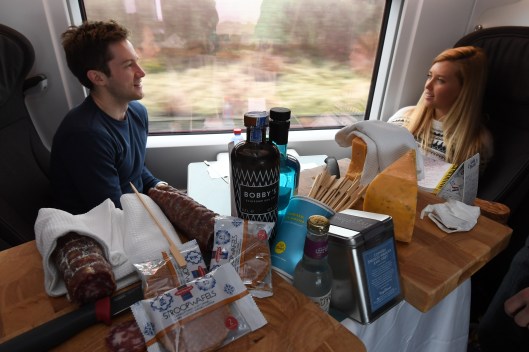
Our journey from the UK went without a hitch. A friend had arranged discount 1st Class tickets on Virgin East coast for us so the trip was in style as we wined and dined on the 12.15 from Leeds to London. I’d not done this for a while, so I have to admit to being impressed with the quality of the food. I had a lovely lamb and mashed potato dish, washed down with a glass of wine. Even if we’d have paid full price, an advance single from Leeds to London was still only £45 (with a meal and wine) which rather puts the recent stories about ‘rip-off’ rail fares into perspective.

We’d given ourselves plenty of time to get to Heathrow but the Piccadilly line was working like clockwork so we stopped off in Covent Garden for some last-minute shopping. There’s a clutch of outdoor shops on the South side which allowed me to arm ourselves with some of the weapons-grade mosquito repellent that can come in rather useful in this neck of the woods, especially as Dawn reacts badly to mossie bites. Terminal 4 at Heathrow was very busy but all the staff were efficient so we were checked-in on our Jet Airways flight in good order, through security with a joke and a smile (always nice as it’s such a thankless process for everyone). Soon we were sitting in a bar-restaurant for a last snack and my final pint of British bitter for some time. I’m not a great fan of this terminal. It’s cramped and the selection of eateries is limited compared to others, although it’s still a lot better than I remember it from the past now that it’s been given a makeover.

The first leg of out flight was with Jet  Airways to their hub at Mumbai (Bombay in old money) aboard a Boeing 777. The flight was packed but I can’t complain. The legroom was OK, the stews’ were friendly and efficient and the vegetarian meal was really tasty – Dahl, with rice and spinach, served with a paratha. On long-haul flights like this I always try & catch a few movies as I’m not a great sleeper and It gives me chance to see stuff I’ve either missed or wouldn’t pay for at a cinema. The in-flight entertainment system was stuck and needed a reset but once it came on it worked a treat and I gorged myself on “Independence Day: Resurgence” which is a pick-up from the original, if not quite as exciting now as it closely follows the path of the first film,”Jason Bourne”, which I really enjoyed as I’ve always been a fan of the series, and finally, “Suicide squad”, a steaming pile of cosmic comic-book nonsense which even Will Smith couldn’t do much with.

We landed at Mumbai on time, so the 90 minute connection time was a breeze. I’ve not been here for a few years. It was unrecognizable as an Indian airport. Not just because it’s been completely rebuilt, but because it didn’t suffer from the usual problems Indian construction always used to. It wasn’t shoddy, and everything worked! I was genuinely impressed by the scale of the place, the quality of the shops and services, and the décor.

The second leg of our flight for the four hour trip to Bangkok was aboard a another Boeing, this time a modern 737-800. As it’s a smaller, single-aisle plane there’s no seat-back entertainment screens, instead, programmes are streamed to your own personal devices. Once again, the service was good. If anything, the stewardesses were friendly and more accessible than before. The veggie meal was just as delicious only this time the spinach came with paneer. I treated myself to a couple of glasses of red wine (something else I won’t be drinking for a few months) to help me sleep. We’d got plenty of leg-room as we were in seats by the escape door, although this was offset by the fact those seats don’t recline. Still, it was a pleasant flight.

The only real complaint of the trip was that the queues for passport control at Bangkok were massive. Several big planes had arrived together and the staff couldn’t cope. We queued for about 40 mins to get through. The irony was, just as the queues abated, extra staff appeared! I couldn’t help thinking back to the UK and the madness of the Brexit vote. Is this going to be the experience we can look forward to at EU airport if we do crash out of Europe – as is looking extremely likely?

We took the airport rail link to get into the city. At 45 baht for a trip to Phaya Thai it’s both the quickest and cheapest way. I was confused when I saw we were being ushered onto one of the red ‘Airport Express’ trains as these used to be dedicated to the Makkasan link but nowadays some trains run the full length of the route. The problem is, one of the four coaches is reserved for checked in airline luggage, which is a waste of space as the service was never anywhere near as popular as it was meant to be so it was abandoned in 2014. Now they move only fresh air, whilst the rest of the train is packed*. At Phaya Thai we caught a taxi to get us to our hotel off Phra Artit Rd, by the Chao Praya river. Unusually for Bangkok, the first taxi I flagged down agreed to use his meter without demur, so we were at the hotel’s check-in desk by 21:00.

Despite being tired we were actually hungry, so we quickly changed before heading out to see if one of our favorite street restaurants in Rambutri was still going. It’s been rebranded ‘The Gun’ but the staff and the quality of the food are still the same. I ordered the classic Thai papaya salad with prawns whilst Dawn ordered a spicy steamed squid in a hot and sour sauce. We shared them both whilst washing them down with a bottle of ‘Chang’ lager (now reduced from 6 to 5.2% abv I see).  The food was divine, as was the chance to unwind and get used to being back in a city we both feel very at home in.

It’s great to be back.

PS. I’ll add some pictures later. At the moment the hotel wifi doesn’t seem to like me trying…

  • In 2009 I was on a press trip that had a look at te new Airport rail link before it opened. You you’ll find may behind the scenes pictures of the operation here.