Cor! You can really start feeling the seasons change right now, especially up here in the Pennines. The autumnal nip in the air was very pronounced today and the the leaves are turning into some beautiful colours in our local woodlands. It’ll soon be time to dig my camera out…
Apart from an an afternoon constitutional I’ve spent the day trapped at home writing and catching up on various chores – including packing a large selection of old slides that I’ve sold on eBay which needed dispatching to customers around the country. With us freelances having suffered so badly during Covid the income from sales like this has helped keep the wolf from the door. I’m certainly grateful for having the supplemental source of income – and it clears out a cupboard! Hopefully, with a busy day at home tomorrow the decks will be cleared for some free time as Dawn and I have planned to escape the Calder valley and head to the coast this weekend – if only for a day trip. Whilst I’ve been lucky enough to have travelled around the UK for work recently, poor Dawn has been stuck (landlocked) since before lockdown, so I know the sight of the sea will be a welcome break.
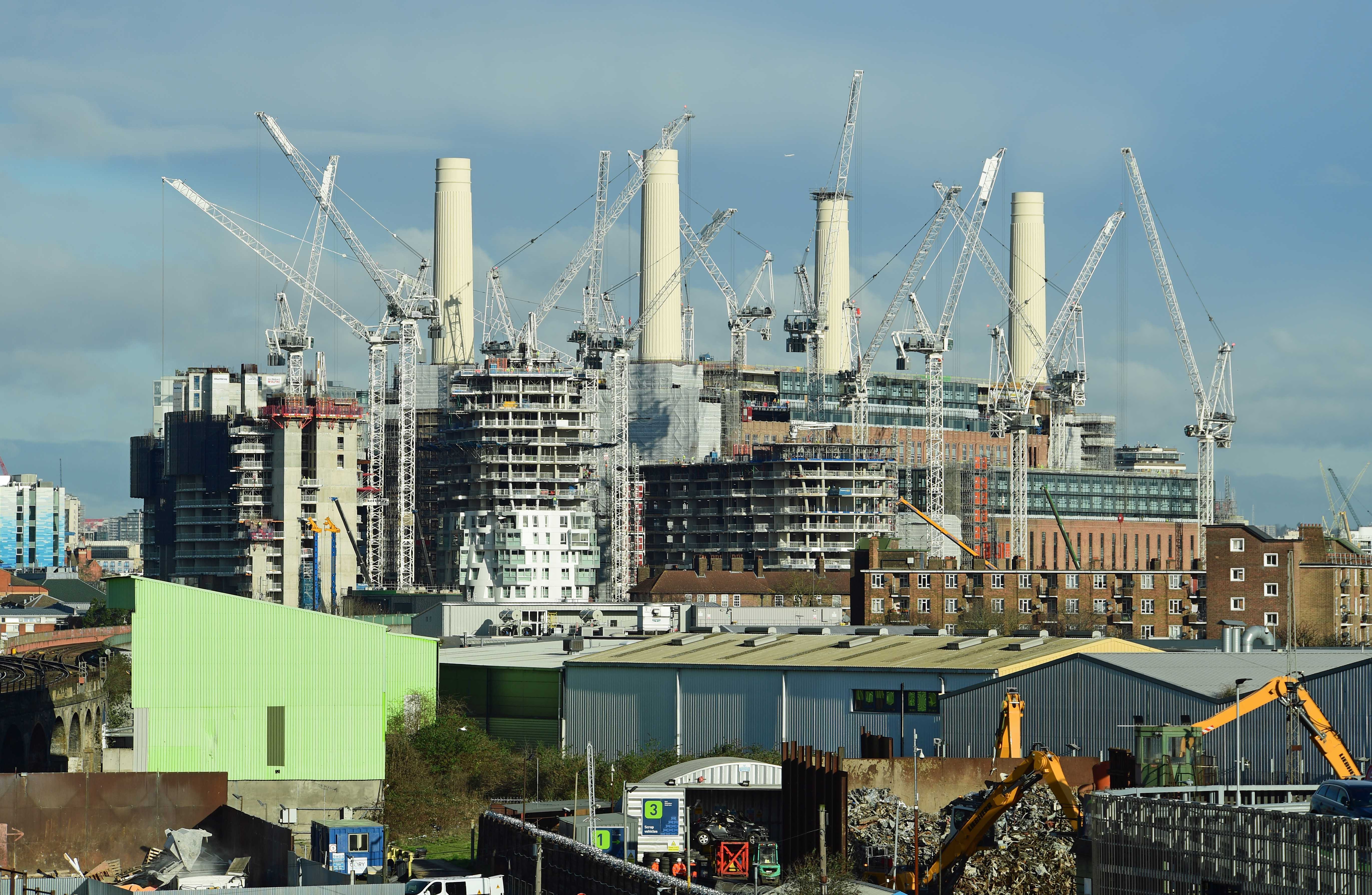
OK, let’s move on to the picture of the day, which isn’t from any exotic beach of far-flung corner of the globe. It’s from London, and for anyone who knows the city well it encapsulates the changing skyline of the capital and just how much it’s changing. I took this picture before lockdown, on the 25th February in fact.
The four iconic chimneys give this building away as being the old Battersea power station on the South bank of the Thames. Having been derelict and gutted for decades it’s now disappearing behind a spiders-web of cranes and new apartment blocks as the abandoned railway yards that surrounded it are converted into a a luxury housing complex that will mostly be bought by foreign investors. Well, that was the plan. Will it still come to fruition? Time will tell…
I’ve a favour to ask… If you enjoy reading this blog, please click on an advert or two. You don’t have to buy anything you don’t want to of course (although if you did find something that tickled your fancy that would be fab!), but the revenue from them helps to cover some of the cost of maintaining this site – and right now (because of Covid), us freelances need all the help that we can get. Remember, 99% of the pictures used in my blogs (including this one) can be purchased as prints from my other website – https://paulbigland.zenfolio.com/
Today’s been another one where I’ve spent most of it getting corns on my bum as I’ve been glued to a computer screen, scribbling words and editing pictures. My stop-count has gone to pot these past couple of weeks but I’m looking forward to putting that right next week once I’ve got the work I need to do out of the way. The weather’s not exactly been conducive to venturing far anyway so earning the ‘ackers to pay bills has been more important than swanning around the country.
Although the swanning will hopefully produce some interesting blogs soon…
Meanwhile, here’s today’s picture of the day, which is rather appropriate for the weather conditions. I took it at Seathwaite in the Lake District in June 2002. I was there on a short break with friends that was rather handy as I had a ‘shot list’ of locations for a forthcoming Lonely Planet guidebook to England. The first they’d ever done if I remember correctly. This picture was featured in the guidebook as Seathwaite is officially the wettest place in England – and this picture illustrates that fact perfectly.
Those of you who’re regular readers of this blog will recognise the picture as I use it as my header on the front page. I suppose it’s time to change it now I’ve given it away, isn’t it?
I’ve a favour to ask… If you enjoy reading this blog, please click on an advert or two. You don’t have to buy anything you don’t want to of course (although if you did find something that tickled your fancy that would be fab!), but the revenue from them helps to cover some of the cost of maintaining this site – and right now (because of Covid), us freelances need all the help that we can get. Remember, 99% of the pictures used in my blogs can be purchased as prints from my other website – https://paulbigland.zenfolio.com/
Blimey! I’d hoped to write monthly updates but pressure of other work means my last one was in July, so there’s a lot to report! Construction of HS2 has continued to pick up speed as work on the ground continues and a whole host of contracts have been signed that have created jobs around the country. This isn’t an exhaustive list as I’m bound to have missed things, but I hope it’s a useful round-up of major events.
On the 27th July a major milestone was reached on the OLd Oak Common site. After 2 years of demolition and clearance work, the site was handed over to main contractors, the Balfour Beatty VINCI SYSTRA Joint Venture, who will be building the massive 14 platform station.
At the end of July HS2 Ltd highlighted the fact Lydney based Mabey Bridge Ltd had won a contract to supply 10 modular bridge to the project. Mabey employs 130 people at its head office and factory in Lydney, with many local people working on the HS2 contracts. Extensive preparatory works are now underway to allow for piling activities and the construction of the diaphragm wall for the main HS2 station, which will be built 20 metres below ground.
All pictures used in this blog are courtesy of HS2 Ltd.
On the 9th of August the M42 motorway reopened 24 hours early after a 2,750-tonne bridge structure was carried along the motorway on a self-propelled modular transporter and fixed into place. The 448-wheel transporter took just one hour and 45 minutes to move the bridge span 150 metres. This was the first major new structure that’s been installed as part of the HS2 project. Later this year a similar bridge will be installed over the A446, ahead of two more bridge structures being installed which will span the new high-speed railway line.
The next day (8th August) the race began to find contractors to install the railways high-voltage power supply systems. The winner will be responsible for the design as well as manufacture, supply, installation, testing, commissioning and maintenance of the HV power supply systems.
Approximately 50 traction sub-stations will be built alongside the line between London and Crewe in order to deliver power from the National Grid to the trains. The contractor will also deliver a dedicated HV non-traction power network that will provide power to stations, shafts, portals, depots and railway systems along the route. The contract is worth an estimated £523m.
On the 11th August HS2 released the winners of the competition to name the first two Tunnel Boring Machines (TBMs).
The names – Florence and Cecilia – were suggested by students at Meadow High School in Hillingdon and The Chalfonts Community College, Buckinghamshire, inspired by female scientific and medical pioneers.
Around 4,500 people from across the UK took part in the poll to select the final names, with Florence taking 40% of the vote and Cecilia a close second with 32%. The schools that suggested the names are close to HS2’s South Portal site, from where the first tunnel boring machines will launch early next year.
The pace didn’t slacken and the next day HS2 highlighted the success of Port Talbot based Wernick Buildings in manufacturing, transporting and installing office and welfare accommodation to the M25 site where the TBMs boring the Chiltern tunnels will be launched from.
On the 20th August the striking design for the new Amersham vent shaft headhouse was released.
HS2 say “The circular single-storey building will be surrounded by a spiral shaped weathered steel wall designed to echo the shape of the site and the natural tones of the surrounding landscape. Robust and durable, weathered steel fades naturally over time to a dark brown colour. In order to let light through, the upper parts of the wall will be lightly perforated with a pattern inspired by woodland foliage”.
Below ground level, a 18 metre deep ventilation shaft will reach down to the twin tunnels below, with fans and other equipment designed to regulate air quality and temperature, remove smoke in the event of a fire and provide access for the emergency services.
On the 25th August the 1st of an estimated 15,000 freight trains that will carry spoil and construction materials ran. Operated by GBRf, the train delivered aggregates to the HS2 site at Washwood Heath. Over the next four months, more than 150 trains will bring up to 235,000 tonnes of stone from quarries in the Peak District, equating to keeping an estimated 13,000 lorry movements off the road.
A peak of around 17 trains per day will serve the Phase One programme beyond 2022. Other sites include HS2’s Rail Logistics Hub at Willesden which will welcome up to eight freight trains a day between 2020 and 2024. These will haul a total volume of around six million tonnes from the Euston approaches, including excavated material from tunnel boring machines – saving the equivalent of up to 300,000 lorry movements.
The next day Solihull Borough Council approved planning permission for the new landmark HS2 Interchange eco-station.
Next month, on the 4th September, the (largely symbolic) formal start of construction was announced, which generated a lot of media interest and certainly rained on the parade of the dwindling number of protesters who were still pretending they could stop HS2!
Throughout September several announcements were made about educational and technical tie-ups with groups and universities, all contributing to the growth in skills and employment that HS2 is helping generate across the UK.
On the 15th September a more tangible milestone was marked with the completion of structural work on the temporary pre-cast factory which will produce wall sections for the 10 mile long Chiltern tunnels. The 1000s of tonnes of steelwork for this and other buildings is being supplied by specialist steel fabricators, Caunton Engineering, from their base near Moorgreen, Nottinghamshire.
As well as the precast plant, family owned Caunton Engineering are also delivering structural steelwork for the general warehouse, workshops, soil treatment plant and the viaduct pre-cast plant. In total, around 2,400 tonnes of steelwork will be delivered from their factory in Moorgreen, Nottinghamshire, on the site of the former colliery. You can read more here.
On a more spiritual note, the next day HS2 announced that the company, working with the Archbishops’ Council of the Church of England, had agreed with Brookwood Cemetery in Surrey for reburials as a result of excavations at St James’s Gardens to take place there. Some of you may have seen the BBC2 TV programme that documented the archeological work at both Euston and Curzon St. If you haven’t, it’s a fascinating delve into the past and the history of the industrial revolution in Birmingham and well worth viewing.
If you’ll excuse the pun, there was more concrete news (literally!) on the 22nd September, when details were released of the new low-carbon Vertua Classic Zero concrete that was being trialled at the HS2 site at Euston. This provides a reduction of 42% in CO2 in comparison to a standard concrete. HS2 has set a carbon reduction target of 50% target for its contractors on construction baselines for Phase One civil assets (such as tunnels, viaducts and cuttings), stations and railway systems. You can read more here.
Continuing with the theme of carbon-cutting, on the 25th September HS2 announced it HS2 had trialled solar and hydrogen powered welfare cabins across its work locations run by enabling and main works civils joint ventures CSjv (Costain, Skanska) and SCSjv (Skanska Costain STRABAG) including Camden, West Ruislip and Uxbridge. HS2 say that data gathered from 16 Ecosmart ZERO cabins over a 21 week period on HS2 sites in Camden, Ruislip and Uxbridge showed that 112 tonnes of carbon were saved – the equivalent of what would be absorbed by over 3,367 trees over a whole year. In comparison, a standard diesel generator running would have used 40,000 litres of diesel fuel. You can read more here.
On September 29th details of a £36m contract awarded to Booth Industries of Bolton, which will supply high-pressure safety doors for the internal passages linking the high speed rail project’s tunnels. more than 300 units manufactured at a new purpose-built facility in the town, and create up to fifty jobs over the next ten years.
OCtober got off to a bang when on the 5th HS2 revealed that the contract for the modular slab track system for Phase One and 2a had been awarded to a partnership which includes PORR UK Ltd and Aggregate Industries UK. The deal will see the slab track segments manufactured at a new factory near Shepton Mallet in Somerset helping to create up to 500 jobs over the life of the contract. The deal – worth £260m – will see the PORR consortium manufacture all of the track (excluding tunnels and some specialist structures) between London and Crewe, where HS2 joins the existing west coast mainline. More here.
OK, that’s the round -up for now. You can find more announcements at the HS2 website, but this will give you an overview of just what’s been going on and the progress being made building HS2. In the next few weeks expect to see more announcements, including a real landmark – the arrival of the first Tunnel Boring Machines (TBMs) from Germany.
If you want to read more about HS2’s progress I can recommend two links. This one to HS2’s media centre, and also this one, to the company’s ‘HS2 in your area’ webpage. The page has a wealth of detailed information on programmes, events, consultations and schedules of work covering all the HS2 routes.
I’ve a favour to ask… If you enjoy reading this blog, please click on an advert or two. You don’t have to buy anything you don’t want to of course (although if you did find something that tickled your fancy that would be fab!), but the revenue from them helps to cover some of the cost of maintaining this site – and right now (because of Covid), us freelances need all the help that we can get. Remember, 99% of the pictures used in my blogs can be purchased as prints from my other website – https://paulbigland.zenfolio.com/
Today’s been another day spent working from home and grappling with the capricious nature of technologies such as the internet. I’d a Community Rail Awards Zoom meeting arranged for 10am, so that my fellow judge (Mark Barker) and I could talk to a station friends group. So, of course, my internet connection decides to play hard to get: Literally! I spent a good half hour rebooting stuff or tinkering with settings before the damn thing decided to behave again. Meanwhile I was trying to transfer hundreds of pictures from my round Britain trip to RAIL magazine, which had to be paused whilst I was having the meeting – just in case both got screwed up.
On the bright side (?) we’ve had a miserable day weather-wise, so being stuck at home was hardly a hardship and everything worked out in the end. Although it does feel slightly surreal to be talking to old friends who only live down the road on Zoom rather then just popping in to see them – such is the mad world we all currently inhabit, and one that doesn’t look like sanity will return to for quite some time – and I’ve not even touched on politics…
I’m taking a break from that form of madness and keeping my spleen unvented until the pressure becomes too much. I’m too busy trying to keep on top of my writing jobs and decluttering the house – hence more and more railway items ending up on my eBay account. Hopefully, once I’ve got this series of RAIL articles in the bag I’ll have the time to add some of the larger items of railway memorabilia as I’ve mostly been focusing on pictures as they’re easy and the P&P is simple.
OK, It’s time to cut the rambling and move on to the picture of the day, which is more about the harder side of life than the scenic side of travel. I took this picture in Kuala Lumpur, Malaysia on the 23rd February 2012. A homeless man is using water from a storm drain on the side of the Gombak River (which is enclosed in concrete at this point) to wash the only clothes he has, surrounded by the buildings of the cities banking and business district…
I’ve a favour to ask… If you enjoy reading this blog, please click on an advert or two. You don’t have to buy anything you don’t want to of course (although if you did find something that tickled your fancy that would be fab!), but the revenue from them helps to cover some of the cost of maintaining this site – and right now (because of Covid), us freelances need all the help that we can get. Remember, 99% of the pictures used in my blogs can be purchased as prints from my other website – https://paulbigland.zenfolio.com/
As the construction of the new HS2 picks up more and more speed with new contracts announced almost every week (a detailed blog on these is coming shortly), the tiny bunch of anti HS2 protesters lurch from one disasterous defeat to another as their numbers continue to dwindle due to a combination of arrests, injunctions and the fact the schools and colleges have gone back. Oh, and the weather! The ‘fair-weather’ anarchists like to pose and posture to their friends on social media in the sunshine – but muddy fields, cold mornings and heavy rain really aren’t their thing.
Nowhere has this become more obvious than the ongoing (but soon to end) eviction at Jones’ Hill wood in Aylesbury Vale. The protesters had been left alone in the woods for several months as they weren’t in anyone’s way. Lulled into a false sense of security they built several tree houses and boasted how they would ‘hold’ the wood against HS2 as the wood was the inspiration for a Roald Dahl story, “Fantastic Mr Fox”. There was only one problem. None of it had any basis in fact!
The Roald Dahl museum – who are the real authorities on the man – say the wood that inspired the story is another one that’s nowhere near HS2!
The protesters boasts were about ‘holding’ the woods were just as baseless. Within 48 hours of moving in the bailiffs had evicted the majority of the tree houses and established that the claim of protesters in tunnels was just another empty boast.
Worse was to come, the protesters reinforcements failed to arrive, despite the media coverage the evictions received. There was one, Daniel Hooper, better known as ‘swampy’, who gained minor celebrity status during the roads protests of the 1990s. There’s only one problem. He failed then – and he’s failed now…
Meanwhile, another small protest camp containing just four people on the Rugby Rd near Cubbington was evicted with alacrity, whittling down the protesters eight camps down to six. As usual, HS2 Rebellion made all the usual ridiculous accusations about violence towards the protesters – all of whom were seen to be in rude health shortly after when they forgot they’d meant to have been beaten up. Funny, that!
This number will fall even further in the next few months – although some of the camps (like Crackley) are already redundant as the work they were trying to stop has already happened! Other camps will linger on as they’re on private land and not obstructing building HS2 in the slightest.
As the protests have failed to actually stop anything the protesters have little left to do but spread massive misinformation about the alleged ‘destruction’ HS2’s doing to wildlife reserves like Calvert. Sadly for them, this keeps getting exposed for what it is – complete bollocks. Here’s an example. Someone flew their drone over the work at Calvert Jubilee reserve a few days ago and stuck the resulting video on Youtube. .
It’s painfully obvious to anyone with an open mind that the reserve is hardly touched, with work concentrated on clearing vegetation on the route of the old railways, including the former Great Central.
As we’re now into autumn and the wildlife nesting season’s behind us HS2 is ramping up the speed of the vegetation clearance work that it needs to do before major construction starts. This means there’s a huge number of active sites and a tiny bunch of protesters to go round. ‘High profile’ events like the eviction of Jones’ Hill Woods drag them in as they waste their time trying to stop the inevitable – meaning work at other sites is undisturbed. It’s farcical to listen to the claims some of them make on social media about ‘winning’ but this is the post-truth era and first major infrastructure project that’s been conducted in the new media age. I’m sure there’ll be a fascinating thesis for a student in all this next year!
In my next blog I’ll compile a list of the HS2 contracts that have been awarded since my last update. They total hundreds of millions of pounds, creating thousands of UK jobs from Somerset to Teesside.
I’ve a favour to ask… If you enjoy reading this blog, please click on an advert or two. You don’t have to buy anything you don’t want to of course (although if you did find something that tickled your fancy that would be fab!), but the revenue from them helps to cover some of the cost of maintaining this site – and right now (because of Covid), us freelances need all the help that we can get. Remember, 99% of the pictures used in my blogs can be purchased as prints from my other website – https://paulbigland.zenfolio.com/
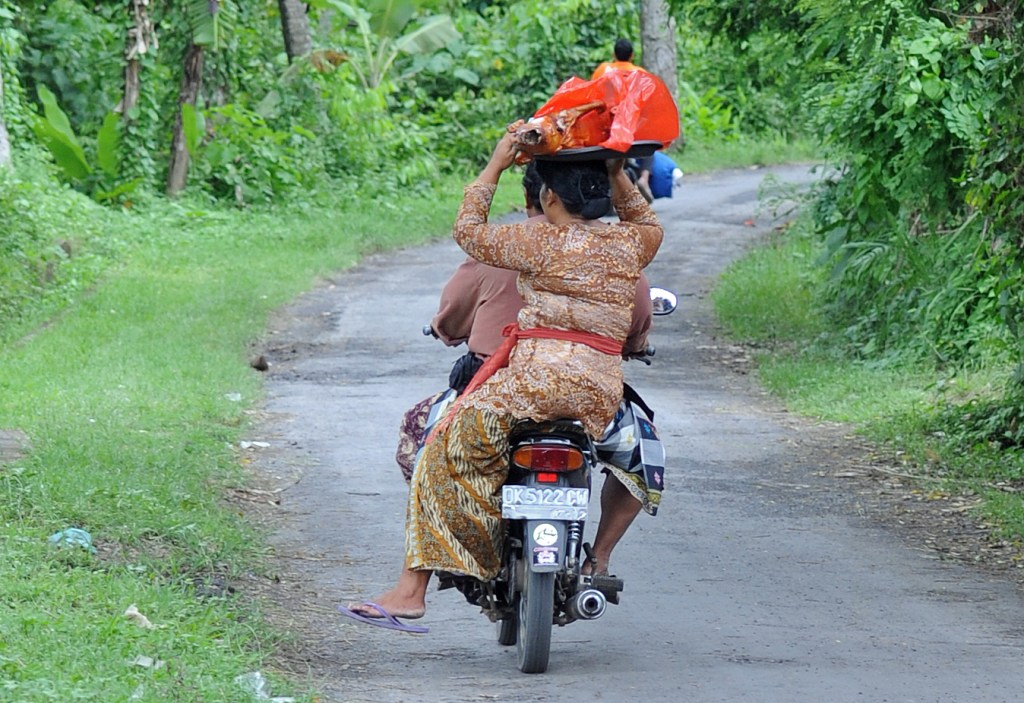
It’s been a long day and I’m knackered, so I’m saying little tonight. I’m going to let the picture speak for itself. I spent Christmas and New Year 2011-12 in Bali, Indonesia, looking up an old friend (and meeting some new ones). I first went to Bali in 1992 and I’ve been back many times since as the beautiful island and its people have grown on me. The fact it’s also a photographers delight and has some fantastic food has absolutely nothing to do with it – honest!
I took this picture on the 7th January 2012. I was walking from where I was staying into Ubud and was overtaken by this couple on a scooter. Luckily, I had the long lens on my camera, which was slung over my shoulder, so I had time to grab the shot. The woman on the back is balancing roast suckling pig atop her head in traditional Balinese style as her husband weaves his way around the local roads on his scooter. Both are dressed in traditional attire, which suggests they’re on the way to a religious ceremony somewhere. The Balinese aren’t great fans of walking more than a couple of hundred metres so transport like this is de rigeur. They would often spot me when I was walking into town and ask me where I was going. My reply often caused bemusement – “jalan jalan” (walking, in Bahasa Indonesian). Why would anyone walk? – especially in the tropical sun? Mad dogs and Englishmen and all that…
I’ve a favour to ask… If you enjoy reading this blog, please click on an advert or two. You don’t have to buy anything you don’t want to of course (although if you did find something that tickled your fancy that would be fab!), but the revenue from them helps to cover some of the cost of maintaining this site – and right now (because of Covid), us freelances need all the help that we can get. Remember, 99% of the pictures used in my blogs can be purchased as prints from my other website – https://paulbigland.zenfolio.com/
Remember the days when you had things to look forward to? No, me neither. That seems like a different word. So many things have happened over the past 9 months with lots of events cancelled or curtailed that the world feels like a very different place to the one it once did. As someone who’s always travelled I feel my wings have been severely clipped – and I don’t know when I’ll get to spread them again.
That said, I think that things will be changing very soon.
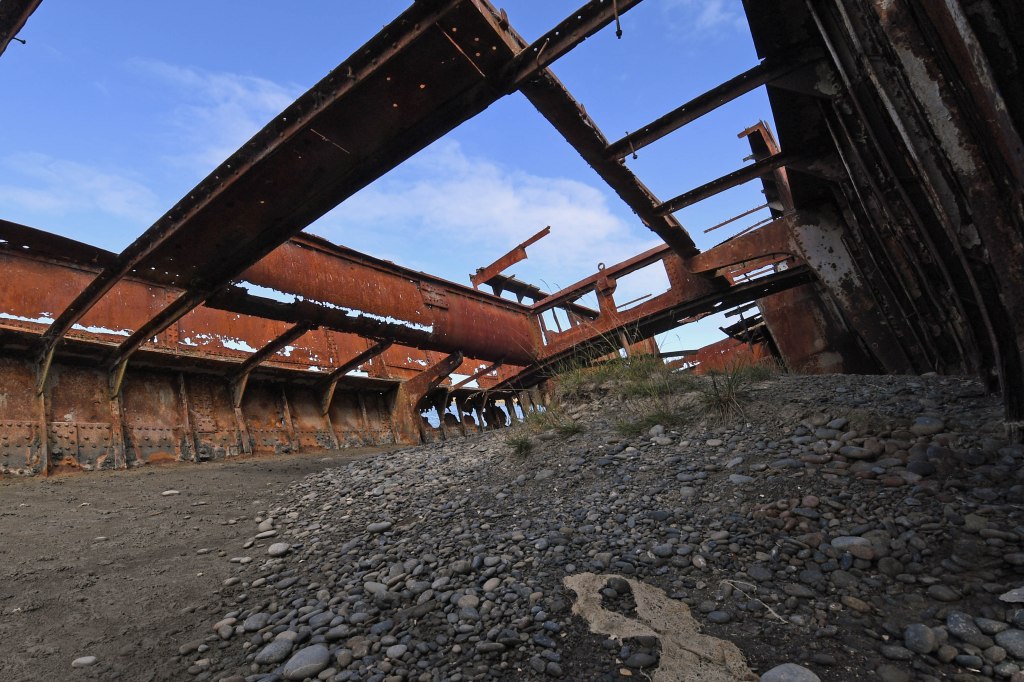
In the meantime, here’s the picture of the day. I’m a fan of industrial archeology and things like shipwrecks. This particular one’s from New Zealand.
This is the wreck of the TSS Waverley. She’s a ship with a fascinating history which you can find here. I really enjoy exploring these old shipwrecks – and ones 1000s of miles from the UK always pique my interest.
I’m sure I’ll have another shipwreck or two to add here soon enough. In the meantime there’s lots of old rail slides to look forward to – as well as a different local focus.
I’ve a favour to ask… If you enjoy reading this blog, please click on an advert or two. You don’t have to buy anything you don’t want to of course (although if you did find something that tickled your fancy that would be fab!), but the revenue from them helps to cover some of the cost of maintaining this site – and right now (because of Covid), us freelances need all the help that we can get. Remember, 99% of the pictures used in my blogs can be purchased as prints from my other website – https://paulbigland.zenfolio.com/
If you possess webbed feet, today’s very much been your time to be alive! Here in West Yorkshire the heavens have stayed open most of the day, so I’ve been happy to have plenty of things to keep me indoors. I’ve spent a lot of time adding another 80 old railway slides for sale on eBay. It’s a time consuming process but it’s worthwhile one as they’re selling well. Here’s one of today’s new additions.
As well as releasing them for sale I’ve spent part of the day decluttering – which will benefit some local charity shops. Other than that the day’s not been what you’d consider a shining example of the rock and roll lifestyle.
According to the weather forecast we’re in for another soggy day tomorrow. Add that aspect to the current Covid restrictions and I’m quite happy to stay indoors and be busy, whilst dreaming of opportunities in the future when I can do something like this again. Today’s picture of the day was taken in the Maldives on the 6th January 2004. There’s no worries about social distancing here…
I’ve a favour to ask… If you enjoy reading this blog, please click on an advert or two. You don’t have to buy anything you don’t want to of course (although if you did find something that tickled your fancy that would be fab!), but the revenue from them helps to cover some of the cost of maintaining this site – and right now (because of Covid), us freelances need all the help that we can get. Remember, 99% of the pictures used in my blogs can be purchased as prints from my other website – https://paulbigland.zenfolio.com/
What a mixed day the first of the month’s been. It started off really well with a Zoom call as part of judging the Community Rail Awards. It was a very positive and informative hour that taught me something completely new that led to this blog. I’m not a great fan of Zoom meetings. They’ve filled a gap left by Covid but anyone who thinks they;re a genuine replacement for face-to-face contact needs their bumps feeling.
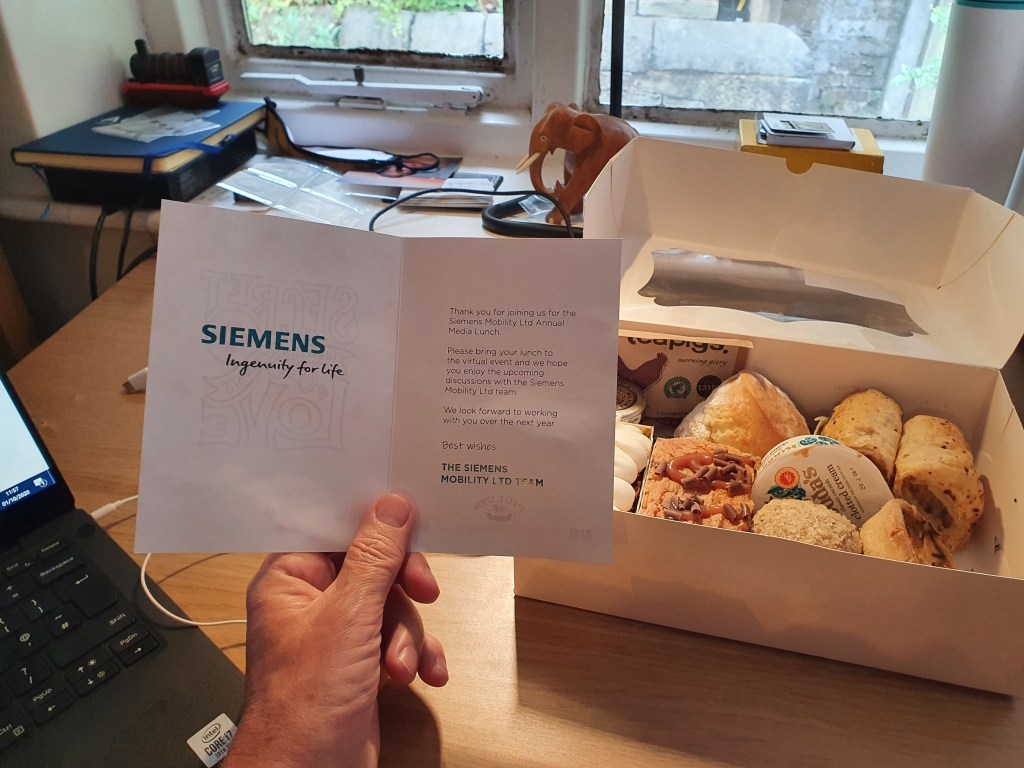
After we finished I had half an hour to get a brisk walk in before going into another very different event, which was the Siemens (online) press lunch conducted on Teams.
Normally Siemens organise an annual press lunch where we can all get together and talk with the companies UK Directors personally over a few hours at a very nice lunch in London. Obviously, the present situation precludes that, but Siemens understand the importnace of maintaining contact with people and arranged an online event. Those registering even got sent a lunchbox!
Despite the shortcomings of the platform and a few minor technical difficulties it was a very useful and informative event that allowed us all to discuss what’s going on at the moment and the issues that face the transport industry. Although not just now – as Covid is a blip – but in the near and far future. The burning post-Covid issue being decarbonisation. Yet again it was another event that made me realise why we’ll never stop meeting face to face, no matter what some people claim.
Having had my fill of meetings on the internet I escaped to confinesof the digital world to go for a stroll in the real one and soak up some of the Autumn sun before the sun set and I was trapped back in the web-world, catching up on work – and writing blogs like this, as well as looking for a picture of the day – and the one I’ve chosen from the archives is this…
The picture is of a stallholder in a market in Luang Prabang, Laos, which I took on the 6th January 2009. Like most pictures, it tells a story, but the story it tells isn’t always obvious.
The woman is plucking a chicken she’s selling whilst she’s on her mobile phone. The phone is the story. Laos is a country where much of its traditional infrastructure was bombed back to the ‘stone age’* by the Americans during the Vietnam war. Like most developing countries it found rebuilding hard. But then technology’s changed. One thing I noticed as I travelled through Loas was the number of wagons I saw on the highways carrying lattice steel masts for mobile phone networks. It’s those networks that are changing the face of the world.
Let me explain.
When I first went to India in 1985 many villages had only just got electricity. Many still had not. Once electricity (through a national grid) arrived, phones started arriving. Then televisions. In those days the Government donated a TV to villages. The TV would be kept in the local hall or temple and I vividly remember passing through villages where everyone would be gathered together to watch the latest Hindi soap-opera or religious film together. There was no individual connectivity to information – and only a state-run TV channel. Now, you can argue the merits/demerits when it comes to propaganda as is your whim. That’s not my point.
My point is how much infrastucture has leapfrogged from those times because of the advent of two things. Mobile communication technology and cheap solar power – as the Loations were finding out. Suddenly, all people needed was a cheap (often recyled) mobile phone and the world was literally their Oyster. There was no waiting for 30 years for power lines to arrive, just a phone mast.
Access to communication is a fabulous thing, but it’s also a double-edged sword, as we’ve seen in the past decade with the advent of weapons-grade misinformation through places like Facebook.
Are the Loations better off now? Time will tell..
* Bombing people back to the stone age has been a popular threat in American history.
I’ve a favour to ask… If you enjoy reading this blog, please click on an advert or two. You don’t have to buy anything you don’t want to of course (although if you did find something that tickled your fancy that would be fab!), but the revenue from them helps to cover some of the cost of maintaining this site – and right now (because of Covid), us freelances need all the help that we can get. Remember, 99% of the pictures used in my blogs can be purchased as prints from my other website – https://paulbigland.zenfolio.com/
In my case, today was the discovery of the fact there’s a Bilberry bumblebee!
I’d been on a Zoom call with the friends of Buxton station as part of my role as a Judge for the Community Rail Awards. Buxton has an excellent friends group who’re a great example of the work station friends do in their community beyond their local railway station. Whilst we were talking about their recent achievements Dave Carlisle mentioned that they’d built a huge flower bed outside the station using old railway sleepers donated by Network Rail (and there’s a long story about getting them from Crewe to Buxton during lockdown, but I won’t tell that here), what surprised me was that Dave mentioned 1/3 of the flowerbed was being dedicated to helping a local endangered species – the Bilberry Bumblebee!
Now, I knew there was many species of bee in the UK through working with my former CRA judge, Paul Cook of the Royal Horticultural Society. One of the delights of visiting different stations during the judging was seeing station flower beds literally buzzing with bees, but Bilberry bees? Here’s what Buxton have been up to (in their own words)…
“Buzzing Stations” project – along with Friends of Glossop Station, FoBS initiated this idea that has crossed the whole Peak District to included stations at Buxton, Edale, Glossop, Hadfield, Hope, Bamford, Grindleford & Hathersage.
The High Peak is home to the Bilberry bumblebee, under threat of extinction. Our work aims to help it thrive and survive. We built a huge (2m x 5m) planter unit from recycled railway sleepers (negotiated donation from Network Rail’s Redundant Assets team at Crewe and encouraged long-term partners, DB Cargo to collect them for us!), filled it with donated compost (from SITA/Suez) and plants, mostly donated (some from Morrisons, through their Community Champion, Rob Harrison). The plants were chosen to provide nectar to our bees prior to hibernation.
We are proud that the Bumblebee Express (the name of the planter unit devised as a media vehicle) was built under strict socially-distanced controls during lockdown.
We also intended to run Bumblebee Safaris from the station, but covid ruled this out, so we prepared a Self-guided version in leaflet form – launched on Heritage Open Day to complement their theme of Hidden Nature, 2,000 leaflets were printed. We were very proud when Jimmy Doherty commended our work as part of his recent TV campaign work, Jimmy’s Big Bee Rescue.
Legacy bumblebee artwork takes the form of an interpretation panel, bumblebees of the Peak District “spotters guide” (we negotiated permission to use the artwork directly with the Artist, Becca Thorne), “Make a Bee-line to Buxton” travel promotional poster (we purchased a special Licence to use the 1950’s image by Kenneth Steel) and commissioned a bespoke “special bees on a special landscape” mosaic from local community Artist, Jo Spencer.
It’s great to see the co-operation and information sharing that goes on between station friends groups and the innovative work this inspires. Living in the Pennines in West Yorkshire where bilberries are plentiful and bilberry pies are a local delicacy I was curious to find out if the bees existed here. Sure enough, they do, Here’s an illustration how the bees look from ‘Blooms for Bees’. The fun bit for me is how they remind me of railway workers high-vis!
Copyright Blooms For Bees
You can find out more about this type of bee here from the Bumblebee Conservation Trust.
It’s fantastic to see the work community rail volunteers are doing in so many ways – despite the depravations of Covid and the difficulties that social-distancing and lockdowns have caused.
Perhaps, when all this is over, you might want to pop along and visit one of these stations and see the great work the groups are doing to grow the railways, help the environment and build their local communities. Your visit might even inspire you to get involved…
You can learn much more about the work and world of community rail here – an if you want to learn more about the Friends of Buxton station you can find them on Facebook here.
I’ve a favour to ask… If you enjoy reading this blog, please click on an advert or two. You don’t have to buy anything you don’t want to of course (although if you did find something that tickled your fancy that would be fab!), but the revenue from them helps to cover some of the cost of maintaining this site – and right now (because of Covid), us freelances need all the help that we can get.








 Paul Bigland