Tags
After two nights in Jakarta it was time to move on. Whilst I really enjoyed being back Dawn was finding it hard to reconcile herself to the poverty and squalor that you encounter in parts of the old town. Dee’s not been back to Asia since 2017 and finds some aspects hard to adjust to, whilst I, as an old Asia hand who’s been coming here for 33 years see it as part and parcel of life.
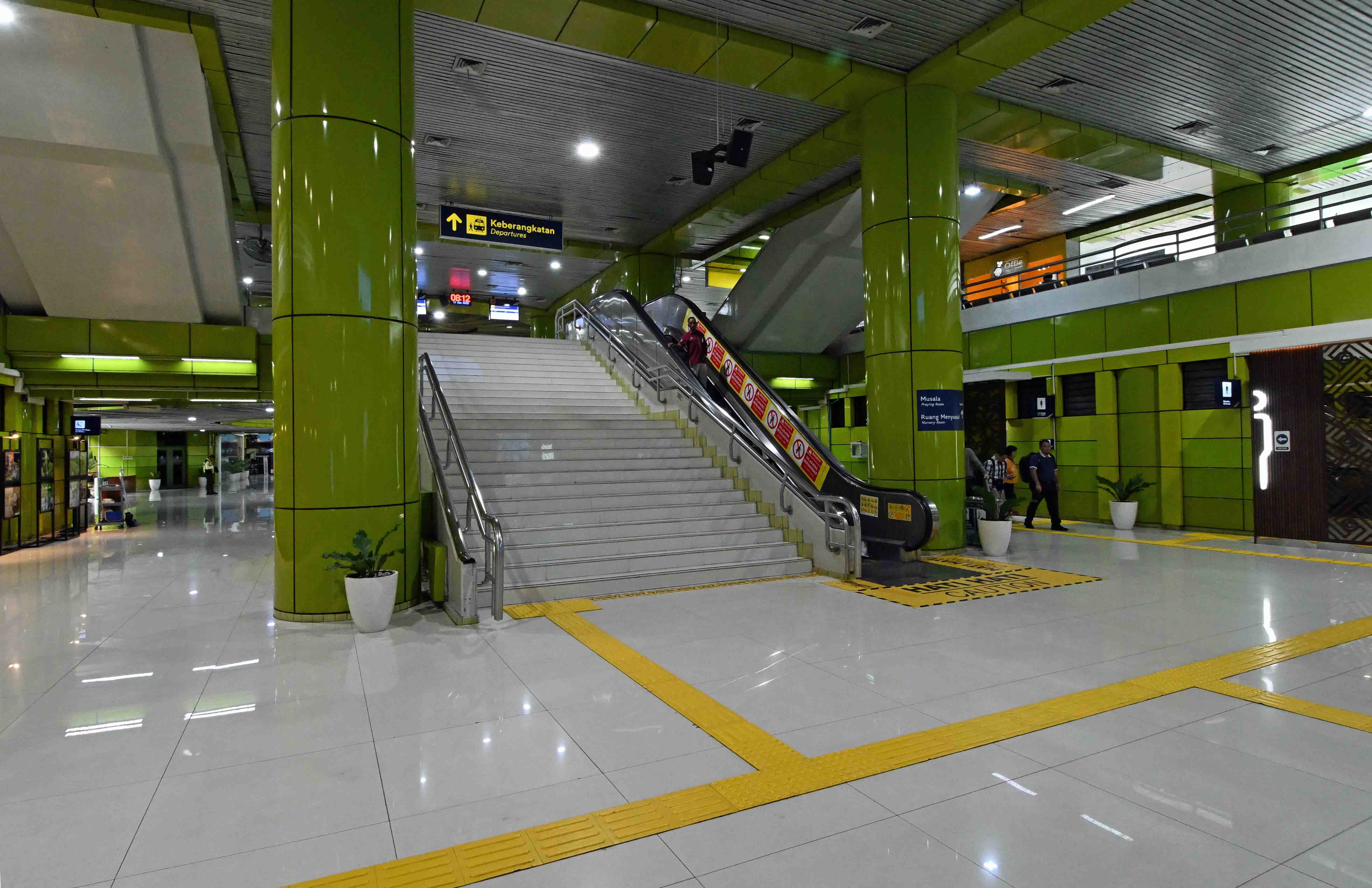
Today was chance for Dawn to see another side to Java, away from the capital. The taxi ride to Gambir station which took us past some of the more salubrious parts of town made her regret not getting to see them yesterday, but c’est la vie. Gambir station itself appears to have been modernised since I was last here, making it a pleasant, hassle-free experience. Scanning your ticket to collect your boarding card’s easy and if you have any problem staff are only too keen to help.
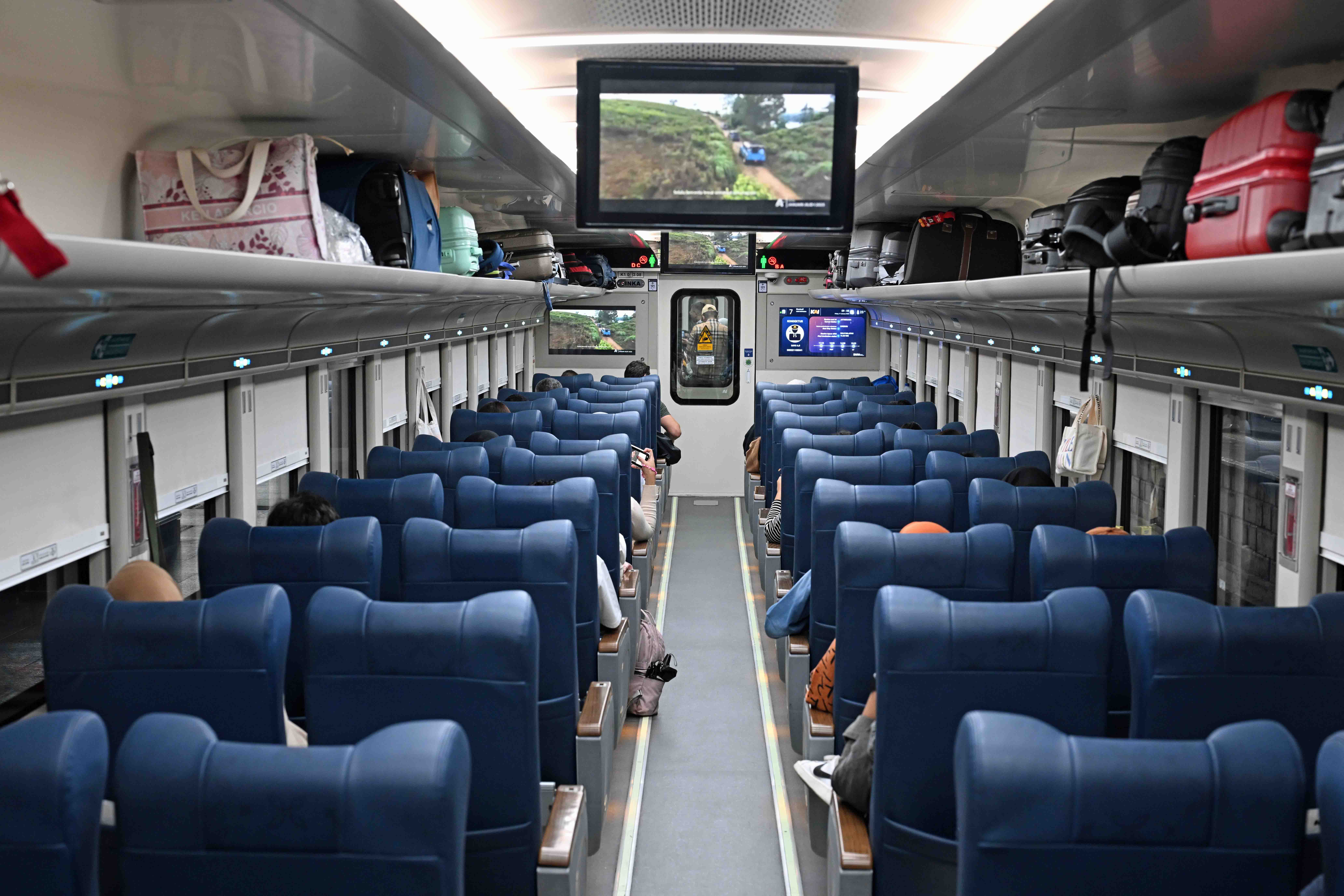
The stock that formed our train (the Argo Dwipangga) was also modern, having been built by INKA (Indonesia) with parts supplied by CRRC. We travelled ‘Executif’ class. These air-conditioned coaches have 2+2 reclining seats, multi fitting plug sockets and information screens at the end of the car above the door that tell you the train’s coach number, the speed. time of arrival at stations and even which station you’re passing through non-stop. A separate bulkhead screen spells out the rules of travel and even gives you the coach attendants name. The cars also contain separate Male and Female toilets.
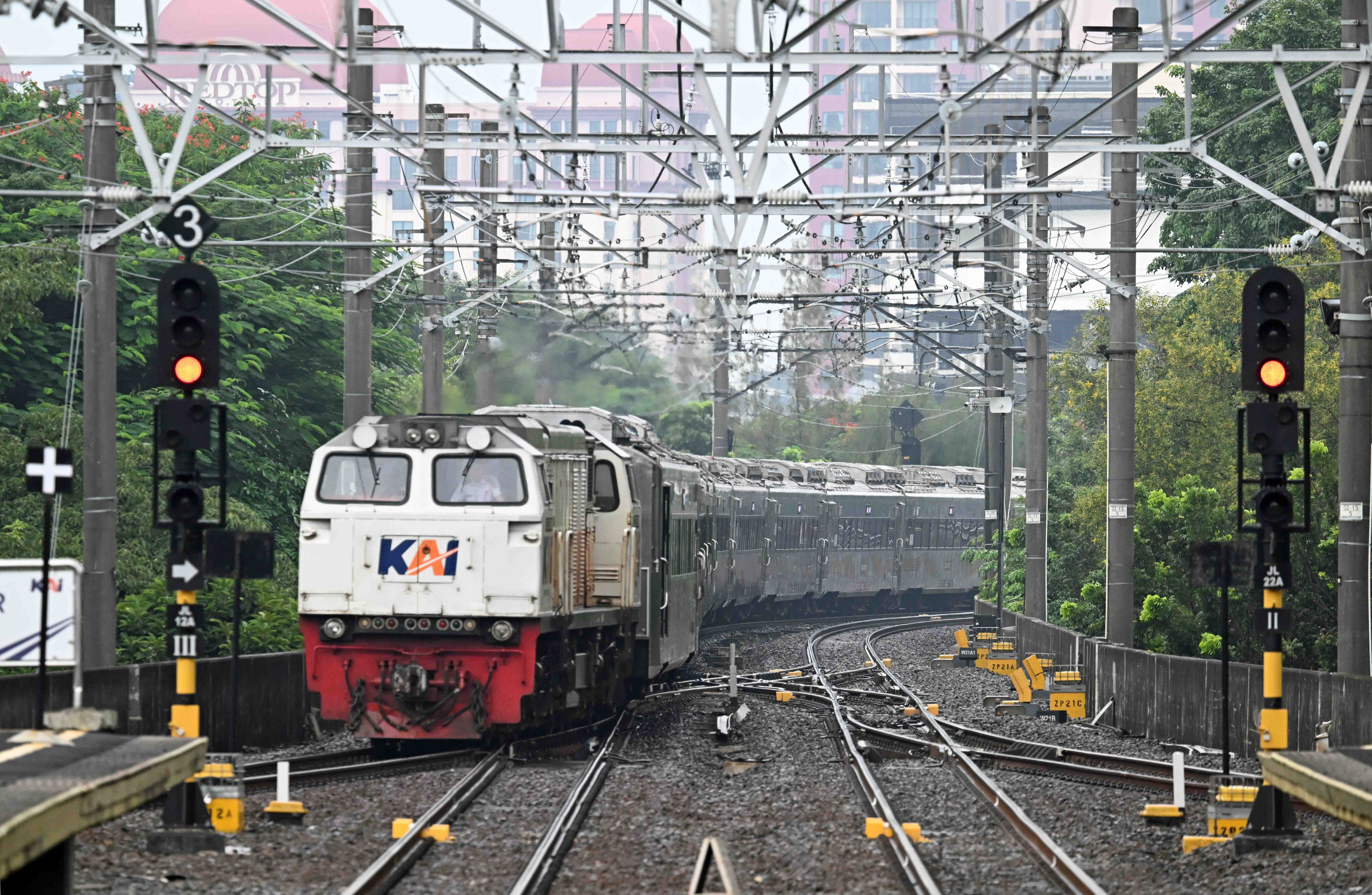
After traversing the busy Jakarta suburban rail network with its succession of stations and frequent trains we broke out into the country and a landscape that soon changed from urban to rural and miles upon miles of paddy fields.
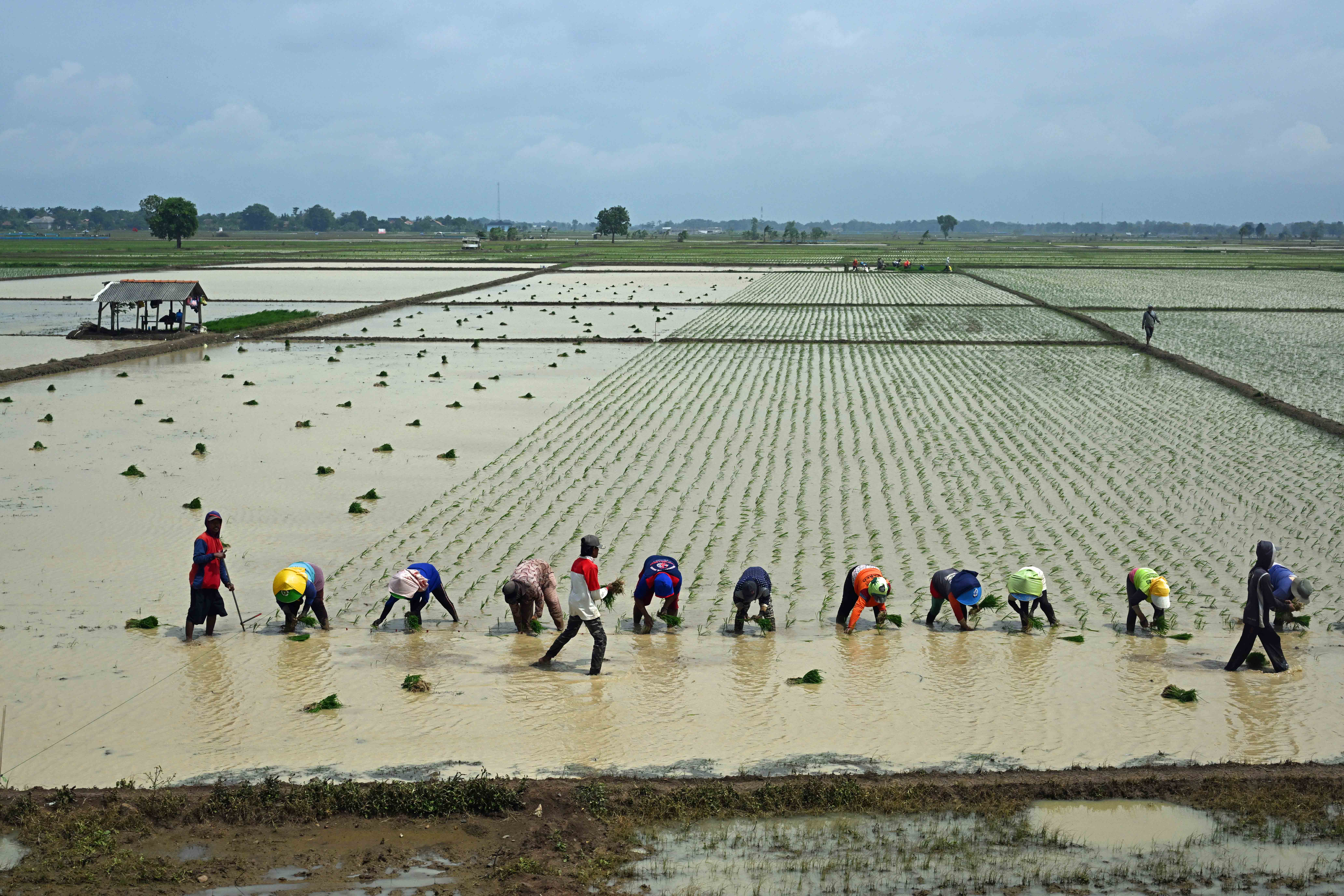
By noon as we approached Dalam Perjalanan we started to see the countryside become less flat with clusters of small hills rising up to break the monotony of the plains. Endless paddy fields gave way to more mixed agriculture with far more tree cover.The railway changed too with level crossings being replaced with road and foot bridges or underpasses. To complete the picture the weather got in on the act. Snatches of blue sky broke up the monotony of universal grey skies that had dogged us all the way from Jakarta.
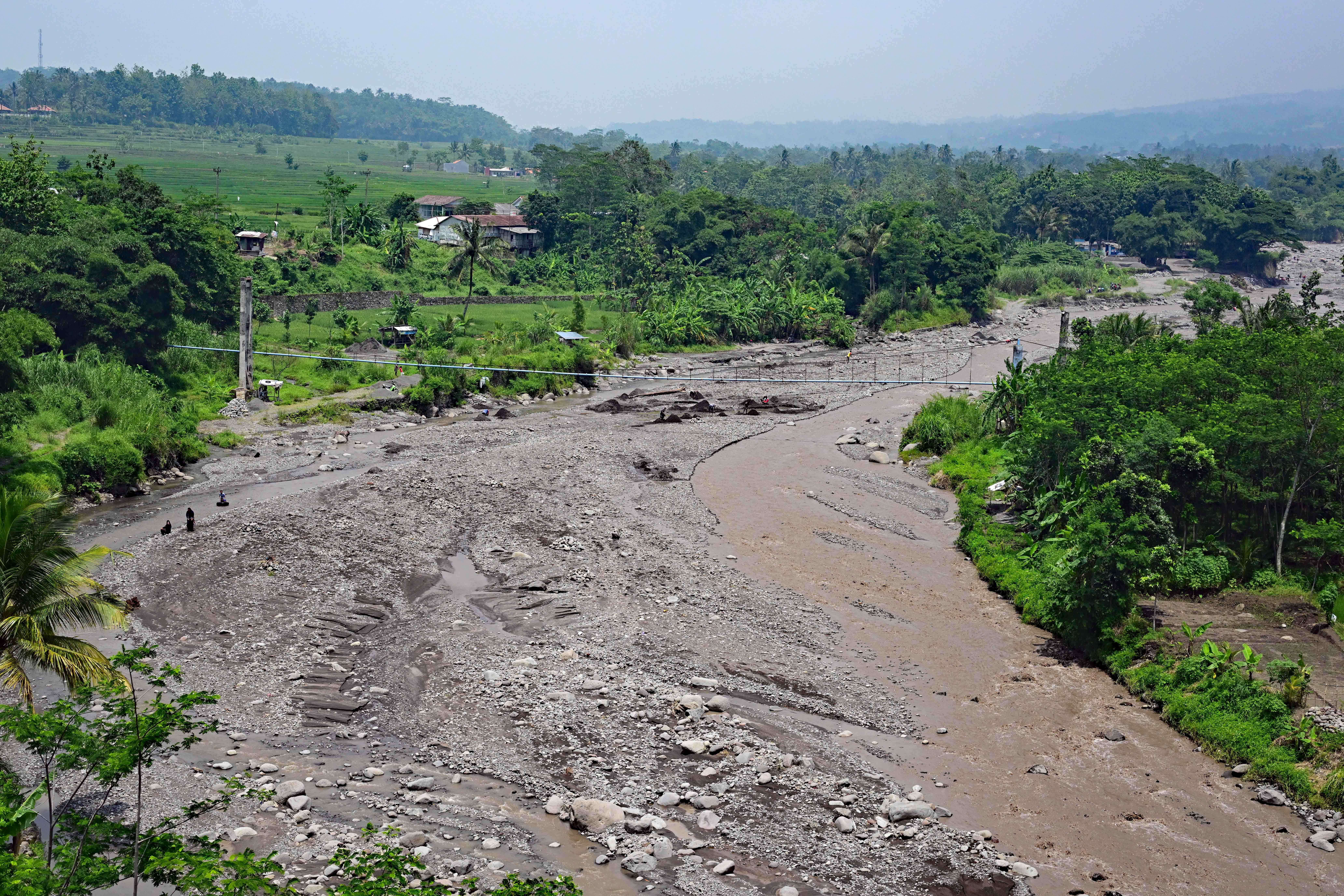
As a consequence of hitting such rugged country our speed dropped back from over 100kph to little more than half that, not that I minded as it gave more chance to admire the scenery. Whilst Dawn dozed I blagged the empty window seat opposite, plugged in my laptop and began to write this blog, balancing my machine on one of the flip-up tables stored in the seat armrests. As I watched the front of our train twisting and turning along a railway snaking through the hills my only regret was that I couldn’t lean out of a window to get pictures! The line to Karang Sari and beyond has had the Airfix style girder bridges replaces by substantial solid concrete beams bridging the various ravines and valleys the line traverses. The twin tracks complement rather than parallel each other. In many places there’s a large gap in between the running lines, or they run on different gradients – as our Eastbound track takes more leisurely curves. I’m assuming this is because the route was originally single track. As in much of Asia the railway’s also used as a footpath between villages. We passed a steady stream of pedestrians, men working in the surrounding fields or groups of women with colourful parasols walking into town.
We continued to cross the hills for some time. At Notog, a pretty and well-manicured little station I observed the first evidence that this line’s been rebuilt. We passed an abandoned single-track viaduct just before we plunged into the first tunnel on the line. Shortly afterwards, when we passed over a wide river another abandoned single track ‘Airfix’ bridge appeared on our right.
Having breasted the hills, which began to recede in the distance we picked up the pace to hit the heady speed of 115kph for a stretch but the hills gradually closed in again, causing us to pass through the third tunnel on the line at a station called Ijo. Emerging from the dark we entered a different world as heavy, ominous-looking clouds greeted us, causing light levels to drop significantly. Fortunately, the rain they brought with them they dropped over the hills and we escaped back into the sunshine.
Passing through Kutuarjo station which still boasts a small loco depot I noticed several younger people filming our train on their phones. I’d noticed the odd one or two en-route. Rail enthusiasm is alive and well in Java. The addition of new locomotives, coaches and liveries no doubt helps as it adds to the variety. After a very pleasant 6 hour trip we arrived at our destination on time. Resisting the urge to get a taxi I chartered two motorised becaks to ferry us to the hotel – just for old times sake. Needless to say Yogyakarta’s change a lot – but I’ll reserve those stories for another blog.
I’ve a small favour to ask…
If you enjoy reading this or any of the other blogs I’ve written, please click on an advert or two. You don’t have to buy anything you don’t want to of course – although if you did find something that tickled your fancy that would be fab! – but the revenue from them helps me to cover some of the cost of maintaining this site (which isn’t cheap and comes out of my own pocket). Remember, 99% of the pictures used in my blogs can be purchased as prints from my other website – https://paulbigland.zenfolio.com/
Or – you can now buy me a coffee! https://ko-fi.com/paulbigland68312
 Paul Bigland